Wednesday, January 30, 2008

Bush shows love to gay Congressman

I wrote this story today. It made me smile.


It was a moment of affection between two politicians, and in normal circumstances it would pass unnoticed.
But when one is the only out gay man in Congress and the other a President who has revelled in his hostility to gay marriage, their closeness raises eyebrows.
After his final State of the Union address to both Houses of Congress on Monday, President George W Bush greeted Congressman Barney Frank with a shoulder and head touch, as the two shared a personal moment.
Fox News commentator Brit Hume felt moved to point it out, without saying the word 'gay':
"Hold on a second, what we just saw there was an interesting moment, a moment of friendship and almost affection between the President and none other than Barney Frank.
"Who I think it's fair to say is one of the most liberal Members of Congress, also one of the smartest guys up there, but, uh..."
His co-host Nina Easton was quick to point out that Congressman Frank has co-operated closely with the White House as Chairman of the House Financial Services Committee.
It later emerged that Frank had encountered the President before his speech.
On the phone to his boyfriend while waiting the Speaker's Lobby, Frank was approached by the President, who leaned in and said "tell him I said hello."
The affectionate exchange captured by the cameras after the President's speech was in fact the Congressman saying:
"Mr. President, by the way, the person I was talking to when you said to say hello was my boyfriend."
"Well. I hope you said how open-minded I am," was Bush's response.
"I considered telling [the President] I wouldn't marry him," Frank told the Boston Globe, "but then I thought, 'Nah.'"
President Bush has tried to introduce an amendment to the US Constitution banning same-sex marriage, while Mr Frank's home state of Massachusetts is the only one in the US to have legalised it.
Congressman Frank has represented the 4th District of Massachusetts since 1981, and is one of two out gay people in the House of Representatives.
Tammy Baldwin, a Wisconsin Congresswoman, is the only lesbian in the House.
An outsider in Congress Frank, a Harvard-educated lawyer, has a sharp tongue and is consistently voted one of the funniest members of the House.
He came out in 1987, and his political opponents have tried to smear and unseat him on many occasions.
Many opponents thought he was politically dead after a rent boy scandal in 1990.
Attempts to expel him failed - the House voted 408-18 to reprimand him instead.
The people of his district stuck with him through the scandal - he won re-election in 1990 with 66 percent of the vote. In 2006 he ran unopposed.
In 1998, he founded the National Stonewall Democrats, a gay, lesbian, bisexual, and transgender Democratic pressure group.
He has been a vocal and articulate defender of LGBT rights. Speaking out against the Federal Marriage Act, which would have amended the US Constitution to ban gay marriage, he said:
"We're told "don't take things personally", but I take this personally. I take it personally when people decide to take political batting practice with my life."


http://www.pinknews.co.uk/news/articles/2005-6713.html

Things move fast as Conway (sort of) resigns


Well , it has been a turbulent few days for Tory MP Derek Conway.

There he are, revelling in his anonymity, a figure of intense apathy among his constituents, and then a scandal rolls into view.

First he was censured for paying his younger son tens of thousands of pounds in public money for "work" for which there is no evidence.

Then he had to make a grovelly speech in the Commons apologising for effectively defrauding the tax payer.

That should have put an end to it all, except revelations come to light that he may have also had a previous similar arrangement with your elder son. And his wife also works for him.

Suddenly Tory leader David Cameron is withdrawing the whip, while opponents talk of police investigations.

Today Derek Conway effectively ended his career, annoucing that he would be stepping down at the next election.

Dozens of MPs who employ family members are jittery. Most of the A List of Tory candidates will be descending upon Old Bexley and Sidcup looking to take over this plum safe seat.

Poor old Derek. Only a week ago he must have been pretty confident of his career. Now it's over

As one wit put it, perhaps he is leaving to spend more time with his staff.

Here is how he explained his decision:

I have had tremendous support from my local party, my family and friendsbut have concluded that it is time to step down.

I stand by what I havesaid in relation to the report by the Commissioner of Standards and do not wish to add to those comments at this time.

Since joining the Conservative Party nearly 40 years ago I have had the privilege of serving in public office since 1974 and have done so to the best of my ability.

I have advised the Chief Whip and the chairman of my local Conservative Association that I shall not seek to continue as the Conservative Party Candidate for Old Bexley and Sidcup at the next election.

Though not an original supporter of David Cameron for the leadership of my party, I believe that he has shown he has both the ability and the character to be Prime Ministerof our country and I do not wish my personal circumstances to be a distraction in any way from the real issues that have to be addressed.


John Edwards will be missed


A significant day in the US Presidential nomination circus, as John Edwards withdraws from the Democrat race and Rudy Giuliani looking almost certain to pull out of the Republican one.
This leaves four contenders left - talk of Ralph Nader running again on an independent anti-corporatist ticket has excited no-one.

It is sad to see two candidates I could have felt quite comfortable seeing sworn in as President leave the field.

Giuliani has always been a friend to gay people, and as he took hits for it in Republican circles I respected him for not trying to tack Right.

He was an outstanding Mayor of New York, before, during and after September 11th, and his support for limited abortion marked him out as a man of principle.

I am more saddened by the news that John Edwards has given up on his White House dream so early in the race.

Initially I was unimpressed with him, taking him for a Tom Cruise clone with a strange voice. However, the more I saw him in action the more I came to form the highest opinion of his stance on poverty.

It is immoral and disgusting that millions of Americans, many of them children, live in poverty. I hope that Barack Obama and Hillary Clinton were sincere when they said they would continue his work in office.

I think he would make an excellent Vice Presidential candidate, especially for Obama, and I also hope he comes out in favour of the Illinois Senator.

During the televised debate on Martin Luther King day earlier this month, Edwards certainly appeared to have more in common with Obama than Clinton and they made an effective team against her.

As for whether or not it helps Hillary or Barack on Super Tuesday next week, I don't really know enough to comment, except to say I hope that the progressives who were all for Edwards will recognise that Barack Obama is the candidate of change.

As for the Republicans, it seems increasingly likely that they will choose John McCain as their candidate. "Mad" Mitt Romney is disturbingly popular, but only with Republicans, and not even with all of them, on account of the Mormon thing.

McCain is a good candidate - for the 1988 election. At 71, he is by far the oldest candidate and was already 35, the age required to run for President, when the boy Barack was born.

He is a war hero, a fiscal conservative and a former prisoner of war. I have the highest respect for him - he is exactly the sort of figure that should be in the Senate.

I suspect that is where he will remain.


Tuesday, January 29, 2008

Conway scandal delights Labour


Every Labour member I spoke today could barely contain their glee at revelations that Tory MP Derek Conway had paid his son close to £45,000 as a “researcher,” despite there being no evidence the boy had done any work.

Indeed, considering he was studying full time in Newcastle, some distance from both Parliament and his father’s outer London constituency, it is hard to imagine what substantive contribution he could have made.

To be sure, the scandal has taken the spotlight off Labour – in the last news cycle Gordon Brown was having to stand up for Alan Johnson in the face of another scandal about deputy leadership campaign donations.

The PM must have wished there had never been a deputy election.

The Conway scandal is much more serious than the Hain incident, and it is telling that it took David Cameron a day to decide to remove the whip from Conway.

A spokesman for the Tory leader was saying yesterday: "Derek Conway has apologised fully on the floor of the House.

"The whip will not be withdrawn. The proper punishment has been administered."

Today, the Leader of the Opposition said that he has reconsidered and apparently realised that the offence was so great (the offence being moving the spotlight away from Labour sleaze) that Conway would receive the ultimate punishment.

Wasn’t it David Cameron who solemnly declared just the other day that the PM had dithered in not removing Hain from office before the Electoral Commission referred his campaign donations to the police?

Now it appears poor Conway also had a similar arrangement with his elder son, Henry.

I am sure you have seen a picture of Henry. A very flamboyant-looking young man in my view.


Look, there he is with former Eastenders starlet and Cockney sparrow Martine McCutcheon.

He has variously been described as a fashion writer, a club promoter, a “socialite” and, in the inimitable words of the Daily Mail, “he is a regular at gay clubs frequented by Elton John and David Furnish, and once described himself as "blond, bouncy and one for the boys."”


Fabulous!

In any case, it appears that Mr Conway’s generosity will spell the end of a Parliamentary career that began in 1983.

We will have to wait and see if Peter Hain can clear his name – it is unlikely he will be asked to rejoin the Cabinet.

So far Harriet Harman, Peter Hain and Alan Johnson have been accused of improperly declaring donations to their campaigns for deputy leader.

Labour MPs must be hoping that Hilary Benn, Hazel Blears and Jon Cruddas were more diligent.

Sunday, January 27, 2008

Caroline Kennedy comes out for Obama

Here is the opinion piece Caroline, the only living child of former US President John F Kennedy, wrote for today's New York Times:

A President Like My Father.

OVER the years, I’ve been deeply moved by the people who’ve told me they wished they could feel inspired and hopeful about America the way people did when my father was president. This sense is even more profound today. That is why I am supporting a presidential candidate in the Democratic primaries, Barack Obama.

My reasons are patriotic, political and personal, and the three are intertwined. All my life, people have told me that my father changed their lives, that they got involved in public service or politics because he asked them to. And the generation he inspired has passed that spirit on to its children. I meet young people who were born long after John F. Kennedy was president, yet who ask me how to live out his ideals.

Sometimes it takes a while to recognize that someone has a special ability to get us to believe in ourselves, to tie that belief to our highest ideals and imagine that together we can do great things. In those rare moments, when such a person comes along, we need to put aside our plans and reach for what we know is possible.

We have that kind of opportunity with Senator Obama. It isn’t that the other candidates are not experienced or knowledgeable. But this year, that may not be enough. We need a change in the leadership of this country — just as we did in 1960.

Most of us would prefer to base our voting decision on policy differences. However, the candidates’ goals are similar. They have all laid out detailed plans on everything from strengthening our middle class to investing in early childhood education. So qualities of leadership, character and judgment play a larger role than usual.

Senator Obama has demonstrated these qualities throughout his more than two decades of public service, not just in the United States Senate but in Illinois, where he helped turn around struggling communities, taught constitutional law and was an elected state official for eight years.

And Senator Obama is showing the same qualities today. He has built a movement that is changing the face of politics in this country, and he has demonstrated a special gift for inspiring young people — known for a willingness to volunteer, but an aversion to politics — to become engaged in the political process.

I have spent the past five years working in the New York City public schools and have three teenage children of my own. There is a generation coming of age that is hopeful, hard-working, innovative and imaginative. But too many of them are also hopeless, defeated and disengaged.

As parents, we have a responsibility to help our children to believe in themselves and in their power to shape their future. Senator Obama is inspiring my children, my parents’ grandchildren, with that sense of possibility.

Senator Obama is running a dignified and honest campaign. He has spoken eloquently about the role of faith in his life, and opened a window into his character in two compelling books. And when it comes to judgment, Barack Obama made the right call on the most important issue of our time by opposing the war in Iraq from the beginning.

I want a president who understands that his responsibility is to articulate a vision and encourage others to achieve it; who holds himself, and those around him, to the highest ethical standards; who appeals to the hopes of those who still believe in the American Dream, and those around the world who still believe in the American ideal; and who can lift our spirits, and make us believe again that our country needs every one of us to get involved.

I have never had a president who inspired me the way people tell me that my father inspired them. But for the first time, I believe I have found the man who could be that president — not just for me, but for a new generation of Americans.

Obama has to be the next President


We always knew the race to the White House in 2008 would be exciting. With no incumbent President or Vice President in contention, the field in both parties is wide open.


I have always been a huge fan of Barack Obama, and I was heartened to read the opinion piece written by President Kennedy's only daughter Caroline in the New York Times today. It seems she agrees with me that he is a once-in-a-generation figure, a man who can bring hope and effect profound change in America and by extension the world.


Of course, my good mood is also because yesterday in South Carolina the wheels came off the Clinton bandwagon. For all the carping about blacks voting for Obama, his 2 to 1 victory over Hillary was a victory for the sort of campaign that the young African-American has chosen to run.


For the past week, Bill Clinton, like the 90s relic he is, has been indulging in attack dog-campaigning. He implied that Obama was untrustworthy.


He bitched about his lack of Washington experience, ironic coming from a man who arrived at the White House with half of the cast of the Beverly Hillbillies, and whose political knowledge extended no further than the backwater state he had been born in.


He compared him to Jesse Jackson in the 1984 and 88 primaries (subtext: he can win all the black votes he wants, only Hillary can take whites).


Bill squandered vast amounts of his political capital in his nasty campaigning - and it failed. It turned the voters off, and many in his own party are furious with him for adopting campaign tactics more associated with the Bush White House.


Meanwhile the most Presidential looking person in the race continues to be Obama. I suspect that many voters know he is up against Bill and Hillary in this election, and I think it can only work to his advantage.


People like the underdog and Americans, for all your negative opinions about them, do believe in their future, do think their country can be better, and do like to give hope a chance.


After all, the people who should know that most are the Clintons.


As we move towards Super Tuesday, it is Bill and Hillary who increasing look like the establishment couple, and Barack and Michelle who most resemble America in the 21st century.

Saturday, January 26, 2008

Gordon shuffles his cards


Peter Hain's resignation in the wake of the Electoral Commission's decision to ask the police to look into donations to his deputy leadership campaign is overdue.
The revelations ruined the government's attempt to gain the upper hand in the New Year, made the whole party seem sleazy and thrust the loans/donations rows back into the public eye.
The PM talking about 'incompetence' really did not help matters.

With his departure comes lots of news stories about the new generation of Labour leaders - Yvette Cooper, Andy Burnham and James Purnell all favoured with high-profile roles.

But when you look across at the shadow Cabinet, it still makes a lot of Brown's team look like old hands.

Jeremy Hunt, Michael Gove, Theresa Villiers and Nick Herbert all became MPs at the last election.

As did the new Lib Dem leader Nick Clegg.

The challenge of the next year for Labour will be to demonstrate to the electorate that they are dynamic and capable of profound change.
It is not even an issue of age as such - after all Ruth Kelly is not yet 40, but it feels like she has been at the heart of the government for many years.
Ed Balls, Douglas Alexander and Ed and David Miliband are all young, but not in any way new. That being said, there does not seem to be a serious rival to Gordon Brown among any of them.

For a decade the Labour party and the public knew that Tony Blair would be succeeded by Gordon Brown. But who will be the next leader?

For the rising stars, the next twelve months will be critical in establishing themselves not so much as the heirs to new Labour but as someone who can take on David Cameron and win.

Friday, January 25, 2008

The cabal around Ken


Although I think he has done his fair share of bad things, I am a bit of a fan of Ken Livingstone.
Why?
Because he is a proper Londoner. He likes a drink of whisky when he is answering Assembly questions? Good lad.
He accurately reflects the cheeky, lairy and cocky instincts of many of us in this city.
Channel 4 did their best with their expose documentary about Ken to dig some serious dirt, but I have to say that if all they could find after eight years in office was a bit of boozing, a streak of arrogance and some dodgy loans to dodgy community projects, then Ken must be cleaner than I thought.
The most hilarious part of the "expose" however, was the revelation that Ken had surrounded himself with a cabal of former Socialist Alliance comrades and - get this - employed them AND paid them salaries.
As I lay in bed this morning listening to Ken on the Today programme, I was amused by the thought that, in adopting the same alarmist tone that Martin Bright did in his Channel 4 hack job, you could make anyone sound sinister.
"A member of a tiny elite who think they are born to rule, he siezed control of the Conservatives when they were at their lowest ebb.
"Vandalising this once-great party, he moved quickly to surround himself with like-minded cronies.
"Committed to fanatical market solutions, he has learned, at least in public, to temper his hard Thatcherite views.
"However, with his gang, their committment to capitalism and the overthrow of the Blair/Brown consensus remains undimmed.
"There is Boris, a fellow member of the secretive Bullingdon Club, on over 60k a year in a sinecure job for life as MP for Henley.
"Two-brains Gove, feared for his ability to rip opponents apart.
"The intimdating figure of Nick Boles, a man who manipulates policy to suit the new, rightwing agenda.
"All of these men were close to Cameron as he plotted his rise to power, most of them given highly-paid jobs at Westminster, the better to advance their leader's cynical agenda."
Easy.

Wednesday, January 23, 2008

Why we should pay MPs £100,000 a year


Tomorrow MPs will get to vote on their own pay rise. Nice work if you can get it.

They are likely to ignore the advice of Downing St for prudence and a 1.9% rise and vote themselves the 2.8% recommended by the Senior Salaries Review Body.

At present MPs get paid £60,675.

I think they deserve more. In fact, I would suggest that they get a much bigger rise than that – perhaps bringing them into line with GPs, who are routinely earning £100,000.

However, there are two caveats attached to this pay rise. For a start, at least half of them need to go.

There are an astonishing 646 MPs at the moment.

All political parties are full of useless, faceless nobodies cluttering up the benches. We need bigger constituencies and less MPs.

By all means increase their office expenses, as long as they prove they are employing researchers for their researching skills.

You do see a lot of suspiciously hot young boys and girls floating around the corridors, in addition to which the vast bulk of researchers have solid party connections, as opposed to solid casework skills. Let’s not even begin to discuss the levels of nepotism attached to many jobs in Parliament.
The second caveat is that no MP should be allowed to accept money from any outside institution. Back in the day being an MP was kind of like voluntary work.

Gentlemen would attend to their profession (if they had something as common as a profession) in the mornings and then spend their afternoons and evenings at the House ruling over the British Empire.

In fact, the very first regular salary for MPs was instituted in 1911 to benefit the newly-elected Labour members who were in actual need of an income – until then all members had to be financially secure enough not to require payment.

The situation these days has completely changed – why on earth is it deemed acceptable that MPs can have paid interests outside Parliament and those of the people who elect them?

Why should former Health Secretary Patricia Hewitt, while still the sitting MP for Leicester West, be taking money from Boots and private equity company Cinven to “advise” them?

Why should Tim Yeo be a paid director of Univent plc, ITI Energy, Eco City Vehicles plc, AFC Energy and Groupe Eurotunnel SA, as well as MP for South Suffolk?

Why should it be OK for Doug Henderson to be on the board of McDonalds as well as claiming to represent the best interests of his constituents?

The Register of Members’ Interests is one of the most depressing documents anyone with any belief in real democracy can read.

MPs should have one job – representing their constituents. If an increased salary and increased expenses are not enough for them, then they should leave politics and find something more lucrative to do.

Even those who are very politically aware would struggle to name more than 100 MPs. In other words less than one sixth of them are making any sort of impact.

For every John Bercow or Gywneth Dunwoody there are a dozen non-entities, lobby fodder for their parties who have contributed nothing to our political process.

People who have trouble getting recognised in their own front room. I think we deserve a leaner, more efficient House of Commons with better pay and conditions for the 50% of MPs who would remain under my excellent plan.

Tuesday, January 22, 2008

Thatcher wheeled out to vote against gays


You can always tell that the forces of conservatism are on full tilt then they wheel out their beloved icon and former Prime Minister to vote in the Lords.

Yesterday, in a doomed attempt to block perfectly sensible proposals to allow same-sex couples to be recognised as the legal parents of children conceived through the use of donated sperm, eggs or embryos, Baroness Thatcher was seen wandering through the lobbies accompained by arch-acolytes such as Lord St John of Fawning and the skinhead Tebbit.

The proposal means that a lesbian lady who gives birth and her civil partner will both be recognised as the parents of a child conceived through assisted reproduction.


Two men will also be able to apply for a parental order to become parents of a child conceived through a surrogacy arrangement.

This modest change in the law is like a red rag to the homophobic bulls of our public life.

I suspect the hand of shady organisation the Christian Institute in the mobilisation of La Thatcher (she’s 82 and by all accounts her once powerful intellect is tragically denuded.)

What was heartening about last night’s Lords vote on the Embryology Bill was the kicking the "need for a father" brigade got – their amendment was defeated by 60-odd votes, which in Lords terms is a disaster.

The family values campaigners, who of course are attempting to weaken the tens of thousands of non-Waltons families that already exist in our country, pulled out all the stops and fell flat on their face.

It certainly seems to have put their nose out of joint – only a few hours ago, in a debate on the proposed new offence of incitement to hatred on the grounds of sexual orientation, one of the more … errr … colourful members of the House had a big rant about gays having too much influence on the government. Read all about it here.

It must be a dark time to be a member of a sect such as Christian Institute – like a sort of a reverse Midas touch. Everything they touch turns to turd.

Still, at least Jeebus is on their side. Or something.

Monday, January 21, 2008

It's a shambles, Darling


Time was that economic competence was the mark of this Labour government.
But today, with shares hitting lows not seen since 9/11, record defecits in December and most of all the continuing balls-up that is Northern Rock, it seems that Brown is no longer the master he once was.

The shameful spectacle of 25 billion pounds being pumped into a dodgy bank has not been helped by the Chancellor and Treasury's seeming lack of an exit strategy.

His latest suggestion is to convert the money into bonds and sell them to investors.

It is pretty clear that they should have let the bank die, and tough on those who had left their savings with the bank, or nationalised the thing in the first place.

While it would have been hard on those people who had deposited money with Northern Rock, the fact is that putting your money in the bank is not 100% guaranteed.

Similarly, pumping tens of billions of pounds into the coffers of a private financial institution was madness and there is no clear route out for the government.

It seems that Alastair Darling's promotion to Chancellor was a poisoned chalice. Meanwhile the Tories and Lib Dems are crowing from the sidelines.

The increasinlgy impressive George Osborne pointed out in the Commons today that not since the nightmares of the 1970s has so much public money been funnelled into a British company, and never on this scale.

Even in the best-case scenario in which Northern Rock's debt is all paid back, albeit over at least five years, the Labour government's reputation for economic competence is ruined forever.

Sunday, January 20, 2008

politicsjunkie returns!

After a year away from blogging, I have decided I can’t live without it.

While editing PinkNews.co.uk, Europe’s largest gay news service, continues to be an exciting way to pass the working day, I find I do not get enough time to comment – and as you know I do love to comment.

In honour of the re-commencement of my blog, I have reproduced some of the best of the interviews and comment pieces I have written for PinkNews.co.uk in the past twelve months.


2007 was a great year for me – the first time I got to interview Cabinet ministers, my first visit to 10 Downing St, my first (and so far only) experience of seeing Tony Blair speak in the flesh.


I was particularly lucky to be able to interview both candidates for Lib Dem leader, all six of the contenders for Deputy Leader of the Labour party and receive a nomination for the Stonewall Journalist of the Year award.


Some person from The Independent won it.


A personal highlight was the party conference season – my first as a political journalist.


I guess I was not prepared for how much fun they are, and how much alcohol is consumed.


I can’t wait for 2008.


Yet there is so much to think about before then.


A London mayoral election that is already too close to call.


A Presidential election in America that could bring real change or more of the same.


A critical year for the Prime Minister.


Can he turn around his image and his party, pick up some council seats in the May elections and push forward into 2009 ready to win an historic fourth Labour term?


And what of Nick Clegg? Always a favourite of mine from the day he gave me one of my first high-profile interviews, he is yet to make a significant dent in the public consciousness.


Will the new confident Tory party squeeze the Lib Dems firmly onto the sidelines? Or will Cameron also falter, his new sheen dulled by the daily rough and tumble of Parliamentary politics?


And when IS Michael Martin going to stand down as Speaker?


Who knows – one thing is for certain though – with a new occupant of the White House to be chosen, and in the most wide-open race in decades, 2008 is going to be a political year to remember.

December 07 - Interview with Nick Herbert, Shadow Justice Secretary


The 2005 intake of MPs contained the usual mix of the good, the bad and the barmy. There were dozens of new Conservative MPs, a brace of freshman Lib Dems and hardly any new Labour faces at all.

The new Tory boys and girls were instrumental in propelling David Cameron into power, and he has rewarded the best and the brightest with seats in his Shadow Cabinet.

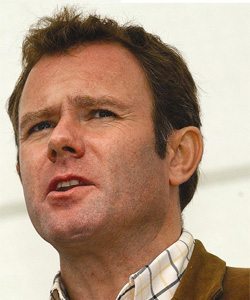
Nicholas Le Quesne Herbert is one of two Nicks who first sat on the green benches two years ago to keep an eye on in the years ahead.

Great expectations follow them around the corridors of Westminster.

While Nick Clegg is the clear favourite to become leader of the Liberal Democrat party later this month, Nick Herbert is making a name for himself as one of the new stars of the Conservative frontbench.

As Shadow Justice Secretary, he speaks for his party on diverse topics such homophobic incitement, prisons, constitutional reform and the funding of political parties.

The first openly gay man to be elected as a Conservative MP, he is destined for a frontline role in any future Cameron administration.

When we met in his Commons office the government was under siege over dodgy donations, and the new Tories were getting their first taste of just how badly the next few years could go for Prime Minister Gordon Brown.

Nick was, unsurprisingly, in a good mood as we talked gay rights, the future for party funding and how it feels to be a minority MP.

Let's start with the government's woes. What is your take on the donations scandal?
It appears that Labour has systematically attempted to undo or evade its own party funding laws. This will dismay the public.
What is doubly serious is not only that the law has been broken, as the Prime Minister said, but there has been a systematic attempt to evade the law by the party that was parading its high moral credentials in introducing this legislation, beating up all the other parties at the time for their approach to this matter, and yet has sought to evade its own legislation not once but twice.
Labour's chief fundraiser, Jon Mendelsohn, who was appointed by the Prime Minister in June, learned about Mr Abrahams' proxy donations last month, but was unaware that they were illegal. Is that credible?
It is completely incredible that those people who are officials involved in this fundraising effort do not understand the law.These are now matters for criminal investigation but in my view these are very serious indeed.
What do the Tories propose by way of reforming party funding?
We have called for a cap on all donations from whatever source, of £50,000, and unfortunately that is not possible. Labour is refusing to agree to that because they will not cap union donations.They should rethink that policy urgently.
It is clear that we need to build public confidence in the way in which parties are funded.The union bosses have control over these funds and we just think there should be one rule that applies to everyone.
But what about your own party. Are you entirely confident your own house is in order?
We are absolutely sure our own house is in order, that has been made clear. We know who all our major donors are.
We go through all the proper compliance procedures, but we have said let's have a cap on donations so that no party has to be reliant on major donations.
And what about public funding for political parties?
We are much more interested in reducing the cost of politics and that is what David Cameron has made clear.
Speaking of David Cameron, you must be very upset that his trip to Washington DC was overshadowed by this awful government scandal?
Well, all Shadow spokesmen over the last two or three weeks been making major speeches, I made a major speech on prisons, which are all receiving far less attention than they might otherwise have done.
I proposed to sell off our Victorian prisons. That was a fairly radical thing to suggest, but the government has found itself in such difficulties. That's politics.
Let's turn to incitement to homophobic hatred. At party conference in October you said that you'd wait to decide on whether to support it until you saw the amendment.
The government's now brought the amendment forward. Tell us what you feel about the government's proposals needs finessing or changing?
Well firstly just to make it clear, in committee the government's amendment went through without a vote, and the official opposition broadly supported the approach.
We think that hate crime has no place in a civilised society and inciting violent hatred against gay people plainly is totally unacceptable. The question is where criminal law should be drawn.
You and I would agree that when people say things which are abusive or insulting about gay people that that can be hurtful and wrong and in our eyes unacceptable but that's not to say that it should always be a matter for the criminal law.
I think that where there seems to be a consensus is that we must just make sure the law is drawn in the right place so that it's outlawing those acts which incite violence but is allowing free speech.
It's what Stonewall describes as "temperate comments" and that's what I think we are all trying to achieve, I don't think there's any disagreement about that between the major parties. We tabled our own amendment which had a very similar effect to the government and the minister said that she welcomed much of the amendment.
This matter will come back to the floor of the Commons I suspect, and I think that there will be Members of Parliament who are simply seeking reassurance that free speech is not going to be outlawed.
That people who have very strong religious conviction are going to be able to express disapproval of gay people. You know, I wish they wouldn't, of course. I think they're wrong but I think they must be allowed to hold those views and express them in a temperate way, provided, that is totally different, to someone seeking to incite hatred that is going to lead to violence against a community by spreading really vile literature and so on.
You seem to be saying that the lessons from the Race and Religious Hatred Bill have been learned.
I think the government has learned them and that's why they've modelled the provision more on the religious hatred side but we will just need to make clear, now it could be through guidance. It may be that the government's amendments doesn't require any further amendment.
We don't want to see the protection that the government is offering significantly weakened.
What we want to see, ensure is that free speech can be protected. It may be that that can be done in the form of guidance and so on. So I think it will need further debate, but I think also there is good will on all sides to try and get this measure onto the statute book.
Those two groups normally referred to as Christians and comedians will still be able to express their views, mock, insult or abuse?
Yes, as you know insulting or abusive words are out of the protection and that I think is a major difference between the racial and religious hatred legislation.
It should give the protection which the church seeks and comedians and so on seek. Now that means that they are going to be able to say things that makes us very uncomfortable, but we must engage with them and recognise that actually what we are trying to protect here is a decent civilised society and one of the qualities of a decent civilised society is that it protects free speech, except where that free speech really has to be criminalised.
It seems to me there has been an almost a wilful misunderstanding of legislation as it affects gay people. There seems to be a similar kind of misunderstanding of IVF provisions. Where do you think that misunderstanding about 'gay' legislation comes from and does it amuse or frustrate you when you read reports that are so wildly inaccurate?
It doesn't often amuse me. Sometimes its because proposals are made without the detail yet being available and I think that was the case in relation to the government's proposal on incitement to homophobic hatred.
I think people thought that it was going to be a wide-ranging offence that would prevent them from saying things that were perhaps comment on the basis of their Christian belief or some kind of joke.
As people see how the legislation is drafted they will become rather more reassured.
How do you feel about being a minority MP?
Am I a minority MP?
Well you are, aren't you? You're a gay MP and that makes you a minority MP in the same way that if you were black you would be a minority MP, or a Muslim, you'd be a minority MP. So clearly you don't think of yourself as a minority MP?
No I don't. I think of myself as an MP as a constituency Member of Parliament doing my best to represent my constituents in West Sussex.
I don't like labels that put people into a box and I think I've always taken the view that I wanted to be selected on my merits. I wanted to be elected on my merits and I think I was.
I want to be able to say things without people putting a label on and I think that's what a lot of gay people want. They just want to be treated as equal people in a society in which we live. They don't necessarily want to say, I'm different. Please treat me as different.
Rather the reverse, they want to say, I'm the same. Please treat me as the same. But having said that, the one thing that I have come to realise since I was elected as an out gay MP is that it's very important to other gay people.
Much more important than I realised. And I've come to realise that through the emails and letters that I get from individuals, including young people, including people going through school, including people who are actually trying coming to terms with coming out at a much older age.
Not just people who are Conservatives but often people who are, not surprisingly, in my own political party, they write and they say thank you for being out and open, because you've given me great hope that I might one day be able to be a Conservative councillor or a Conservative MP, or just be whatever I want to be in my community, without people thinking that there's anything wrong with that.
I've really come to understand that.I think initially I was trying to say, "yea look right I'm gay, next question," but actually it does matter, it matters to other people because we still live in a society where people feel inhibited about being open about their sexuality.
I've realised Alan Duncan (the other out gay Shadow Cabinet member) and I do have an important role in the Conservative party in making people say "look the Conservative party has changed, it doesn't matter if you're gay or straight, what matters is that you're Conservative."
You've had a pretty rapid rise to power.
Well I haven't got power yet.
Well, you know, influence. You're in the Shadow Cabinet and you've only been in Parliament for two years and a couple of months. What do you ascribe that to?
(Laughs) You'll have to ask others. I think I've been incredibly fortunate, you know I was selected at the last moment for a constituency in a fantastic part of the world.
I live in Arundel which is just a great town for anyone who's visited it. I feel incredibly privileged to be an MP, but I feel really privileged to be representing Arundel and the South Downs, it's a great part of the world and I'm very lucky and I also feel lucky because I've kind of come in to this just at the time when the political sands are shifting.
We have a new leader who has transformed the position of the Conservative party.
You mentioned your constituency, I was having a look at your schedule which you've very kindly put on your website. It seems that you're going to two Christmas parties in the next few days. How many Christmas parties does a conscientious constituency MP have to go to?
I don't know. But I think I'm doing about 20. By the time I get to Christmas, I'm never going to want to look roast turkey in the face again that happened last year.
The truth is if you're like me and really enjoy Christmas, I actually think that it's good fun, I have the opportunity to do it 20 times over.
They've started already, they started in November. I have a very busy life in the constituency, going to community events, going to my local party events.
There's a very strong sense of community in the villages I represent and it's a very big constituency so there are lots of villages in it so there are always things going on.
Apart from the great, huge enjoyment of being an MP is that you do four days a week up in Westminster, that's kind of intense and everything, but then you are down in the constituency doing the community work and it's actually that side of things that I really look forward to.
Talking of the constituency, well I get asked a lot if you've got a boyfriend, but I understand you do have a partner called Jason?
Yeah.
You've broken a lot of hearts there Nick.
That's very kind of you!
Does he have to do the role of the constituency wife?
Well I think a lot of the younger MPs of whichever party, whether they're gay or straight, it's very likely that their partners will be working, will have their own careers.Jason certainly is, he's a solicitor so he has his own career.
He often jokes about making vol-au-vents and so on, but the truth is since he can't cook to save his life, so it's plainly not true.
Jason was welcomed by the local party from the minute that I was selected and he supports an enormous number of the local activities, comes along to them and he's just treated as anybody else is treated.I think it's one of the marks actually of the way in which the Conservative party really has changed.
We haven't had an iota of criticism or rejection, rather than the reverse. He'll be coming along to one of the lunches that I'm going to tomorrow and they've specifically asked him to.
Do you think that model of the constituency wife is a little bit outdated?
What I think is outdated is the idea that you might have a partner and you are the principal person and your partner is the secondary person.
That's completely an outdated model. I think that being an MP is a job where I would find it very difficult to do without the kind of support that I get from him and I think a lot of MPs would say that about their wives, their husbands and their partners.
How long have you two been together?
Eight years.
Were you out at university, after university?
No, not at all. I mean I think that like a lot of people I was kind of crap about this, you know, really, really crap about this. And the thing is of course, once you're out, it's so easy to forget just what a huge deal this is. And at whatever age you are.
When I got around very late in the day to telling my friends, family and so on, and the funny thing was that a lot of my friends just said "Yes, right, well we kind of guessed that, you know, it's taken you a very long time to come right to telling us."
For a lot of young people and for old people it is still the most difficult thing to do and people need a lot of support and so on. Be reassured that it may seem the most difficult thing, but coming out will make you feel honest, powerful and liberated.
Do you feel now that the Tory party is there in terms of being fully accepting of gay, lesbian, bisexual and transgender people?
I think the party, I think we really are getting there.
We hear different things from the Tories in the House of Lords every time they talk about gay rights.
I think it is self-evidently that the party has moved. You have two out gay MPs both of whom happen to be in the Shadow Cabinet. You got the stances that, the frontbench led by David Cameron. we took on the sexual orientation regulations, the stance that we have taken in relation to this incitement to gay hatred provisions.
Still the bulk of the party, the majority of the party it would appear, voted against.
Actually most people didn't vote that day, because the vote was not expected and people weren't there, as I explained at the time.
Surely, the important thing is the signal that the frontbench was sending. I see among my own intake, which is about 50 conservative MPs who were elected last time, a change of attitude.
And I think it's fair to say that some of the recent legislation has raised very important issues about freedom of religious conscience. Both the Sexual Orientation Regulations in respect of gay adoption and the current regulations in relation to current bill, incitement in relation to free speech, and you shouldn't dismiss that.
And there are plenty of people, including gay people, including people who are otherwise very sympathetic to the gay rights agenda, who have concerns about this legislation, that it should not go too far, that it should be balanced, should protect free speech, should protect freedom of religious expression.
I didn't think myself that the sexual orientation regulations as it applied to gay adoptions was an easy issue to decide, because it appeared to involve competing rights.
I think that it's quite clear that we are a party that is changing its attitudes towards gay people and I am very proud of the fact that we are doing so and have a leader who is determined that is one of the things we should do.

Read an interview with Lib Dem Justice spokesman David Heath here.


http://www.pinknews.co.uk/news/articles/2005-6306.html

November 07 - Interview with Justice minister Maria Eagle


The government's proposal to create a new offence of incitement to hatred on the grounds of sexual orientation has not been met with approval by some leading gay commentators.


Well-respected opinion-formers such as Times columnist Matthew Parris and Independent journalist Johann Hari have questioned the need for new laws. Parris said that the gay community does not need protection from ridicule.


Rowan Atkinson, the star of the inexplicably popular Mr Bean films, has publicly fretted about the implications of such a law on the freedom of comedians to mock gay, lesbian and bisexual people.


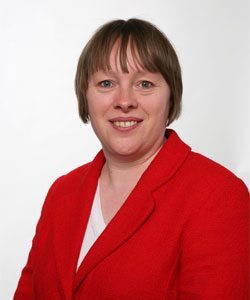
The minister piloting the relevant amendments to the Criminal Justice and Immigration Bill is the Parliamentary Under Secretary of State at the Ministry of Justice, Maria Eagle.


The 46-year-old MP for Liverpool Garston has held various junior ministerial posts since 1998, and when we met in her spacious Whitehall office last week she was keen to highlight the work done on gay equality in the past ten years.


As the sister of the only out lesbian MP, Maria Eagle has a particular understanding of the experience of the gay community. The proposed incitement to homophobic hatred law has been discussed for some time.


The Liberal Democrats made its introduction a manifesto commitment in the 2005 elections.


The passage of the controversial Racial and Religious Hatred Act in 2005 and 2006 led gay rights campaigners to increase their campaign to have their community granted an equal level of protection.


I put the three main arguments put forward in opposition to the government's homophobic hatred provisions to the minister.


The first is that as incitement is already an offence, the new law is unnecessary.


"There is existing legislation about violence against individuals, provisions within the current law that will enable the Criminal Justice System to take a dimmer view of those who get engaged in violence against an individual because of their sexuality," she replies.


"If you go and attack someone because they are gay then that is an aggravating feature of the violence offence. That's true.


"But I think that the evidence that Stonewall gave to the public bill committee got to the point on this.


"Because there is no incitement provision at the minute, there is a gap.


"If you go around inciting hatred against a group of people or an undefined group of people on the grounds of their sexuality, that isn't against the law. We think it should be."


Christian activist groups such as the Evangelical Alliance claim the new law will leave them "living in fear of prosecution" for expressing their Bible-inspired beliefs about homosexuality.


Muslim groups have also criticised the law for the same reason. Ms Eagle confirms that groups have made representations to her on the issue. She insists that the new law will not have any such effect.


"It has not been our intention to outlaw people expressing their views, whether they be Christians or comedians, about the way other people live their lives.


"You can have protection against incitement to hatred and at the same time protect people's right to express their free views. It's a very important factor of our history and heritage, freedom of speech, and I hope we can do it right."


Concerns about freedom of speech led to a rare Commons defeat for the government in January 2006 over the Racial and Religious Hatred legislation.


Lib Dem peer Lord Lester introduced a clause in the House of Lords which had the effect of seriously restricting the way in which the incitement law could be used.


The Blair government lost a vote on that amendment in the Commons.


Provisions referring to "abusive and insulting" language and behaviour were removed from the law, and prosecutors now have to prove intent to stir up religious hatred, rather than just the possibility of doing so.


Ms Eagle says the homophobic incitement proposal differs from both the race protections in the Public Order Act and the recent religious protections.


The homophobic amendments target threatening behaviour or words that are intended to stir up or incite hatred but not those that are judged as "likely to."


"We are aiming at threatening words and behaviour that are intended to incite. It is very clear from that what we do not want.


"We are taking out abusive and insulting, but we are applying the offences to threatening words or behaviour.


"Partly because that way of expressing ourselves in (the Racial and Religious) legislation was never what we wanted as a government. We did not support it. It only ended up in there because we got defeated.


"I think that in respect of sexuality in particular it would be most inappropriate to have a caveat saying you are allowed to go and abuse and insult gay people."


To bring some clarity to all of this, I presented two high-profile examples to the minister.Stephen Green, the Christian activist, likes to hand out leaflets at Pride events carrying quotations from the Bible stating that homosexuality is wrong.


He's been arrested under public order offences before. The BNP has in the past handed out leaflets in a council estate saying "All gay people are paedophiles."


Would both or either of those be covered by the proposed incitement law?


"I think it depends not only on the intention, which is a key part of the offence, and that will be a matter for the judgment of the individual investigating officer," Ms Eagle explains.


"Police officers make those judgments all the time and CPS make those judgments.


"Obviously the context is going to be important. If you are a preacher and on Sunday morning you tell your sermon of your beliefs and the beliefs of your denomination about gay people then that's different to going and standing outside a gay club and using threatening words and behaviour.


"The intent is the key. That is very clearly unacceptable and that's where we are pitching the offence."


The third objection to the law focuses on its practical purpose. When he announced the proposed amendments, Justice Secretary Jack Straw said of the proposed incitement legislation:


"It is a measure of how far we have come as a society in the last 10 years that we are all now appalled by hatred and invective directed against gay people, and it is now time for the law to recognise the feeling of the public. "


In other words, it is symbolic, a sign to the gay community that their concerns are listened to by the government, but just another new offence to add to the thousands already created by this Labour administration.


"The law lays down a line beyond which it's not possible to go without being on the wrong side of the law and you are subject to being prosecuted," the minister asserts.


"The law as a side effect can send signals, yes, and I think that can be important in areas like this about equality.


"But I am trained as a lawyer and I am not myself inclined to see the law as something that is just sending signals.


"It's putting down a line in the sand, on this side of the line what you do is lawful; on the other side it's unlawful. That's what the law does.


"If it sends signals as a result then that's also important. It's not a cosmetic exercise. I don't think it's right to change the law as a cosmetic exercise."


The leading contender for the Lib Dem leadership supports the proposed new law, while the Tory Shadow Justice Secretary Nick Herbert has stressed "the right balance between freedom of speech, ensuring that the offence must be intentional, and covering threatening language only."


The minister says she expects amendments to be brought forward, and concedes that the Lords are unpredictable, but expects "widespread support" from MPs for the incitement law.


There are proposals to include trans people and the disabled in the proposal, but the government requires an evidence base to make the case for their inclusion.


"One of the things you need to do if you are impinging upon free speech is be able to show for human rights reasons that there is a good reason for that to balance against the free speech rights," Ms Eagle explains.


"I've had some representations as you might imagine as a result of this. Anyone who wants to talk to us about this please do. We do, in order to impinge on free speech in this way, need to show that there is a reason."


The new Justice department, of which Ms Eagle is one of six ministers, takes responsibility for the criminal justice system in England and Wales.


She concedes that parts of the system have been slower than others to tackle homophobia and homophobic attacks, but claims that the specific needs of gay, lesbian and bisexual people are being taken seriously.


"Since the 2003 legislation that made an aggravating factor of homophobic motivation in attacks, the criminal justice agencies, be they police, the judges or the CPS have to take that on board.


"It's partly training, partly cultural change in society. I think we have seen a lot of that, but which is the chicken and which is the egg I'm not quite sure.


"One of the reasons why we have seen such cultural change is a general increased level from younger age groups of tolerance, but in order to promote that you have to have a way of tackling intolerance, and this is part of that."


Ms Eagle knows more than most about intolerance.


She has been a Labour member since her teenage years, and her sister Angela made the headlines and gained the respect of many by coming out as the only gay woman in Parliament soon after the 1997 election.


The sisters first attended party conference in 1980 – "you never had to queue in the ladies, put it that way, as there weren't very many women there," she recalls with a smile - and they are the only pair of female twins ever to be elected to the Commons.


The minister embraces the change in British attitudes since the days of Old Labour, not least the fact that the Tories are now keen to stress their gay-friendly credentials.


"You wouldn't have thought that ten years ago, or five years ago, and I think that's good. Tolerance, diversity and equality have always been at the heart of the Labour party and its politics.


"Far more gay and lesbian people are happy to come out now, they are able to do it without having to live their lives hiding away, and that's got to be good for the health of individuals and society generally."


Many MPs and others in politics are yet to step out of the closet.


When I mention that her sister is the only lesbian MP the minister corrects me by saying she is the only one "out," indicating there are others who have thus far not been so brave.


Given the attention Angela Eagle's announcement received, it is understandable why other women have not followed.


"It was a tough thing for her to do," recalls Maria.


"I supported her very much. The previous female MP who had done that, or rather had that done to her, was Maureen Colquhoun, who had a terrible time.


"She was deselected by her own party, the national party had to say hang on, you can't do that to her, reinstated her, and she lost.


"So obviously we were worried about it, but to be honest she prepared it so very, very well, she picked the time perfectly and it came off as well as you could have expected.


"That isn't to say that my father wasn't door stepped, that I wasn't door stepped, our neighbours weren't door stepped, our old head teacher from when we were five wasn't door stepped because, they all were.


"I saw it from being a supportive sister with Angela, how much guts and preparation and everything it takes. It's the same for everybody who decides to come out in their lives. Alright it's not always going to be on the front of all the newspapers but for every person who does that it feels like to them.


"There are gay and lesbian people at every level of every organisation, and I think whether or not they are out is a very personal choice.


"Some people do and do so at an early stage, but I have never talked to a gay or lesbian friend who has not found it to be one of the hardest things they have ever done, and I don't think its right to force people to declare themselves. It's the same with disability.


"When I was a minister for disabled people we had all these arguments and discussions. I just don't think that when you have discrimination, which we still do, that it's right to force people to declare a disability, or their sexuality.


"I am the only person who got forced to declare my sexuality that I know of because of course when Angela came out everybody had to report that I was heterosexual.


"It's quite amusing , when you look at a lot of the information sheets you get about MPs, you get a lot of "Maria Eagle, the heterosexual member for Liverpool Garston."


"Why don't you say everyone else is heterosexual as well, but its just one of the consequences of being a twin."


Despite all that information identifying Maria Eagle as the straight one, she reveals that even the Speaker has mixed them up.


"People just think of us as "the Eagles." Sometimes I wish I had a pound for every time I get mixed up with my sister, because I'd be very rich."


http://www.pinknews.co.uk/news/opinion/2005-6149.html

November 07: Nick Clegg interview


This article was first published on 15th November 2007. Nick Clegg beat Chris Huhne to become the Lib Dem leader on 18th December 2007 by just 511 votes.


Since winning Sheffield Hallam in the 2005 general election, Nick Clegg has made a major impression on Liberal Democrats in Parliament and across the country.
Tipped as a future leader before he even entered Westminster, in the wake of Sir Menzies Campbell's resignation he finds himself standing sooner than was imagined.
Age did it for Ming, and 40-year-old Clegg is the frontrunner in the contest to replace him. Like his opponent in the leadership race, Chris Huhne, he attended the private Westminster School.
After Cambridge, and post-graduate degrees at the University of Minnesota and the College of Europe in Brussels, he joined the European Commission in 1994.
A high-flyer, he became a senior adviser to Sir Leon Brittan, the Thatcher-appointed Vice President of the Commission, and then MEP for the East Midlands from 1999 to 2004.
As his party's home affairs spokesman he has become a prominent critic of the government on civil liberties and a vocal opponent of ID cards and increased pre-charge detention of terror suspects.
In an exclusive interview Nick Clegg explains why he is the heir to Ming, how to tackle homophobia in eastern Europe, and where the Lib Dems could take seats from Labour at the next election.
How is the campaign going?
Good. The whole contest gives us a really good opportunity to do what, frankly, we haven't been doing enough of over the last couple of years, which is speaking to people beyond politics and starting to really showcase what the Lib Dems are about. I am all about expanding the appeal of the party.
Why are there so few out gay MPs?
There are too few women, too few gay men and women, too few black and minority ethnic MPs, all roughly for the same reason. This whole place, Westminster, looks like a 19 th century boarding school, acts like a 19th century boarding school, so frankly it speaks a language utterly alien to anybody who does not fit that conventional mould.
In 2005 the Lib Dems had a manifesto commitment to make incitement to homophobic hatred a crime on a par with religious hatred. What is your view?
I am absolutely in favour of that. I pushed it very strongly has home affairs spokesperson; I passionately believe that there is a real problem. I have heard some people claim that it is not an issue – it is.
There is a real problem with homophobic violence. That is unacceptable and what we did with religious hatred bill shows that we can strike the right balance between making sure that hateful crime does not take place but at the same time protect people's right to free speech.
Several gay commentators, such as Times columnist Matthew Parris, object to the law.
I have become persuaded by the evidence put forward by Stonewall that this is a real issue. I accept there is a much more theoretical argument about where the law affords protection to particular groups.
I still think the evidence from Stonewall is compelling. Matthew is an old friend. I understand where he is coming from, I just disagree with him on this particular issue and under my leadership I will make absolutely sure that we are at the forefront of getting the balance right with this legislation.
Homophobia in some of the new EU states is a huge problem. Gay rights marches are being banned in Poland and in Lithuania. As a former MEP, what do you think we should do about it?
Bluntly, I do not think we were tough enough on the Copenhagen criteria in letting them in without challenging this. And it is not just homophobia.
If you look at the persecution of the Roma in parts of central and eastern Europe, it is grotesque.
We need to use every single avenue possible – political, in press terms as well to throw a spotlight onto behaviour that is simply incompatible with the criteria these countries signed up to when they joined the European Union. The EU is not an economic club, it is a club of values, and I passionately believe that, of liberal values.
Are you confident they will come round to our way of thinking?
If you look at the grand scheme of things, there is progress. Sometimes it goes backwards, but on the whole, judicial independence and a spreading of liberal values is going in the right direction, but is not moving as fast as I would like.
If you become leader will you increase online campaigning?
Oh yes, hugely. For the obvious reasons. I am part of that generation that increasingly does not rely on ink and paper for my information. I take a train in every morning into Westminster, when I am London during the week, and I get my news from a little hand-held PDA. That is now the way people increasing get their information.
What is it you can bring to the party as leader?
It is a number of things. If you look at the work I have done in the home affairs capacity for the party, I think most people recognise that I am one of the leading campaigners in this country on some very important issues: prison reform, talking in a smart but compassionate way about immigration, being a progressive voice on civil liberties.
I have always tried to do it in a way that is straight, plain speaking and has real substance to it.
But you do not have the gravitas that Ming was praised for.
I am someone who has taught at university on policy, I used to work as an international trade negotiator, I used to manage major aid projects in some of the poorest countries in Asia. I think I have got the experience and the background …
The perception of some people is: he has only been in Parliament for two years, he is the new boy, young, charismatic, good looking, but we do not know what he stands for ...
I will tell you a story to illustrate it. About seven years ago when I first thought that I might want to make the transition from the European Parliament to Westminster, I came to this building to meet some senior Lib Dem MPs.
I said that no one had made the leap from the European Parliament to Westminster before, do you think I can do it.
And all of them said to me that your problem is that you are too interested in policy substance, you keep producing all these books, I have written books on world trade, education police, reform of the EU.
They said, you are just a bit too interested in substance and not interested enough in the presentational side of politics.
So to be told a few months later that maybe the reverse is the case shows how fickle, frankly, people's judgements are. I am totally self-confident that I marry an ability to be able to speak to people like a human being and crucially communicate with people beyond the Westminster bubble, but do so with a real sense of credibility and substance.
It is one of the most dangerous jobs in British politics, being leader of the Lib Dems. You are confident that there are not any skeletons in the Clegg closet that are going to jump out.
I doubt my teenage years merit a great deal of scrutiny by those who are easily shocked! I am not for one moment pretending I am an unblemished human being but I wouldn't be stupid enough – not for my own sake, by the way, but for the sake of the party – to put myself forward if I did not feel that I can do so with a clear conscience.
Being leader does put a big strain on your family – is that something you have discussed with your wife?
Oh yeah. I would say this, wouldn't I, but Miriam is an extraordinary woman. She has her own full time career. We have two small children; we both work more than full time and we share childcare very easily. I am as much a primary parent to my children as she is.
The way you do that is being very organised and sheltering the kids from politics. I do not think you will ever see me use my kids for political advantage and above all saying no sometimes.
It is not their fault their dad has gone into politics.
Are you the nasty party now?
No, I don't think we are. We have had a really rocky time of it obviously and there have been some ructions, some self-inflicted, some not.
Frankly my only concern now is to draw a line under what has been a slightly introverted time in the parliamentary party and start talking outwards again.
That is why I am so pleased that the vast majority of the colleagues in the parliamentary party, who know Chris and myself the best, have declared in favour of me.
Not for some fatuous tally or head count, but because I think any leader of this party is going to have to be able to unite people very rapidly in order to make sure that there is no internal tensions so we can reach out to new voters.
It is going to have to be very rapid because of what is known as the Tory squeeze, that a third party with a resurgent Conservative party …
Can I just qualify that? Cameron's appeal is much more regionally constrained than large parts of the London-based media appreciate.
In the same way that you are a middle-class party with middle-class concerns?
Well you say that, but you watch. We are now a party which is representing north and south, urban and rural. The Conservatives have been beaten back to their English rural heartlands.
One of the reasons I am keen to lead the party is because I am an MP from the North, I cut my teeth in cities like Derby, Leicester, and Nottingham. I am the only non-Labour MP in Sheffield and south Yorkshire.
You represent one of the richest seats in the UK outside of the south east.
Well come and visit it. If you think Sheffield Hallam is paved in gold you have another thing coming. There are some real pockets of deprivation.
I am a very active MP for the whole of Sheffield. I campaign with Lib Dems across the city. You cannot but be shocked by the social divisions where in the poorest ward in Sheffield you will die, on average, 14 years earlier than someone in the wealthy wards just a few miles down the road.
The Conservatives are nowhere there. They are a meaningless political force in any urban area north of Watford. That gives us an enormous bridgehead.
I think the big gains that we will make against either party in the coming years will be in large measure against Labour in their urban heartlands. Look at our advances in Leeds, Newcastle and Liverpool.
And you don't think the Tory emphasis on social justice under former leader Iain Duncan Smith will work in those areas?
I think most people are pretty smart, and are not just going to be bought off with some new rhetoric and photographic blandishments from Cameron. They want to see where the beef is.
I still don't know where the substance is on his environmentalism, his social compassion.
How can you believe the Conservatives on social justice, when they want to distort the tax system in favour of marriage? Where is the progressive nature of a party that somehow thinks you can bribe people through the tax system to walk up the aisle?
Where is the progressive nature of a party that thinks you can turn immigration on and off like a tap? In a party that is extraordinarily introverted and inward looking when it comes to international relations?
And what about the charge that you are a middle-class party?
It needs to change. Which is why Simon Hughes has declared himself in favour of my candidacy and why I was with him in London South Bank University last week meeting a number of students from black and minority ethnic backgrounds.
The Liberal Democrats cannot pretend to represent contemporary Britain until contemporary Britain is represented in us.

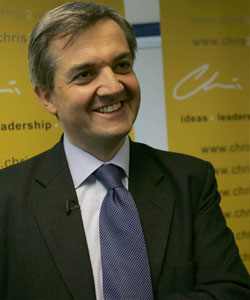
November 07: Chris Huhne interview


This article was first published on 10th November 2007. Nick Clegg beat Chris Huhne to become the Lib Dem leader on 18th December 2007 by just 511 votes and appointed his rival as the party's Home Affairs spokesman.


Much has been made in these first few weeks of the race to become leader of the Liberal Democrats about the similarities between the candidates.
Nick Clegg and Chris Huhne are both Westminster School-educated former MEPs with near-identical views nearly all the key issues.
Both became MPs as part of the Lib Dems strong showing in the 2005 elections. Both are English and will appeal to voters in key south and south east seats where the resurgent Tories are a major threat.
Indeed, Chris Huhne, currently his party's spokesman on environment issues, has a majority of just 568 in his Hampshire seat.
At 53, he is the more senior candidate. He ran against Sir Menzies Campbell in the last leadership election in early 2006, coming second, and is a former journalist and successful businessman.
Yet for all that his 40-year-old opponent is the favourite to win when the results are announced just before Christmas.
In an exclusive interview Chris Huhne explains why he should succeed Ming, why Sir Ian Blair must resign as Met police chief and why he is not convinced of the need for a new crime of incitement to hatred on the grounds of sexual orientation.
How's the campaign going?
Not bad. I mean we're picking up. I think we're getting there slowly. I always thought we'd have a nice long campaign.
And you've been through it before of course.
And I've been through it before so I know about pacing ourselves which is quite important.
How soon after Ming resigned were you up and running the campaign?
Well it took a bit of time because really weren't expecting it at all actually and so...
Because your rival had a website up very quickly.
Well I'm told that. I don't know whether Nick had managed through foresight or whatever be preparing anything but certainly we weren't expecting it.
I was very determined that there would be no question of a sort of Michael Portillo phone line moment, so we didn't do anything before the resignation.
Many people are disengaged in politics because they think the main parties are quite timid in the way that they react to things like the environmental challenges. Do you think the place for your party to be is the radical party?
Well it is. I think the absolutely key role for the Liberal Democrats is to make sure we are not just radical in the sense of putting forward radical proposals on climate change for example, although we are, but actually we're the only party that's in favour of changing the whole system.
That's a really fundamental message because the pool of votes which we should be able to attract in are those 40% of people who aren't voting at all.
If we can somehow energise and give back a sense of trust and faith in the political process to those people, we can enormously increase the number of people who vote Liberal Democrat.
Half the population describes themselves as liberal and so we've got potentially a great pool to draw from but we're not getting our message across effectively.
Are you talking about changing the electoral system through proportional representation and localism?
Well I mean the whole constitution. Localism and proportional representation are the two key things. You've got to get power back to the people for them to understand that actually they can influence their own lives and the communities they live in.
And so localism is absolutely essential but obviously you also need fair votes, every vote has to count wherever you come from.
This is an area where the Tories have quite effectively come onto your ground, talking about localism returning, returning power down to as local a level as possible.
With proportional representation, don't you think that a coalition with either of the other main parties is the only way that you're going to achieve it?
You can get proportional representation either through winning an overall majority itself and then giving it away by introducing proportional representation or you can do it through cooperation with other parties.
I don't know which one of those will come but we have to be prepared for either and be very ambitious about the party.
Ming very clearly said it would be a precondition for him before he would consider any kind of coalition. Would that be your policy?
Well I wouldn't use the word precondition, I see it as slightly differently. I would say that actually any party leader who seriously wants to talk about partnership politics has to think through the political consequences of that and the system that we work in.
You can't have partnership politics if you have an electoral system that means very small shifts of votes can suddenly lead to casino-like effect on different parties.
You can't have partnership politics either if the Prime Minister of the partnership government is able to call an election at whatever time, potentially therefore putting a coalition partner at serious danger.
Inevitably if you begin to think of what is necessary for partnership politics you begin to think through the consequences of changing the system.
The system we have at the moment, first past the post, is designed to victimise partnership politics, it is designed to extrude it from the political process and have nothing to do with it. So we've got to change that.
But you won't use the word precondition?
I won't use precondition simply because it's not a bargaining chip. It's actually whether you're on the right wavelength. I mean it's even more fundamental than a precondition.
It's just basically, if you really want to have a partnership in normal times as opposed to a national emergency like war, then do you understand what the consequences are for the system?
In your 2005 manifesto the Lib Dems said they will make homophobic incitement an offence on the same basis as inciting racial hatred. Is that your position?
No, I'm very supportive on that and I very much like the work that Steven Williams has been doing on homophobic bullying in schools, and appointing a bullying mentor, I think that makes a lot of sense.
But on the specific issue of incitement - the Tories aren't sure what they're going to do about it. Jack Straw's very keen on it. I was wondering as a candidate for leader, what's your view is on this specific provision?
Well I think that incitement for any violence is frankly it's already illegal. I'm not sure that taking in a further offence adds an awful lot.
But if it's necessary to do that then I'm up for it because I think frankly, you know incitement to violence, incitement to hatred and therefore potentially to violence is extremely dangerous.
I think it's quite similar to racial hatred in the sense that people cannot choose their sexuality and therefore it is innate. I think where you draw the line is on those issues where you can't, where you don't want to chill free speech on issues.
Where people can makes decisions legitimately about what they're saying and doing. I wouldn't want to go so far as to act as an obstacle in the law to freedom of speech but I would want to protect people who are targeted because of race or sexual orientation, anything which is an innate part of their character.
So would you say you're open to the argument?
Yes.
Jack Straw and the Labour government whenever they talk about this piece of legislation, constantly talk about it sending a message and it being a gesture. I was wondering what you felt about that given that the Lib Dems have always been critical of how many new laws we have.
In general I'm not in favour of using the legislative process to send messages. I mean I think there is a role for the government of making it clear, I don't know if you have to pass a law to do so.
But there is a role for government clearly in making it clear what is acceptable and civilised behaviour and what isn't.
I look with consternation at the fact that we have 3400 new criminal offences since 1997 and you know many of them are frankly completely redundant because they merely repeat things which were already illegal.
I just don't see the point of them other than as a press release.
It seems an awful odd way of going about attracting press attention to limber up the Treasury solicitor into coming up with yet another draft bill on something or other.
Are you the nasty party now?
No, of course not. Nobody in their right mind would spend a lifetime in Liberal Democrat politics unless they cared passionately about the values that we put forward about fairness, about the green future for our society, about decentralisation, about civil liberties.
Having been active in our politics since the early 1980s, having been through periods when our poll ratings were so low that it was within the margin of error and one pollster actually just had an asterisk because they couldn't find any Liberal Democrat supporters at all, it's astonishing to suggest that we are the nasty party because we are in any way motivated other than by belief in our values.
You mention the 1980s there and that leads me onto your reputation, your City days when you were a petrolhead. How much of that is true?
Well I wasn't a petrolhead. I mean I had a...
Tell us what cars you had.
I actually...
It's nothing to be ashamed of Chris, everyone was doing it in the 1980s.
The truth is that I started getting interested in global warming as an issue in the late 80s and I wrote columns in The Guardian about it and then in The Independent.
I also wrote a book called Real World Economics in 1990 which talks about global warming as being one of the greatest threats that we face.
But in terms of personal behaviour you still have to make ridiculous compromises. I mean I still fly around and buy my offset because we're in an economy which is in a process of transition.
All that stuff about cars is frankly nonsense, because I had a company car when I went to The Independent, which was a standard issue BMW.
I didn't have any choice about it, I actually a nice Alfa Romeo is what I really wanted, but they said I had to have a BMW because of the resale value.
It's something that the press obviously enjoy talking about. It leads me onto something else. You remember the 1980s and you were a professional by that decade already. Nick Clegg and David Cameron were still at school.
Age was an issue in Ming‘s resignation. Are you not worried that you might be a bit too old? You know, you're as old as Gordon Brown, you're a good 15 years older than...
13 years older than Nick. I am 13 years older than Nick. That's obviously up to people to decide in the leadership contest.
I am very lucky in that I look younger than I am. I am very energetic, I'm very fit, I usually leave anybody with me panting after running up the stairs so I don't think I have any problems with energy levels and I wouldn't undertake this job if I didn't think that I was able to lead the party very vigorously.
I also think that the background of having been in business and having built up a business and employed people and created wealth and having 19 years in journalism is, actually has some advantages.
A lot of people want, crave these days authenticity in politics and one thing which is tremendously suspicious for many voters is the fact that people come into politics at a very young age without any experience of the real world.
They're not necessarily on the same wavelength as most voters and they don't necessarily understand the same sort of concerns, the insecurities that people have to face in the normal working environment.
I do, I've been there, I've done that, I've bought the T-shirt and I think that that's actually, particularly against both David Cameron and Gordon Brown, quite an important point. David Cameron's only spent four years outside the Westminster bubble in his life, when he was working as a PR advisor for Michael Green at Carlton.
And Gordon Brown similarly, similar period when he was a researcher on Scottish telly. So, I think that's actually quite a strength.
Well as you've said you have experience running an organisation, you've had experience running a business. With the Met police what's your view on their chief executive? Do you think Sir Ian Blair should resign?
It seems to me that it's pretty inevitable, he was clearly where the buck stopped, that was the decision and I think he has to go and it does worry me actually that in a lot of government departments there is a sort of culture of impunity where people do not take responsibility for their own mistakes.
And you'd expect that same high standard across the board from all your Liberal Democrat ministers and ministers in other administrations such as Scotland?
Yes, I think you do. If somebody's responsible for a really crass error, the signal you send out if you leave them in post is that it doesn't matter making crass errors and so you're actually inviting people in future to make the same sort of mistake as there's no problem from their point of view if they do.
You're a former MEP. One of the things that we report on regularly are countries who have joined the EU but don't seemed to have fully understood their social responsibilities towards gay people.What can we do about that?
The role of the EU in instilling liberal values into central and eastern European transition countries has been absolutely crucial.
I can remember people saying we only need the EU for peacekeeping, mainly for the environment, global warming.
I can remember when I was doing country risk work the Prime Minister of Slovakia set out in a very brutally nationalist way to persecute the Hungarian-speaking minority in Slovakia - 440,000 people.
He even went so far as to change the local government boundaries, to put them in minorities, to remove the right to educate their children in Hungarian and so forth.
And frankly if he had gone on, it would be almost inconceivable that the Hungarian state next door to Slovakia would not have had to intervene because of the political pressures on them.
You could easily have had an appalling mess like Bosnia and Serbia and Croatia. So, the EU response was you go ahead and do that and you'll no longer be entitled to join the EU, this is not acceptable behaviour, it was very firm and it stopped it.
We need through that gradual process of trying to send very clear signals, grading them obviously depending on what is acceptable behaviour in a civilised liberal democratic state and what isn't.
One of the most moving things of my entire career was going and visiting all of the central and eastern European countries when they first came to the capital markets in the 1990s and giving them ratings.
I realised just how much they wanted to be a part of the European democratic family and all that meant. And you know, particularly somewhere like Lithuanian or Latvia or Estonia, which had been gobbled up by the Soviet Union after their very brief moment of independence and suddenly actually becoming a country which is able to have their parliament and traditions and so forth, it's actually very moving.
And I think it doesn't take very much to move them on. I mean in the case of Poland I think it's also a thing you have to remember which makes it a rather special case.
Poland as a state didn't exist from the partition at the end of the 18th century between Russia and the Hapsburgs and the Prussians right the way through until after the First World War.
The institution that became the vehicle for Poland's cultural identity was the church.It was terribly important in preserving the cultural identity but a certain amount of baggage went with it.
And the baggage is taking a little bit of time to shed. But some of the more staid and conventional attitudes, traditional attitudes towards gays, follow ineluctably from some of that history. It will work its way out. And we don't need to speed it up.
Are you going to change the name of the party?
No, well I have no intention of changing it. I'm a social liberal and that means, I came through the SDP but in fact my history in terms of my family, my grandfather couldn't be more liberal.
He was named William Ewart Gladstone Murray, so you could imagine the kind of family he was born into.
If he wants it will there be a place for Ming on your front bench?
Oh absolutely, we are enormously indebted to Ming for stabilising the party and to making sure that we are getting more professional with the policy and with the organisation and he has a fantastic amount, I think, still to bring.
He was very hard done by, by the press in particular. There is undoubtedly an element of ageism in the whole attitude towards Ming and I said the same about Charles.
One of the things which I think any leader of the party must feel is that we have an enormous amount of talent within the Parliamentary party, we've got plenty enough talent to run a government in my view, and we need to be much more ambitious.
We're not going to take any nonsense, any condescension about the Liberal Democrats because we've actually got a fantastic front bench with a talent that we've got, Ming and Charles, all the other, Nick, Vince, all the other talent, David Laws.
We've got fantastic talent on the front bench and we can run a government. We should not hide our light under a bushel, we need to get out there and persuade people.


http://www.pinknews.co.uk/news/opinion/2005-6006.html

October 07: Michael Gove on homophobic bullying


While many in David Cameron's Conservatives are recent converts to gay equality, including Cameron himself, there are a few who spoke out long before it was fashionable.

The Shadow Secretary of State for Children, Schools and Families, Michael Gove, was urging the party to break with the past long before he took his place in the House of Commons.

Elected in 2005 to represent the true-blue constituency of Surrey Heath, Gove is a clever, articulate Scot, a former Times journalist and new Tory through and through. He used to share a flat with prominent gays Ivan Massow and Nick Boles, and during his time as a columnist he spoke out in favour of gay equality and even praised Will & Grace.

"Sexuality is incapable of being swayed by "promotion" in schools," was his common sense take on the hated Section 28 in 2003, when the Tories were still supporting it.

"You can no more "promote" the idea of becoming gay to a testosterone-fuelled, Key Stage 4-taking, FHM-reading, Jordan-ogling male teenager than you could have persuaded the young Graham Norton to make an honest woman of Ann Widdecombe," he continued.

"The intractability of your sexual orientation, and the folly of trying to change it to fit in with social pressure, forms one of the running gags in Channel Four's marvellous comedy Will and Grace.

"As the title itself prompts us to realise, your sexuality is not a simple matter of free will. It is something beyond your power to effect. Like the operation of divine grace."

The party, under the quietly suicidal leadership of Iain Duncan Smith and later the spine-chilling Michael Howard, continued to wear prejudice against gay people almost as a badge of honour until the arrival of David Cameron.

Gove, who is married with two small children, has risen quickly through the ranks since becoming an MP, making a name for himself as a quick-minded debater and as someone skilled at making simple statements about complex ideas.

Just before the summer, the first major ideological crisis for the "new" Tories was over grammar schools. The party's then-Education spokesman David "two brains" Willetts made a complete hash of explaining policy, seemingly announcing that the Tories no longer supported them, angering many.

Willetts was moved sideways at the first opportunity and replaced by Gove. At 40, he is a central figure in the Notting Hill set that surrounds Cameron.

He was promoted to the frontbench as soon as Cameron became leader, and in July was promoted to the Shadow Cabinet, one of a handful from the new intake at the top table.

He shadows Ed Balls, the Secretary of State for Children, Schools and Families, and has been a vocal supporter of new guidelines aimed at tackling homophobic bullying in schools.

I spoke to him about faith schools, the importance of sex education, double standards at the BBC and what age to start teaching kids about gay relationships.

What was it that spurred you to give the new guidance on homophobic bullying such a strong endorsement?

Michael Gove: The first thing is that bullying for all is a significant problem, a growing challenge, and it reflects some of the weaknesses, the broader weaknesses and challenges that society faces overall.

Two things I think reflect the way society has changed, and has shown up in the way bullying manifests itself, and that is as Britain has become more multi-ethnic and more multi-cultural, there is a real danger that there is a racially prejudiced tinge or a culturally prejudiced tinge to bullying.

I think that people are rightly aware of that, though as ever the government has a role to play in disseminating guidance, which helps people deal with some of the cultural challenges.

The other thing that's a related challenge is that as society has grown up and become better able to deal with sexual diversity, there are still taboos to be tackled and difficulties that need to be dealt with when it comes to adolescent sexuality.

In particular I think it's the case that society is still finding it difficult to work out how to deal with young people below the age of consent who are attempting to deal with a sexual orientation that is not the majority orientation.

That requires some sensitive handling.

You can't pay attention to popular culture and what's happened in the last ten years without being aware of a nasty edge to bullying and intimidation and sometimes it can have a homophobic element to it.

Many of us will remember the controversy around Chris Moyles, the Radio 1 DJ.

I myself do not believe that Moyles meant to be malicious. I'm sure that he regards himself as an equal opportunities tease, as it were, but what he's doing is picking up on the fact that 'gay' as a word has been used to intimidate in a pejorative sense, and without having to go into details about language, there are other examples of that. It's a complicated area.

I wanted to pick up on racial bullying. There are actually legal requirements surrounding racial bullying - schools are legally required to record it and the authorities are required to deal with it.

Homophobic bulling just gets 'guidance,' which is voluntary. One of the concerns about guidance is that at present 75% of gay and lesbian pupils at faith schools are bullied.

A much higher figure than in other schools. I want to know how you feel it is going to be possible to present guidelines to a Roman Catholic school or a Muslim school, when clearly they have views that are going to clash with that.

Well it is going to be tough, it is going to be a challenge because I support faith schools. I also support the right of individuals to believe, if they wish to, that homosexual behaviour is a sin.

The basic nature, the basic compact of British society is that you can believe what you like. But schools, if they are funded by the state, have to be a prejudice-free zone, they have to be zones where you respect the moral and ethical codes of the great religions, but it's also the case that there are basic minimum standards that have to be upheld.

That means when it comes to the treatment of women or to the treatment of anyone who might have a different sexual orientation from the majority, or from that prescribed as "optimal" by the faith, they have to show they are sensitive to those needs and respectful of them.

Now, I am not in a position to speak definitively about how you can negotiate those boundaries, but the one thing that I'm clear about is that there's a compact.

Faith schools have an ethos that's influenced by their faith and they have the right to insist that when it comes to appointments, people subscribe not just to the ethos but also to the religion.

They can be clear about what they consider to be the highest ethical standards, but at the same time they have to also be clear that if there are examples of behaviour which are prejudiced or intimidatory, based on someone's sexual orientation or their gender or their cultural background, then that's unacceptable.

The contract that comes if you're state-funded.

Exactly, and as I say these are uniquely sensitive areas because the contract at the heart of British society preserves the right equally of a fundamentalist Muslim preacher to hold certain views and of a militant atheist to hold his views and we have to hold the line between them but with institutions like schools have that challenge to respect both.

What the faith expects and also what society expects.

What part does sex education play here? Surely it is a mechanism by which ignorance can be defeated?

Yes, I think that one of the things I am cautious about is prescribing in detail every aspect of the curriculum. I think that teachers find that a great deal of prescription, often very well meaning, constricts their freedom to teach in the appropriate way.

I think that what you need is a light-touch curriculum, clear boundaries, proper inspection from Ofsted, and that can provide the groundwork.

Of course sex education and the other things that the curriculum has, such as PSHE, which is this broader menu of teaching, which covers personal and sexual developmental and health issues - there are things which can be taught there.

There are also things that can be taught in citizenship, so that people can understand the diverse nature of Britain, why we are where we are, and the respect that we have towards people from different backgrounds and who follow different lifestyles.

So you think they should be teaching civil partnerships in citizenship classes?

Well the key thing is that I wouldn't prescribe a particular model of teaching these things.

But I do think that one of the things is that sex education is there first to provide young people with an understanding of human biology and also to provide them with the tools and the knowledge to be more aware of their own bodies and the risks they can run.

A good school will teach children to respect themselves and their own bodies. Not just through sex education but generally through the way in which discipline is enforced, the way in which boundaries are set.

Doesn't that mean that faith schools can just not teach civil partnerships and not teach homosexuality as an acceptable thing or even mention it, a Roman Catholic school doesn't have to teach that...

You are quite understandably trying to draw me in to prescribing the curriculum. There are certain minimum standards that one should have ....

Isn't why civil partnerships exist a key part of citizenship?

I think that there are a variety of issues here. I believe that Britain is a better, healthier and a more advanced society because we deal with discrimination on the basis of gender and sexual orientation, and civil partnerships are part of that.

But I also recognise that British society is a delicate contract. I recognise that in order for diversity to work you've got to be firm and clear about what is acceptable.

You've also got to be open to negotiation with minority groups about their beliefs. More broadly, with the curriculum, it is also clear in my mind that there should certain things that we expect, but how schools achieve them should be up to them. Because to specify that a Roman Catholic school should teach precisely this set of ethics in this way in order to ....

This is not an ethics issue, this is a citizenship issue.

We have two forms of commitment in this country, marriage and civil partnerships, this is not a moral issue.

It is one of the basic things - if you are going to teach them about how to be good citizens, how to vote, what voting is about, but you are not going to mention that we should be proud of the fact that we have created civil partnerships, the most important legal contract that two people can have ....

You are inviting me to re-write the curriculum ...

I'm asking you whether it's something that you think should be taught in every school.

You're inviting me to step into an issue which I don't want to step into in the way in which you're inviting me.

Would you hope that it's something that every school would teach?

Again you're inviting me to .... look - the key thing is, I respect the autonomy. I'm a believer in both choice and autonomy.

I have clear views, but I do not believe that it is right for me to use the education system to impose my views in every area. Both as an individual and as a politician I think that civil partnerships are a good thing.

But it is important that I do not use the curriculum as a way of advancing these things. People should develop in education a practical tool to be able to engage with these issues so that they can then challenge prejudices and ethical positions.

I know you have only been in parliament since 2005, but that's a massive change from your party's position in 1988, when you were stomping round telling local authorities what books they could and could not take into their schools, and telling them that homosexuality under no circumstances was to be "promoted."

I personally am on the record saying that I thought that Section 28 was a foolish piece of legislation.

Do you understand the point about the chilling effect across the education system, to the extent that teachers would not know how to react to gay pupils and did not know how to help them?

I completely understand the effect that it had. One of the reasons why there is the religious hatred legislation in the form which it was brought before us is precisely because they believed that it would have that chilling effect.

That even though Salman Rushdie might not have been prosecuted under that legislation, the publishers might have felt that it was inappropriate. And so I entirely understand that.

I also think that as well the chilling effect there's a direct link between an environment in which Section 28 was part of legislation and the fear that adolescents and children may have had in discussing questions of their sexuality, their lack of confidence, their concern, their worry, with an appropriate authority figure, so yes I do.

I also understand why people with traditional ethical and religious views wanted to ensure that they were able to choose schools which reflected their value system and I think that it's important that we respect that right.

I'm one of those people who takes a view of sexual diversity which is different from traditional religious teachings, but I respect what those traditional religious teachings bring to the country.

What age do you think it's appropriate to learn about same-sex couples? Is it appropriate at primary school age?

Because the sexual development of young people has become a heavily fought-over area, the one thing I'm anxious to do is strike an appropriate balance between ensuring that children who either come from non-typical backgrounds or are developing in a particular way are given support and protection.

But I also think it's appropriate to recognise that there are many parents who are worried about the premature introduction of sexualisation, not just into the classroom but into their children's lives.

I think that there is an issue, everything from the way in which children's fashion is marketed, the way in which make-up is marketed to girls, to the way in which even for young boys, children's fashion and certain roles are assigned, which are encouraging children to grow up more quickly.

I absolutely share the concern that parents have and I think that while it is important that we counter prejudice, it's also important that we recognise that it is quite right for parents to say, "I want my children to be protected from some of the inevitable complexities of adolescent life for as long as possible, I want them to enjoy and cherish their innocence away from the premature drive towards introducing that sexual element into their lives."

As a social element rather than a sexual element, there is what is called the BBC test. When a footballer gets married, (Children's BBC news programme) Newsround can't shut up about it.

When Elton John or John Barrowman from Torchwood gets 'married,' they couldn't possibly mention it because it has moved away from being a social thing to a sexual thing.

I appreciate that and I think one of the things is that society is moving and has moved in a way which is much more understanding of sexual diversity.

The fact is that over time we are becoming more and more relaxed about these situations, but it's also important that in human relations there's always a desire to lay down hard and fast rules.

Sensitivity is required. There are people, to move it into a different area, there are people, particularly older people, who are not racist, but whose discourse and conversation wouldn't pass muster as being as respectful of difference as they should be.

If people can be offended, in particular, as I say, by older people who use a form of language which is inappropriate, I would say that rather than getting on your high horse about it, one should just recognise that there is a difference between the use of inappropriate and insensitive language and active prejudice.

And most of us know when we see it. In the same way I think that it's appropriate to recognise that when institutions are being well meaning and respectful, or when there's an extra edge to it, it's incumbent on all of us to use our judgement.

I am in the fortunate position of not having been a victim of prejudice, and not having had to go through the travails that people whose sexuality has been a source of prejudice have had to.

So it's relatively easy for me to say you should be a bit more relaxed about it, because I haven't been in the firing line, but the one thing that I would say is that it's important that we as a society develop that sense of being prepared to acknowledge that if things are broadly moving in the right direction, that's a good thing and patience can be a virtue as well.

Has having gay friends helped with you with that process of understanding?

Yes absolutely. I wouldn't say that I was anything other than broadly typical of my generation. I was part of a generation that at university it was natural and normal to have gay friends and I had friends, both gay men and lesbians, coming out at the time.

Therefore I'm part of a generation that finds it difficult to understand many of the arguments that were being made by people older than us against equality.

But at the same time one of the things that I've always tried to do, it doesn't apply in every area, but one of the things that I've always tried to do is understand if people are generally well meaning but they appear to have a prejudice or a block in one particular area it is sometimes appropriate to give them the benefit of the doubt.

I think that would mark me out from some others.


October 07 - Trevor Phillips on the Equality and Human Rights Commission


Trevor Phillips meets me in an office he has just moved into. The L-shaped sofa came from his own home; his framed Martin Luther King montage sits on the floor waiting to be hung. A small silver bust of Lenin on his desk catches my eye.
The new public body of which he is chairman, the Equality and Human Rights Commission, only came into being a few days before we met. There are boxes everywhere, as staff from the Commissions for Racial Equality, Equal Opportunities and Disability Rights, along with some new faces, move in.
Phillips' office, at the end of an open-plan room, has a fine view of London's City Hall, with the Tower and the City itself in the background. As we discuss the new commission, I cannot help but wonder if Ken Livingstone can see into the EHRC offices from his mayoral lair in the distinctive building on the banks of the Thames known to its detractors as The Testicle.
Ken is not a fan of Phillips. The two clashed bitterly over comments that Phillips, a former journalist, LWT executive and TV presenter made about the failure of multiculturalism. While waiting in reception, as builders and maintenance people trudged in and out, I noticed that I was not, in fact, visiting the Commission for Equality and Human Rights, but the Equality and Human Rights Commission. Could the scores of stories I had written in the past year about the new CEHR all be wrong?
Being a stickler for a correct acronym, I tackled the CEHR vs. EHRC issue first. Phillips assures me that all references to the CEHR were correct - that is the name of the institution in the Parliamentary Act that created it. The change of name was meant to change the emphasis, he explains.
"We want people to concentrate not so much on the bureaucratic institution but more on what we do.
"It's basically a trivial thing but I think it's important when people talk about us to talk about the Equality and Human Rights Commission, because nobody cares if we're a commission, or a council, or a commune.
"It wasn't something that we spent a great deal of energy on, in a way, because it's pretty obvious."
With the name sorted, the next thing to consider is how this commission is going to operate. MPs have fretted over whether the EHRC is properly funded. Gay rights advocates complain that the commission's responsibilities for gender, race, age, religious and disability discrimination will leave sexual orientation as an after-thought.
Trans activists are annoyed that their needs are seemingly not addressed by the EHRC, while disabled gays complain that the needs of "multiple identity" people are bound to get squeezed out by the more established concerns of the so-called legacy commissions.
Phillips is keen to stress that the first days, weeks and months of the EHRC are about listening and learning.
"We are inheriting a lot from the existing commissions and we don't want to pretend like we're the new thing, like we've discovered everything, and that everything that happened before wasn't any good.
"Bearing in mind though as a commission we're going into completely new ground.
"For example, Stonewall is ahead of us. We're going to depend a lot on them to guide us.
"Secondly, before you start boasting about how wonderful you are I think it's a good idea to make sure that the phone's working.
"So first priority is to establish the organisation as a credible, effective source of guidance and so on before we start sending up fireworks.
"I think it would be arrogant to suppose that our staff, most of whom have come from the legacy commissions, have the level of expertise, subtlety and sophistication about the new strands of religion and sexual orientation as they have about race, gender and disability."
The first serious challenge for Phillips and EHRC is the new Single Equality Act. He calls the government's Green paper "rather timid" and it is up to the commission to ensure there is equality of protection for not just all groups but all citizens.
"If your great Equality Bill is about letting people buy drinks at the golf club bar, excuse me, but don't waste my time.
"Happily I think the new ministers have a greater and deeper ambition - Harriet Harman has been completely clear about this - we think that actually the opportunity of the Equality Bill should be more than to deal with some really specific situations.
"What it should do, rather like the Human Rights Act, is to enshrine certain values in British law.
"The value we think, since Gordon Brown wants to have a new constitutional settlement, of the Equality Act, is to say the that number one plank of a new constitutional settlement in this country, is for greater equality."
In the preparations for the EHRC, the word "strands" came up constantly. The commission is tasked with enforcing equality legislation on age, disability, gender, race, religion or belief, sexual orientation and transgender status, and promote human rights.
Phillips emphasises the human rights aspect of the commission's mission.
"The whole point is not to think of us as an organisation of six joined-up bits which are somehow under the same roof.
"We're interested in all kinds of discrimination and inequality, even if it doesn't involve any specifics in the legislation.
"For example, we've become very interested in the issue of carers, but obviously the six protected groups are going to be our priority because that is what is in the law and what we have to deal with."
On trans rights, he points out that the EHRC is committed to advancing the rights of all and the commission must listen and learn from the people who know the problems and challenges.
"I have to say, working with (trans activist) Christine Burns has taught me a hell of a lot. I mean, just being around her.
"To be completely blunt about it, given the background that I come from, a Methodist Caribbean family and all the rest of it, someone like Christine is way out of my ken, frankly, but actually it just goes to show the most important thing, the most persuasive thing for people, is to meet people. Real people."
Phillips was a controversial choice to head the EHRC. He has been outspoken on the failures of multiculturalism, of which he had been a vocal supporter, during his time as head of the Commission for Racial Equality. His talent for generating headlines is undeniable.
Born in London on New Year's Eve 1953, of Guyanan parents, he went to secondary school in Georgetown, Guyana and returned to the UK to study chemistry at Imperial College London.He became involved with left-wing politics, ultimately being elected President of the National Union of Students in 1978.
A distinguished career in television followed. At London Weekend Television he rose from a researcher to Head of Current Affairs as well as presenting The London Programme and documentaries. Close to Tony Blair and a passionate believer in the New Labour project, he left TV to return to politics, being elected to the London Assembly in 2000. He was its chair until he resigned in 2003 to take charge of the CRE.
After three years in the job he warned that the UK is "sleepwalking into segregation" because of the accepted wisdom of multiculturalism.
The response was suitably inflammatory – Ken Livingstone accused him of pandering to the right.
"When he was appointed to run the CRE, it did an awful lot of work taking up genuine cases," London's Mayor told the BBC. "What he did was turn it into a vast press department and wound down all the legal work.
"Ever since then he's gone so far over to the other side that I expect soon he’ll be joining the BNP."
His first controversy as head of the new commission came before they even opened for business.
He caused outrage among traditional historians with his comments about recalibrating British history to better reflect the contribution of ethnic minorities.
"When we talk about the Armada, it is only now that we are beginning to realise that part of it is Muslims - actually it was the Turks who saved us because they held the Armada for a few weeks, on the request of Elizabeth I," he told a Labour party conference fringe event.
"Let's rewrite that story, let's use our heritage to rewrite that story so that it is truly inclusive."So that we have an identity which brings us together and binds us in the stormy times we’re going to have."
Phillips response to the criticism is characteristically unapologetic.
"Besides the fact that black men shouldn't have much to say about English history because what do I know? I can't read the English language, my ancestors were nothing to do with the English Empire. Oops, never mind, they were slaves."
Phillips asserts that he merely "calls it as I see it.
"I would say to my colleagues when I'm chair of something, the only qualification I would expect from anybody else is whatever else they're doing in the organisation they're better at it than me.
"So we've got a fantastic leadership team all of whom are better at corporate management, policy or law than I am. My job is to lead the team. Controversial?
"That's what you have to decide with these kinds of jobs. Whether to put these things politely where nobody can hear them, or the truth spoken as the truth.
"I think the value of having a chair who is prepared to deal with difficult subjects and dilemmas is that people will know that the organisation is honest.
"The fact is that we deal with the most explosive territory in British public life, other than perhaps war.
"There are questions which we will keep bothering people about, for example now we can read people's genetic material.
"What are we going to say when insurance companies say they ought to be able to load somebody's premium for a condition that they are predisposed to get, but may not get later in life?
"To me that's an equality issue. These are big moral questions and to dance around them as though there weren't a decision to be taken around them I think is dishonest."
DNA testing, carers, trans rights – no one could say that Phillips lacks ambition for the EHRC.
But the lesbian, gay, bisexual and trans communities want protection and there is considerable concern that sexual orientation and gender identity will come a poor second to race and disability. What can we expect from the commission?
"I think the priority is, because we've discussed this as commissioners, we think that in the first year we have to put a big push on hate crime and on bullying, which I think is related to this issue on sexual orientation.
"There are many things which are important, but the thing which matters most for gay and transgender people is to be able to be safe and that means we have to get a focus on hate crime and make sure the police and local authorities know what they're doing and that people are protected."
The CEHR exists to serve the public, and has a helpline and offers advice through its website.
Will it, like its legacy commissions, be taking forward test cases? What can a gay complainant expect from them?
"You would expect exactly the same response that anybody that comes to us with a complaint of discrimination under any of the anti-discrimination legislation.
"So as far as the complaints issue and dealing with the individuals concerned I think we've got the service out there, the website where they can get information, we will take the calls, and if we think the case if meritorious then we will take the case.
"A lot of people who were anxious about the commission talked about the case work and all the rest of it.
"I understand why they're anxious about that and I want to make it absolutely clear we are not going to resile from supporting legal case.
"But people need to know that going through a case of discrimination when you are the victim, it's not a laugh.
"It's hard on you; it's hard on your family. In the workplace you may end up winning but none of your workmates may talk to you.
"Rather than put people through that I would rather people prevent it from happening.
"My point is, the reason we are here is because we don't want to have people to be heroes in order to tackle discrimination. It's our job to try and prevent that."
For all the talk of equal rights for all, the much-praised Sexual Orientation Regulations are civil and not criminal prohibitions.
Any determined Christian business owner is free to discriminate as much as he likes, and the worst he will suffer is a fine.
Phillips, unsurprisingly, does not share my pessimistic analysis."First of all it's better to have the legislation than not have it. Secondly, any piece of legislation is only as creative as those who use it can be.
"Let’s say you're broadly right about contempt and fines and so on.
"I think that in the arena of gay bashing or slurs in the workplace, what fine a court may hand down is important, but what is more important to people is being shamed and we will do our best to shame anybody.
"Let me put it as crudely as I can do it as a public official. If somebody is guilty of discrimination of any kind, and with sexual orientation we usually know what it's about with sneering and contempt and all the rest of it, we want them not to be just be punished by the court but frankly to feel the contempt and hatred that they have visited on other people.
"They can argue what they like, but there's a law now and frankly if these people want generally to pose as they often do as the decent and moral people in the community, perhaps they should remember that the first elements of decency in a liberal democracy is the rule of law.
"As far as I'm concerned there isn't a conflict here.
"There is a law. Your faith does not protect you. I understand what you are asking me but to be perfectly honest I haven't got time for it. If people want to use in my view, the mantle of faith to be bigots, I'm not buying it."
Toward the end of our meeting Phillips mentions two friends who are gay – former BP boss John Browne, who had to step down after he lied in court about where he met his ex-boyfriend, and EU Commissioner Peter Mandelson, who was outed on national TV by a journalist.
"The fundamental reason for us being here is this. We are more diverse of a society as we have been before both objectively and subjectively.
"What I mean subjectively is, speaking specific to your readers, we are no longer in a time when it is OK and accepted that you should be quiet about your sexual orientation. We've seen how grotesque that can be.
"I have two friends who have been in public life in various ways, John Browne and Peter Mandelson. I have seen how quite incredibly difficult and cruel the suppression of identity can be.
"This is true when people were disabled when I was a kid.
"Disabled children didn't exist because they were invisible. We're in a society where that no longer is right or respectable, although over in the City the latest survey shows that a minority of people will admit to being lesbian or gay and let their colleagues know about it.
"It's our job to let the light in on all that and let it be OK to be different."

September 07 - Boris Johnson interview


At this time of this interview Boris was one of the four Tories vying to become the party candidate for Mayor of London. He won the selection on 27th September 2007. The election for Mayor of London will be held on May 1st 2008.


When I meet Boris Johnson in a Westminster cafe it becomes apparent, immediately after he shambles in and launches himself into a chair, that 10am is not optimum Boris time.

As he puts it in his diary of the 2001 election campaign, Friends, Voters, Countrymen, it is "a pretty ungodly hour for someone accustomed to journalism."

The interview had been in the pipeline well before Labour activists started taking swipes at him over his views on everything from civil partnerships to climate change.

In fact, the day after Boris announced his candidacy amid chaotic scenes outside City Hall several weeks ago, his press officer enthusiastically agreed to an interview with PinkNews.co.uk

The month of August intervened, and when we finally sit down to talk about his views on gays and gay issues, he has been roundly condemned as hostile to the LGBT community by left-wing groups nervous about his bid for the Conservative party nomination for Mayor of London.

In many ways he is reminiscent of Michael Foot - sartorially shambolic, though the suits have got better - and the general impression of not really caring about bourgeois concerns like neatness.

In the words of one critic, he looks like he has to keep a pitchfork in his back pocket to deal with his straw-coloured mess of hair.

He also has that vagueness that Foot possessed.

Many of Boris' stream of consciousness responses trail off or come to a sudden stop, but there is an impressive intelligence to his answers. One thing is for certain - he is not afraid to question measures that some gay people take as an article of faith - a new law of incitement to homophobic hatred among them.

43-year-old Boris - the 'Johnson' seems somehow redundant - is one of four candidates for the Conservative party nomination for Mayor of London. Andrew Boff, an IT consultant and publisher, joins Kensington & Chelsea councillors Warwick Lightfoot and Victoria Borwick in the contest, which has been opened up to the public for the first time.

All Londoners on the electoral register are eligible to vote by phone or postal ballot.

This "open primary" of voters closes on 26th September and the Tory candidate will be announced soon after. Boris, the clear front-runner, stakes out his message to London's gay community pretty clearly - he is a libertarian.

He thinks Section 28 was a bad idea, he voted in favour of civil partnerships and he will "fight against" homophobic attacks. That probably means he will attempt to use his powers to combat them, but could just as easily mean he will pile in, head first, to bash the homophobes himself.

That's the thing about Boris. He claims he is always being misinterpreted.

The many hundreds of articles he wrote in his years as a rightwing journalist and columnist do give his opponents easy pickings, he admits.

"I am on record with loads of provocative articles about loads of things, but if you take the article as a whole, they always amount to robust common sense," he claims.

He laments the tactics of Labour activists, who have pre-empted even his selection as Tory candidate by producing a 17-page document highlighting a range of those provocative statements from his pre-2001 journalism.

One quote in particular, taken from his 2001 book Friends, Voters, Countrymen, has angered and upset many gay people:

"If gay marriage was OK - and I was uncertain on the issue - then I saw no reason in principle why a union should not be consecrated between three men, as well as two men; or indeed three men and a dog."

This infamous passage actually refers to an incident where Boris was jogging and was verbally assaulted by "three youths."

He challenges them, they respond that they had formed a bad impression of him from a TV appearance, and he wonders if comments he once made on BBC current affairs programme Question Time (see above) were the reason they disliked him.

"What I was saying was that I am generally a libertarian," is Boris' response.

"What they are trying to do is they are trying to invent a character or create a turnip ghost, a kind of scarecrow figure they can attack because its much more convenient to have some sort of crypto-fascist, foam-flecked, Norman Tebbit-type Tory instead of me.

"They have gone back through thousands of articles, millions of words, to try to find a few phrases that they can take out of context to demonstrate I am something that I am not."

But clearly comparing a loving gay relationship with "three men and a dog" is in any context insulting.

He disagrees, and denies that such comments imply that civil partnerships are not equal to marriage and are instead are just a sort of contract.

"No, no, no, no, no," insists Boris. "I am genuine - I come from a family, I have Muslim ancestors, my ancestors believed in polygamy and I believe in loving relationships between all sorts of people to be valid, I really do."

He pauses for a moment, suddenly aware that he might have caused even more outrage. "I don't want to get myself into more trouble than I need to be," he adds.

"I am in favour of civil partnerships and I voted in favour of them.

"I was cycling up Shaftesbury Avenue the other day and there were two guys in a rickshaw who had just got married and they said, "Hey Boris we just got married" and it was wonderful."

On Section 28, which in fairness he did vote to repeal on one occasion, the incumbent Mayor of London, Ken Livingstone, has directly attacked his record.

"He struck a stance in support of the anti-lesbian and gay Section 28 and now wishes to be seen as supporting London's diversity," Ken said.

Again, in this race, the 'Livingstone' also feels slightly redundant.

The aforementioned 17-page report from left-leaning think tank Compass also highlighted some comments from Boris, written before he became MP for Henley in 2001 that appear to support the aims of Section 28.

"Slowly Labour is winning the battle it really cares about, the Kulturkampf, adjusting what can be said, and what cannot be said... Homosexuality is to be taught in schools." The Spectator 29 April 2000.

"I am not sure how widespread this new right-on mood really is. Metropolitan opinion was wrong-footed over Section 28." The Spectator 29 April 2000

Boris accepts the historic anger of gay people over towards the Tories over Section 28.

"I disliked all that (the way the Tories acted in the 1980s) and what I disliked about it was the way they were trying to whip up people's feeling of identification with the Tories by trying to make them hostile to another group.

"I hate all that stuff. In a way this is also my objection to the way the current incumbent is running London. It's all about trying to build up loyalty by trying to bash other groups."

I suggest that this would be a perfect opportunity to apologise to the gay community for Section 28.

Surprisingly, given that he has probably apologised more times than any other mainstream politician, he rejects this relatively easy option.

"I hate all this gesture politics. I am not convinced of the political value of endlessly apologising to absolutely everyone.

"On Section 28, what it was trying to do, what the whole argument was really about was about homophobia and tolerance.

"It wasn't really about the practicalities - it was about what you thought about it. It wasn't ideological - it was personal and I dislike it because I think all human hatreds are, when you dissect them, all irrational human hatreds are always really about your own feelings about yourself in some way.

"Anyway I think it's all bollocks and the sooner we get over it the better."

The existence of LGBT liaison officers within the police seemed to be news to Boris, but he is keen to praise the Met generally.

"I didn't know about those community support officers working specifically with the gay community but I'm in favour of safe neighbourhood teams and teams of community support officers that work with communities of all kinds.

"I think it's a fantastic way of improving everybody's sense of security on the streets of London."

Many groups, among them Stonewall, argue that attacks motivated by hatred of gay people should be covered by a new homophobic hate crime law. Boris takes a different view on the likely effects of such a law, especially on people's right to criticise homosexuality.

"Of course I want everybody to feel safe, and I deplore homophobic attacks, I think they're outrageous and disgusting and I will fight against them if I'm lucky enough to be Mayor.

"The point I'm trying to make to you is I loathe acts that encourage hatred of groups. But sometimes the very measures we take can kind of stir things up rather than produce harmony.

"What I worry about is that you have erosions in free speech that I don't think anyone in the gay community would ultimately support. We are all basically, what we want is for people to debate freely and rationally and not to succumb to bigotry."

Ken has, of course, been very vocal in his support for the gay community. Boris says that funding for Pride London will continue if he becomes Mayor ("The idea of gay Pride seems very good. Right on!") and the community generally is one he stresses his support for.

"London has a fantastic record of being attractive to gays around the world and being a place gays feel they can come and be safe and where they will have a tolerant society. That's what I want."

He even tacitly agrees that the office can be used to encourage other cities to become involved with the global struggle for gay equality, while making clear he will not have a "foreign policy" like Ken Livingstone.

"I'm not in favour of the Mayor intervening on every matter of global controversy but yeah I think there are things he can do to improve people's lives elsewhere."

A lot has been written about Alexander Boris de Pfeffel Johnson's background.

Eton and Oxford-educated, he has been close to party leader David Cameron since university.

The seemingly bumbling Boris has been editor of The Spectator, Brussels correspondent and later a columnist for the Daily Telegraph, and MP for Henley since 2001.

Michael Howard fired him from the frontbench in 2004 amid accusations he lied about his extra-marital affair with journalist Petronella Wyatt. Brought back to frontline politics by Cameron, he has proved popular as shadow higher education minister.

His many TV appearances have added to the public perception of Boris as a sort of Bertie Wooster-ish genial buffoon, but that convenient caricature conceals an ambitious political animal.

He did not bumble into a high-profile political career – indeed in his 2001 diary of his campaign for Parliament, he says he "always knew" he would become an MP.

Despite his early ambition, he smoked cannabis in his youth. Today he takes a traditional Tory line on London's established drug culture.

"I'm deeply against drugs. I loathe them. I think they destroy lives and they've changed since my last experiences of cannabis, which were a long time ago.

"I don't want the police to concentrate on rifling through the sock drawer of every student in the hope of finding a rabbit dropping of cannabis resin.

"I think if they do find it they should take action and I don't think they should be tolerant but what we want are serious crimes to be dealt with as well, and that was the point I was trying to make about cannabis.

"I have to accept as someone who took it years ago is that the drug has changed and it's far more potent and everything I read now tells me it has much more damaging psychotropic effects and it's a much more effective gateway drug than it used to be.

"I think most people strongly disapprove of drug culture. I don't think anybody really wants to see London turning into anything like Amsterdam was a few years ago, last time I was there, with a really sleazy atmosphere and lots of places really suffering from the tolerance of drugs."

A few months ago, the smart money was on another Cameron ally, Nick Boles, winning the Tory nomination for Mayor of London. Unfortunately, Boles dropped out unexpectedly when he was diagnosed with cancer, from which he is expected to make a full recovery.

Boris denies his very late entry into the race was David Cameron's idea, and claims he had thought of running for Mayor before Nick Boles withdrew from contention.

"I wont deny it had crossed my mind but I am a friend of Nick and a supporter of Nick and I was very, very sad when he had to pull out - and he encouraged me to do it."

As for his own credentials, as the only candidate for the Tory nomination never to serve in local government in the capital, he has come under fire as a carpetbagger.

"Well I've always loved London. I've always thought London was a fantastic place. I lived in London on and off most of my life.

"And I remember when the idea (of an elected London Mayor) was mooted years ago by my predecessor, actually, Michael Heseltine, thinking my God that's a good idea - we do need a spokesman, the place does need a voice."

A voice silenced by Margaret Thatcher when she abolished the Greater London Council.

"I think it is a bit unfair to blame me. I was at school."

It's a fair point. Boris is well known for his devotion to cycling around London, but of late he has been more concerned with buses.

"I do take the bus when my bike is stolen, as I take the tube. I normally, every day I ride a bike. I've taken all sorts of buses across London recently.

"I used to take the 277 every day. I used to get off at Canary Wharf, with my friend Yvette Cooper (now the housing minister).

"She used to sit next to me on the top deck. Me and Yvette Cooper – God, we used to slug each other, we'd have these ferocious arguments."

Boris has made some strong statements about safety on buses, a big issue for many Londoners instinctively scared of gangs of teenagers who get free travel. His law and order stance is designed to appeal both to natural Tories and older voters.

"Most under sixteens are great kids, but there is a problem," says Boris, warming to his theme.

Weeks of meeting disgruntled bus passengers has galvanised his view that this issue is a vote-winner.

"Travelling around London quite a lot on the buses, talking to loads of, particularly elderly people, it's the biggest issue that's being raised with me at the moment.

"And this is something that's directly in the power of the Mayor to sort out.

"I don't understand why people say the office of Mayor holds no power - he has huge direct power over things like that and there are things I could do immediately if I was lucky enough to get the job on day one I think to elevate the problem of kids abusing their privileges.

"We should take away their right to free travel if they are abusing it and we should take it away for a good long time and that would be a good deterrent."

Of course a policy towards youth crime and unemployment needs to be as much stick as carrot.

Boris is on-message with his proposed solutions for London's disenfranchised teenagers, echoing the sentiments of new Tories such as Shaun Bailey, the party's candidate in the Hammersmith parliamentary seat.

His suggestions range from male role models to old-fashioned respect for authority. "When I was a child there was a real difference between children and adults from the one that there is now.

"I mean there was no question. When I was a child all adults were given automatic respect, I don't mean to exaggerate but you know what I'm driving at, it was a different thing.

"There was more nervousness of adults, people were reluctant to shout at adults to insult them, children are much more confident about things today, which in some ways is a good thing - I'm not saying all the change has been completely bad.

"Because in many ways it's been a liberation, but the trouble is that there are too many kids that simply don't have any understanding of what the boundaries are in their lives.

"They don't have any rules, they don't have any figures of respect, they don't have any role models that they can identify with, they don't have any idea of what it might be to be a grown up human being with a productive interest in the rest of his or her society."

Boris has been heavily criticised for his comments on race.

References to "smiling piccaninnies" in some of his journalism have been used as evidence of his unfitness to lead multicultural London.

Doreen Lawrence, mother of murdered teenager Stephen, has condemned his candidacy.

None of this stops Boris from offering advice to the city's ethnic communities suffering from gang violence.

"There are considerable funds available to the Mayor, to support wonderful organisations like Kids Company, which is run by Camilla Batmanghelidjh, which has 11,000 children on its books and they are working with children who could so easily turn to crime and they're giving them an alternative vision of their futures.

"And they are saying 'you don't have to be like your older brothers, you don't have to be like your uncles, you don't have to feel so frightened about the world that you have to be in gang, there are other ways of being successful than just having this or that tracksuit of pair of trainers' and that's the way forward.

"I think you've got to work with the kids when they're a very young age, you've got to work with the parents and I think that there is great scope for expanding the whole safer neighbourhoods idea and using the networks that are being built up to reach out into every part of the community.

"Also I think the Mayor has a big job, and a potentially wonderful change we could have, is to get more males, black, white, don't care, teaching in primary schools, in London. And the ratio now is really dismal.

"It would make a huge difference I think to young males positive self-identification, if they saw someone teaching them who they could identify with.

"I think that young males learn in a different way from young girls - young males learn in a quite competitive way sometimes and they want to pit their wits against the teacher and if they see a male teacher that they can identify with and they think that's a figure of respect and he knows things and I want to be like that, then that's a fantastic thing.

"I would love to see far more black male graduates particularly."

Boris' comments about Papua New Guinea being over-run with cannibals caused anger, while an article he published while editor of The Spectator accusing Liverpool of wallowing in "vicarious victimhood" forced him to make a personal visit to the city to apologise.

Londoners seem split between those who think Boris' gaffes would make the city a more interesting place and others who cringe at the thought of the havoc his well-established ability to say the wrong thing might unleash.

"I don't like the term gaffes anyway but I reserve the right to keep a sense of humour," he says.

"I think it would be a good thing for a lot of us if we keep a sense of humour about some things.

"But please don't be in any doubt about the seriousness with which I'm approaching this. I'm fighting extremely hard. I'm trying very hard to get the Conservative nomination now and I hope I can win next year."

One of Boris' opponents for that nomination, Andrew Boff, expressed the Tory party's antagonism to the Mayoral organisation that Ken Livingstone has built around himself as London's figurehead by suggesting that City Hall be turned into a gay club.

Boris does not make quite such a generous offer, but still has a message for the gay community.

"I certainly think that are substantial savings that can be made in City Hall and I'm going to make them, I hope, if I get elected, and I look forward to using the proceeds for all sorts of wonderful things for Londoners

"But I think primarily what most people in the gay community would want is a greater sense of security on the streets, better transport and they'd want people to have better access to housing.

"I think the gay community has got enough energy and enterprise to build its own club, another big club, without some subsidy from me."

We asked Boris quick-fire questions about his London. Here are his not very quick responses.

Let's talk about your favourite places in London.

Oh man, then I'm just going to cheese off everybody else, that's the trouble. Everything I say causes immediate anger.

Neighbourhood: Greenwich.

Shop: There are a couple of cheese shops that I'm not going to name for fear of causing a riot. I mean London is incredible, one of the reasons doing this would be so exciting if you think how much better it is from the city I grew up in.

We never had shops selling cheese like this from all over the world. The quality of the food is so much better, the quality of the restaurants is so much better.

Everything is wonderful, well not everything is wonderful - that's what I hope to improve - but it is a joyous place now.

Street: My favourite street is Shaftesbury Avenue, without the traffic. It's beautiful sometimes.

So many people are frightened of it (cycling) but I think roads in London are safer than roads in the countryside. You'd be mad to cycle in the countryside.

The other thing is that people get their bikes stolen and that is something that I can crack down on and I will crack down on.

People snigger about them (decoy bikes) but it will make a huge difference.

Bridge: My favourite bridge is Hammersmith bridge.

Building: The British Museum.

September 07: The Tories advertise in the gay press


For a few weeks in September 2007 the Conservative party ran a series of adverts on PinkNews.co.uk. It was the first time the party had advertised in the gay press. I wrote this editorial defending my decision to take their money.


The Conservative party is well-known for its ad campaigns. From the iconic 1979 "Labour isn’t working" posters, to the "Demon Eyes" of Tony Blair in the 1997 election campaign, through to the "Five Pledges" of Michael "are you thinking what I am thinking" Howard in 2005, never let it be said that the Tory party were short of a strategy.
Some, of course, more successful than others.
Today marks a new stage in the party’s attempts to disseminate its message to the voters. For the first time, the Conservative party is advertising in the gay press - on this website to be exact.
The decision by the management team at PinkNews.co.uk to run this advert and take the revenue that comes from it should not be seen as an endorsement of the Tory party.
We are proud of our ability to engage with all political parties and interest groups, even the ones, such as Christian Voice, with whom we profoundly disagree.
The Tory adverts on PinkNews.co.uk are part of a wider internet strategy that has seen the party buy ad space on social networking site Facebook, on zeitgeist gossip portal Popbitch and even on NHS doctors' websites.
The aim, we suppose, is to try to reach the places billboards and traditional "dead tree press" adverts cannot.
The political parties are prohibited from advertising on television, so the net is a new opportunity for all of them. A casual glance at the millions of words written about the impact of the internet on the American political process should convince even the most hardened cynic of the growing importance of net campaigning.
From ObamaGirl to YouTube clips of a Republican candidate in drag, to the groundbreaking Democratic Presidential candidates Logo debate for the gay community, it is clear that online is the place to engage with disaffected voters, particularly younger ones.
We are aware that some of our readers will be angered that PinkNews.co.uk has decided to take adverts from the Conservative party.
We can only stress that we look forward to the day when all the parties see the value of advertising on our site and understand the value of the unique access to clued-up, engaged and switched-on gay and lesbian readers that we can offer.
We will never endorse a political party or try to tell our readers how to vote. By the same token, if advertisers, from retailers to charities to pressure groups to political parties, want to reach our readers, we will make a judgment on their product and decide whether or not to let them on our site.PinkNews.co.uk is a work-safe website.
We do not publish images of naked men (or women) because we think it is possible to present information to the gay community without having to use sex to 'sell' our product.
We would never run an advert from anyone that seeks to harm the gay community.
There will be no adverts for ex-gay movements on PinkNews.co.uk.
20 years ago, by the same logic, had we existed, we would have struggled to accept adverts from a Tory government determined to demean and belittle gay, lesbian, bisexual and transgender people.
However, the messages that the Conservative party in 2007 want to share with the gay community are ones we feel comfortable with.

June 07: Ken Livingstone on Pride London


Ken, tell us about your first Pride.
The very first lesbian and gay march I did, it was in the late 1970s and Tom Robinson was the lead speaker at Trafalgar Square. It was the first time I spoke on the plinth at Trafalgar Square. It was miserable grey day, late winter, early autumn. A grim, grim day.
I was the GLC member for Norwood in 1973 and by sheer coincidence the gay liberation front squatted in my constituency in 1973. Just as I got elected. They were great fun, completely mad in retrospect. They made Peter Tatchell look conservative.
And that traumatised the local political establishment because they thought this was a diversion from the real issue of class struggle, comrade.
The gay liberation front had a horse, and the candidate rode on the horse through the streets and then on polling day he was carried around in a coffin, to represent the death of democracy.
I remember a lot of the hard Left thought it was an outrageous undermining of class struggle.He came to the count in the coffin. So it was good fun, it was a good start.
A lot of people have been critical of your public support for gay rights because you had the homophobic Mayor of Moscow at a press conference in front of the world's press a few months ago, and you chose not to say anything to him. What's your response to that?
Well, I mean, when you've got the mayors of Paris and Berlin, who are gay, you really can't outdo them. And I thought they handled it very well. The most important thing about that press conference was that everyone saw it and what they saw was Mayors of two of the greatest cities in Europe, openly gay, and here's the Mayor of Moscow doing this appalling number.
And he's under huge pressure, I'm not saying this is an area you'd like to go down voluntarily, but you've got the grand Patriarch of the Eastern orthodox church and the Grand Mufti of Moscow, the Chief Rabbi in Moscow.
The only three things these religions agree on is that “perverts” shouldn't march through the streets of Moscow.
So you have sympathy for his position?
No, no. I don't have any sympathy for his position. But he's under huge pressure from the religions and what I noticed was, I mean the Tories put down a motion to say you must promise never to meet the mayor of Moscow here again, but overlooked the fact that the Israeli parliament voted by 2 to 1 to ban gay marches.
You've got London, Berlin, and Copenhagen and Amsterdam, and San Francisco, New York, but these little gay friendly jewels are floating in a great effluence of homophobia, and the vast majority of gay people in the world are still risking if not their lives, a savage beating.
We've had this huge influx of Poles into London over the last 15 years, and then you see the Polish government and these homophobic twins who run it, and you think, perhaps all the Poles who come here are fleeing them. If you were gay or lesbian in Poland, where would you want to be? You'd want to come to London.
Surely the bravest thing to do is stay in your own country and change things there?
Yeah. For lesbian and gay campaigners here, fifteen years ago, I mean, you were putting your jobs on the line. One of the first things I got involved in was a schools inspector in the ILEA back in the early 70s who came out as openly gay and immediately people said, this man can't be allowed into schools.
He's clearly going to abuse the children, and that was one of the first cases I took up.
Anyway, I've gone on a great diversion and forgotten you're original question. I think you've answered it.
Would you accept an invitation to Moscow Pride next year?
As long as it doesn't clash with my election. When is it?
May.
There may be a small problem, I've got to fight off the hordes of reactionaries and get re-elected. But listen, I'd be happy too. When I'm in Moscow... this came up. You're talking about what happened this year. Last year in Moscow, and the whole issue came up again, and I was able to say, 'no, no, you've got to accept that lesbians and gays have equal rights, and they should have a march.'
So we've done all this, it just didn't get mentioned until this year when it became a much bigger issue.
London Pride is obviously a big event that you fund. But it's a very inward-looking event. What I mean by that is, St Patrick's Day isn't an Irish only event. Do you think Pride needs to do more to become a true community event?
I don't know. I mean, last year as we marched through London, yes, every gay and lesbian from London is really there aren't they, but the majority of people lining that route are tourists, either from the rest of Britain or the rest of the world, and I suspect, not to the same degree.
Londoners all pile into St Patrick's Day because the Irish know how to party, they enjoy it more, and there's a strong element of that as well with Pride, and that will build up year by year. We'll market this, I mean Visit London markets it actively and it’s a great day out for people.
Do you think it could do more to include the whole of the London community?
I'm not going to be in the position of how telling Pride how it should organise itself, we're here to support it. And that's a debate which has to happen within the lesbian and gay community. I think we're doing quite well actually in London.
Though obviously more women and more black people need greater representation at Pride.
Well, I mean exactly the same argument is made about the environmental movement.
Why aren't there more black people in it.The same was said of the peace movement twenty years ago, why aren't there more black people?
If you're black and you haven't got a job and you've got bad housing and you're subject to massive racism, other issues get pushed back.
But we will get there.
I was speaking to Ben Summerskill of Stonewall earlier about homophobic bullying and he was saying they are now going to distribute the DVD, which you were very kindly involved in, across the country.
Has your impression of homophobic bullying at school been affected by the fact you now have kids?
Mine are only 3 and 4, they don't know there's sex yet, let alone homophobia.Bullying in schools is just horrendous at all levels, and there's a lot, my broad view, which we've really got to push, as proper anti-bullying.
Because it’s not just about being lesbian and gay, it’s about everything else. The scale of violence... when I was at school there was an awful lot of bullying, but people would kick or punch you, now they produce a bloody knife. It’s scary.
I remember when I was a kid I was so glad to leave school and go to work. I just hated it. Because I was very scrawny and slightly unusual, I was always getting beaten up as well. Kids are horrendous.
They're not fully human till they're well into their twenties.
Something you're going to push is the campaign against bullying.
The campaign against bullying, which immediately overlaps the fight against homophobia.
Because the suicide rate of kids is appalling. I grew up in a world where we were innocent, I didn't know sex existed until we were 11. It's just got … the pressure of kids, exams, have you got the money to afford the latest things that everyone else has. Add to that the fact that you're a different sexual orientation, and it's a nightmare

June 07: Harriet Harman interview

This article was first published on 3rd June 2007.

The results of the election for deputy leader of the Labour party were announced on 24th June 2007. Jon Cruddas won the first round with 19.39%. Hazel Blears came sixth, Peter Hain came fifth, Hilary Benn finished fourth, Jon Cruddas came third, Alan Johnson came second and Harriet Harman won with 50.43%

Justice Minister Harriet Harman has something she wants to say to the gay community, particularly those who grew up during the Blair years.

"Young people, remember! Remember! Be afraid!"

Hoodies, perhaps? Terrorism? The threat of a nude Keith Chegwin returning to our television screens?

No – the resurgent Conservative party.

"I just want to say to those people that can't remember what it was like under the Tory party, they absolutely represent that dark part of politics which is quite comfortable with discrimination, with prejudice, and so it's like a warning.

"This is a dangerous moment."

In this six-way race for Deputy Leader of the Labour party, Harriet Harman is often touted as the Brownite candidate.

A former civil rights lawyer, she had a short and turbulent Cabinet career at the start of the Blair decade, and later returned to government as Solicitor General and now as a Justice minister.

That's a good place to start actually. She has of late been subtly critical of the style of Presidential government under Tony Blair.

The sort of government where the press pack knows the contents of the next policy announcement before Parliament, before the Cabinet, hell, even before the ministers in a department.

The poor civil servants probably only find out what they will be doing at work for the next few months from the free papers handed out at London tube stations. Or indeed where their office is or what it is called.

A case in point – the Lord Chancellor, Ms Harman's superior at the Department for Constitutional Affairs, recently revealed that he found out that the department was being renamed and reconfigured from, er, The Sunday Telegraph.

And he used to be Tony Blair's flatmate – God knows how he treats Cabinet colleagues he doesn't like.

Harriet, trooper that she is, concedes that she too found out from the papers that when she went into work the next day she would be a Justice minister and not a Constitutional Affairs minister.

"It's been discussed for a long time, the question of changing the boundaries of what used to be the Lord Chancellors Department and the Home Office.

"When I was legal officer at the NCCL we used to argue for a ministry for justice.

"It is not that people have not though through the detail but as to where I found out – yes, the Sunday papers."

For those of you not au fait with the acronym, NCCL is, or rather was, the National Council for Civil Liberties. They changed the name to Liberty. Acronyms are so last century.

Harriet Harman, 56, MP for the inner London constituency of Camberwell and Peckham, lawyer, campaigner, feminist, gay rights advocate, former scourge of the establishment, is now a member of a government trying to bang Islamic suspects up for three months without charge.
An administration full of lawyers who seem to have lost their respect for the law, some have argued.

Ms Harman, not surprisingly, disagrees. The climate is different these days:

"When I was at Liberty one of the things we argued for was a Human Rights Act and we actually now have that certainty, that if the government or Parliament oversteps the mark in terms of breaching an individual's human rights, then the courts are immediately there to ensure their rights are respected.

"That is not how it was before, you had to go to Europe, and it would take seven years, so actually we have done a lot to entrench new rights. I have been Solicitor General and now a Justice minister I see the change that the HRA has brought about."

But it is not all Shami-bashing.

"I think that Liberty plays a very important role but it's a different role from our role (at NCCL)."

Human rights, for gay people are, unfortunately, still a big issue, particularly for our friends in Poland and Latvia.

Gay rights marches being banned. Teletubbies being accused of promoting gayness to the under-threes.

Ms Harman seems an appropriate person to ask what can be done to help our gay brothers and sisters in Eastern Europe.

"We should take, very strongly, a human rights perspective.

"It is people's right to demonstrate, right not to be discriminated against, the right to have family life, which is protected in the European convention, and therefore this is not a question of diplomacy or European policy.

"It is about our commitment to people's human rights wherever they are."

It is a this point in our meeting, held in the ghostly calm of a House of Commons on its mid-term break, that Harriet feels moved to speak out.

"I have got something I want to say!

"While we have still got a long way to go in this country, in terms of homophobia and homophobic crime and discrimination, we must never lose sight of how far we have come and take it for granted such that we feel that we can take the risk of a Tory government.

"The fact is the Tories are now agreeing with us, but we have got to remember that it was Labour who fought against Section 28, fought for civil partnerships and fought for a right not to be discriminated against on grounds of sexual orientation.

"What we did is said 'we are in government, we want to be in government to do these things.'

"The Tories argued against to begin with. We had taken a strong lead, we have changed the weather, and the Tories come on our ground.

"Without Labour being in government we would have still been in the climate that the Tories left us with ten years ago."

A recent poll for PinkNews.co.uk bears out her concerns. 534 of our readers took part in a poll in May.

Asked how they would vote if a general election were called immediately, and given the choice between Gordon Brown, David Cameron and Lib Dem leader Sir Ming Campbell, 40% selected Campbell, 33% Cameron just 27% Gordon Brown.

"The Tories have not really changed, they just want to win power, so therefore they are saying the latest thing they think people want to hear," continues Ms Harman.

"Outside, the Tory party is the same old nasty party. They have licensed David Cameron to say things that they hope will make him popular with groups who previously wouldn't have been seen dead having any dealings with the Tory party.

"This is a dangerous moment for people lulled into a false sense of security. A Labour government is the only way we can be sure this agenda is safe where we are, let alone moving forward."

At this point I feel moved to point out that there is a widespread perception among gay people that Gordon Brown has a problem with the gay rights agenda, albeit just a perception. As the Brownite candidate, Ms Harman first tries to go wide:

"But this is about the party, it is a question of who stands where, and the Labour party is firmly committed to the agenda of gay rights.

"The Tory party is firmly opposed to it. They are biting their tongues because they have allowed Cameron licence.

"They have bet the shop on this basically. They are allowing him to say anything because they want to get into power.

"This is not about the inclinations or the preparedness of Cameron, this is about the Labour party and the Tory party and we are the party that believes in equality and that will fight against prejudice and discrimination. "

So I try again. "You are the candidate closest to Gordon Brown - is he as committed to the equality agenda as Tony Blair was?" I ask.

"I am sure he will be. Absolutely. In terms of his work as Chancellor of the Exchequer, it has not brought him front of house into these debates.

"Not least because he had to be relatively circumscribed in what he did to avoid the two leaders problem.

"If ever he came out on something then it would be like 'oh is this different to Tony Blair, is he saying more or less than Tony Blair.'

"Because he was such a huge figure in the Treasury he had to be more circumscribed in what he said, and indeed Tony Blair still is the Prime Minister.

"I would want to reassure people that Gordon is very much part of Labour's equality agenda."

Still, David Cameron has spoken in favour of civil partnerships, backed the slow trickle of Tory representatives out of the closet, and seems to be making the right noises.

The effect of all this is most notable with the younger gay population. Ten years is a long time to be in government.

Anyone born before 1985 would be hard pressed to even remember Margaret Thatcher as Prime Minister.

In the PinkNews.co.uk poll 51% of respondents who were too young to vote in the last election rated David Cameron as the best leader of our country, hence Ms Harman's warning to gay youth that he is a dangerous man.

"David Cameron is saying what people want to hear, he looks as though he is the appeal to modernity, because he is relatively new, don't be fooled.

"He will say anything that you want him to say there but there is the question of where are his roots.

"My roots, going back 30 years, we are used to facing the howls of the Tories and the lynch mob of the right wing for even making these arguments and that is where we come from.

"We steeled in that, it is part of our politics. It's about consistency and belief and what your politics is made of."

So will a new Brown government usher in a new style, and how will it take on the Tory threat and their appealing new leader?

"We have got to bear in mind that, without over-stating it, the Tories are once again a threat, in a way that Iain Duncan Smith wasn't, William Hague wasn't and Michael Howard wasn't either.

"We have got to give him the benefit of actually taking apart his proposals.

"We have to be forensic in how we expose Cameron.

"For example, when he said that thing that he was going to support marriage. That was like a dog-whistle call to bits of the Tory party.

"Then, when pressed, it was, 'oh if you are on your third marriage, you still get the tax relief, but if you have lived together as a couple and brought up your children together but never married, you don't.'

"So what sort of signal does that send? So then he was challenged 'well what about civil partnerships?'

"'OK, no they can't get the tax relief' he said. 'Oh, but if they have children, they can.'

"Whereas if you are married, you get it irrespective of whether you have children.

"What we have got to do with Cameron is actually expose the fact that there is no commitment, no principles, and no practical policies."

In our interviews with the candidates for Deputy Leader, we have heard of their plans and aspirations for the role.

Is it a campaigning job? A conduit between the party and the Prime Minister? A Cabinet role?

Ms Harman starts with an obvious assertion: "The job involves making absolutely sure that Labour wins a fourth term. All of these things that we care about, we can't do anything about if we are not in government.

"The polls show very clearly that it is me plus Gordon which gives Labour the best chance for us to win a fourth term."

The poll in question is featured prominently on her campaign literature.

YouGov polled 2,000 people, though it is not made clear who commissioned the survey.

"If you add together Gordon and all the other candidates and you ask the voters who is most likely to make you feel inclined to vote Labour, across the board, the answer is: me and Gordon.

"Particularly with swing voters, who are not certain whether or not to vote Labour, and particularly with women voters."

The other candidates fare less well in this snapshot of voter sentiment.

Hilary Benn, very much the quiet one in this race, comes in second (12% with swing voters and 10% with women.) Among women, no one else polls above 7%

However, to win that unprecedented fourth term in office, the Labour party needs to be rebuilt – all the candidates say so.

"In my constituency we have 700 members. I don't just talk about rebuilding the party, I have done it, I have knocked on the doors. So I have the confidence to say to the party nationally I can help build the party, because I have shown I can do it on my own patch.

"If people can't do it on their own patch, how can they be expected to be credible when they say that everybody else should do it?"

Ms Harman was one of the earliest reshuffle casualties of the Blair years, serving just 14 months as Secretary of State for Social Security.

If she becomes Deputy Leader should she be back in the Cabinet for the first time since July 1998?

"If you are going to be strong for the party you have to be in the Cabinet, not outside waiting for people to come out in order to say what the party would like to happen.

"If you are leading a big department, delivering schools or hospitals, you can't deliver for the party."

Peter Hain, Alan Johnson and Hazel Blears backed the idea of a new crime of incitement to homophobia when they spoke to PinkNews.co.uk

As a Justice Minister, what is Ms Harman's view?

"We want to stamp out homophobic crime and things like acts preparatory, such as conspiracy, incitement, contempt; they need to be properly covered.

"I know there is an argument that there is a gap in the law, I would want to look at that.

"I also want to discuss with the prosecutors whether or not there is evidence and they just have not been prosecuting, or whether the law has been the problem."

Finally, we talked about the new Equality and Human Rights Commission.

Many have expressed concern that the new body will not be able to tackle its multiple responsibilities, among them racial, sexual and disability discrimination.

"The roots of, and the manifestation of discrimination and inequality in relation to gay and lesbian people are completely different from the roots of and the manifestation of discrimination against women."

Ms Harman keeps on-message, but seems to accept that it might not work:

"There is not one set of causes and one set of remedies.

"Tackling discrimination requires a forensic understanding of what is underpinning it.

"It makes sense for those places where there is a vulnerability to the breach of human rights to come together and to work together and to share, for example, legal advice, IT systems and personnel.

"But in bringing them together it's very important that we don't blur the edges of the sharpness of the different strands.

"To be effective we must not lose sight of the different strands and if that means having a separate committee to do with gay rights and homophobia that might be necessary but what we can't do is let people think that there is a general problem and a general solution."

At the very start of this seemingly endless campaign for Deputy Leader, Ms Harman got a lot of flak for saying that Labour "needed" a woman in the role. Surely that's discrimination?

"I think that a men-only leadership campaign would have been a very bad thing for the party. We are a party of 97 very strong women MPs and we would mask the women behind an all male leadership. I don't believe in men only politics full stop."

Given her closeness to Gordon Brown, whatever the result of the election it seems likely that Harriet Harman will be back in the Cabinet, only nine years after she left it.


In June 2007 Harriet Harman was elected Deputy Leader of the Labour party.
Days later new Prime Minister Gordon Brown appointed her Lord Privy Seal, Leader of the House of Commons and Labour party Chair.
She has subsequently been given the roles of Secretary of State for Equalities and Minister for Women.

June 07: Hilary Benn interiew


This article was first published on 23rd June 2007.
The results of the election for deputy leader of the Labour party were announced on 24th June 2007. Jon Cruddas won the first round with 19.39%. Hazel Blears came sixth, Peter Hain came fifth, Hilary Benn finished fourth, Jon Cruddas came third, Alan Johnson came second and Harriet Harman won with 50.43%


"This is going to be a really, really closely fought contest and I genuinely have no idea what the outcome is going to be," Hilary Benn tells me when we meet.

The terrace of the House of Commons is the location for this typically relaxed Benn comment.

He is unique among the candidates for Deputy Leader I have spoken to, in that he arrived with no entourage. He exudes a sense of schoolboy excitement that he does not know who will win, as if he was just an interested observer in the race for John Prescott’s job.

Sipping House of Commons mineral water on a sunny June day, we chat amiably about the dozen or so Skype conversations the MP for Leeds Central has undertaken in the pursuit of second in command. Journalists and senior Brown lieutenants are deep in conversation a few tables away. Hilary Benn, the bookies favourite in the six-way contest, seems oblivious.

An MP for just eight years, Benn barely scraped together enough nominations to make it onto the list. Some said his father called in old favours to secure his son’s place on the ballot paper.

Whether that is true or not, what is for certain is that Benn junior surprised everyone by coming top of the list of nominations from the Constituency Labour Parties, who have a third of the vote in this contest.

"It took slightly longer than I would have liked, but I always said from the beginning that I was confident I was going to get on the ballot paper, and I did," he tells me.

Benn declines to explain his appeal to the party grassroots, instead stressing the common theme of all the candidates, the members:

"I think the party wants to be heard and it wants to be listened to. They want a chance to participate in discussions about what we are going to do in the future.

"The contest has been a wonderful process. Genuinely I think the party feels good about it, people have been coming to hustings, discussed a huge range of issues.

"People have been joining the party in large numbers."

Benn takes a novel approach to the much-discussed renewal process:

"Quite a good way of trying to frame the task we have got is to say, ‘supposing we hadn’t been in government for the last ten years.’

"If we were coming in for the first time now, what would be the priorities? What would a Labour government be seeking to do?

"That is why affordable housing has really come to the fore in these debates.

"I believe in a practical and a purposeful politics, if we are going to overcome cynicism and alienation, which I worry about.

"The best way you do that is when people see politics being relevant to their lives, helping them deal with their problems and realise their dreams and aspirations for the future, as opposed to being remote, distant and alienating.

"I represent a constituency, Leeds Central, where at the last election 54% of the electorate voted for nobody at all.

"Why is that the case? What do the constituencies with the lowest turnout have in common? Poor inner cities.

"Where will you see the highest turnout? Leafy suburbs. Why?

"Because more people in the latter type of constituency see politics as having a connection to their lives.

"The minimum wage and the increase in child benefit, tax credits and paternity leave, all came because of politics.

"They didn’t fall out of the sky one morning because someone was feeling generous.

"We worked very hard to make them happen but it’s about seeing the connection between that."

One of the problems for Labour is that the public have absorbed the positive changes in British life over the last ten years, and now are asking ‘what else have you got?’

The appeal of David Cameron’s Conservative party has alarmed many Labour MPs, especially those sitting on small majorities.

With the imminent arrival of a Prime Minister representing a Scottish constituency, many commentators are predicting heavy losses for Labour, perhaps even a loss of power. Benn is predictably upbeat:

"There is everything to play for at the next election. I genuinely do not believe that the British public are at the point where they have decided they have had enough of a Labour government.

"I am relishing the next election because it is going to be a choice between a person of undoubted substance, Gordon Brown, serious politician, serious times, strong moral core, thinks about issues and has shown himself to be radical on a number of things, and David Cameron, who can take his tie off as much as he likes, he can pose for photographs with people … all politics is what do you stand for, what do you believe in, what are your policies."

At a time when the Conservatives should have been sitting back and watching Labour expose their divisions, the opposition have instead been caught in an unwanted ideological battle over a core Tory policy.

Cameronite Shadow Education Secretary David Willetts gave a clumsy statement on secondary education, backing Blair’s cherished city academies while appearing to drop grammar schools altogether. Resignations, u-turns and an avalanche of bad headlines followed.

Benn points to this tussle in the Tory ranks as proof that the opposition threat is a mere paper tiger: "The grammar school debate. Honestly, I look you in the eye and I tell you, I haven’t a clue what their policy is on that subject.

"Now, if I haven’t got a clue, and you may not have a clue, and he hasn’t got a clue, what are the public to make of this?

"It has actually been quite illustrative, because it has demonstrated a lack of clarity about policy in one of the few areas where they were trying to have one, and it demonstrates that the Conservative party, as an entity, isn’t entirely sure that it wants to be taken in all the directions he wants to take it."

As attacks on David Cameron go, that was pretty mild. Benn is avuncular and often seen as a ‘soft’ member of the Cabinet, certainly in comparison to John Reid.

He rankles slightly at the suggestion that International Development is an easy Cabinet post, responding that two million people in refugee camps in Darfur and political infighting in Ethiopia is not soft-core politics.

Benn stresses that he served time as a junior minister at the Home Office, a hard enough job even if you aren't in charge of prisons. One of the disadvantages of being the son of Tony Benn is that people tend to imagine Hilary as just like his father.

He is philospohical when asked if a famous father is a blessing or a burden: "In the end I think it kind of evens out. Sometimes it meant that people were more friendly toward me, sometimes people were less favourably inclined towards me, in the end it can only take people so far.

"I am me, he is him, I am incredibly proud of him he has been enormously supportive of me but each of is ourselves."

Benn waggles his finger at me as he defends Tony Blair’s astounding assertion that it is the press who are to blame for public cynicism about politics and politicians.

"There is no doubt that the perception of spin has harmed politics in general. That’s why I talk about a more straightforward type of politics. My sense is that there is a type of yearning for that out there.

"Why have we got the problem? Partly down to us as politicians, partly down to you as journalists.

"Let’s put it in very sharp terms. Ask people about their most recent experience of using the NHS. 80% say good, very good or excellent. Ask people what they think of the state of the NHS in general, what answer do you get?"

Benn, 53, was raised in a household where the NHS was just one symbol of the collective power of the Labour movement.

His father was a leading member of the party and Hilary, one of four children, worked as a policy adviser in various trade unions for 22 years.

An unsuccessful Parliamentary candidate in 1983 and 1987 in Ealing, where he was a local councillor, in 1997 he was appointed a special adviser to Education Secretary David Blunkett.

He won a by election in Leeds Central in 1999, and by 2001 he was a junior minister at International Development. After a short spell at the Home Office, he returned to DFID in May 2003.

Five months later he was appointed Secretary of State for International Development, and in that role he grants aid to countries that criminalise homosexuality.

As a tax-payer, why should I gift money to help Jamaica, for example, where gay people are beaten, abused and murdered?

"We are trying to deal with poverty and part of what we are doing is trying to help them improve their policing.

"In the end, at International Development, I can’t pretend I am going to be the government of all these countries. We might as well tell the truth to eachother.

"You may be in a country where you have a rotten government. Should you be penalised twice over, once because you are poor and once because you have a rotten government?

"I don’t think that is the right approach. Those countries must answer for what they are doing and those societies must try and change in the way that we have made the change."

Homophobia has become an issue closer to home as well, namely in eastern Europe.

The Polish government repeatedly talk tough on homosexuality, with new laws to ‘protect’ children from gay influence, and the President predicting the end of the world if homosexuals are given equal rights. These are the people we are in union with.

What use is the EU if it cannot guarantee the rights of LGBT people?

"It is not an easy process, and I must say, seeing some of those pictures, and hearing some of those reports of what has gone on is pretty disturbing.

"But, as our society has shown, we have seen a transformation in your lifetime and certainly in mine. We criminalised people when I was born, up until we changed the law.

"I reflect on my own political life, my experience as a councillor in west London in the 1980s.

"Ealing council was by no means the first, there were other pioneers in London, but I remember the first time that we put adverts for teaching jobs in the gay press, saying we welcome applications regardless of sexual orientation.

"Some people were apoplectic.

"I remember about ten years later, I was standing on Turnham Green underground station, waiting for the District Line to arrive, and next to me was this large poster, urging people to join the police force. At the bottom it said ‘we welcome applications from people regardless of sexual orientation.'

"I remember that very moment thinking 'that is how our society has changed' and people do get it in the neck for being part of a pioneering process.

"We are profoundly different and profoundly better as a society as a result of that change and that is a combination of legislation, things we are really proud to have put on the statute book, but it is also social attitudes changing.

"Each society has got to make that journey, and politics can be both a powerful force in helping to make the change, and also use legislation as a bookend on social change, helping to solidify it within society.

"It is about each country standing up for the values it represents. It is about offering support to people who are trying to stand up for those values, and leading by example. Those are the things that we can do."

The votes for Deputy Leader are already in. On Sunday 24th June, Gordon Brown will be declared leader of the Labour party.

And once all the second preference votes have been cast, and perhaps third preferences as well, the party will have a new deputy.

Bookies, who after all make a living from correct predictions, think it will be Hilary Benn.

What is his vision for the job he is tipped to win?

"If this is about party members having a voice, a greater voice in what is being decided, then members want a voice on policy.

"Therefore if you want the Deputy Leader to be in part your voice then he has to be in Cabinet with policy responsibility, on the committees and arguing all of that.

"In the end it is ideas that will bring people back into the party, it is causes, passions, things we haven’t yet done. That is what motivates people to join political parties."

June 07: Alan Johnson interview

This article was first published on 5th June 2007.
The results of the election for deputy leader of the Labour party were announced on 24th June 2007. Jon Cruddas won the first round with 19.39%. Hazel Blears came sixth, Peter Hain came fifth, Hilary Benn finished fourth, Jon Cruddas came third, Alan Johnson came second and Harriet Harman won with 50.43%

It's the kind of thing journalists have nightmares about.

There you are, in the 7th floor office of Her Majesty's Secretary of State for Education and Skills.

Stunning views of Westminster Abbey. Classy cream leather sofas. A senior minister ready to give you his undivided attention.

You turn on your Dictaphone. It doesn't work. The batteries are dead.

I could hear the mocking voice of my shorthand teacher ringing in my ears.

Within minutes, efficient civil servants arrive with a box of triple A batteries. And people complain about the civil service. On this occasion, they certainly saved me from humiliation.

Alan Johnson remained calm and mildly amused throughout this farce. He has a reputation for being charming, and so it proved.

In interviewing all six of the candidates for Deputy Leader, a journalist seeks our their unique selling point, the better to distinguish between them.

In Alan Johnson's case, his background sets him apart in numerous ways not just from the rest of the candidates, but from the entire Cabinet and the vast majority of MPs.

He did not go to university. He does not play at stunts like working for a day in Tesco – he spent years there stacking shelves.

He was raised by his older sister, was married at 18 and was the father of several children before Tony Blair was out of law school.

Did the boy who left school at 15 and suffered abandonment by his father and the early death of his hardworking mother ever dream of a life in politics and a Cabinet job? Was it a boyhood ambition?

"Nothing was in the scope of my ambition. It's not a Heseltine, sitting down, back of a fag paper, mapping out your future.

"I was a postman, and the nominations went up for the postman's committee of the Slough amalgamated branch and someone said 'why don't you go up for that Alan.'

"And I thought 'yeah why don't I,' and then suddenly someone says 'why don't you go for branch chair' and then you are on the executive and you are a national officer.

"Then I was general secretary of the union and we won this great victory over Heseltine, ironically, and the Tories, over Post Office privatisation.

"We had a completely different campaign, we didn't go for the traditional 'have a strike, have a march.'

"We had seen unions get defeated for 18 years and we decided on a different approach, and we won.

"I was on the National Executive Committee of the Labour party and it asked 'have you ever thought about being an MP' and I said no, but then the opportunity to come in with that huge wave of optimism in 1997, and if you don't make these decisions in your early forties you will never make them. So I thought 'why not.'"

In fact, the suggestion of a parliamentary career came late in 1997:

"It was a six-week campaign and for the first three weeks I was going around with Malcolm Wicks in his constituency saying 'vote Wicks' and for the last three weeks I was going round Hull West and Hessle saying 'vote Johnson.'"

His neighbour in Hull West is John Prescott. In a scenario that would not look place out of a film called Scenes From the Class Struggle, part of Mr Johnson's postal route included the country home occupied by the current Deputy Prime Minister, Dorneywood.

Mr Prescott was photographed playing croquet on the property's immaculate lawn last summer, while he was supposed to be running the country, further denting his working class credentials.

Surely Mr Johnson would relish the opportunity to be Dorneywood's new master?

"I would like to walk through the front door rather than the servant's quarters, because I delivered the post there for five years.

"I've never been to Chequers and never been back to Dorneywood as a guest of anyone. They might be worried I might roll up in a postal truck!"

So should the grand country house in Buckinghamshire be sold off, as a sign of a new Brown approach to the trappings of power? The extra revenue might come in handy too.

"There is a serious point about Dorneywood in that nobody can occupy it if a government minister doesn't. It was a house left in trust for the use of government ministers and so it is not as if you can suddenly turn it into a refuge centre or whatever.

"I have got no ambition to live in big houses, I lived in a council house until I was 37, but at the same time these properties exist to be used in one capacity or another, whether you are entertaining guests or whatever. We shouldn't just leave them mothballed."

He is now engaged in a six-way contest for Deputy Leader, but in the autumn of last year many were banking on him standing for the top job, so is this bid a case of thwarted ambition?

"No not at all. But that was a febrile period, that period after all the shenanigans in September and letter writing and all that, it seemed like everyone was going to chuck their hats in the ring.

"So I thought, 'well, if everyone is going to chuck their hats in the ring I might as well think about it as well.'

"And then of course the press picked up on that, there is always someone who was going to be the opponent of Brown, the heavyweight opponent.

"But when I sat down and thought about it, you go for a job where you think you are the best candidate, you don't go for a job when you think, as I think, that Gordon is far and away the best candidate.

"I announced pretty quickly, early November, that I wasn't going to stand for leader."

Gordon Brown duly became the only candidate for leader, and eventually the vast majority of Labour MPs nominated him, some argue out of fear that to abstain would be tantamount to career suicide.

If a change of leader were meant to inspire the party to greater heights, surely a challenge of any sort would have been better for all involved?

"A point that many people forget is that nomination is an important part of democracy.

"I can't stand as the Member of Parliament for Hull West and Hessle unless ten good citizens of that borough nominate me. I could not have stood for the postman's committee unless two postmen nominated me.

"Nomination is important, and if you don't get the nominations you don't stand, that's part of democracy.

"With Gordon, I can't think of a political equivalent on the Tory side let alone our side, going back, who has been so obviously, with ten years as Chancellor, so obviously part of the reversal in our fortunes from losing elections to winning elections, so obviously a part of the stable economy that has been the foundation on which we won three elections."

So Gordon will become Prime Minister on 27th June unchallenged.

The many party members seeking change in the party have focused their energies on the deputy campaigns.

Mr Johnson was the favourite candidate among MPs, but with six contestants and the Constituency Labour Parties, the MPs and MEPs and the unions all having a third of the vote, it is a very tough race to predict. At least Mr Johnson seems to be enjoying the contest.

"I am, now, and I say I am enjoying it with some surprise, because when you looked at the hard slog of so many hustings meetings, enjoyment wasn't the first thing that sprung to your mind.

"Maybe it will deteriorate after I have said this, but it's been quite good, it's been comradely, we get on well and for some reason, I mean us chattering on is not likely to enthuse anyone, but people have raised issues like housing that have become important political issues through this campaign.

"The contest has also raised interest in the direction of the party to highs not seen since the days before the Iraq war.

"I am told we are recruiting 1,000 members a week, which partly is the Gordon effect obviously but is also the fact that if people join they can actually vote.

"So whether they watch us and think 'Johnson's a bastard, I got to stop him becoming the deputy leader,' at least there is a motivation to join the party."

Alan Johnson has a reputation for supporting gay rights, a perception enforced when Tony Blair, while conceding defeat over an opt-out from the Sexual Orientation Regulations for Roman Catholic-run adoption agencies, singled him out for praise in standing by his guns.

When pressed, he refused to reveal the extent of the row in Cabinet over the issue."I think we just have to say that there was a robust exchange of views among Cabinet members," is as revealing as he gets on that subject, but he is more willing to talk about his involvement with the regulations themselves.

They came into force on April 30th, and protect gay, lesbian and bisexual people from discrimination when accessing goods, services and facilities.

"I was the Secretary of State at Trade and Industry when we had come up against the problem where we were introducing this equality legislation on sexual orientation and religious discrimination.

"I found a way to take an order-making power to resolve that situation to everyone's satisfaction and then I was there just before I switched to Education in time to publish the consultation document.

"In that consultation we had already been lobbied, and listened very carefully, to the arguments put forward, we had already decided that there should be no exemption for Catholic adoption agencies.

"By some perverse political fate I end up then coming here where I am now responsible for adoption agencies at the time when this is all coming to a head.

"The argument was put to me, and there was an argument, about exemption.

"There was an argument among government about exemption – why not?"Surely for the benefit of children, etc." My instinctive reaction was that we are outlawing discrimination on the grounds of sexual orientation.

"How can we allow that discrimination to continue in terms, in the legislation, in a sector that is funded publicly and where it would be such an anomaly that we might as well say it's fair game for anyone to seek an exemption from this.

"When I actually looked into what happens in adoption agencies, we find Anglican adoption agencies are not seeking any exemption, Jewish adoption agencies are not seeking any exemption.

"We have the capability, if there is a proper transition period, to ensure that no child is disadvantaged by this at all.

"The people who are working in Catholic adoption agencies, we think we can persuade them to keep working in this sector. They do a very good job.

"Alongside that of course is the fact that gay men and lesbians who adopt disproportionately adopt the hardest to place children. Put all that together and there is not a good intellectual argument on any level to sustain an opt-out."

Last year, Lib Dem MP Stephen Williams persuaded his colleagues on the Commons select committee on education to investigate bullying in schools.

Incredibly, it was the first such investigation into the topic, and the testimony from the Roman Catholic schools was indicative of the scale of the prejudice gay kids face.

Archbishop Vincent Nichols, who is head of the Catholic Education Service, told the committee that specific issues of bullying should not be singled out.

He insisted that the Church had no problems with a person's sexual orientation, but "sexual intercourse belongs within marriage."

How can we ever tackle hatred against gay people when many of them are attending faith schools, which have the right to teach homosexuality is an abomination?

Mr Johnson previously got into trouble when he put forward the idea that all faith schools should take 25% of their pupils from outside their religious group, a proposal that was quickly dropped.

He is full of praise for their role when asked about their harsh attitude to the gay community.

"Faith schools, like all schools, have to abide by the national curriculum.

"They are inspected by Ofsted, and they say that we are making huge progress in these areas.

"If you are in the state sector, you are governed by the rules of the state sector. I would not be pessimistic about us being able to tackle homophobic bullying in any faith schools.

"The whole argument about faith schools has been a bit distorted. I think they are part of a good rich educational mix. Some of the problems that might occur can be overcome by discussion.

"I am amazed at how much progress we have made through getting all the faith groups round a table and talking through these issues.

"I have got no doubt that a discussion around how we tackle bullying can lead to, if we need a voluntary code on top of what we have got, we can achieve that.

"It's amazing what you can achieve in dialogue rather than through the heavy hand of legislation."

His faith in the abilities of religious schools to keep their homophobic attitudes out of the classroom is admirable, though many gay people who attended such institutions would say it is naĂŻve.

The Commons education select committee reported in March. All schools are required by law to have an anti-bullying policy, but many do not collate figures on how much bullying goes on.

The committee expressed concern that this may be to protect the school's reputation.

They heard evidence from charity Anti-Bullying Alliance that between 30-50% of young people in secondary schools attracted to people of the same sex have directly experienced homophobic bullying, compared to the 10-20% of young people who have experienced general bullying.

The committee also took evidence from Stonewall about the experiences of gay children and the children of gay parents.

Mr Johnson says that tacking bullying is a priority for the DfES, and revealed that he will unveil a range of new guidance for schools at the upcoming Stonewall Education for All conference in July.

"Where the problem could lie is if we try to chop this up into little bits, and try to publish a bit of guidance about homophobic bullying, a bit of guidance about bullying against disabled kids, a bit of guidance about ethnic minority bullying," he explained.

"You just give too much stuff to teachers in little bits and pieces. I want to bring all this together. I want one anti-bullying document that actually lays out clear guidance that people will read.

"That has the bit about homophobic bullying that we worked out with Stonewall and that has an integrated piece of advice and guidance."

Guidance about gay children being beaten up and abused sounds a bit weak, considering the obligations on schools to record racial harassment. Mr Johnson is optimistic that the attitude of educators has changed.

"Don't underestimate the importance of guidance in education.

"Teachers and head teachers do want to tackle it, and there have been incidents of people in denial about it, but that's now hopefully a thing of the past.

"People recognise this, not least because of the incidents of youngsters trying to take their lives because of bullying and have succeeded in some cases.

"It's a terrible, terrible thing to have to undergo. So there might have been a point in the past where schools weren't taking this seriously enough. I don't think that's the case now and our guidance is alongside powers we have given to schools to discipline.

"Very strict powers that were contained in a report which was commissioned under the Thatcher government back in the late 1980s by a distinguished peer, Lord Elton, and they just ignored it, they did not do anything with it.

"We picked up those recommendations about giving teachers the power to detain, to restrain, to confiscate, that they did not have before. So we have given them those powers to act against school bullies.

"The guidance is really to help them to identify when it is happening and to introduce things like getting the school council involved in this.

"The kids themselves, who are the class representatives, involved and on the lookout for bullies. Sometimes kids are better able to talk to other children than to teachers so it will be a whole host of good practical guidance."

Mr Johnson attended the Stonewall fundraising dinner earlier this year where the Prime Minister spoke of his pride at introducing civil partnerships, and he is fulsome in his praise for the gay equality organisation and their campaign to stop gay kids being abused at school.

"They are a class act. If you were going to pick one of the top five lobby groups for their effectiveness, their professionalism, their energy and their integrity, you would pick Stonewall."

I realise that we have talked little about what he would do as Deputy Leader, apart from visit Dorneywood as a guest and not a postman.

He is keen to highlight a difference in his approach to the role from some of the other contenders.

"There is a very clear role within the Labour party that the deputy leader is that conduit between the leader and the party, the PLP, the European party, the trade unions.

"If you are not at the heart of policy and you are not round the Cabinet table and involved in the big policy discussions then you are not going to be able to do the conduit job properly.

"There is a very clear difference between the way Jon Cruddas, Harriet Harman and Hazel Blears to a certain extent see it and the way myself, Peter Hain and Hilary Benn see it.

"That's a very important part of the role but it is not the total role.

"There is a very clear policy role just as there was for Clement Atlee when was the leader, when Herbert Morrison was the deputy, when George Brown was the deputy."

Finally we turn to events in Eastern Europe. Gay people being beaten and abused in the streets of Moscow, gay rights marches banned in Poland and attacked in Latvia, and an EU seemingly incapable of doing little except wring its hands.

"There are things that we can do through the EU, I am sure, to make it absolutely clear that this is not the kind of behaviour that we expect from EU countries.

"Russia is a bit different, but it has signed up to the European Declaration of Human Rights.

"I just think that we have to ensure that the forces of darkness which we have largely removed in this country are removed throughout Europe.

"On a wider issue about Europe we have got to re-burnish our credentials. When you look at all the problems we are facing in the 21 st century, and some of them are the bigotry and discrimination that we see, but whether its energy security, climate change or globalisation, they are international problems waiting for an internationalist party to resolve them.

"That means we have to be a lot more heavily engaged in Europe. The EU ought to be an environmental union, as David Miliband said. We won't tackle climate change just in the UK and our international multi-lateral method of doing that is through the EU."

Aaah, the equally charming Mr Miliband. The gay choice for Prime Minister, if PinkNews.co.uk polling is to be believed.

The future for Labour is uncertain under Gordon Brown, and as for who will be his deputy, even the bookies don't know.

Of all the candidates I have met so far, Mr Johnson seems the most relaxed about winning, or perhaps about losing the contest.

Let us at least hope that when he addresses the Stonewall conference in July, he has a practical set of proposals that ensure no gay child ever suffers abuse in school again.

June 07: Hazel Blears interview

This article was first published on 1st June 2007.
The results of the election for deputy leader of the Labour party were announced on 24th June 2007. Jon Cruddas won the first round with 19.39%. Hazel Blears came sixth, Peter Hain came fifth, Hilary Benn finished fourth, Jon Cruddas came third, Alan Johnson came second and Harriet Harman won with 50.43%


Hazel Blears is a Marmite politician. Many are impressed and enthused by the indomitable energy of the Labour Party Chair.

Others find her drive and organisational zeal irritating.

She provokes love or hate from members of her party, but never apathy. For my money, it is always good to see an enthusiastic politician – but boy has she got high hopes.

A few minutes into our meeting, at her office in the House of Commons, she is talking about winning back seats the party lost in 2005. Optimism is certainly something 51-year-old Hazel possesses.

The first thing that you notice, of course, is how petite she is, a fact vividly exposed earlier this week on Newsnight when, during a debate between all six candidates for the Deputy Leadership, she looked like an interloper in a land of giants.

Her small stature – she is 4’ 11” – led some to comment that under Blair, Labour Party Chairs are like Russian dolls. We have gone from the bull-like Charles Clarke down to Hazel. Her size is often commented on, with phrases like Tiny Blairite used to mock her. She says of her reputation for being loyal and on-message:

"I have spent six years in government doing some of the toughest jobs, three years at the Home Office doing crime and counter terrorism.

"I think loyalty is much undervalued quality in politics.

"I think the next couple of years are going to be really tough for us fighting the Tories and the Lib Dems, and the new Prime Minister will need the most loyal team you can get."

The jibes about her size do not seem to get to her. She describes herself as an optimistic, easy going person. "I was going to say I don’t stand on my dignity but it would be quite hard to stand on my dignity.

"The only time it annoys me is when it is used as a metaphor for your politics, that if you are a small person somehow you are not serious.

"I would not have come from my very working class background in Salford end up as a member of the British Cabinet if there wasn’t something about me so I think the fact of being small as a woman I don’t mind at all. I think that its more difficult for small men.

"As a small woman sometimes people want to protect you or look after you so I don’t say no to that!"

She is one of two women candidates for Deputy Leader in a field of six. Harriet Harman entered the race saying that Labour needs a woman at the top of the party.

Ms Blears but does not back that position but says it “would be nice” to have a female deputy leader.

Much has been made of her apparently new image. Ms Blears denies she has consulted the style gurus:

“I have got a lovely hairdresser called Richard who works in Manchester - he is gorgeous - and he said to me last year, ‘you always have this short hair, why don’t you grow it a bit,’ so I did, and the only thing I have changed is my hair. It has taken me a year.”

In such a crowded field, it is the little things that get noticed, such as Communities Secretary Ruth Kelly’s support for the Blears campaign. I was told that Hazel was minded to give Roman Catholic adoption agencies an exemption to the Sexual Orientation Regulations, a discussion in Cabinet that enraged gay rights activists. She flatly denies it.

"I am against discrimination in any way, shape or form.

"I fundamentally believe in equality before the law for everybody - it’s a basic human right, it's actually a Labour party value.”

She does defend Ruth Kelly, often seen as having a problem with voting for gay rights. The appointment of this strongly Catholic minister to the equality portfolio in 2006 caused dismay among the gay community, not helped by the fact that Ms Kelly failed to vote for any of the gay rights legislation the government has introduced since 1997.

Her first pro-gay vote was earlier this year, opposing a Tory backbench attempt to block the SORs. Ms Blears denies that her Catholic colleague is homophobic:

"First of all if you look at my voting record on gay rights it is impeccable.

"Second I am glad to have the support of a range of Cabinet members including Ruth Kelly. She is actually one of my neighbouring MPs and I work very closely with her in the region.

"I have a faith, I go to church, but I do not think these things have to be in opposition at all.

"One of the foundations of faith is that you treat people equally you value every human being you believe in their worth and their contribution and those are deeply held values for people of all faith backgrounds.

"I genuinely do not think for a moment that Ruth … certainly she is not homophobic, she shares Labour’s values, I think there is a role, a moral and ethical basis for politics as well."

When pressed, she answers the gay critics with an accusation: "I don’t want this interview to be me defending Ruth Kelly I don’t think she needs defending, she is a very good minister.

"I think that is an example of intolerance. I think that our politics - mine and Ruth’s - are about tolerance, respect and understanding other people’s points of view."

Ms Blears pitch for the Deputy Leadership focuses on the party she currently chairs, with some good old-fashioned Tory-bashing as a side dish.

She says the deputy should be the party’s "campaigner in chief and the voice of the party at the Cabinet table," and supports the abolition of her current role as Party Chair appointed by the leader.

"I think the coalition that helped us win the elections is fundamental to our success we have got to keep that," she says.

"This does not mean, as Alan Johnson’s camp posits it, heartlands versus newer voters.

"I actually think that a very similar message is appealing to a broad coalition of people.

"That message is about helping people to succeed in their lives, to get on, get a decent job, make sure your kids get a decent education, make sure your neighbourhood improves, make sure you are safe on the streets and that the NHS provides services that are personal to you and accessible.

"I do not think that is a message that is a heartland message or a middle class message. The challenge for us as a political party is to ensure that we continue to have appeal.

"I do not see why we can’t be more ambitious and try to win back some of the seats lost in 2005."

A very Blears-like moment of optimism, but the Tories are ahead in the polls and their leader David Cameron has certainly caught the public mood. She is unimpressed with their political repositioning of the ‘new’ Conservatives.

"I think that imitation is the sincerest form of flattery. It’s a serious political point – I think we have changed the values of this country over the last ten years, I think we have shifted people a little bit to the left.

"You are never going to shift the British people far to the left but I think we have created a more tolerant community. I think people are much less tolerant of discrimination and prejudice.

"These days if you heard the phrase from (former Tory minister) George Young that homeless people are the people you step over on your way out from the opera, I think people would be scandalised.

"We genuinely made the values of this country much more about inclusion and caring for people who are vulnerable.

"If you had had another ten years of Tory government I hate to think where the values of this country would have been.

"Equally I am not complacent about David Cameron. I think that for the first time in 20 years you have got a Tory party that is resurgent, it no longer embarrassing to be a Tory and I take them very seriously."

Outsider Deputy Leadership candidate Jon Cruddas points to the collapse in membership of the party as a sign that New Labour has lost its way. Ms Blears accepts that numbers have fallen, but she has a string of ideas about how to re-engage with a voting public she concedes have fallen out of love with Labour.

"In terms of the ‘crisis of membership’ the truth is that in 1995/6 we had a huge influx, 100,000 extra people joined the party," she says.

"That was because they wanted to get rid of the Tories - everybody had had enough."They mainly joined through national adverts and party political broadcasts, they did not get involved in the local party and they left after we elected a Labour government.

"We did have a drop around Iraq but it was nothing like as significant."

She is strongest when talking about root and branch reform of the moribund party structure on the ground.

"Labour as a party is pretty boring," she admits. "You go to party meetings, there are groups of small individuals – or small groups, rather than groups of small individuals! – discussing the same issues and talking to themselves.

"Bless our party members, they go despite all of that. There is a big challenge of party reform and if I was elected Deputy Leader I would put forward a programme of significant change to turn us from an inward focused party into a party that is much more connected with local communities.

"It means supporters networks, it means an easier entry into the party – at the moment you have to join, you have to pay your full subs and people feel that they then have to agree with 100% of what the Labour party stands for.

"If you look at NGOs, the entry point could be a postcard campaign, it could be a text alert to something that is going on.

"I would like to see more political education. If you have not come up through a party or trade union background how do you know what our values are, why are we an internationalist party, all of that.

"I would like to involve the community in looking at candidates, not necessarily full primaries, I think there is a role for members in voting, but involving the community in policy discussions."

The community in her own constituency of Salford is changing, as are the boundaries of her seat.

The town where she was born and raised is mentioned often in our conversation, and her links there are strong – her brother works as a bus driver in the town and her parents live there.

"Boundary changes are always difficult because you sometimes end up having to compete with colleagues but I want to stay as Salford’s MP.

"It’s where I live and where I go home to and I can’t ever imagine representing somewhere else."

"I can tell you no, no, no," she says when I ask if she will be parachuted into a safe seat at the other end of the country. She clearly has great affection for the town, where as a child she appeared as a street urchin in the gritty British film A Taste Of Honey.

"Salford is changing - ten years ago we had 50% male unemployment in two wards, now we have the BBC moving in and we have a new community.

"The challenge for us in Labour locally is to make sure those new people see our agenda as relevant to them.

"I am probably at the heart of new Labour at the moment because I have a heartland core vote being joined by an increasingly aspirational and successful community moving in, lots of gay people too as its so close to Manchester.

"I have got to make sure my Labour message is relevant to all the community."

What more has Labour got to offer those new gay constituents?

"We have got a manifesto commitment to come forward with a single Equality Act. I am at the heart of that. I think it’s very important to give people rights, but also make the most of the talents of skills of people from all backgrounds.

"We have done it because it is the right thing to do but also because it contributes to our economy or communities.

"I used to be the police minister – our police service does not look like the community it serves in terms of race gender or sexual orientation.

"We could not take positive action, even when the police wanted to take on more people from a specific group, you wouldn’t be allowed to do that.

"We are preparing a green paper to cover all these issues and we shall bring it forward legislation in the lifetime of this parliament."

The six-way race for Deputy Leader is unprecedented in the history of the Labour party. It is almost impossible to predict the outcome.

"It makes it a completely open contest. It could well be decided on second and third preferences," she comments.

It is not the closest in her political experience however.

"In 1992 when I was candidate in Bury South a marginal seat I lost it after three recounts," she explains.

"I had been a candidate for three years, I had to give up my job, everybody thought I would win, the Tory came to the count with a losing speech.

"It was 4am. When you have lost you are still a leader, so you can’t cry, you have to be really strong.

"There was a party organised for after and my mum was with me. I wanted to cry and she said to me, ‘never forget how steel is tempered. It has to be heated to a great temperature and then plunged into icy cold water when you do that it has an edge and it makes it a lot sharper.’

"That was a metaphor for how I felt and nothing could ever feel like that, so it toughened me up a bit."

A comparison is often made, both in humour and in criticism, that Hazel Blears most resembles a fictional character.

BBC1 last year made a drama starring Jane Horrocks called The Amazing Mrs Pritchard, about an ordinary woman who becomes Prime Minister.

She was Northern, tiny, fiesty, a little bit annoying, and driven with a zeal to change politics.

Ms Blears does not resile from the comparison: "I think I am Mrs Pritchard with politics; she was the voice of common sense but she didn’t understand how politics works.

"I am the voice of common sense but I have got thirty years in politics, so maybe I will survive longer than her."

Come to think of it, if they ever make a movie about Hazel Blears, Jane Horrocks would be perfect casting.

May 07: Peter Hain interview

This interview was first published on 10th June 2007.
The results of the election for deputy leader of the Labour party were announced on 24th June 2007. Jon Cruddas won the first round with 19.39%. Hazel Blears came sixth, Peter Hain came fifth, Hilary Benn finished fourth, Jon Cruddas came third, Alan Johnson came second and Harriet Harman won with 50.43%


Fans of the BBC drama Spooks would feel at home in the Northern Ireland Office.

In their distinguished but somewhat anonymous office block round the corner from the Houses of Parliament, there is no smiling receptionist sitting behind a desk.

Instead you are confronted with those tube-like floor-to-ceiling security doors so lovingly featured in the MI5 drama.

A security guard behind inch-thick glass examined my ID and I was ushered into a room with two cameras and reinforced windows to await my escort.

As I am taken upstairs to meet Peter Hain, she explains that the NIO's proximity to the actual real life MI5 building is partly the reason for the ultra-tight security. Mr Hain himself greets me in a suitably grand office, as befits his status of Secretary of State for Northern Ireland and Wales.

The 57-year-old is less perma-tanned orange in person than he sometimes appears on television, and during our 30 minutes together he is keen to stress the role he has played in advancing LGBT rights in Northern Ireland and the rest of the UK.

One of the more bizarre aspects of a party leadership campaign is that candidates approach these sort of encounters as if they were in front of a job interview panel.

Mr Hain sets out his stall.

I learn that he is proud of imposing the Sexual Orientation Regulations on Northern Ireland, despite the howls of displeasure from the DUP.

That he is responsible for ensuring that the Civil Partnerships Bill made it onto the legislative agenda.

That when he negotiated the European Constitution as the government representative he argued for much more extensive protections for people on grounds of sexuality.

He has positive things to say about hate crimes and homophobic bullying in schools.

He is keen to point out that when the issue of exemptions for Roman Catholic-run adoption agencies came before Cabinet, he was having none of it.

And why shouldn't he big up his achievements? There are five other MPs vying for the Deputy Leadership, and every vote counts.

To be fair to Mr Hain, his credentials as a fighter against prejudice are impeccable.

He did decide to use his powers as Secretary of State for Northern Ireland to outlaw discrimination on the grounds of sexual orientation when accessing goods and services, known as the Sexual Orientation Regulations, with no exemptions for Catholics or anyone else.

Undemocratic, some would argue, as the suspended Northern Ireland Assembly seemed split on the matter and indeed devolved government looked likely to be resorted imminently.

"I took a very straightforward view on this," he explained."I have spent my whole life fighting discrimination whether it is on grounds of race, gender, disability, age, or sexuality.

"My parents were jailed and issued with banning orders and then eventually as a family, when I was a teenager, we were forced into exile from the old apartheid South Africa for fighting racism of the most brutal tyrannical kind.

"When the decision came to me as Secretary of State for Northern Ireland, do I proceed to legislate to stop discrimination against gay people, bisexuals and lesbians I said, 'yes I would' because that is where I am coming from.

"I am proud of the fact that that in Northern Ireland, with its horrible history of bigotry and prejudice and discrimination, including on gay rights, that I was the person who has changed that forever.

"I do not know what would have happened in the Assembly, it might well have been log jammed.

"I would not have felt proud of myself if I had evaded my responsibilities on this matter. I am not in power just to have the trappings of office, I am in power to change society and I think this will go down as a landmark change, which was without any exceptions, unlike elsewhere in the UK, and in a sense set the pace."

"Unlike elsewhere" refers to the unedifying spectacle of the SORs being delayed in the rest of the UK, while Communities Secretary Ruth Kelly considered whether Roman Catholic-run adoption agencies should be exempt from the regulations.

When news of this proposed opt-out broke, it caused outrage among gay campaigners and there was a heated discussion in Cabinet.

Ruth Kelly, as a prominent Catholic, took a lot of flak over the issue, but it is also known that Tony Blair was also in favour.

"Matters had to be processed in a different way but I took the view that there should not be any exceptions and we proceeded and I am proud that we did," says Mr Hain.

Pretty clear what side of the fence he is on, but he rejects the assertion that the proposed opt-out damaged the Blair government's gay rights record.

"In defence of the government it's very important that we do not try to snatch defeat from the jaws of victory. This is a major step forward."

In the end Mr Hain and the majority of Cabinet prevailed.

The Catholics have been given until the end of 2008 to comply with the law or shut down their adoption agencies.

Mr Hain, the MP for Neath since 1991, is an unusual Northern Ireland Secretary. In the 1970s he was best known as a radical anti-apartheid campaigner.

He was instrumental in a direct-action movement that disrupted tours by the South African rugby union and cricket teams in 1969 and 1970.

He became a target of the Establishment, and was convicted of criminal conspiracy on 1972 for his part in those radical protests. He was not very popular with the South African authorities either.

We discuss a bizarre incident from 1976 – did he really rob a bank, or was he the victim of more dirty tricks?

"Is it true that I was framed for snatching 490 pounds worth of five pound notes from a Barclays bank just round the corner from my house?

"A quite surreal case in which the SA security services were targeting me at the time. They sent me a letter bomb a few years before which did not explode.

"The anti-terrorist squad descended on our house and immobilised it. They were coping with IRA bombs at the time."

Mr Hain matured from 70s radical to 90s New Labour insider.

He has held various government posts since the 1997 general election, joining the Cabinet in 2002.

What can this Blair loyalist hope to offer a Labour party battered by the Iraq war and with its membership, and morale, at a record low?

In January he stuck the boot into the outgoing Bush administration and their political ideology, telling the New Statesman that they are "the most right-wing American administration, if not ever, then in living memory."

Strong words – will Mr Hain give an equally frank analysis of where New Labour has failed?

"Obviously all governments makes mistakes and there have been mistakes.

"I don't think I am going to share my views with you on what those are.

"I think we have got to learn from those mistakes and we have to move forward on Iraq, but provided we use this period of transition to Gordon Brown as leader, and a new Deputy Leader, to revitalise the party.

"To promote policy making on a more partnership basis than delivering policy on high and bouncing policies on everybody, then I think we can win the next election.

"There is some veiled acknowledgement that New Labour has been high-handed in its approach and the voters have become disengaged as a result.

"We had two landslides in 1997 and 2001 and then in 2005 we lost millions of voters, so clearly we have got to learn the lessons from that and bind people back together again.

"Actually if you look at the way we have worked, we have consulted more, we have brought more groups into the process of government, including the LBG community, and I think that has resulted in tremendous policy advances.

"Just look at the agenda we have implemented, the things we have done in terms of transforming the legal rights of gay lesbian and bisexual people.

"We have been in power 10 years – we have just transformed Northern Ireland and I have been part of that – taking it away from bigotry and horror, and people have been mesmerised by that, but I would guess that within a few months time they will say it is just part of the furniture of life.

"A strong economy, low mortgages, low inflation, rising public spending, more jobs than ever before, just part of the furniture of life.

"They aren't – they are down to government policy and the fact we have been in power ten years means we have to win more support than would have been the case earlier on."

While New Labour may have lost the affection of the electorate, it is the state of the party that is more worrying.

In concert with the other candidates for Deputy Leader, Mr Hain wants to rekindle the party's fighting spirit, knowing it will be their only chance of a Brown victory.

"The party is in a mood where it wants leadership that listens not lectures, that involves everybody with grassroots opinion."

On gay issues, Mr Hain has lots to talk about.

On Civil Partnerships: "I am proud that as Leader of the House of Commons I insisted that the Civil Partnerships bill went into the legislative programme and went into the Queen's Speech.

"I do not know whether it would have happened if I had not been Leader, but I know the steps I took ensured that it was there.

"There was a lot of concern as to whether the Lords would logjam it and affect the rest of our legislative programme but I said, "no, it is the right thing to do" and as it happens it went through pretty smoothly."

Mr Hain says he personally supports new laws to outlaw incitement to hatred against LGBT people.

On the subject of homophobic bullying in schools, he uses the Northern Irish process as a working example:

"What we have got to ensure, and that is the main responsibility of the government, is that the rule of law prevents discrimination.

"As in Northern Ireland, once it is in statute then attitudes start changing, because people do not want to behave unlawfully, whatever their private prejudices might be.

"That starts to create a different climate in which it is possible to make advances, including in challenging some peoples deep-seated fears and attitudes.

"We have got to go beyond equality legislation – we have got to involve teachers and parents and school governors in a proper process of dialogue about this problem.

"There was a Race Relations Act from the Labour government in 1968 and we introduced another one in 1976, but that has not stopped racism.

"It has made a big, big difference and it has made racists much more furtive and they are much less self-confident than they used to be.

"You can change things fundamentally by putting in place basic civil rights but you still have got a big job of work to do to change attitudes and to change prejudice and you just got to keep working at it."

Change takes time, and Northern Ireland is living proof. Mr Hain points out that the first Civil Partnership took place in Belfast, but acknowledges the province has a long way to go on the road to equality.

"When I launched the consultation on the process that led to legislation banning discrimination in goods and services, in July 2006, it was the same day as the gay Pride march in Belfast.

"I offered to meet the leaders of the groups concerned - they were very pleased to have the consultation paper issued on that day but they were not willing to meet me because many of them had not told their families about their sexuality, because they were frightened of doing so.

"This is even the leaders of the main pressure groups involved. I just thought that said something about the change in mindset that you need still to achieve in Northern Ireland and the tremendous change we have to go through to overcome prejudice."

Prejudice that the province's largest political party wears like a badge of honour.

The DUP tried to overturn the SORs in the House of Lords, and complained loud and long about the rights of Christians to turn away gays from bookshops and bed and breakfasts as ungodly "sodomites."

Why does Peter Hain think that the laws he implemented will survive with the DUP running Northern Ireland?

"Because of cross-community voting you couldn't make a change to unravel or repeal the legislation I introduced on goods and services.

"I think there is a great respect for the law among members of the DUP, whether they approve of it or not, and I don't think you will find there is any attempt to unravel it.

"And if there were, in the way that the devolved government acted administratively or in terms of resources, it will be challengeable in the courts, and the courts would find against the government so that means its not going to happen.

"The gay community can feel quite comfortable in that."

Peter Hain is facing five competitors in the race to succeed John Prescott. Gordon Brown faces none.

It seems a bad start to renewing the party, in effect handing control of the UK government and the keys to No 10 to Mr Brown without a proper contest or even debate.

Mr Hain defends the slightly Stalinist spectacle of over 85% of the Labour party's MPs nominating Mr Brown:

"Gordon would have welcomed a contest, I would have welcomed a contest … but the rules of the party state clearly that you have to attract a sufficiently significant proportion of MPs to put you on the ballot paper and that's right.

"You have got to be a very serious candidate to win such a substantial section of your party's colleagues, 44 in this case, otherwise you wouldn't be seen as a candidate capable of doing the job.

"There is no point in having a contest for its own sake, you have got to have a contest between people who are seen as capable of doing the job."

So Gordon it is, and Mr Hain thinks he is the man to take on the role of shaping and revitalising Labour into an election-winning machine for a fourth time in a row.Only Harriet Harman, Hazel Blears, Alan Johnson, Hilary Benn and Jon Cruddas stand in his way.

May 07: Why the boy Miliband should have challenged Gordon

This article was first published on 8th May 2007

It could go down in history as one of the worst political decisions ever made – if gay votes are anything to go by.

A poll of PinkNews.co.uk readers shows that if David Miliband had got up the courage to tackle Gordon Brown for the leadership, Labour might have had a stronger chance of winning an historic fourth term in office. 27% wanted Mr Miliband as next Prime Minister – only 13% wanted Gordon Brown.

Given that between 6% and 10% of the population are LGBT, depending on whom you believe, that is a lot of votes in every constituency in the country.

Alan Johnson’s profile gets a boost – the education secretary came second among LGBT voters with 21% picking him to become next Prime Minister. The smart talk is that Miliband knows Labour will lose the next election, and he is biding his time to lead the party in a (hopefully) short period of opposition against David Cameron.

And what of the Leader of the Opposition? The PinkNews.co.uk readers were asked – if Tony Blair, in a final act of spite, called a general election today, how they would vote if a general election were called?

It seems with gay voters, Mr Cameron has a way to go. It should come as no surprise that the two parties most associated with gay rights come out on top – 35% would vote Labour, 27% Liberal Democrats and 26% would vote Conservative. 10% said they would vote Green and 2% for the Scottish and Welsh nationalist parties.

In the local elections last week, 40% of the general populace voted Tory, 26% for Labour, Lib Dem 26% and others 7%.

A reluctance to vote Tory is more marked in older PinkNews.co.uk readers. The legacy of Section 28 and the Thatcher-years intolerance of gay people is not a factor for those too young to vote at the last election.

51% of them chose David Cameron, 32% Gordon Brown and 17% Sir Ming Campbell.

Overall 40% of the community selected Sir Menzies Campbell, 33% David Cameron just 27% Gordon Brown.

The sample was not asked if they would vote for Tony Blair again, but his legacy is certainly assured among gay people.

73% of LGBT voters consider that Britain's attitude to gay rights has changed for the better thanks to Tony Blair and his policies. More than half (51%) considered the introduction of Civil Partnerships as the Prime Minister’s strongest legacy. This was followed by the Equality Act (15 %), scrapping Section 28 (13%) and equalising the age of consent (13%).

Tony Blair is rightly praised for his record on gay rights, but it was not all good news. 48% of the gay community felt that the appointment of Ruth Kelly as minster for equality was the biggest LGBT-related mistake made by Blair since 1997.

22% criticised the Prime Minister for dithering over religious exemptions of the Equality Act, an equal number highlighted the decision not to introduce full marriage.

It seems that Ruth Kelly continues to be the main point of contention when it comes to recent Labour relations with gays. Not surprisingly, 89% of LGBT voters thought she would be the worst possible successor to Blair.

Labour’s outstanding record on gay rights does not seem safe in the hands of Gordon Brown seems to be the resounding message of the poll.

Gay voters see Alan Johnson, or even better David Miliband, as the sort of people who can keep that agenda moving forward. They would trust the other David, Cameron, with their votes more than they would Gordon Brown.

Whether this means that Labour are in danger of losing a core vote of gay people is unclear. Surveys are very different from general elections. Gay people, like everyone else, vote on a range of issues and none.

PinkNews.co.uk readers are likely to be more politically engaged than the general gay populace, so we should be wary of appearing to speak for the 3.5 million LGBT people in the UK. But the message seems clear. No breakthrough yet for the Tories, especially among older gay voters.

But Gordon Brown is failing to set pulses racing, and there seems as much suspicion about him as there is for the Conservatives.

The poll was open over Saturday and Sunday morning on the PinkNews.co.uk website. 534 geographically representative members of the LGBT community took part in the poll.

May 07: Power sharing government restored to Northern Ireland

This article was first published on 8th May 2007

The two parties sitting down to face each other as partners in government in Belfast today disagree about many things.

Gay rights proves no exception. Sinn Fein were the only party to mention LGB or T people at all until a few years ago. While middle-class Catholic opinion, in the form of the moderate SDLP, was cleaved tight to the pedestrian morality of the Roman Church, the doctrinaire Republicans were all for equality in its many forms.

Equality is not really a concept Unionist politics ascribed to.

For the men who were once masters of a "Protestant Parliament and a Protestant State" prejudice seemed to come naturally.

As Northern Ireland changed, the DUP sat sulking in the corner, clutching its Bible and lamenting that its leader Dr Paisley had lost his campaign to Save Ulster From Sodomy.

Now Sinn Fein and the DUP are the prime movers in the government of Northern Ireland.

The former main parties, the UUP and SDLP, have got one minister each but everyone knows that the engines driving devolution are two old enemies. The gay stories started last week.

The respected Belfast Telegraph could not resist having a bit of fun with the po-faced DUP.

New minister Edwin Poots, for example. The newspaper reported with mock horror and pantomine-style quotes that the department Mr Poots now heads, Culture, Arts and Leisure, give money to the Belfast Pride parade.

Or, as a reasonably typical preacher from Poot's religious sect called it, a "celebration of sodomy."

The founder of that sect, (the Free Presbyterian Church) is Ian Paisley. Another promoter of sodomy - his Office of the First Minister and Deputy First Minister is responsible for equality issues.

The Belfast Telegraph could not resist reporting that they will give £180,000 over a 12-month period to promote equality for the gay community, working with LGBT groups in the province. There is that word again. Equality. Of course the real triumph for the LGBT community in Northern Ireland is not a devolved government.

From the 14th October 2002 until 7th April 2007, the British government ruled directly from London. During that time a range of measures, from civil partnerships to protection from discrimination when accessing goods and services, were granted to the LGBT community.

Opposed at every turn by the new First Minister and his cohort.

Denounced from pulpits across the denominations in every city, town and village.

Money neither the DUP nor the former terrorists can touch has been ring-fenced for the purposes of making Northern Ireland a bit more like the rest of the UK.

Many in the province will see today as a great moment in their history. It certainly is.

But people concerned with the struggle for gay equality will take a moment to silently thank the British for imposing gay rights on a reluctant populace.

March 07: Ming Campbell on gays, religion and age discrimination


This interview was first published on 20th March 2007. Ming Campbell stood down as Liberal Democrat leader in October 2007 and was succeeded by Nick Clegg in January 2008.

It is just over a year since Sir Menzies Campbell won the leadership of the Liberal Democrats.
The vacancy arose when disgruntled MPs ousted the popular Charles Kennedy, an act of political regicide that led to a period of turbulence that continued throughout the election to find his successor.
The tabloid newspapers gorged themselves on a series of sexual revelations during the two-month campaign. Leadership hopeful Mark Oaten was revealed to be a serial hirer of rent boys.
Simon Hughes, the respected MP for Southwark & Bermondsey and a leading candidate, was forced into admitting he used gay chat lines.
The party, reeling from these lurid tabloid nightmares, turned to Ming Campbell.
He already had the backing of a third of the party's MPs and a string of Lib Dem grandees, among them former leaders Paddy Ashdown and David Steel.
As the Lib Dem Foreign Affairs spokesman, he had led his party’s principled opposition to the invasion of Iraq.
He was, in the words of another backer, Baroness Shirley Williams:
"Completely honest, completely devoted to his wife, most unlikely to be engaged in financial trickery. He is a good, upright Edinburgh man. Given that the media concentrates so much on personal weaknesses, you really needed someone who that could not be alleged against."
Since taking charge of the party, Ming has experienced some political turbulence himself. Not least from persistent, off-the-record voices within the parliamentary party who claim he is too old to take on David Cameron at the next election, which may not happen until 2010.
At that point Campbell will be 69.
Whether his maturity is an advantage or disadvantage is debatable, but it certainly allowed PinkNews.co.uk to explore with him the changing attitudes towards gay and lesbian people in Britain.
Campbell himself says he has always been supportive of the rights of gay and lesbian people to live their lives in freedom – a belief he ascribes to his liberal values. When the 18-year-old Campbell arrived at Glasgow University in 1959, he says he already had those values. Many of his university contemporaries would later become prominent in British politics.
Among them was the former leader of the Labour party, John Smith, and Donald Dewar, who helped found the Scottish Parliament. Both died young.
"It was not quite the Sixties, it was the eve of the Sixties, and we were beginning to cast off the shackles, as a group of people in society, to want to make more choices for ourselves," says Campbell.
"I went up to university in 1959, it’s no secret. By then things were beginning to change. I was developing, I was growing up, moving from being a schoolboy to being an adult, but I think at that particular time, there was a very 'small l' liberal sort of atmosphere and attitude.
"It was a perfectly natural thing for me to be associated with a party that believed in these things and to form views and opinions of my own which were consistent.
"There were all of the social consequences of rigidity. The unhappiness that people, homosexual people, lived through.
"The fact that in some cases they felt it necessary to take their lives, or they were repressed or deeply, profoundly unhappy.
"Not that I had any direct experience, but we knew, there was sufficient evidence of all of that, to tell you that this was something that was most certainly not in the interests of society. You are asking me to explain something that was a gut feeling."
The lack of personal experience of the lives of gay people at the time is easily explained."People did not come out. I mean they just didn’t come out.
"Although there was this liberal consensus among Glasgow university students, people just didn’t do it.
"They just did not reveal themselves because the attitudes were not always going to be as liberal as mine. There were derogatory words like poof and queer and bent and all the rest of it."
Campbell’s party has been consistent in their support for gay rights. In fact, the party’s constitution talks about no one being enslaved by conformity or discrimination.
He speaks warmly about the new Sexual Orientation Regulations, which are due to become law on 30th April, subject to a vote by both Houses of Parliament.
The regulations have raised serious objections from the Christian churches and most other denominations. They claim that services they provide, including adoption agencies and schools, will be forced by law to promote a gay lifestyle they regard as morally wrong. What is the correct balance between the secular and the religious?
"If they want to teach a particular view, then I do not stand in their way to do that, but I am not going to allow the fact that they have that particular moral view to stand in the way of people who are entitled to their own lifestyle," is Campbell’s response.
"Freedom is indivisible, and the freedom which I have to worship is the same freedom that others have to worship, to follow a particular lifestyle which their orientation makes them comfortable with.
"You can’t start dividing freedom up, you can’t start saying there are packages of it."
That being said, Campbell is not hostile to religious belief.
"I am an occasional Presbyterian. Let me put it this way, I think that everyone’s lives are in general made better by a set of ethical beliefs. And mine are I suppose the traditional ethical beliefs of someone brought up in particular way at a particular time, against the background of the Church of Scotland, whose radicalism and liberalism has long been well-known.
"I suppose I am a product of that. I do not believe in a man with a beard, of course I don't.
"But do I believe that there are ethical principles, which I find myself in sympathy with? Yes.
"But I do not think that my views are exclusive, and I certainly don’t think that any view I have would allow me to be intolerant of others."
Campbell took his time getting into Parliament. While his university friends John Smith and Donald Dewar were making names for themselves in the Labour party, he was losing election after election as a Liberal candidate.
His former university colleagues did try to convert him to Labour. "I joined the Liberals when I was 18. If I had wanted to be the Prime Minister of the country it was hardly a very constructive career move.
"At the time the Liberals had six MPs and were hanging on by their fingernails.
"I don’t determine my views by those around me, I determine them by what I think I believe and what I think to be right.
"I happen to think that liberalism is a fundamentally important philosophy. Every democracy is a better democracy the more that it espouses the principles of liberalism."
Campbell gained a repuation as a barrister, or advocate as they are called in Scotland. He was admitted to the Faculty of Advocates in 1968 and two years later he married Elspeth Suttie.
They have no children of their own, but his wife has one son from her first marriage. Her divorce lawyer, eccentric Tory Sir Nicholas Fairburn, is said to have introduced the couple.
Campbell finally won a parliamentary seat, North East Fife, in 1987. When he took his seat at Westminster, 34-year-old Tony Blair had been an MP since 1983.
Parliament was already eight years into the Thatcher revolution, and the Liberal party was eyeing up a merger with the SDP in an attempt to consolidate a third party voice to counter the binary division of Labour and Conservative.
That merger of the Liberals and the Social Democratic Party in 1988 resulted in the Liberal Democrats, and the party have increased the number of MPs since then, under popular leaders Paddy Ashdown and Charles Kennedy.
Ashdown led the party to great success in 1997, taking 46 seats, an increase of 28. Charles Kennedy consolidated the party's position in 2001 with a further eight seats overall.
By 2005, Kennedy's immense popularity with the public, coupled with a strong party and an unpopular government and opposition meant that at the last election the Liberal Democrats won a record 62 seats.
Campbell was a senior frontbench spokesman on defence and foreign affairs from 1992. He highlights his decision to support calls to allow gay people to serve in the military as an example of his liberal approach:
"One of my proudest possessions is a letter from Ian McKellen. He wrote to me after I took the view in relation to the Armed Forces that the situation was not sustainable.
"We associated ourselves with the Stonewall campaign. That is something of which I am rather proud.
"That is an illustration of where, if liberalism is sufficiently organised, you can change things."
He was appointed LibDem Shadow Foreign Affairs spokesman in 1997. He decided against standing for leader against Charles Kennedy when Paddy Ashdown stood down in 1999, and admitted he apparently regretted the decision "for about 10 minutes a day."
In 2000 he was an unsuccessful candidate to become Speaker of the House of Commons in a farcical election process in which 14 MPs put themselves forward. It could be argued that he was more high-profile earlier in his life than as a Lib Dem spokesman.
Campbell was a sprinter who represented the UK at the 1964 Tokyo Olympics, and captained the Great Britain athletics team from 1965 to 1966.
From 1967 to 1974, he was the fastest 100m sprinter in the country, while also practicing as a barrister. His thoughts on why there are so few out gay sportsmen seemed apposite.
"I have never really thought about any of this, so this opinion is rather ill-formed, but I think in hierarchies it may be more difficult, because people are so conscious of their place in the hierarchy that to admit to be different or to admit to a difference might lose you your place in that hierarchy.
"I played a bit of rugby, these are parts of society where, let’s put it this way, tolerance is taking a little bit longer to reach."
Despite his earlier assertion that he had no personal experience of the pressures on gay people in the 1960s and 1970s, Campbell revealed he may have known one person who suffered from the oppressive nature the hierarchical society of the time.
"I had one close friend at university, whom I think was gay. Clever, clever man, never got married, died early, because he drank too much, and when I look back now I realise.
"With the benefit of hindsight, I suspect he was, in fact I am pretty certain that he was gay. But these pressures I have been talking about really made it impossible.
"He was an exceptionally successful lawyer, a partner in a very successful firm, but I think the pressure of his sexuality certainly influenced his drinking, and the drinking ultimately caused him to lose his life."
The unhappy tale of Campbell's lawyer friend has some parallels with former Liberal leader Jeremy Thorpe's fall from grace in 1979. The scandal surrounding Thorpe's trail for conspiracy to murder in 1979 cast a long shadow over the party.
Campbell was Leader of the Scottish Liberal Party at the time. Thorpe was in many ways one of the most gifted politicians to lead the Liberals in the 20th century.
He inherited a party of twelve MPs in 1968 and became a media celebrity of sorts. His youthful, charismatic style and distinctive Edwardian suits made him a household name. In the February 1974 election the Liberals took 20% of the vote, and Thorpe was reportedly offered the Home Secretary role in a possible coalition with Ted Heath's Conservatives.
By 1976, though, Thorpe was engulfed in a serious sex scandal. A former male model called Norman Scott claimed to have been involved in sexual relationship with Thorpe between 1961 and 1963.
The Liberal party had investigated the claims in 1971 and found them to be baseless. In 1975 Scott was confronted on Exmoor in Devon by an armed man, and a dog accompanying him, Rinka, was shot.
At the gunman's trial, Scott once again claimed he had an affair with Thorpe and that the Liberal leader had threatened to kill him if he continued to talk about their relationship. He then released sentimental letters sent to him by the Liberal leader to the press. Thorpe had to resign.
To make matters worse, he stood trial in 1979 alongside David Holmes, then deputy Treasurer of the Liberal party and two others, charged with conspiracy to murder.
A week before the trial Thorpe lost his seat in the 1979 general election. All four were acquitted of the conspiracy charge, but Thorpe was a broken man. He retired from public life for good. Still alive today, he has never commented on his sexuality.
What sort of pressure would compel such an ambitious and talented politician into these almost unbelievable circumstances?
"I knew Thorpe reasonably well, not as well as most," says Campbell."I am back to my hierarchies. For Thorpe, if he were gay, and I don’t know whether he was or not, but put it this way, a lot of evidence points in that direction, I think for him to have admitted that would have damaged his place in the hierarchy.
"In the end it becomes "what is most important" and it's your place.
"Like my friend, the place as a partner in a successful law firm is more important to you than the freedom and the release which you would have from being open about your sexuality."
Simon Hughes knows something of that pressure. The veteran MP was forced to admit his bisexuality during last year’s leadership contest. The revelation was particularly ironic for those old enough to remember Hughes' first election to Parliament in 1983.
He was the SDP candidate who split the Labour vote in a by-election campaign notorious for the homophobia directed against Labour candidate Peter Tatchell.
"I think if Simon Hughes were here he would say, "the problem was what I said about it rather than the fact of it."
"Simon is a close friend and I would not want to hurt him," explains Campbell."But I think part of it too was the context of the by-election with Peter Tatchell."
Mr Tatchell himself spoke up for Mr Hughes in the aftermath of his admission of bisexuality.
For Campbell, his age is a constant theme in criticism of his leadership.
Although he has packed his frontbench with young talent, notably the 27-year-old Jo Swinson and rising star Nick Clegg, 40, he is most regulary portrayed as an out-of-touch pensioner.
His performances at Prime Ministers Questions have also been a focus for criticism from opponents within his own party. BBC TV satire Dead Ringers is fond of portraying Ming as an avuncular granddad.
Surely that must hurt? Campbell claims to not watch the show.
"If you put yourself into the public arena, then you have to accept that there are certain advantages that go with it, and certain disadvantages.
"So long as humour is not distasteful, so long as it doesn’t mock disability, then I think you have to be tolerant of that as well.
"I am not going to be deflected from my belief in that by the fact that there is a rather poor impression of me on television. Not actually that good. If it were better I might watch it more often."
In the modern political climate, there is something comforting about Campbell’s refusal to be made over into an appealing figure. When the workaholic Chancellor and PR savvy Leader of the Opposition's attempts to appear down with the kids is raised, Campbell seems to revel in being rooted to his generation and class.
Like he said, he is pre-Sixties and has none of that baby boomer desire to appear hip that so famously led to Tony Blair clinging to rock stars in an attempt to live up to the spin of Cool Britannia.
"There is no time for pop, in a way, in this life. I like classical music. I am not an expert in any sense whatsoever, but my wife and I have been going to the Edinburgh festival for 37 years."
Campbell reveals a musical pechant that could conceivably win him some votes in the gay community.
"I am very keen on musicals – I saw Porgy & Bess not all that long ago, and before that I saw Guys and Dolls.
"I have got Les Miserables in the car and I play that and play that and play that. Let me put it this way, I could live without music, but it is something from which I take great pleasure."
The Lib Dems are the most prominent supporters of the European project in British politics. But events in the new EU states, notably Poland and Latvia, have caused outrage among gay people in the UK.
The leaders of Poland freely state their disgust for gay people, while in Latvia, last year's Pride parade was attacked by gangs of protestors.
Given that the Lib Dems are the party who are most supportive of the European dream, what does Campbell think can be done to combat the naked homophobia on display?
"Poland is particularly offensive, isn’t it? We have what we call the Copenhagen criteria which as you know means (new EU member states) meeting these human rights standards.
"The trouble is when you let people in, the EU has no way of dealing with it.
"You remember we sort-of suspended Austria from some of the councils of Europe over right-wing fascism, but we have absolutely no mechanism for dealing with people who want to detract from human rights.
"I would say that we should seek out intolerance wherever we find it and expose it. In our words and our deeds we should.
"Both in what you do and what you say, you have to live up to these principles. If you really think they are important then you have to live by them."
Finally, we turn to the young David Cameron, the 40-year-old huskie-riding, hoodie-hugging, NHS-loving, Arctic Monkeys fan who currently leads the Conservative party. Cameron is often desribed as a liberal on social issues like civil partnerships – what is Campbell's take on the use of his favourite word to describe an opponent?
"If I told you I was a conservative Liberal, you would find that a pretty curious animal. So to be a liberal Conservative is to be equally curious.
"It is not the judgement of other political parties that counts about these things, it is what the public think and if I may say so it is about what gay people think
"What do gay people think of it?
"They are in an infinitely better position to make an assessment and reach a conclusion than someone who has never been adversely affected by the sort of prejudice that we are talking about."

February 07: Sarah Waters and The Night Watch

When I mentioned to my lesbian friend Rachel that I was going to interview Sarah Waters, her big blue eyes lit up.

Rachel told me a story about being 16 and secretly sleeping with the most popular girl in her village, and how all the little lesbians at her school read and re-read and read again Waters first novel, Tipping The Velvet.

For them, it was Sapphic version of Catcher In The Rye, a dazzlingly exciting, sexy and fun novel that spoke directly to their experiences of the joy of discovering their sexuality. Joy and excitement that can so often be absent from lesbian fiction.

Rachel also said that Waters is damn sexy, and when I did finally sit down with her to discuss her latest novel, the award-winning, best selling The Night Watch, I understood why.

Waters, 40, is petite, pixie-faced and just about the easiest person to talk to I have ever met.

Before the interview I had been a bit worried about it. Novelists, you see, can be the most pretentious artists of all, especially about their own work.

Some will refuse to talk about their writing process or how they come up with characters. They will sit there and talk absolute bollocks about their "art," about how they are channelling their muse, about how hard their work is.

And one is always tempted to say, try a ten-hour shift in a cake factory and you will see what hard work is.

As you might have guessed, Waters was chatty, open, pragmatic and best of all amusing. After Tipping, she wrote Affinity and Fingersmith.

All three were set in Victorian England. With The Night Watch, Waters moved out of her comfort zone and chose to write about the lives of characters, gay and straight, in the London of the 1940's, during the war and two years after it ended.

Why the change of time period?

"For the sake of making a change, which sounds a bit calculating. I had written the first three, absolutely loved the Victorian setting, but I began to feel I might be in danger of getting a bit stuck there and become known for only being able to do one thing.

"I wanted to see what sort of book I would produce if I moved setting.

"I knew a bit about the war, like everybody who lives in the UK does, but as soon as I started researching I realised that actually I knew nothing about it.

"I started with a few books about London at war and then read published diaries which were really great, ordinary people talking about what they did the night before.

"Gradually I started to accumulate knowledge and I began to realise how and where to focus.

"Every time I made a decision about a character like where they work, driving an ambulance or something, where they lived, that guided my research more and more."

The book is rightly feted as a triumph. Waters manages to build the landscape of London, and in a style reminiscent of Dickens, makes the reader feel like they are actually on the street or in the room with the character.

I assumed this attention to tiny detail, such as the taste of wartime tea or the sounds and smells of a men's prison, must have come from first-hand accounts.

"I didn't talk to lots of people actually, I talked to a few when I had the chance and I gave the manuscript to a couple of people. My girlfriend's grandmother read it, she was a WREN.

"I went to local archives and called up actual Civil Defence pamphlets. I went to the London Metropolitan archives and called up photos and maps of bomb-damaged streets. It felt a lot more real to me.

"It's always those details that interest me, even when I was doing my Victorian novels it was always 'what did the clothes feel like, where did your shoes rub you.'

"I feel very mired in details like that myself and I fasten on them when I am writing my characters."

Waters began her career as a novelist after completing a PhD in gay and lesbian historical fiction at the University of London's Queen Mary and Westfield College.

Her wide reading of Victorian fiction certainly paid off when it came to her first novel, Tipping The Velvet.

"Doing the PhD was like a complete liberation of creativity for me. It is great training for being a novelist –it is a long project, you are on your own, you have to research.

"I finished it with this new competence about writing and a real urge to do something more imaginative.

"It was really a question of trying to write a scene, and then another. I remember giving it to my girlfriend at the time to read, and she really liked it and that felt really great because she is a smart girl, a clever reader, and I would have known if it was crap."

After all the usual rigmarole with finding a literary agent and then a publisher, she found a home at Virago.

Tipping was an instant success, loved by women, gay and straight. It was turned into a saucy BBC drama starring Keeley Hawes that everyone from The Guardian to the tabloids adored.

"I thought that Tipping was a lark!" says Waters."I could tell quite early on that it was not going to alienate lesbians.

"If it only appealed to middle-aged men or boys I would have been very disappointed but to me it seemed to have a very wide appeal – lesbians liked it, my mum liked it and The Sun liked it too and I thought that was great."

Waters, who has been with her present partner for more than four years, explained that writing The Night Watch was more difficult than her previous novels.

"I did practically lose sleep over it and was certainly in tears over it more than once," she reveals. It took four years to write.

"This book was different from my other novels because they were all very tightly structured in my head from the start.

"With this it was much more fragments – I had fragments of lives and at first I did not really know how they might go together or what the connections might be.

"When it did all start to fall into place it was really exciting. I have not re-read it since I finished it and I probably never will. I have never re-read any of them. But I feel very fond of it and my characters."

When we begin to discuss those characters, her love for some of them is evident. The Night Watch is in three sections. It starts in 1947, then jumps back to 1944, then back again to 1941.

It is concerned with the intertwined lives of three lesbians, Kay, Julia and Helen, a heterosexual couple having an extra-marital affair, Viv and Reggie, and Viv's younger brother, Duncan, who is gay, though his sexuality is never explicitly referred to.

Lots of literary types will talk intelligently about women writing a male character, but what about a lesbian writing straight voices?

"I think it is about the individual writer rather than anything more broad about gender or sexuality," says Waters."I have had the experience of reading a novel that is supposed to be narrated by a woman, or supposed to be a gay voice, and it does not ring true.

"At the same time a writer like Mary Renault, for example, often wrote as a man.

"Roddy Doyle has written really convincingly as a woman, some writers can do it. Ideally all writers should be able to do it because it is all about imagination."

That said, Waters admits that some characters she is more in tune with.

"Viv is a woman, I can relate to that, I have straight women friends, but I did not feel close to her in the way that I did to my lesbian characters."

The male characters are nicely drawn, but the novel's third person narrative and backwards structure does add a level of dislocation to the book.

The sex has a peculiar distance to it as well, and there is not much of it.

"After Tipping the Velvet I did get this reputation for being a rather raunchy writer and that book has lots of sex in it and it is very celebratory, it's fun.

"Since then I have never written a book that needed the same sort of sex, never written a book that is about a sexual awakening in the way that novel is.

"Fingersmith had one sex scene that is written twice.

"This book has sex scenes that are not great. There is something slightly unpleasant about each of them for the characters involved.

"Maybe that gives them an edge. This novel was written in the third person and what is an effect of that is distance.

"Sex can be something that transports you out of your body but lots and lots of times you are far too aware of your body, it does not quite work or you are not quite there.

"That kind of sex is more interesting and more of a challenge to write about because we very rarely see it.

"We see sex in movies and it is athletic and seamless, simultaneous orgasm, and on the whole sex is a lot more messy than that in real life, emotionally and physically. The whole novel is slightly shabby, all the surfaces are dirty."

Waters was nominated for the Booker Prize and won a Stonewall Award last year for The Night Watch.

Her interest in the past experiences of gay men and lesbians gives her body of work a real sense of those lives.

"Moving to the 1940s after the Victorian era I expected everything to be a lot more rosy for my lesbian and gay characters, they would be more mobile and visible.

"They were, but what I had not really taken on board before I started my research was how their new visibility made them targets for homophobia. People could make nasty comments about fairies or lesbians - it was a more dangerous time.

"When you read autobiographies and novels about gay life of that period, you have these enclosed worlds which are quite outrageous.

"Gay parties that are lots of fun and butch women and camp men but its like they are sealed off and the public bits in between, although gay men were cruising and having casual sex, in other ways you had to be so careful of blackmail and women could lose their jobs.

"In my novels I have never wanted to dwell on homophobia because lesbians and gay men just get on with their lives and do have fun and their emotional lives can be separated away from a hostile world.

"In this novel I wanted to show lesbians and gay men living on their own terms but then suggest the greater hostility."

Waters is working on a new book, as yet untitled, and she confides that it is going "OK," though it is still at an early stage.

"It is set in the late 1940s and it is not set in London but the Midlands. There are no queer characters in it at all.

"It is a novel in which sex and romance do not really feature so it is not like a great straight romance."

Towards the end of my time with her we discuss the newest lesbian phenomenon to hit our TV screens, namely that LA-set Queer as Folk -wannabe, The L Word. Is the cerebral Sarah Waters a fan?

"You see very sexualised images of lesbians, women who tend not to look like the lesbians I know, very made up and girlie and in one way it's a nice advert for lesbianism but it does not feel very real.

"It is nothing to do with the political side of lesbianism, which has become quite a small issue these days. I think it is a shame that is the only type of lesbians we get to see on TV."

Given that television companies seem to want to film everything she writes, it seems Ms Waters owes it to the sisters to return to lesbian lives very soon.


The Night Watch is published by Virago and is now on sale in paperback for £7.99

February 07: Gay history


LGBT History Month is an excellent opportunity for all of us to learn more about the histories of lesbian, gay, bisexual and transgender people in the UK.


A recent poll of more than 5,000 gay people found that Kylie Minogue is their goddess, and that the gay community seems to worship straight women who can hold a tune more than the real heroes that have made their lives better.


50 gay icons were chosen, and down the list after the pocket princess came David Beckham, (6) his delightfully common wife, (12) and a couple who make Posh and Becks look like the Greek royal family, Jordan and Peter Andre at 9.


Guess where the first homosexual on the list appeared? 19th place. And it was Will Young.


Dolly Parton is the number two gay icon. You know Dolly, out on the streets marching for gay rights. Oh no hold on. Sorry - Dolly sings songs. Sometimes she walks around while she sings. I do not recall her ever expressing public support for gay rights.


That nice young man Will Young is followed on this list of gay icons by Sir Elton John at number 20. They only narrowly beat a plastic doll. (Barbie at number 21). Overall there were only nine gay men on the list, either as individuals or as members of a band. (Young, John, Wham!, Rupert Everett, Westlife, Boy George, The Village People, Steps, Scissor Sisters).


There were no lesbians on the list. That means only 18% of "gay icons" are in fact gay. A depressing statistic. Had any of these people heard of Chris Smith, the first MP to ever publicly come out of the closet?


What about Sir Ian McKellen, who helped found Stonewall and went to 10 Downing St to talk to Prime Minister John Major about gay rights? Or Harvey Milk, the former San Francisco city supervisor who showed that the gay community could be galvanised into an effective political force?


What about Quentin Crisp, who by his tenacity and simple refusal to be anything except what he was, made middle England consider their prejudices as well as making them laugh?


A person ignorant of their own history cannot really know themselves. How can you be proud of how far we have come if you don't know how we got there?


For those of you unaware of the lives of people like Alan Turing (without him you would not be reading this) LGBT History month is a useful opportunity for you to learn about your history.


You might even be proud of some of it, of the people who came out and stayed out when it was social suicide.The people who marched and publicly displayed their sexuality at great risk to themselves.


Until recently, most LGBT people preferred to avoid attention. Many still do. Even today, the penalties for those who refuse to conceal themselves, or fail to do so, can be severe.


They can range from ostracism and victimisation to assault and even murder. In the past, the silencing of LGBT people was often reinforced by legislation.


The most recent example was Section 28, passed in 1988 and repealed in 2003, which was intended to restrict debate on homosexuality, particularly in schools.


Whatever you do during History Month, try to learn something about the people who are responsible for the freedoms we enjoy today.


And for God's sake, stop holding aloft Katie Price and Victoria Beckham as icons of anything, except conspicuous consumption and the triumph of bad taste over talent.


Tuesday, January 01, 2008

Profile of Spencer Livermore

This profile was first published on PinkNews.co.uk on 27th December 2007.

Spencer Livermore is one of the least-recognised names on the PinkNews.co.uk Top 50, but he wields a level of influence most politicians could only dream of. As Director of Political Strategy at Number 10, he is planning the next election and the direction of the government and the Labour party next week, next month and next year. He speaks to Gordon Brown several times a day, and no-one is more trusted to give advice and analysis.
Only 32, Livermore lives the dream of many a West Wing addict. He contributes to speech writing for Mr Brown and he is one of his closest advisers, and with the departure of key personnel Ed Miliband and Ed Balls to greater things, he is one of the longest-standing. Let's put it this way - he attends Cabinet meetings, and unlike the rest of the people round the table, he has easy access to the Prime Minister.
His low profile is in keeping with his approach to political strategy, but lazy comparisons with that other ultra-powerful gay New Labour figure, Peter Mandelson, are wide of the mark.
The current EU Commissioner for Trade was closeted for most of his career, until outed on live television by Times columnist and former MP Matthew Parris.
Livermore, from a different generation of gay men, has been out and proud his whole professional career. On first meeting his demeanour and manner would never indicate his sexuality but his always-immaculate appearance might lead you to think otherwise.
A tall, besuited and perpetually discreet presence at the odd Stonewall event or gay networking evening, he has been heard to remark that he is not the gay representative in No 10.
However, he clearly has a hand when gay issues or requests from the gay community come to the attention of the Prime Minister - an 'area of special knowledge' rather than his own cause. Livermore has no desire to become an MP or a Cabinet minister.
This is partly because he is not at heart a politician, though he is tribally Labour, but mostly because he knows he has far more power where he is now – at the side of the Prime Minister.
Working with MPs on a daily basis also appears to have retarded his earlier consideration of a career in front line politics.
He is "licensed to speak" as they say, yet chooses not to - there could be two reasons for this - the first is the correct assumption that the less people say the more influence they actually have.
The other is that in contrast to many special advisers, or SpAds as they are called, who are keen to get their name in the paper, Livermore seems equally keen to keep his out.
He does not see it as his job to speak to the press - probably because he is too busy speaking to the PM. Livermore has worked for Gordon Brown for nearly ten years, and much of his attitude towards politics has been moulded by this close relationship.
Accusations that the Prime Minister is less than keen on gay rights do not seem to have much traction when this decade of close co-operation and mutual admiration is taken into account.
Livermore and his boyfriend were recent supper guests at the Prime Minister's country home, Chequers, along with the Chancellor and his wife. Whenever the issue of Brown's perceived coolness towards gay rights is raised with Livermore, he replies that he would never work for someone who has a problem with his sexuality, says one friend.
His boyfriend, Seb Dance, recently took up a post as a special adviser to Secretary of State for Northern Ireland Shaun Woodward and previously worked in public affairs for Digital UK. They met at Labour party conference, but those close to them both describe the relationship as a love match. They are eagerly buying furniture for a new flat they have bought in Canada Water.
The couple recently took a two-week holiday, so clearly Livermore is not a political obsessive of the type so often seen in the corridors of power that has to feed his addiction to information – in fact he does not even own a Blackberry.
All very different from that most heterosexual of Prime Ministerial advisers, Alistair Campbell, who seemed surgically attached to his pager and mobile. That being said, Livermore is rumoured to have something of Campbell's attack-dog sensibility at times.
The Mail on Sunday recently gave Livermore the dubious honour of publishing the first news story about him.
While it is clear he was closely involved with the election that never happened, friends describe the idea that he was "reduced to tears after the Prime Minister exploded in rage, blaming him for the on-off autumn Election fiasco" as fantasy.
Some Westminster watchers also detected a note of old-fashioned homophobia in the tone of the Mail on Sunday article. In any case, following a profile in gay magazine GT Livermore is more prominent than he was at the Treasury.
He is described by colleagues as a very private person who seems to have no ambitions to follow former Brown aides such as Ed Miliband, Ian Austin and Douglas Alexander into the House.
Livermore was born 12th June 1975 in Slough but later moved to Wickford in Essex. His sister is a nurse and he has recently become an uncle for the first time. His mother works in the NHS, and his father for a music publishing company. He was educated at a local comprehensive then took his A-levels at a sixth form college in Basildon. Livermore was the first person at his college to apply for Oxbridge and one of only a handful in his year to go to university at all. He fed his interest in economics and politics at the London School of Economics, while taking advantage of the opportunities the capital affords by working part time for the Institute for Public and Policy Research.
It was here that Livermore made connections with the actual movers and shakers in New Labour. During his years at LSE, which coincided with the slow, drawn-out death of the Major government, Livermore became interested in politics and put aside his ambition to become a civil servant.
"The future was there for the bright young things such as Spencer," one old New Labour hand commented. He became active in the party in 1994, and by the 1997 election, less than a year since graduating from LSE, he was working for the Labour Party's Economic Secretariat.
In 1998 he was a Special Adviser at the Treasury and his close relationship with the Prime Minister began. Brown, the arch-strategist, asked his young apprentice to take up the post of Head of Research for the 2001 election campaign, when Labour held on to all but a handful of seats. For Livermore's key role in this triumph, he was appointed Special Adviser to the Chancellor of the Exchequer.
By 2005, he was Gordon Brown's most senior adviser and in charge of strategy. There is no doubt that Livermore would have been in government whatever route he took.Like most of Brown's camp, he appears more relaxed now they are finally in No 10, and there no one banging on the walls.
Downing St insiders attribute Brown's strong showing early in his premiership to Livermore's 'strategic genius' but will he end up being blamed if it all goes wrong? He was deeply involved with the u-turn over a November election, though one of the advantages of relative anonymity is that, in public at least, rising Cabinet stars such as Ed Balls are taking much of the blame.
The end of a third term is when things normally start to get very rocky for a government – and it will be up to Livermore to provide the Prime Minister with the strategies needed to navigate the inevitable storms ahead.


http://www.pinknews.co.uk/news/articles/2005-6417.html

PinkNews.co.uk Top 50 LGBT people in politics


Here is the PinkNews.co.uk list of the 50 most powerful gay, lesbian, bisexual and trans people in British politics. It was first published on the website on 27th December 2007.


1. Spencer Livermore, 32, Director of Political Strategy, 10 Downing Street

Top of our list is a non-elected Labour adviser, but Spencer Livermore has power most MPs could only dream of. He has worked with Gordon Brown for nearly ten years, and after strategy roles in the 2001 election and at the Treasury, in June he became one of the most powerful people in Britain as Director of Political Strategy at 10 Downing St. He speaks to the PM several times a day and is one of the tiny inner circle that Gordon Brown turns to for strategic advice. Spencer Livermore profile: click here


2. Nick Brown, 57, Deputy Chief Whip, MP for Newcastle upon Tyne East and Wallsend

A friend and ally of Gordon Brown since the early 1980s, he was at first close to Tony Blair as well, but by 1996 he was Gordon's unofficial campaign manager for the leadership, and reportedly persuaded him to stand aside in favour of the telegenic Blair. Nick Brown was appointed Chief Whip by the new Prime Minister in 1997 and was moved to Agriculture, Fisheries and Food a year later. This effective demotion was followed by a News Of The World story that outed him, and he responded with good humour. "It's a lovely day. The sun is out - and so am I," he announced to a room full of baffled farmers. His department's poor handling of the foot and mouth outbreak led to his second demotion and he was eventually sacked in 2003. He is immensely close to the Prime Minister, and they talk often on the phone. While not in contact as regularly as Spencer Livermore, he is described by one Downing St insider as "the most trusted" of Gordon's confidantes. He continues to act as an organiser for the Brownites among the parliamentary party, was instrumental in organising Brown's "coronation" as leader earlier this year and most of all has a rapport and bond of trust with the Prime Minister that only a 24-year alliance could forge.


3. Peter Mandelson, 54, EU Trade Commissioner

The 'Prince of Darkness' is one of the great survivors of British politics. Hated by many in his own party, his closeness to Labour leaders from Neil Kinnock onwards meant he has retained power and privilege despite his reputation. Mandelson's survival skills are legendary – a man who has been sacked twice from the Cabinet now controls one of the most important jobs in world trade, bringing his notorious slippery spin tactics to the negotiating table, just as he did as Secretary of State for Northern Ireland. The Unionists certainly did not know what to make of this softly-spoken gay man, Brazilian boyfriend in tow, who entered the fray at a key moment in the peace process and contributed immensely to its successful conclusion. He was outed on Newsnight in September 1998, by journalist Matthew Parris (11), who, knowing he was unlikely to get sued for libel, baldly stated " Peter Mandelson is certainly gay."

The hate between Brown and Mandelson is the stuff of legend. Initially thick as thieves, Mandelson's affections gradually drifted towards the charismatic Blair, who he supported for leader in 1996. Brown never forgave his former ally for the betrayal, and Gordon never forgets. He has made it clear that he will not be reappointing Mandelson to the EU Commission. Few think that the man legendary for spin, the Dome, the dodgy home loan and the Hinduja brothers scandal will settle into anonymous retirement when his Brussels term ends in 2009.


4. Angela Eagle, 46, Exchequer Secretary to the Treasury, MP for Wallasey

Angela Eagle is a hero to many in the gay community as the only out lesbian in Parliament, and for her consistent hard work on gay issues, such as civil partnerships. Recognised with the Stonewall Politician of the Year award last month, in June she was appointed to the government by Gordon Brown, in the newly-revived position of Exchequer Secretary to the Treasury. She served in a series of junior posts under Tony Blair until he sacked her in 2002.Close to deputy leader Harriet Harman and well-regarded by Gordon Brown, she is also popular in the party, and is a member of Labour's governing body, the National Executive Committee. She came out a matter of weeks after Tony Blair was elected, and her frank interview in The Observer was a special moment in lesbian history in the UK. Angela Eagle was elected to Parliament in 1992. Five years later her twin sister Maria joined her, making them the first twins ever to be elected to the House of Commons.


5. Ben Bradshaw, 47, Minister of State for Health Services, MP for Exeter

In the 1997 general election Ben Bradshaw fought a notoriously homophobic opponent, and went on to win Exeter with with a majority of 11,705.A former BBC journalist, he was appointed to the government in 2001, and has held several junior positions. He is regarded as a safe pair of hands, an intelligent and successful minister, although his profile is somewhat low. In 2006 he became the first MP to have a civil partnership ceremony, but it was a relatively low-key affair in the wake of Sir Elton John and David Furnish's nuptials. He is currently Minister of State at the Department of Health.


6. Andrew Pierce, 46, Assistant Editor, Daily Telegraph

A ball of giggles, gossip, scandal and kinetic energy, Pierce is an interesting mix of rebel and establishment figure. He was an out and proud political correspondent when such things were regarded as scandalous (1988), yet these days he moves in Royal circles and seems to know every important person in London. His career has been spent at the right-wing end of the newspaper spectrum; he left The Times after nearly 20 years to take up the assistant editor role at the Daily Telegraph. Memorably dubbed a "gay gadfly from Swindon's best council estate" by The Independent, he usually has enough Westminster gossip to fill a diary section every day, and can't wait to tell you all the gory details.


7. Ben Summerskill, 46, Chief Executive, Stonewall

When he speaks, people listen. Since taking Stonewall by the scruff of the neck in 2003, Ben Summerskill has transformed the organisation into a solvent, highly effective campaigning machine, regarded with fear and admiration in equal measure. Whether giving evidence to MPs, lobbying peers, speaking out against homophobic bullying or marching in the pouring rain at Pride London, Summerskill is the face of Stonewall and its most effective asset. He is on first-name terms with most of the Cabinet and is ridiculously well-informed, with a dry, caustic sense of humour. While his reputation as a boss is fearsome, his charm has helped oil the wheels of government in favour of gay rights. A former assistant editor of The Observer, his mastery of the media has pushed Stonewall's visibility to an all-time high, and during his tenure landmark protections for gay people have become law. The appearance of Prime Minister Tony Blair at a Stonewall fund-raising event was a person highlight of 2007 for Summerskill, but 2008 will find him ensuring the Equality Act is effective and that gay children are protected at school.


8. Nick Herbert, 44, Shadow Secretary of State for Justice, MP for Arundel and South Downs

Herbert is one of those politicians that stands out. Smart, clubbable and hard to dislike, this fox-hunting enthusiast from Sussex is destined for high office in a future Tory administration. The first out gay man to be elected for the party, he and his boyfriend Jason seem anything but ground-breaking in their constituency, where the local Conservatives seem to have taken to the pair without dwelling on the fact of their sexuality. Herbert is currently making a name for himself shadowing Jack Straw at Justice, and has made some well-regarded, if under-reported, initiatives on prison reform. While light on experience, he is the subject of high hopes among political watchers as a future leading light of the progressive Tories. He could even lead the party one day, becoming their first, or possibly second, gay leader.


9. Michael Cashman, 56, Labour MEP for the West Midlands

The most vocal gay advocate in the European Parliament, Cashman is Chair of the Intergroup on LGBT Rights and has represented the West Midlands since 1999. A member of Labour's ruling NEC, he is an influential figure in the party and close enough to Tony Blair to have been invited to Chequers with his civil partner, Paul Cottingham, on several occasions. In the European Parliament he has been a tireless campaigner on a range of issues, yet seems to have reconciled himself to the fact that in the minds of most people, he will always be Colin, the gay one off EastEnders. His character was groundbreaking, the first to have a gay kiss on a UK soap. Around 17 million people saw it, The Sun was outraged, and another small victory for gay visibility had been won. Cashman has been fighting for more victories, big and small, ever since. In 1988 he was one of the founding members of Stonewall.


10. Stephen Williams, 41, Liberal Democrat spokesman for Innovation, Universities and Skills, MP for Bristol West

The first out gay Liberal Democrat MP, Stephen Williams is well-respected in the party for his sterling work on homophobic bullying. His support for Nick Clegg in the recent leadership election has seen him promoted into the Liberal Democrat "shadow Cabinet" with responsibility for Innovation, Universities and Skills. While keen not to be seen as "gay MP" he has been a steadfast supporter of gay rights measures, in particular combating bullying in schools. With a major boundary change to his constituency before the next election, Williams spends a considerable amount of time in his Bristol constituency. If he can retain the seat, there is the possibility he might find himself in government in the event of a hung parliament.


11. Matthew Parris, 58, journalist and broadcaster

Probably the UK's most influential gay commentator, Matthew Parris' regular columns in The Times and numerous TV appearances have made him a well-loved presence in British politics. A former correspondence secretary to Margaret Thatcher and later a Tory MP, he has carved a niche for himself as a national treasure, but his quiet insistence on gay equality has always set him apart from his Tory colleagues. In 1998 he outed Peter Mandelson (3) during an edition of Newsnight. Matthew Parris once jumped into the Thames to rescue a dog, and was awarded with an RSPCA medal. In 2006 he entered into a civil partnership with his boyfriend of many years, John Glover (19).


12. Paul Jenkins, Treasury Solicitor

Appointed in 2006 as Her Majesty's Procurator General, Treasury Solicitor and Head of the Government Legal Service, Paul Jenkins is probably the most influential civil servant on our list. He oversees legal services to other departments in England and Wales and runs one of the largest legal organisations in the UK. He joined the government legal service in 1979, has served as a litigator and adviser to half a dozen departments and was formerly Solicitor to both the Department for Work and Pensions and the Department of Health.


13. Gregory Barker, 43, Shadow Environment Secretary, MP for Battle and Bexhill

After a bruising experience being outed by the Daily Mirror, Greg Barker seems at ease in his new role at the latest gay Tory MP, attending a National AIDS Trust reception at a Soho bar earlier this month. He confirmed he is gay earlier this year, having amicably separated from his wife and become romantically involved with his decorator, William Banks-Blaney. His treatment at the hands of the tabloids gave David Cameron a good opportunity to show his gay-friendly credentials, and he backed his political ally and friend in public and in private. His closeness to the Tory leader – Barker, as the party's environment spokesman, accompanied Dave on his Arctic adventure – is the reason he is rated above other gay Shadow Cabinet members.


14. Howell James CBE, Permanent Secretary, Government Communications

A former head of publicity at TV-am, BBC director of corporate affairs and political secretary to John Major, Howell James moved between the government and private sector until his appointment as the first permanent secretary for the Government Information and Communications Service in 2003.A gregarious, lively figure, he is ridiculously well-connected, and whether dining with Princes William and Harry or recounting his days at Downing St at a gay networking event, he is always good value for money. His wide brief in managing all non-political communications came in the wake of the Alistair Campbell years and he reports directly to the Head of the Civil Service, Sir Gus O'Donnell.


15. Alan Duncan, 50, Shadow Secretary of State for Business, Enterprise and Regulatory Reform. MP for Rutland and Melton

Compact, suave and beautifully presented, Alan Duncan is the liberal, urbane face of the Conservative party. He became the first Tory MP to voluntarily come out, in 2002, has been a frontbench presence for nearly a decade and is a nimble Commons performer. Duncan has a devoted following among some gay Tories, and he has certainly spoken up in favour of gay rights, often disagreeing, politely, with many of his own colleagues. His style and politics sit well with Cameron, and he can expect to retain a high profile presence on the frontbench.


16. Adam Price, 39, Plaid Cymru MP for Carmarthen East and Dinefwr

One of two Welsh nationalist MPs, Adam Price has been fermenting revolt in the principality of late, threatening to go to jail rather than pay his TV licence in protest at the lack of Welsh news programming. The son of a coal miner, he was central to recent negotiations over Plaid Cymru's involvement in the new Welsh government, bringing the party into power for the first time. At Westminster he exposed the link between Tony Blair and the Indian steel magnet Lakshmi Mittal and tried to have the Prime Minister impeached for going to war in Iraq. Voted the Western Mail's Greatest Living Welsh Politician in 2006, he is tipped as a future leader of Plaid.


17. Margot James, Conservative prospective parliamentary candidate for Stourbridge

A Tory party vice chair and self-made millionaires, as she hates to be described, Margot James is openly gay, a confident and intelligent speaker and likely to be a Tory leading light if she gets to Westminster at the next election. A Kensington and Chelsea councillor, she lives with her partner, BBC TV presenter Jay Hunt. She is highly rated by David Cameron, and was an A-List candidate when selected for Stourbridge, in the West Midlands, exactly the sort of seat David Cameron's Conservatives must win back at the next election if they are to stand a chance of taking power.


18. Simon Hughes, 56, President of the Liberal Democrats. MP for North Southwark and Bermondsey

A veteran MP and another survivor of a tabloid outing, Simon Hughes is both powerful and popular among Liberal Democrats as their elected party president. His bid for Mayor of London failed in 2004 and his leadership prospects were sunk by revelations he had been calling a gay chatline. He first came out as bisexual in an interview with PinkNews.co.uk after the tabloids labelled him as gay.Hughes was first elected in the notoriously homophobic 1983 Bermondsey by-election, where he beat the Labour candidate, Peter Tatchell (22).


19. Waheed Alli, Baron Alli, 43, Labour Peer

Waheed Alli is a TV genius, a committed gay rights champion and successful businessman. He even finds time to speak in the Lords. He left school at 16, had a highly successful career in magazine publishing and then in investment banking, before joining forces with his partner Charlie Parsons to produce legendary TV shows such as The Word. Made a life peer at the age of 34, he was, preposterously, the only openly gay person in the House, as well as the youngest. His softly-spoken manner has endeared him to many peers, but his honest, effective, moving and forthright speeches on gay matters have earned him admirers in all political parties. Lord Alli is believed to have convinced Tony Blair not to grant an exemption of the Sexual Orientation regulations to Catholic adoption agencies that would have allowed them to ban gay couples from jointly adopting children.


20. Julian Glover, journalist and author

The chief leader writer on The Guardian, Julian Glover is one of the most influential voices on the paper. Despite his leftist credentials, he helped John Major write his memoirs and in 2006 he entered into a civil partnership with his boyfriend of many years, Matthew Parris (11).


21. Brian Paddick, 49, Liberal Democrat candidate for Mayor of London.

Until May he was the most senior gay police officer in the UK, but even if he wasn't it would be likely you would have heard of Brian Paddick. He has a knack for generating headlines, from his policy on cannabis while borough commander of Lambeth to his revelations about what London's senior police officers knew about the shooting of an innocent commuter Jean Charles de Menezes.A biography due next year, which will deal frankly with his gay experiences as a constable and his five year marriage, should coincide nicely with the campaign for Mayor of London. Of most concern is his tendency to say the wrong thing to the media, which has continued to land him in trouble.


22. Nick Boles, 42, Conservative prospective parliamentary candidate for Grantham and Stamford

The ultimate Cameroon, Nick Boles narrowly failed to take the decidedly gay seat of Hove in 2005. A former director of think tank Policy Exchange, he was the frontrunner to become the Tory candidate for Mayor of London until illness intervened, but bounced back when he was selected to fight the seat Margaret Thatcher grew up in. Close friends with David and Samantha Cameron, Michael Gove and George Osborne, he is at the centre of the Notting Hill cabal currently steering the Tory party in a new direction and is certain to form part of any future Cameron administration.


23. Peter Tatchell, 55, Green party parliamentary prospective candidate for Oxford East

Currently celebrating 40 years of campaigning, Peter Tatchell is probably the best-known gay rights activist in the UK. In recent years he has concentrated on broader human rights issues, becoming a hero to the Daily Mail for attempting to perform a citizen's arrest on the President of Zimbabwe and being beaten savagely for his trouble. He is a regular TV and radio commentator, and with his nomination as a Green party candidate at the next election, there is a slim hope he might become an MP more than 25 years after his defeat in Bermondsey, where he faced unmasked homophobia as the Labour candidate. Fearless in his opinions, he regards civil partnerships as a form of apartheid, compares the Pope to Hitler and makes most of us feel vaguely guilty we do not do enough to fight for gay rights.


24. Patrick Harvie, 34, Green MSP for Glasgow Region

Re-elected this year despite the best efforts of evangelical Christian groups, Patrick Harvie was nominated to convene the Transport, Infrastructure and Climate Change Committee in the Scottish parliament. The Greens lent support to the minority SNP government, and he has used his new prominence to promote homophobic hate crimes legislation and other gay rights issues.


25. Dan Ritterband, 32, director of Boris Johnson's campaign for Mayor of London

Tories, with the possible exception of Theresa May, are not known for their sartorial sophistication, but Dan Ritterband certainly stands out. He is currently the impeccably-dressed campaign director for Boris' bid, appointed by David Cameron. An ex-ad man, he worked in Michael Howard's private office and was a member of the Cameron leadership campaign team, but he will need all his charm and skill to keep Boris away from potential gaffes. Regardless of what happens in London next May, he will be working closely with communications chief Steve Hilton on the Conservative election strategy.


26. Chris Bryant, 45, Labour MP for Rhondda

Once tipped for high office, it seems the curse of Gaydar continues to hang over Chris Bryant. In 2003 The Sun brought to light pictures of the former Anglican priest posing in his underwear, which they procured from his Gaydar profile. Despite that setback, he has worked hard in Parliament and spoken in favour of gay rights at every opportunity. One of the MPs behind a plot to oust Tony Blair in 2006, he may have hoped for promotion under Gordon Brown but remains on the first rung of the ministerial ladder as parliamentary private secretary to Secretary of State for Equality Harriet Harman.


27. Ray Collins, assistant general secretary, Unite

With Labour looking for a new general secretary, many close to the Prime Minister are encouraging support for Ray Collins. As assistant general secretary of the TGWU, he has helped steer the union into a merger with Amicus, creating Unite, one of the largest trade unions in the country. Peter Watt, who resigned as Labour's general secretary in the wake of the Abrahams scandal after claiming he did not know that third-party donations are illegal, beat Collins, Tony Blair's choice, to the post in November 2005.


28. Iain Dale, 45, blogger

Loved and loathed by his own party in equal measure, Iain Dale has used the internet to its full potential and transformed himself from failed parliamentary candidate to one of the most listened-to Tory pundits in the UK. His blog Iain Dale's Diary is one of the most popular and influential around Westminster and among the party grassroots, and it has led to a regular column in the Daily Telegraph and numerous TV and radio appearances. He reportedly still harbours ambitions to become an MP.


29. Michael Portillo, 54, political commentator

He could have led his party, instead Michael Portillo no longer sits in Parliament and devotes his time to TV work and journalism. He is known to a whole new generation of political watchers as Diane Abbott's comedy partner, but to many he is the face of Tory defeat, when he lost his safe seat in 1997 to an out gay Labour candidate. Portillo did his own bit of coming out in 2001, when he admitted to " youthful homosexual dalliances." Whether this revelation harmed his chances of leading the Tories is debatable, but the right-wing press were in uproar.The revelation he had an eight-year affair with gay rights campaigner Nigel Hart gave the impression he was being less than truthful. Norman Tebbitt certainly thought so when he accused him of lying about the extent of his "sexual deviance." Michael Portillo has been married to Carolyn Eadie since 1982.


30. Lord Chris Smith, 56, Labour Peer

The MP for Finsbury South and Finsbury from 1983 to 2005, Chris Smith was the first MP to come out, the first out man to be appointed to the Cabinet and the first MP to reveal that he is HIV+. A hero to many in the gay community, he continues to argue for LGBT rights in the Lords, where he is a highly-respected figure. A former Secretary of State for Culture, Media and Sport, he retains strong links with the arts world. Convivial, agile and intelligent, he came out in 1984, blazing the trail for many others on this list.


31. Iain Smith, 47, Liberal Democrat MSP for North East Fife

Elected to the first Scottish parliament in 1999, Iain Smith was previously Sir Menzies Campbell's election agent and is tipped to inherit the North East Fife constituency when the former leader stands down. He is Convenor of the Education Committee and one of three LGB MSPs.


32. Margaret Smith, 46, Liberal Democrat MSP for Edinburgh West

Only the third lesbian politician on our list, Margaret Smith outed herself in 2003 ahead of a Sunday tabloid story. A mother of two children from a previous marriage, she entered into a civil partnership with her partner Suzanne Main in 2006.Just before the ceremony Rangers and Trinidad and Tobago player Marvin Andrews said his church could "cure" her of lesbianism.


33. Alan Wardle, public affairs director, Local Government Association

It will be hard for Alan Wardle to top his multiple achievements as Stonewall's chief lobbyist, but after four years in the job this effective and well-connected Scot left earlier this year for the LGA.


34. David Borrow, 55, Labour MP for South Ribble

One of the Labour multitude elected in the 1997 landslide, David Borrow came out in 1998 during the age of consent debate. A former valuations tribunal clerk, he entered into a civil partnership in 2006.


35. Clive Betts, 57, Labour MP for Sheffield Attercliffe

Elected in 1992, Clive Betts was outed by The Sun in 2003. As Chair of the Parliamentary Football Club has tabled motions about homophobia in the game and lent his support to the Gay and Lesbian Football Association World Championship 2008 in London.


36. Stephen Purcell, 34, Labour leader of Glasgow City Council

Elected unopposed as the leader of Scotland's largest city council two years ago, at the tender age of 32, Stephen Purcell was recently tipped as a future Scottish Labour leader. Described as charismatic and capable, he helped secure the Commonwealth Games for Glasgow in 2014. One to watch.


37. Steve Reed, Labour leader of Lambeth Council

When he gained control of the council last year in a surprise result, which bucked the national trend, Steve Reed was feted as a 'model' local government leader. Widely admired in Labour circles, he is the frontrunner to take Streatham when sitting MP Keith Hill retires at the next election.


38. Brian Coleman, 46, Conservative member of the London Assembly

In practical terms, Brian Coleman is probably more influential both in London government and across the party than any of his Tory Assembly colleagues. Known for his incendiary journalism, he recently accused the Metropolitan Police Commissioner of being drunk at public functions and claimed that former Prime Minister Edward Heath went cruising for gay sex.


39. Darren Johnson, 43, Green member of the London Assembly

Before Peter Tatchell joined the Greens, Darren Johnson was probably the most influential gay member of the party. He was the Green candidate for Mayor of London in 2000 and 2004. Lives in Brockley with his long-term partner and fellow Lewisham councillor Dean Walton.


40. Sir Simon Milton, 45, Conservative leader of Westminster City Council

As well as chairing the influential Local Government Association, Sir Simon Milton oversees one of the most important boroughs in the country. Knighted in the 2006 New Year's Honours List, he publicly declared his sexuality and married his long-term partner Councillor Robert Davis at The Ritz hotel earlier this year.


41. Richard Barnes, Conservative member of the London Assembly

A Hillingdon borough councillor since 1982 and former council leader, Richard Barnes has served on the London Assembly and takes a special interest in policing and security. A partner of Richard's died of AIDS several years ago and he has been active in HIV charities since then.


42. Rodney Berman, 38, Liberal Democrat Leader of Cardiff Council

Probably the most influential gay Liberal Democrat in local government, Rodney Berman runs Wales' biggest city. Born and educated in Glasgow, he unsuccessfully ran for Parliament in 1997 and 2001. Entered into a civil partnership at the city's Mansion House last year with ITV Wales political correspondent Nick Speed.


43. Jenny Bailey, 45, Liberal Democrat mayor of Cambridge

Although the role is largely ceremonial, Jenny Bailey's election as mayor of one of the country's best-known cities was a huge moment for trans visibility in the UK. Coverage of her transition was mostly sensitive, and her elevation was reported across the world.She has become an all-too-rare trans role model in British life. Ms Bailey chose her partner Jennifer Liddle, who also underwent gender reassignment surgery, to serve as Mayoress.


44. Philip Hensher, 42, journalist

The author, critic and journalist Philip Hensher worked as a House of Commons clerk for six years, and no doubt his observations there inform his often funny, sometimes surreal comment pieces in The Independent. Won the Stonewall award for Journalist of the Year 2007, a companion piece to the Somerset Maugham Award he won for his 1996 novel Kitchen Venom.


45. Angela Mason CBE, 63, adviser

As head of the government's Women & Equality Unit from 2003 until earlier this year Angela Mason was instrumental in pushing forward gay rights legislation. A lawyer, former radical and previous director of Stonewall, she has worked hard to change civil service attitudes. Currently works as an adviser to the Improvement and Development Agency.


46. Johann Hari, 28, journalist

He has fallen out with George Galloway, won armfuls of awards, beginning with Student Journalist of the Year in 2000, and remains one of the most original writers in British journalism. And he isn't even 30 yet. Nearly got beaten up at the BAFTA awards by James Bond, aka Daniel Craig, for commenting on his pecs and not his acting.


47. Seb Dance, 26, special adviser to the Secretary of State for Northern Ireland

A fun-loving exterior masks Seb Dance's quick mind, and his recent appointment by Shaun Woodward indicates his star is on the rise. He previously worked with Woodward as his parliamentary researcher, and also worked as a lobbyist for Digital UK. Lives in London with his boyfriend Spencer Livermore (1).


48. Mark Meredith, 42, Labour Mayor of Stoke-on-Trent

In an unusual and largely unreported election in 2005, Mark Meredith became the first gay man to oust another gay man as directly elected Mayor of Stoke-on-Trent. The election was his first – he had never stood as a candidate before. He now controls a city of 239,000 people.


49. Mike Wolfe, 56, former independent Mayor of Stoke-on-Trent

An honourable mention for the man defeated by number 48. In 2002 Mike Wolfe was the man who pushed the idea of a directly-elected mayor for the city, then resigned from the Labour party, ran for the job as an independent, and won.


50. Pav Akhtar, Labour party councillor, Lambeth

He came within 28 votes of becoming President of the National Union of Students, but Pav Akhtar claimed a potent mix of Islamophobia and homophobia denied him victory. The first non-white President of the Cambridge University Students Union, Pav worked as a journalist for the Daily Telegraph and is now employed by UNISON, the trade union.

http://www.pinknews.co.uk/news/articles/2005-6416.html

June 06 - Nick Clegg interview


At the time he was a new MP, destined for great things. Today he leads his party. First published on the new-mothballed politicsjunkie.co.uk website, this interview with Nick Clegg was first published in June 2006.

Charismatic. Articulate. Passionate. Crowd-pleasing. Funny. Not the usual qualities one expects in Liberal Democrats.

They are more usually thought of as nice, unconfrontational, consensus building dreamers.

The appeal of Nick Clegg, who burst onto the Westminster scene a mere 17 months ago, is that he appears to combine all these qualities and more.

Since winning Sheffield Hallam in the 2005 general election, the39-year-old has made a major impression on the Liberal Democrats in parliament and across the country.

He was initially appointed as a Foreign Affairs spokesman by Charles Kennedy, a sensible appointment for a former MEP who speaks five languages. He represented the East Midlands from 1999 to 2004.

He rejects the assertion that the Brussels parliament is boring: “I look back on my time in the European Parliament with enormous nostalgia and regard it as pleasurable and formative time.

“The thing that people in the Westminster village forget is that the European Parliament has become an extremely important legislative body.

“You could argue now that the average MEP has considerably more influence over the shape of laws in this land than the vast bulk of MPs.

“It’s very much a law making body which contrasts with the political pyrotechnics of Westminster which is more of a politically dramatic place.

“If you are interested in how law is made, scrutinised and improved, or at times rejected, there are few more interesting places than the European Parliament.”

Clegg was no stranger to Europe. He was educated at the highly regarded private Westminster School, and went on to Robinson College, Cambridge.

He took post-graduate degrees at the University of Minnesota and the College of Europe in Brussels. After training as a journalist in New York, he joined the European Commission in 1994.

The high-flyer then became senior adviser to Sir Leon Brittan, the Thatcher-appointed Vice President of the European Commission.

Despite this pedigree, Clegg was a latecomer to party politics. He says student politics left him cold: “I only developed, if you like, in a partisan fashion, a lot later than many of the colleagues I know in the LibDems.

“It was a switch I guess in my professional life, when I just felt that I had strong opinions on a number of things and that maybe it was time for me to put my money where my mouth is and not continually hurl abuse at the television set, but try to make my own views known in the public realm.

“I had always voted for the LibDems, I was a member as soon as I became interested in party politics, for a number of reasons. I am a passionate internationalist, extremely interested in civil liberties and human rights, in the way in which this country is governed.

“The LibDems are the only party of radical and far-reaching reform, I like the sincerity with which we talk about devolution and decentralisation, I like the fact that we are a party free of dominance from any particular interest group, whether it’s the unions or big business.”

It is a mark of his extraordinary talent that by January this year, when Charles Kennedy stood down, MPs and party activists were approaching Clegg to stand as leader. He cannily refused, just as he refuses to discuss whether or not he will succeed Ming Campbell, or when.

He was appointed to the high-profile Home Affairs brief by Ming, to replace the disgraced Mark Oaten, and has proved his mettle in the job.

In parliament, the LibDems can often be a marginal voice, barracked by Labour and the Tories alike.

Clegg has been an effective Commons performer, holding Charles Clarke and John Reid to account over the multiple failures of the Home Office on everything from asylum to terrorism legislation.

Surely even a seasoned MEP would find standing up in the House of Commons as a frontbench spokesman a little scary?

“I think the sheer intensity of the House in full flight is pretty difficult to prepare yourself for. It has its pros and its cons.

“It is not always the place that is most conducive to balanced considered argument, but it does

show up weak or strong arguments for what they are in a fairly brutal fashion.”

The material he had to work with certainly helped:

“It was pretty intimidating the first couple of occasions. The first few times I was against David Davis and Charles Clarke I was lucky in the sense that I was on very secure territory, as the spokesman of the only party to maintain our principled objection to ID cards.

“Remember the Conservatives inexplicably at the last minute supported the legislation. I was lucky that I was able to find my feet on an issue that I felt very strongly about, it was an issue I had been following for some time.”

Perhaps his finest hour in the last parliamentary session came with the debate he secured on the UK/US extradition treaty. MPs from all sides listened to his principled comments about the unfair nature of that treaty, and many praised his efforts to raise the issue in the House.

Let us be clear about just how charismatic Nick Clegg is. Not since the days of Paddy Ashdown has there been a Liberal Democrat with such an electrifying effect on his own party.

The start of our conversation was delayed by over ten minutes. Just trying to get through the café at Portcullis House and into a seat, it seemed everyone wanted a word with Nick, to introduce him to their visiting constituents or have a word about policy.

Just as we were about to start, LibDem party president and 23-year veteran of the House of Commons Simon Hughes interrupted to go over the wording of a press release on sentencing with him. The boy has star written all over him.

Clegg continues to be a loyal supporter of the party’s current leader, who has faced sustained press attention because of his age and slightly stiff manner.

Like many Liberal Democrats, he sees Campbell’s difference as an asset: “Ming’s appeal to the electorate at a time when everyone’s heads are being turned by the somewhat cosmetic charms of David Cameron will prove even more overwhelming by the time of the general election than it does now. He will be able to bring a degree of credibility and gravitas to his job that I think will escape Cameron.”

Clegg is the same age as Cameron, and in his keynote speech he took time to mock the new Tory leader as small-c Conservative.

Yet the Cameron message of ‘hug-a-hoodie’ could provide the third party with a rare opportunity to out-manoeuvre the Tories on one of their core strengths, law and order.

“Intellectually, I refute the idea that because we are the leading proponents of civil liberties and human rights in British politics that that somehow neuters us as a party speaking out about crime, anti-social behaviour, the rights of victims.

"Ming surprised many people in the party by saying very bluntly and very boldly that we will continue to champion human rights but we will also be champions of a criminal justice system that works, and that doesn’t let criminals off.”

Clegg is also talking tough on the Home Office, which he feels has become too big to be handled effectively by one cabinet minister: “I think the Home Office now needs to be broken up.

“There is an overwhelming case to look at the model used in other European countries, and in North America as well, where you have a justice ministry dealing with judicial issues, you have another ministry dealing with security issues.

“You make sure that quasi-judicial functions such as the processing of asylum applications are hived off altogether into a separate agency such as you have in Canada, in other words you de-politicise those areas.”

Clegg also thinks that the government’s proposals for ID cards will be an issue for voters once the cards start to be introduced. Many of the voters have failed to grasp what biometric identification actually means.

“The sheer scope and power of an ID database which will be capable of storing a level of information which no ID card I know of anywhere in the world has so far required.

“The government has grotesquely underestimated the cost of ID cards and the complexity of the IT systems.

“They are dangerously underestimating how much resistance there will be amongst the British people when they are asked to go down to some office somewhere and give their fingerprints, give their iris scans, give up a lot of information that is going to be held on a database.

“And then pay through the nose for the privilege of having that intrusion in their private lives. I think there is a long way to go before we can say that ID cards are here to stay.”
So there are some of the key battlegrounds that Nick Clegg will be fighting on up until the next election.

When teased about being exactly the same age as the still-wet behind the ears Tory leader, he responds: “I don’t get up every morning and compare myself to David Cameron, I promise you!”
Clegg recently conceded even he is bored of constantly being talked up as a successor to Ming Campbell.

After his outstanding speech to the Liberal Democrat conference this week, it is a question he will have reconcile himself to being asked in every interview.

When asked, he gave politicsjunkie the standard response:

“I have so much to get on with as a Home Affairs spokesman, I am forever being asked to speculate about our party and the future, for me it is just essential that we do what I think we do best, which is to provide a liberal alternative to the electorate.

“Come the next general election I think with Cameron peddling his slightly insincere wares and Brown not really resiling from the authoritarian instinct in the Labour party, the role for the Liberal Democrats will be even more pressing than it has been in the last few elections.”

Finally, politicsjunkie asked about which MPs have impressed Clegg since he came to the House in 2005:

“I am enormously impressed by Michael Gove’s presence in the chamber. I have to confess that at his best I am impressed by Tony Blair’s capacity to, in the teeth of terrible headlines and vicious opposition, even from his own benches, to speak with a self-confidence that probably comes with experience but is impressive to watch.”

May 06 - Shirley Williams


This interview was first published in May 2006 on my now-mothballed webiste politicsjunkie.co.uk


It was one of my first ever big gigs, and I am immensely grateful to Baroness Williams for taking the time to speak to me. I realised today that the interview is no longer available online, so I thought I would reproduce it here.


Shirley Williams has been in Parliament, on and off, for over 40 years, first as a Labour MP, then briefly for the SDP and finally as a leading LibDem peer.


She clearly still loves the job - her interview with politicsjunkie was delayed when she realised she wanted to make a point about Iraq in the Lords.


Despite not being in a visible role since she stood down as LibDem leader in the Lords, she is still a well known figure in Britain:


"Comprehensive education and the creation of the SDP - those are the two things people remember about me – oddly enough most people remember one or the other but not both."


When she returns from the chamber we settle down in her box-strewn office and politicsjunkie asks how a political animal like Williams adjusted to the pace of life in the Lords:


"I enjoy politics very much so I enjoyed the Commons – I found the House of Lords a bit quiet at first, but when we got to the situation where there was no overall majority, when the great bulk of the hereditary peers went in 1998, that changed the House of Lords into a much more interesting place than the Commons.


"I don’t miss the Commons. Most of the time I was there I was an opposition MP and the government of the day had huge majorities - that frankly makes the House of Commons a dull place.


"The outcome of almost every vote is known. It's only if you get a substantial rebellion on the part of the governing party that you actually have an interesting Commons where things are fluid. Basically it becomes a rubber stamp."


The recent history of the party she helped to found has not exactly been tranquil. As a senior party figure she was privy to the growing problem at the heart of the LibDems:


"I was aware that Charles had an alcohol problem. I spoke to him about it well before it became publicly known. What I am aware of is that if you have an alcohol problem then you have to give it up totally – its no use just having a few drinks on the side.


"I also know that the culture of politics is one that makes that extraordinarily difficult. I think he was in many ways a brilliant leader – the way he appealed to young people was very striking, the fact that he had no pomposity was remarkable.


"At the end of the day there were too many public occasions when Charles couldn’t handle it because he was under the influence of drink. It was becoming more and more evident to the media."


Williams rejects suggestions that the party had been ruthless and brutal in their removal of Kennedy:


"Actually the Liberal Democrat party behaved with extraordinary restraint. Charles had a problem for at least two years before anyone made it public and the party effectively covered up because they so appreciated the good things he had done.


"They really became quite worried and some of us who were, as it were, senior figures in the party became quite worried. In the end we came to the conclusion that Charles simply had to stand down."


Williams is no stranger to political turbulence. Born Shirley Catlin in 1930, she was the daughter of political scientist Sir George Catlin and the novelist Vera Brittain, best known for her World War 1 memoir 'Testament of Youth'.


Young Shirley was heavily influenced by both her parents, and was brought up as a Roman Catholic - her mother was a leading pacifist during the Second World War.


While studying at Columbia University in New York she met Bernard Williams, regarded as one of the greatest philosophers of the 20th century. Shirley returned with him to Oxford and they married in 1955, despite her brief affair with four-minute-miler Roger Bannister.


Williams worked for the Financial Times as a journalist, gave birth to a daughter and lived happily in Kensington with her husband.


She became a Labour MP at the age of 34, winning Hitchin in the 1964 Labour landslide, and was an immediate star, becoming a junior minister.


In 1974, her marriage was dissolved - the athiest Bernard had grown distant from the religious - and increasingly ambitious - Shirley. That year she was appointed to the Cabinet by Harold Wilson as Secretary of State for Prices and Consumer Protection.


When Wilson was succeeded in 1976 by James Callaghan, she became Secretary of State for Education.


Williams will always be identified with the creation of comprehensive education, though much of the groundwork had been laid by her predecessor, Tony Crosland.


She is not impressed with the bill that the current secretary of state now finds himself piloting:

"I find the education proposals appalling. They're an attempt to bring the market to bear on education – as they are trying to do in the health service. These are both areas where the customer is captive – you can't choose to have healthcare – ditto with education – it’s a compulsory process you can't not have it.


"It's absurd to think that the market would operate in the normal way it would operate for cosmetics or soups. That means that your customer is in an extremely weak position.
"It's much more effective in my view to deliver a public service where there is accountability to parliament and government, not to try to deliver a market service where the providers have got something close to monopoly power.


"Where the education white paper is terribly weak is that it rests the whole of the non-selective principle on an admissions code which is even now not statutory. It’s a terribly weak protection – it means if the Tories get back in they can sweep it away just overnight.


"They are building a hierarchy of secondary schools, protected by what I can only call the codpiece of an admissions code. But within the system the pressures are all the other way – the academies want the brightest kids, then the specialist schools want the next brightest kids, then after that the trust schools.


"In every case the pressure will be to satisfy the sponsor – these are private business interests and there is no guarantee that their first concern is education. There is no system of sifting or enquiring into, no system of interviewing these people.


"Some of them are very curious people."


Curious people is an apt description of the gaggle of mis-matched Labour MPs who rocked the party in 1981.


Williams had lost her seat in the 1979 election and was disgruntled with the extreme leftists who seemed to be taking over the party. Moderate Labour MPs were being deselected from their constituencies by Militant socialist activists.


Something had to change and in 1981 Williams resigned from the party, along with fellow moderates Roy Jenkins, David Owen and Bill Rodgers, to form the SDP.


Later that year, following the death of Tory Rodney Graham Page, Shirley Williams won a by-election in Crosby in Merseyside, becoming the first SDP MP to be elected.


The SDP rocked the political establishment, at times hitting 25% in the polls. The Labour party reacted by swinging even further to the Left under Michael Foot while Thatcher's right-wing market-led policies became more strident. The SDP seemed the sane alternative.


Williams was elected SDP president but lost her seat in the 1983 general election. The party had failed to make a breakthrough at the ballot box, despite the unpopularity of Labour, who lost 3 million votes, their worst result since 1918.


The Falklands War had buoyed up support for the incumbent and the SDP revolution was stalled by an unfair voting system. The SDP-Liberal Alliance was a mere 675,985 votes behind Labour, but won only 23 seats with 25% of the vote.


Williams supported the party's subsequent merger with the Liberal Party in 1988, to become the Liberal Democrats.


The SDP/Liberal Alliance may never have lived up to their early promise but they changed the Labour party. The Limehouse declaration reads like a new Labour manifesto - taking on union power, a healthy private sector, a constructive role in the EU, the elimination of poverty.


By 1997, new Labour were in tune with many of the LibDem values. Use of the market where appropriate, regional assemblies, independence for Scotland were all policies the Liberal Democrats supported.


If new Labour started out looking like the SDP, where did it all start to go wrong?


"Round about 2002 the whole thing started going pear-shaped. The unbelievable levels of intervention in the public services from this government.


"A new law virtually every few months in the Home Office, reorganising every bloody thing, reorganising the police forces, the schools, the hospitals. Not once but twice and in some cases three times, with the result that we have got a demoralised and totally confused public sector that doesn’t know if it is coming or going.


"There seems to have been a sort of control madness on the part of the government."


One area where the government has been uncharacteristically slow to legislate is reform of the house of Lords. Since the proposals brought forward by Robin Cook in 2002 found no consensus in the Commons, the second chamber has been in a sort of limbo.


The recent scandals over peerages-for-sale has prodded the government into action, with an assurance that MPs will be given a free vote and Tony Blair indicating he will concede to an elected second chamber.


Baroness Williams has a very clear idea of how she wants the Lords to be selected:

"What I would really like is an 80% elected house with a long term – probably not renewable, maybe 10 years, elected by PR from the regions. But with a system like a multi-member constituency system – which allows the public to make the choice but not the party, in other words not a party list system."

She thinks she will get half of what she wants:

"I think we may well get the 80%, I think the government is likely to give in to a democratic element to the Lords. I think we are unlikely to get PR as the government gets scared anytime it goes near PR because you might just get a just voting system. And that would never do."

Williams left front-line British politics in 1988 and moved back to academia. She married for a second time, to Harvard academic Richard Neustadt, and moved to the United States, as Public Service Professor of Elective Politics at the John F Kennedy School of Government at Harvard University from 1988 and also lecturing in Princeton, Berkley and Chicago.

When we talk about the current tide of anti-American sentiment in the UK, it is clear Williams relishes her time in the States. She is sanguine about the current British distaste for America:

"Anti-Americanism is made up of two things – a very unattractive aspect of some of the older and posher groups in society, resenting America just for being big and successful, lively and exciting.

"On top of that there is a different kind of resentment, much more justified in my view, largely directed at the present administration. The US is beginning to change quite fundamentally and will never be again the kind of beacon of liberty that we thought of it as being in the 1940s.

"Roosevelt, Eisenhower, that whole period when America was deeply internationalist, deeply involved in the outside world, dominated by the civilised east coast intellectuals or west coast professionals.

"You now have the middle asserting itself, most of whom haven’t travelled abroad or if they have it is only on the briefest of visits. Most of them aren’t interested in abroad, know very little about abroad and they are becoming the dominant political force.

"They tend to be conservative, fundamentalist Christian and they are a very different ball game. A lot of Brits who have never been to Des Moines or Kansas City just don’t know that America and don’t like what little they do know about it. Even a change of president will not change that."

Returning from American academic life to British politics as a life peer with the title Baroness Williams of Crosby in 1993, she was Leader of the Liberal Democrats in the House of Lords from 2001 to 2004.


It is a mark of the love which the party have for this icon of the centre-left that her last speech at the Liberal Democrat party conference in autumn 2004 received an emotional standing ovation. She backed another well-loved figure, Sir Menzies Campbell, after Charles Kennedy stood down.


Williams insists the LibDems are back on an even keel, despite the rising concerns about Ming Campbell's recent performances in the Commons, notably at prime minister's questions:


"PMQ are a media silliness, real clown stuff. People watch PMQ in the same way they watch Rory Bremner, because it is a fun entertainment. It has got very little to do with real politics."

The mention of Ming leads Williams to a comparison with the new Tory leader - and criticism of the the press for reducing the debate to image and soundbite:

"We needed someone who could bring to bear a real degree of wisdom and judgment to matters, as Ming did to his credit over Iraq.

"Because of that people like the government and the foreign office treat him seriously. As they do not treat David Cameron seriously despite him being a brilliant performer at PMQ.

"Forgive me for saying this to you so sternly, but that is exactly the mistake the media make over and over again and that is why they are ruining politics."

Chastened, politicsjunkie asked Williams what made Ming the right choice, given that image is more and more important than substance in modern politics, whether the fault of the media or of politicians:

"Ming was the right choice and I was actually a sponsor of him. I think we needed an absolutely steady and reliable leader for a while against whom the press could not dig up anything.

"Ming is completely honest, completely devoted to his wife, most unlikely to be engaged in financial trickery. He is a good, upright Edinburgh man."

Williams' reasons reveal the depth of her political instincts, when one considers what happened to two of Ming's opponents for the leadership:

"Given that the media concentrates so much on personal weaknesses you really needed someone who that could not be alleged against."

As a representative of the media, image is everything to politicsjunkie - so what did the baroness make of the young pretender?

"We have to see - he is very attractive and obviously in the initial phase you get a reaction to him, which you would expect. He is the first good, exciting leader for some while for the Conservatives."

It is the threat from the far-right, more than the rise of green Conservatism, which has been occupying the chattering classes since the local elections. Williams asserts that comparisons with the 1970s are wide of the mark:

"The BNP are hardly a huge threat with 40 councillors - we are looking at a much smaller threat than in the 1970’s – there is no comparison at all.

"The National Front were very consciously racist, more than now, and it was stopped in its tracks by the extraordinarily courageous action of Edward Heath in sacking Enoch Powell.

"Enoch as you know went off to the UUWC (Ulster Unionists) and became a dud volcano.

"This time it's not just to do with race, an awful lot of it is to do with a feeling in some London boroughs and in certain parts of the Pennines that the government is not listening to them. "

Of the two things Shirley Williams is known for, one, the SDP, has been folded into a new political entity.

She still stoutly defends the other claim to fame, the comprehensive principle so closely identified with her as education secretary:

"In Scotland where the comprehensive system has been almost untrammeled by interventions from the centre you have got better results, more children staying on and this is a system which has been true throughout to the comprehensive ideal.

"In England and Wales they have become a political football and not been given the time and the peace and the support to settle down.

"It makes me very angry."