Sunday, January 20, 2008

June 07: Hilary Benn interiew


This article was first published on 23rd June 2007.
The results of the election for deputy leader of the Labour party were announced on 24th June 2007. Jon Cruddas won the first round with 19.39%. Hazel Blears came sixth, Peter Hain came fifth, Hilary Benn finished fourth, Jon Cruddas came third, Alan Johnson came second and Harriet Harman won with 50.43%


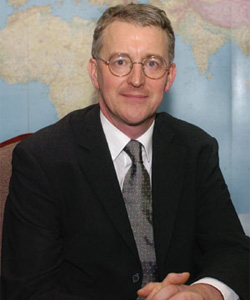
"This is going to be a really, really closely fought contest and I genuinely have no idea what the outcome is going to be," Hilary Benn tells me when we meet.

The terrace of the House of Commons is the location for this typically relaxed Benn comment.

He is unique among the candidates for Deputy Leader I have spoken to, in that he arrived with no entourage. He exudes a sense of schoolboy excitement that he does not know who will win, as if he was just an interested observer in the race for John Prescott’s job.

Sipping House of Commons mineral water on a sunny June day, we chat amiably about the dozen or so Skype conversations the MP for Leeds Central has undertaken in the pursuit of second in command. Journalists and senior Brown lieutenants are deep in conversation a few tables away. Hilary Benn, the bookies favourite in the six-way contest, seems oblivious.

An MP for just eight years, Benn barely scraped together enough nominations to make it onto the list. Some said his father called in old favours to secure his son’s place on the ballot paper.

Whether that is true or not, what is for certain is that Benn junior surprised everyone by coming top of the list of nominations from the Constituency Labour Parties, who have a third of the vote in this contest.

"It took slightly longer than I would have liked, but I always said from the beginning that I was confident I was going to get on the ballot paper, and I did," he tells me.

Benn declines to explain his appeal to the party grassroots, instead stressing the common theme of all the candidates, the members:

"I think the party wants to be heard and it wants to be listened to. They want a chance to participate in discussions about what we are going to do in the future.

"The contest has been a wonderful process. Genuinely I think the party feels good about it, people have been coming to hustings, discussed a huge range of issues.

"People have been joining the party in large numbers."

Benn takes a novel approach to the much-discussed renewal process:

"Quite a good way of trying to frame the task we have got is to say, ‘supposing we hadn’t been in government for the last ten years.’

"If we were coming in for the first time now, what would be the priorities? What would a Labour government be seeking to do?

"That is why affordable housing has really come to the fore in these debates.

"I believe in a practical and a purposeful politics, if we are going to overcome cynicism and alienation, which I worry about.

"The best way you do that is when people see politics being relevant to their lives, helping them deal with their problems and realise their dreams and aspirations for the future, as opposed to being remote, distant and alienating.

"I represent a constituency, Leeds Central, where at the last election 54% of the electorate voted for nobody at all.

"Why is that the case? What do the constituencies with the lowest turnout have in common? Poor inner cities.

"Where will you see the highest turnout? Leafy suburbs. Why?

"Because more people in the latter type of constituency see politics as having a connection to their lives.

"The minimum wage and the increase in child benefit, tax credits and paternity leave, all came because of politics.

"They didn’t fall out of the sky one morning because someone was feeling generous.

"We worked very hard to make them happen but it’s about seeing the connection between that."

One of the problems for Labour is that the public have absorbed the positive changes in British life over the last ten years, and now are asking ‘what else have you got?’

The appeal of David Cameron’s Conservative party has alarmed many Labour MPs, especially those sitting on small majorities.

With the imminent arrival of a Prime Minister representing a Scottish constituency, many commentators are predicting heavy losses for Labour, perhaps even a loss of power. Benn is predictably upbeat:

"There is everything to play for at the next election. I genuinely do not believe that the British public are at the point where they have decided they have had enough of a Labour government.

"I am relishing the next election because it is going to be a choice between a person of undoubted substance, Gordon Brown, serious politician, serious times, strong moral core, thinks about issues and has shown himself to be radical on a number of things, and David Cameron, who can take his tie off as much as he likes, he can pose for photographs with people … all politics is what do you stand for, what do you believe in, what are your policies."

At a time when the Conservatives should have been sitting back and watching Labour expose their divisions, the opposition have instead been caught in an unwanted ideological battle over a core Tory policy.

Cameronite Shadow Education Secretary David Willetts gave a clumsy statement on secondary education, backing Blair’s cherished city academies while appearing to drop grammar schools altogether. Resignations, u-turns and an avalanche of bad headlines followed.

Benn points to this tussle in the Tory ranks as proof that the opposition threat is a mere paper tiger: "The grammar school debate. Honestly, I look you in the eye and I tell you, I haven’t a clue what their policy is on that subject.

"Now, if I haven’t got a clue, and you may not have a clue, and he hasn’t got a clue, what are the public to make of this?

"It has actually been quite illustrative, because it has demonstrated a lack of clarity about policy in one of the few areas where they were trying to have one, and it demonstrates that the Conservative party, as an entity, isn’t entirely sure that it wants to be taken in all the directions he wants to take it."

As attacks on David Cameron go, that was pretty mild. Benn is avuncular and often seen as a ‘soft’ member of the Cabinet, certainly in comparison to John Reid.

He rankles slightly at the suggestion that International Development is an easy Cabinet post, responding that two million people in refugee camps in Darfur and political infighting in Ethiopia is not soft-core politics.

Benn stresses that he served time as a junior minister at the Home Office, a hard enough job even if you aren't in charge of prisons. One of the disadvantages of being the son of Tony Benn is that people tend to imagine Hilary as just like his father.

He is philospohical when asked if a famous father is a blessing or a burden: "In the end I think it kind of evens out. Sometimes it meant that people were more friendly toward me, sometimes people were less favourably inclined towards me, in the end it can only take people so far.

"I am me, he is him, I am incredibly proud of him he has been enormously supportive of me but each of is ourselves."

Benn waggles his finger at me as he defends Tony Blair’s astounding assertion that it is the press who are to blame for public cynicism about politics and politicians.

"There is no doubt that the perception of spin has harmed politics in general. That’s why I talk about a more straightforward type of politics. My sense is that there is a type of yearning for that out there.

"Why have we got the problem? Partly down to us as politicians, partly down to you as journalists.

"Let’s put it in very sharp terms. Ask people about their most recent experience of using the NHS. 80% say good, very good or excellent. Ask people what they think of the state of the NHS in general, what answer do you get?"

Benn, 53, was raised in a household where the NHS was just one symbol of the collective power of the Labour movement.

His father was a leading member of the party and Hilary, one of four children, worked as a policy adviser in various trade unions for 22 years.

An unsuccessful Parliamentary candidate in 1983 and 1987 in Ealing, where he was a local councillor, in 1997 he was appointed a special adviser to Education Secretary David Blunkett.

He won a by election in Leeds Central in 1999, and by 2001 he was a junior minister at International Development. After a short spell at the Home Office, he returned to DFID in May 2003.

Five months later he was appointed Secretary of State for International Development, and in that role he grants aid to countries that criminalise homosexuality.

As a tax-payer, why should I gift money to help Jamaica, for example, where gay people are beaten, abused and murdered?

"We are trying to deal with poverty and part of what we are doing is trying to help them improve their policing.

"In the end, at International Development, I can’t pretend I am going to be the government of all these countries. We might as well tell the truth to eachother.

"You may be in a country where you have a rotten government. Should you be penalised twice over, once because you are poor and once because you have a rotten government?

"I don’t think that is the right approach. Those countries must answer for what they are doing and those societies must try and change in the way that we have made the change."

Homophobia has become an issue closer to home as well, namely in eastern Europe.

The Polish government repeatedly talk tough on homosexuality, with new laws to ‘protect’ children from gay influence, and the President predicting the end of the world if homosexuals are given equal rights. These are the people we are in union with.

What use is the EU if it cannot guarantee the rights of LGBT people?

"It is not an easy process, and I must say, seeing some of those pictures, and hearing some of those reports of what has gone on is pretty disturbing.

"But, as our society has shown, we have seen a transformation in your lifetime and certainly in mine. We criminalised people when I was born, up until we changed the law.

"I reflect on my own political life, my experience as a councillor in west London in the 1980s.

"Ealing council was by no means the first, there were other pioneers in London, but I remember the first time that we put adverts for teaching jobs in the gay press, saying we welcome applications regardless of sexual orientation.

"Some people were apoplectic.

"I remember about ten years later, I was standing on Turnham Green underground station, waiting for the District Line to arrive, and next to me was this large poster, urging people to join the police force. At the bottom it said ‘we welcome applications from people regardless of sexual orientation.'

"I remember that very moment thinking 'that is how our society has changed' and people do get it in the neck for being part of a pioneering process.

"We are profoundly different and profoundly better as a society as a result of that change and that is a combination of legislation, things we are really proud to have put on the statute book, but it is also social attitudes changing.

"Each society has got to make that journey, and politics can be both a powerful force in helping to make the change, and also use legislation as a bookend on social change, helping to solidify it within society.

"It is about each country standing up for the values it represents. It is about offering support to people who are trying to stand up for those values, and leading by example. Those are the things that we can do."

The votes for Deputy Leader are already in. On Sunday 24th June, Gordon Brown will be declared leader of the Labour party.

And once all the second preference votes have been cast, and perhaps third preferences as well, the party will have a new deputy.

Bookies, who after all make a living from correct predictions, think it will be Hilary Benn.

What is his vision for the job he is tipped to win?

"If this is about party members having a voice, a greater voice in what is being decided, then members want a voice on policy.

"Therefore if you want the Deputy Leader to be in part your voice then he has to be in Cabinet with policy responsibility, on the committees and arguing all of that.

"In the end it is ideas that will bring people back into the party, it is causes, passions, things we haven’t yet done. That is what motivates people to join political parties."

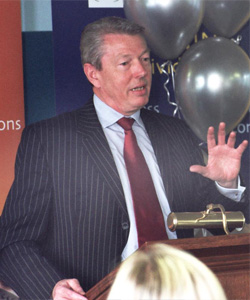
June 07: Alan Johnson interview

This article was first published on 5th June 2007.
The results of the election for deputy leader of the Labour party were announced on 24th June 2007. Jon Cruddas won the first round with 19.39%. Hazel Blears came sixth, Peter Hain came fifth, Hilary Benn finished fourth, Jon Cruddas came third, Alan Johnson came second and Harriet Harman won with 50.43%

It's the kind of thing journalists have nightmares about.

There you are, in the 7th floor office of Her Majesty's Secretary of State for Education and Skills.

Stunning views of Westminster Abbey. Classy cream leather sofas. A senior minister ready to give you his undivided attention.

You turn on your Dictaphone. It doesn't work. The batteries are dead.

I could hear the mocking voice of my shorthand teacher ringing in my ears.

Within minutes, efficient civil servants arrive with a box of triple A batteries. And people complain about the civil service. On this occasion, they certainly saved me from humiliation.

Alan Johnson remained calm and mildly amused throughout this farce. He has a reputation for being charming, and so it proved.

In interviewing all six of the candidates for Deputy Leader, a journalist seeks our their unique selling point, the better to distinguish between them.

In Alan Johnson's case, his background sets him apart in numerous ways not just from the rest of the candidates, but from the entire Cabinet and the vast majority of MPs.

He did not go to university. He does not play at stunts like working for a day in Tesco – he spent years there stacking shelves.

He was raised by his older sister, was married at 18 and was the father of several children before Tony Blair was out of law school.

Did the boy who left school at 15 and suffered abandonment by his father and the early death of his hardworking mother ever dream of a life in politics and a Cabinet job? Was it a boyhood ambition?

"Nothing was in the scope of my ambition. It's not a Heseltine, sitting down, back of a fag paper, mapping out your future.

"I was a postman, and the nominations went up for the postman's committee of the Slough amalgamated branch and someone said 'why don't you go up for that Alan.'

"And I thought 'yeah why don't I,' and then suddenly someone says 'why don't you go for branch chair' and then you are on the executive and you are a national officer.

"Then I was general secretary of the union and we won this great victory over Heseltine, ironically, and the Tories, over Post Office privatisation.

"We had a completely different campaign, we didn't go for the traditional 'have a strike, have a march.'

"We had seen unions get defeated for 18 years and we decided on a different approach, and we won.

"I was on the National Executive Committee of the Labour party and it asked 'have you ever thought about being an MP' and I said no, but then the opportunity to come in with that huge wave of optimism in 1997, and if you don't make these decisions in your early forties you will never make them. So I thought 'why not.'"

In fact, the suggestion of a parliamentary career came late in 1997:

"It was a six-week campaign and for the first three weeks I was going around with Malcolm Wicks in his constituency saying 'vote Wicks' and for the last three weeks I was going round Hull West and Hessle saying 'vote Johnson.'"

His neighbour in Hull West is John Prescott. In a scenario that would not look place out of a film called Scenes From the Class Struggle, part of Mr Johnson's postal route included the country home occupied by the current Deputy Prime Minister, Dorneywood.

Mr Prescott was photographed playing croquet on the property's immaculate lawn last summer, while he was supposed to be running the country, further denting his working class credentials.

Surely Mr Johnson would relish the opportunity to be Dorneywood's new master?

"I would like to walk through the front door rather than the servant's quarters, because I delivered the post there for five years.

"I've never been to Chequers and never been back to Dorneywood as a guest of anyone. They might be worried I might roll up in a postal truck!"

So should the grand country house in Buckinghamshire be sold off, as a sign of a new Brown approach to the trappings of power? The extra revenue might come in handy too.

"There is a serious point about Dorneywood in that nobody can occupy it if a government minister doesn't. It was a house left in trust for the use of government ministers and so it is not as if you can suddenly turn it into a refuge centre or whatever.

"I have got no ambition to live in big houses, I lived in a council house until I was 37, but at the same time these properties exist to be used in one capacity or another, whether you are entertaining guests or whatever. We shouldn't just leave them mothballed."

He is now engaged in a six-way contest for Deputy Leader, but in the autumn of last year many were banking on him standing for the top job, so is this bid a case of thwarted ambition?

"No not at all. But that was a febrile period, that period after all the shenanigans in September and letter writing and all that, it seemed like everyone was going to chuck their hats in the ring.

"So I thought, 'well, if everyone is going to chuck their hats in the ring I might as well think about it as well.'

"And then of course the press picked up on that, there is always someone who was going to be the opponent of Brown, the heavyweight opponent.

"But when I sat down and thought about it, you go for a job where you think you are the best candidate, you don't go for a job when you think, as I think, that Gordon is far and away the best candidate.

"I announced pretty quickly, early November, that I wasn't going to stand for leader."

Gordon Brown duly became the only candidate for leader, and eventually the vast majority of Labour MPs nominated him, some argue out of fear that to abstain would be tantamount to career suicide.

If a change of leader were meant to inspire the party to greater heights, surely a challenge of any sort would have been better for all involved?

"A point that many people forget is that nomination is an important part of democracy.

"I can't stand as the Member of Parliament for Hull West and Hessle unless ten good citizens of that borough nominate me. I could not have stood for the postman's committee unless two postmen nominated me.

"Nomination is important, and if you don't get the nominations you don't stand, that's part of democracy.

"With Gordon, I can't think of a political equivalent on the Tory side let alone our side, going back, who has been so obviously, with ten years as Chancellor, so obviously part of the reversal in our fortunes from losing elections to winning elections, so obviously a part of the stable economy that has been the foundation on which we won three elections."

So Gordon will become Prime Minister on 27th June unchallenged.

The many party members seeking change in the party have focused their energies on the deputy campaigns.

Mr Johnson was the favourite candidate among MPs, but with six contestants and the Constituency Labour Parties, the MPs and MEPs and the unions all having a third of the vote, it is a very tough race to predict. At least Mr Johnson seems to be enjoying the contest.

"I am, now, and I say I am enjoying it with some surprise, because when you looked at the hard slog of so many hustings meetings, enjoyment wasn't the first thing that sprung to your mind.

"Maybe it will deteriorate after I have said this, but it's been quite good, it's been comradely, we get on well and for some reason, I mean us chattering on is not likely to enthuse anyone, but people have raised issues like housing that have become important political issues through this campaign.

"The contest has also raised interest in the direction of the party to highs not seen since the days before the Iraq war.

"I am told we are recruiting 1,000 members a week, which partly is the Gordon effect obviously but is also the fact that if people join they can actually vote.

"So whether they watch us and think 'Johnson's a bastard, I got to stop him becoming the deputy leader,' at least there is a motivation to join the party."

Alan Johnson has a reputation for supporting gay rights, a perception enforced when Tony Blair, while conceding defeat over an opt-out from the Sexual Orientation Regulations for Roman Catholic-run adoption agencies, singled him out for praise in standing by his guns.

When pressed, he refused to reveal the extent of the row in Cabinet over the issue."I think we just have to say that there was a robust exchange of views among Cabinet members," is as revealing as he gets on that subject, but he is more willing to talk about his involvement with the regulations themselves.

They came into force on April 30th, and protect gay, lesbian and bisexual people from discrimination when accessing goods, services and facilities.

"I was the Secretary of State at Trade and Industry when we had come up against the problem where we were introducing this equality legislation on sexual orientation and religious discrimination.

"I found a way to take an order-making power to resolve that situation to everyone's satisfaction and then I was there just before I switched to Education in time to publish the consultation document.

"In that consultation we had already been lobbied, and listened very carefully, to the arguments put forward, we had already decided that there should be no exemption for Catholic adoption agencies.

"By some perverse political fate I end up then coming here where I am now responsible for adoption agencies at the time when this is all coming to a head.

"The argument was put to me, and there was an argument, about exemption.

"There was an argument among government about exemption – why not?"Surely for the benefit of children, etc." My instinctive reaction was that we are outlawing discrimination on the grounds of sexual orientation.

"How can we allow that discrimination to continue in terms, in the legislation, in a sector that is funded publicly and where it would be such an anomaly that we might as well say it's fair game for anyone to seek an exemption from this.

"When I actually looked into what happens in adoption agencies, we find Anglican adoption agencies are not seeking any exemption, Jewish adoption agencies are not seeking any exemption.

"We have the capability, if there is a proper transition period, to ensure that no child is disadvantaged by this at all.

"The people who are working in Catholic adoption agencies, we think we can persuade them to keep working in this sector. They do a very good job.

"Alongside that of course is the fact that gay men and lesbians who adopt disproportionately adopt the hardest to place children. Put all that together and there is not a good intellectual argument on any level to sustain an opt-out."

Last year, Lib Dem MP Stephen Williams persuaded his colleagues on the Commons select committee on education to investigate bullying in schools.

Incredibly, it was the first such investigation into the topic, and the testimony from the Roman Catholic schools was indicative of the scale of the prejudice gay kids face.

Archbishop Vincent Nichols, who is head of the Catholic Education Service, told the committee that specific issues of bullying should not be singled out.

He insisted that the Church had no problems with a person's sexual orientation, but "sexual intercourse belongs within marriage."

How can we ever tackle hatred against gay people when many of them are attending faith schools, which have the right to teach homosexuality is an abomination?

Mr Johnson previously got into trouble when he put forward the idea that all faith schools should take 25% of their pupils from outside their religious group, a proposal that was quickly dropped.

He is full of praise for their role when asked about their harsh attitude to the gay community.

"Faith schools, like all schools, have to abide by the national curriculum.

"They are inspected by Ofsted, and they say that we are making huge progress in these areas.

"If you are in the state sector, you are governed by the rules of the state sector. I would not be pessimistic about us being able to tackle homophobic bullying in any faith schools.

"The whole argument about faith schools has been a bit distorted. I think they are part of a good rich educational mix. Some of the problems that might occur can be overcome by discussion.

"I am amazed at how much progress we have made through getting all the faith groups round a table and talking through these issues.

"I have got no doubt that a discussion around how we tackle bullying can lead to, if we need a voluntary code on top of what we have got, we can achieve that.

"It's amazing what you can achieve in dialogue rather than through the heavy hand of legislation."

His faith in the abilities of religious schools to keep their homophobic attitudes out of the classroom is admirable, though many gay people who attended such institutions would say it is naïve.

The Commons education select committee reported in March. All schools are required by law to have an anti-bullying policy, but many do not collate figures on how much bullying goes on.

The committee expressed concern that this may be to protect the school's reputation.

They heard evidence from charity Anti-Bullying Alliance that between 30-50% of young people in secondary schools attracted to people of the same sex have directly experienced homophobic bullying, compared to the 10-20% of young people who have experienced general bullying.

The committee also took evidence from Stonewall about the experiences of gay children and the children of gay parents.

Mr Johnson says that tacking bullying is a priority for the DfES, and revealed that he will unveil a range of new guidance for schools at the upcoming Stonewall Education for All conference in July.

"Where the problem could lie is if we try to chop this up into little bits, and try to publish a bit of guidance about homophobic bullying, a bit of guidance about bullying against disabled kids, a bit of guidance about ethnic minority bullying," he explained.

"You just give too much stuff to teachers in little bits and pieces. I want to bring all this together. I want one anti-bullying document that actually lays out clear guidance that people will read.

"That has the bit about homophobic bullying that we worked out with Stonewall and that has an integrated piece of advice and guidance."

Guidance about gay children being beaten up and abused sounds a bit weak, considering the obligations on schools to record racial harassment. Mr Johnson is optimistic that the attitude of educators has changed.

"Don't underestimate the importance of guidance in education.

"Teachers and head teachers do want to tackle it, and there have been incidents of people in denial about it, but that's now hopefully a thing of the past.

"People recognise this, not least because of the incidents of youngsters trying to take their lives because of bullying and have succeeded in some cases.

"It's a terrible, terrible thing to have to undergo. So there might have been a point in the past where schools weren't taking this seriously enough. I don't think that's the case now and our guidance is alongside powers we have given to schools to discipline.

"Very strict powers that were contained in a report which was commissioned under the Thatcher government back in the late 1980s by a distinguished peer, Lord Elton, and they just ignored it, they did not do anything with it.

"We picked up those recommendations about giving teachers the power to detain, to restrain, to confiscate, that they did not have before. So we have given them those powers to act against school bullies.

"The guidance is really to help them to identify when it is happening and to introduce things like getting the school council involved in this.

"The kids themselves, who are the class representatives, involved and on the lookout for bullies. Sometimes kids are better able to talk to other children than to teachers so it will be a whole host of good practical guidance."

Mr Johnson attended the Stonewall fundraising dinner earlier this year where the Prime Minister spoke of his pride at introducing civil partnerships, and he is fulsome in his praise for the gay equality organisation and their campaign to stop gay kids being abused at school.

"They are a class act. If you were going to pick one of the top five lobby groups for their effectiveness, their professionalism, their energy and their integrity, you would pick Stonewall."

I realise that we have talked little about what he would do as Deputy Leader, apart from visit Dorneywood as a guest and not a postman.

He is keen to highlight a difference in his approach to the role from some of the other contenders.

"There is a very clear role within the Labour party that the deputy leader is that conduit between the leader and the party, the PLP, the European party, the trade unions.

"If you are not at the heart of policy and you are not round the Cabinet table and involved in the big policy discussions then you are not going to be able to do the conduit job properly.

"There is a very clear difference between the way Jon Cruddas, Harriet Harman and Hazel Blears to a certain extent see it and the way myself, Peter Hain and Hilary Benn see it.

"That's a very important part of the role but it is not the total role.

"There is a very clear policy role just as there was for Clement Atlee when was the leader, when Herbert Morrison was the deputy, when George Brown was the deputy."

Finally we turn to events in Eastern Europe. Gay people being beaten and abused in the streets of Moscow, gay rights marches banned in Poland and attacked in Latvia, and an EU seemingly incapable of doing little except wring its hands.

"There are things that we can do through the EU, I am sure, to make it absolutely clear that this is not the kind of behaviour that we expect from EU countries.

"Russia is a bit different, but it has signed up to the European Declaration of Human Rights.

"I just think that we have to ensure that the forces of darkness which we have largely removed in this country are removed throughout Europe.

"On a wider issue about Europe we have got to re-burnish our credentials. When you look at all the problems we are facing in the 21 st century, and some of them are the bigotry and discrimination that we see, but whether its energy security, climate change or globalisation, they are international problems waiting for an internationalist party to resolve them.

"That means we have to be a lot more heavily engaged in Europe. The EU ought to be an environmental union, as David Miliband said. We won't tackle climate change just in the UK and our international multi-lateral method of doing that is through the EU."

Aaah, the equally charming Mr Miliband. The gay choice for Prime Minister, if PinkNews.co.uk polling is to be believed.

The future for Labour is uncertain under Gordon Brown, and as for who will be his deputy, even the bookies don't know.

Of all the candidates I have met so far, Mr Johnson seems the most relaxed about winning, or perhaps about losing the contest.

Let us at least hope that when he addresses the Stonewall conference in July, he has a practical set of proposals that ensure no gay child ever suffers abuse in school again.

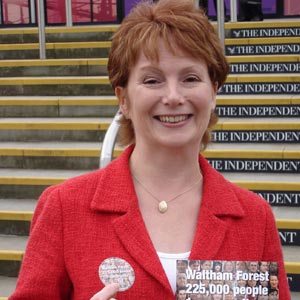
June 07: Hazel Blears interview

This article was first published on 1st June 2007.
The results of the election for deputy leader of the Labour party were announced on 24th June 2007. Jon Cruddas won the first round with 19.39%. Hazel Blears came sixth, Peter Hain came fifth, Hilary Benn finished fourth, Jon Cruddas came third, Alan Johnson came second and Harriet Harman won with 50.43%


Hazel Blears is a Marmite politician. Many are impressed and enthused by the indomitable energy of the Labour Party Chair.

Others find her drive and organisational zeal irritating.

She provokes love or hate from members of her party, but never apathy. For my money, it is always good to see an enthusiastic politician – but boy has she got high hopes.

A few minutes into our meeting, at her office in the House of Commons, she is talking about winning back seats the party lost in 2005. Optimism is certainly something 51-year-old Hazel possesses.

The first thing that you notice, of course, is how petite she is, a fact vividly exposed earlier this week on Newsnight when, during a debate between all six candidates for the Deputy Leadership, she looked like an interloper in a land of giants.

Her small stature – she is 4’ 11” – led some to comment that under Blair, Labour Party Chairs are like Russian dolls. We have gone from the bull-like Charles Clarke down to Hazel. Her size is often commented on, with phrases like Tiny Blairite used to mock her. She says of her reputation for being loyal and on-message:

"I have spent six years in government doing some of the toughest jobs, three years at the Home Office doing crime and counter terrorism.

"I think loyalty is much undervalued quality in politics.

"I think the next couple of years are going to be really tough for us fighting the Tories and the Lib Dems, and the new Prime Minister will need the most loyal team you can get."

The jibes about her size do not seem to get to her. She describes herself as an optimistic, easy going person. "I was going to say I don’t stand on my dignity but it would be quite hard to stand on my dignity.

"The only time it annoys me is when it is used as a metaphor for your politics, that if you are a small person somehow you are not serious.

"I would not have come from my very working class background in Salford end up as a member of the British Cabinet if there wasn’t something about me so I think the fact of being small as a woman I don’t mind at all. I think that its more difficult for small men.

"As a small woman sometimes people want to protect you or look after you so I don’t say no to that!"

She is one of two women candidates for Deputy Leader in a field of six. Harriet Harman entered the race saying that Labour needs a woman at the top of the party.

Ms Blears but does not back that position but says it “would be nice” to have a female deputy leader.

Much has been made of her apparently new image. Ms Blears denies she has consulted the style gurus:

“I have got a lovely hairdresser called Richard who works in Manchester - he is gorgeous - and he said to me last year, ‘you always have this short hair, why don’t you grow it a bit,’ so I did, and the only thing I have changed is my hair. It has taken me a year.”

In such a crowded field, it is the little things that get noticed, such as Communities Secretary Ruth Kelly’s support for the Blears campaign. I was told that Hazel was minded to give Roman Catholic adoption agencies an exemption to the Sexual Orientation Regulations, a discussion in Cabinet that enraged gay rights activists. She flatly denies it.

"I am against discrimination in any way, shape or form.

"I fundamentally believe in equality before the law for everybody - it’s a basic human right, it's actually a Labour party value.”

She does defend Ruth Kelly, often seen as having a problem with voting for gay rights. The appointment of this strongly Catholic minister to the equality portfolio in 2006 caused dismay among the gay community, not helped by the fact that Ms Kelly failed to vote for any of the gay rights legislation the government has introduced since 1997.

Her first pro-gay vote was earlier this year, opposing a Tory backbench attempt to block the SORs. Ms Blears denies that her Catholic colleague is homophobic:

"First of all if you look at my voting record on gay rights it is impeccable.

"Second I am glad to have the support of a range of Cabinet members including Ruth Kelly. She is actually one of my neighbouring MPs and I work very closely with her in the region.

"I have a faith, I go to church, but I do not think these things have to be in opposition at all.

"One of the foundations of faith is that you treat people equally you value every human being you believe in their worth and their contribution and those are deeply held values for people of all faith backgrounds.

"I genuinely do not think for a moment that Ruth … certainly she is not homophobic, she shares Labour’s values, I think there is a role, a moral and ethical basis for politics as well."

When pressed, she answers the gay critics with an accusation: "I don’t want this interview to be me defending Ruth Kelly I don’t think she needs defending, she is a very good minister.

"I think that is an example of intolerance. I think that our politics - mine and Ruth’s - are about tolerance, respect and understanding other people’s points of view."

Ms Blears pitch for the Deputy Leadership focuses on the party she currently chairs, with some good old-fashioned Tory-bashing as a side dish.

She says the deputy should be the party’s "campaigner in chief and the voice of the party at the Cabinet table," and supports the abolition of her current role as Party Chair appointed by the leader.

"I think the coalition that helped us win the elections is fundamental to our success we have got to keep that," she says.

"This does not mean, as Alan Johnson’s camp posits it, heartlands versus newer voters.

"I actually think that a very similar message is appealing to a broad coalition of people.

"That message is about helping people to succeed in their lives, to get on, get a decent job, make sure your kids get a decent education, make sure your neighbourhood improves, make sure you are safe on the streets and that the NHS provides services that are personal to you and accessible.

"I do not think that is a message that is a heartland message or a middle class message. The challenge for us as a political party is to ensure that we continue to have appeal.

"I do not see why we can’t be more ambitious and try to win back some of the seats lost in 2005."

A very Blears-like moment of optimism, but the Tories are ahead in the polls and their leader David Cameron has certainly caught the public mood. She is unimpressed with their political repositioning of the ‘new’ Conservatives.

"I think that imitation is the sincerest form of flattery. It’s a serious political point – I think we have changed the values of this country over the last ten years, I think we have shifted people a little bit to the left.

"You are never going to shift the British people far to the left but I think we have created a more tolerant community. I think people are much less tolerant of discrimination and prejudice.

"These days if you heard the phrase from (former Tory minister) George Young that homeless people are the people you step over on your way out from the opera, I think people would be scandalised.

"We genuinely made the values of this country much more about inclusion and caring for people who are vulnerable.

"If you had had another ten years of Tory government I hate to think where the values of this country would have been.

"Equally I am not complacent about David Cameron. I think that for the first time in 20 years you have got a Tory party that is resurgent, it no longer embarrassing to be a Tory and I take them very seriously."

Outsider Deputy Leadership candidate Jon Cruddas points to the collapse in membership of the party as a sign that New Labour has lost its way. Ms Blears accepts that numbers have fallen, but she has a string of ideas about how to re-engage with a voting public she concedes have fallen out of love with Labour.

"In terms of the ‘crisis of membership’ the truth is that in 1995/6 we had a huge influx, 100,000 extra people joined the party," she says.

"That was because they wanted to get rid of the Tories - everybody had had enough."They mainly joined through national adverts and party political broadcasts, they did not get involved in the local party and they left after we elected a Labour government.

"We did have a drop around Iraq but it was nothing like as significant."

She is strongest when talking about root and branch reform of the moribund party structure on the ground.

"Labour as a party is pretty boring," she admits. "You go to party meetings, there are groups of small individuals – or small groups, rather than groups of small individuals! – discussing the same issues and talking to themselves.

"Bless our party members, they go despite all of that. There is a big challenge of party reform and if I was elected Deputy Leader I would put forward a programme of significant change to turn us from an inward focused party into a party that is much more connected with local communities.

"It means supporters networks, it means an easier entry into the party – at the moment you have to join, you have to pay your full subs and people feel that they then have to agree with 100% of what the Labour party stands for.

"If you look at NGOs, the entry point could be a postcard campaign, it could be a text alert to something that is going on.

"I would like to see more political education. If you have not come up through a party or trade union background how do you know what our values are, why are we an internationalist party, all of that.

"I would like to involve the community in looking at candidates, not necessarily full primaries, I think there is a role for members in voting, but involving the community in policy discussions."

The community in her own constituency of Salford is changing, as are the boundaries of her seat.

The town where she was born and raised is mentioned often in our conversation, and her links there are strong – her brother works as a bus driver in the town and her parents live there.

"Boundary changes are always difficult because you sometimes end up having to compete with colleagues but I want to stay as Salford’s MP.

"It’s where I live and where I go home to and I can’t ever imagine representing somewhere else."

"I can tell you no, no, no," she says when I ask if she will be parachuted into a safe seat at the other end of the country. She clearly has great affection for the town, where as a child she appeared as a street urchin in the gritty British film A Taste Of Honey.

"Salford is changing - ten years ago we had 50% male unemployment in two wards, now we have the BBC moving in and we have a new community.

"The challenge for us in Labour locally is to make sure those new people see our agenda as relevant to them.

"I am probably at the heart of new Labour at the moment because I have a heartland core vote being joined by an increasingly aspirational and successful community moving in, lots of gay people too as its so close to Manchester.

"I have got to make sure my Labour message is relevant to all the community."

What more has Labour got to offer those new gay constituents?

"We have got a manifesto commitment to come forward with a single Equality Act. I am at the heart of that. I think it’s very important to give people rights, but also make the most of the talents of skills of people from all backgrounds.

"We have done it because it is the right thing to do but also because it contributes to our economy or communities.

"I used to be the police minister – our police service does not look like the community it serves in terms of race gender or sexual orientation.

"We could not take positive action, even when the police wanted to take on more people from a specific group, you wouldn’t be allowed to do that.

"We are preparing a green paper to cover all these issues and we shall bring it forward legislation in the lifetime of this parliament."

The six-way race for Deputy Leader is unprecedented in the history of the Labour party. It is almost impossible to predict the outcome.

"It makes it a completely open contest. It could well be decided on second and third preferences," she comments.

It is not the closest in her political experience however.

"In 1992 when I was candidate in Bury South a marginal seat I lost it after three recounts," she explains.

"I had been a candidate for three years, I had to give up my job, everybody thought I would win, the Tory came to the count with a losing speech.

"It was 4am. When you have lost you are still a leader, so you can’t cry, you have to be really strong.

"There was a party organised for after and my mum was with me. I wanted to cry and she said to me, ‘never forget how steel is tempered. It has to be heated to a great temperature and then plunged into icy cold water when you do that it has an edge and it makes it a lot sharper.’

"That was a metaphor for how I felt and nothing could ever feel like that, so it toughened me up a bit."

A comparison is often made, both in humour and in criticism, that Hazel Blears most resembles a fictional character.

BBC1 last year made a drama starring Jane Horrocks called The Amazing Mrs Pritchard, about an ordinary woman who becomes Prime Minister.

She was Northern, tiny, fiesty, a little bit annoying, and driven with a zeal to change politics.

Ms Blears does not resile from the comparison: "I think I am Mrs Pritchard with politics; she was the voice of common sense but she didn’t understand how politics works.

"I am the voice of common sense but I have got thirty years in politics, so maybe I will survive longer than her."

Come to think of it, if they ever make a movie about Hazel Blears, Jane Horrocks would be perfect casting.

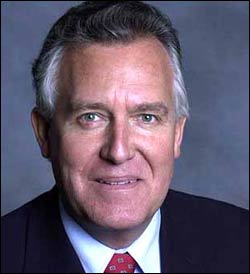
May 07: Peter Hain interview

This interview was first published on 10th June 2007.
The results of the election for deputy leader of the Labour party were announced on 24th June 2007. Jon Cruddas won the first round with 19.39%. Hazel Blears came sixth, Peter Hain came fifth, Hilary Benn finished fourth, Jon Cruddas came third, Alan Johnson came second and Harriet Harman won with 50.43%


Fans of the BBC drama Spooks would feel at home in the Northern Ireland Office.

In their distinguished but somewhat anonymous office block round the corner from the Houses of Parliament, there is no smiling receptionist sitting behind a desk.

Instead you are confronted with those tube-like floor-to-ceiling security doors so lovingly featured in the MI5 drama.

A security guard behind inch-thick glass examined my ID and I was ushered into a room with two cameras and reinforced windows to await my escort.

As I am taken upstairs to meet Peter Hain, she explains that the NIO's proximity to the actual real life MI5 building is partly the reason for the ultra-tight security. Mr Hain himself greets me in a suitably grand office, as befits his status of Secretary of State for Northern Ireland and Wales.

The 57-year-old is less perma-tanned orange in person than he sometimes appears on television, and during our 30 minutes together he is keen to stress the role he has played in advancing LGBT rights in Northern Ireland and the rest of the UK.

One of the more bizarre aspects of a party leadership campaign is that candidates approach these sort of encounters as if they were in front of a job interview panel.

Mr Hain sets out his stall.

I learn that he is proud of imposing the Sexual Orientation Regulations on Northern Ireland, despite the howls of displeasure from the DUP.

That he is responsible for ensuring that the Civil Partnerships Bill made it onto the legislative agenda.

That when he negotiated the European Constitution as the government representative he argued for much more extensive protections for people on grounds of sexuality.

He has positive things to say about hate crimes and homophobic bullying in schools.

He is keen to point out that when the issue of exemptions for Roman Catholic-run adoption agencies came before Cabinet, he was having none of it.

And why shouldn't he big up his achievements? There are five other MPs vying for the Deputy Leadership, and every vote counts.

To be fair to Mr Hain, his credentials as a fighter against prejudice are impeccable.

He did decide to use his powers as Secretary of State for Northern Ireland to outlaw discrimination on the grounds of sexual orientation when accessing goods and services, known as the Sexual Orientation Regulations, with no exemptions for Catholics or anyone else.

Undemocratic, some would argue, as the suspended Northern Ireland Assembly seemed split on the matter and indeed devolved government looked likely to be resorted imminently.

"I took a very straightforward view on this," he explained."I have spent my whole life fighting discrimination whether it is on grounds of race, gender, disability, age, or sexuality.

"My parents were jailed and issued with banning orders and then eventually as a family, when I was a teenager, we were forced into exile from the old apartheid South Africa for fighting racism of the most brutal tyrannical kind.

"When the decision came to me as Secretary of State for Northern Ireland, do I proceed to legislate to stop discrimination against gay people, bisexuals and lesbians I said, 'yes I would' because that is where I am coming from.

"I am proud of the fact that that in Northern Ireland, with its horrible history of bigotry and prejudice and discrimination, including on gay rights, that I was the person who has changed that forever.

"I do not know what would have happened in the Assembly, it might well have been log jammed.

"I would not have felt proud of myself if I had evaded my responsibilities on this matter. I am not in power just to have the trappings of office, I am in power to change society and I think this will go down as a landmark change, which was without any exceptions, unlike elsewhere in the UK, and in a sense set the pace."

"Unlike elsewhere" refers to the unedifying spectacle of the SORs being delayed in the rest of the UK, while Communities Secretary Ruth Kelly considered whether Roman Catholic-run adoption agencies should be exempt from the regulations.

When news of this proposed opt-out broke, it caused outrage among gay campaigners and there was a heated discussion in Cabinet.

Ruth Kelly, as a prominent Catholic, took a lot of flak over the issue, but it is also known that Tony Blair was also in favour.

"Matters had to be processed in a different way but I took the view that there should not be any exceptions and we proceeded and I am proud that we did," says Mr Hain.

Pretty clear what side of the fence he is on, but he rejects the assertion that the proposed opt-out damaged the Blair government's gay rights record.

"In defence of the government it's very important that we do not try to snatch defeat from the jaws of victory. This is a major step forward."

In the end Mr Hain and the majority of Cabinet prevailed.

The Catholics have been given until the end of 2008 to comply with the law or shut down their adoption agencies.

Mr Hain, the MP for Neath since 1991, is an unusual Northern Ireland Secretary. In the 1970s he was best known as a radical anti-apartheid campaigner.

He was instrumental in a direct-action movement that disrupted tours by the South African rugby union and cricket teams in 1969 and 1970.

He became a target of the Establishment, and was convicted of criminal conspiracy on 1972 for his part in those radical protests. He was not very popular with the South African authorities either.

We discuss a bizarre incident from 1976 – did he really rob a bank, or was he the victim of more dirty tricks?

"Is it true that I was framed for snatching 490 pounds worth of five pound notes from a Barclays bank just round the corner from my house?

"A quite surreal case in which the SA security services were targeting me at the time. They sent me a letter bomb a few years before which did not explode.

"The anti-terrorist squad descended on our house and immobilised it. They were coping with IRA bombs at the time."

Mr Hain matured from 70s radical to 90s New Labour insider.

He has held various government posts since the 1997 general election, joining the Cabinet in 2002.

What can this Blair loyalist hope to offer a Labour party battered by the Iraq war and with its membership, and morale, at a record low?

In January he stuck the boot into the outgoing Bush administration and their political ideology, telling the New Statesman that they are "the most right-wing American administration, if not ever, then in living memory."

Strong words – will Mr Hain give an equally frank analysis of where New Labour has failed?

"Obviously all governments makes mistakes and there have been mistakes.

"I don't think I am going to share my views with you on what those are.

"I think we have got to learn from those mistakes and we have to move forward on Iraq, but provided we use this period of transition to Gordon Brown as leader, and a new Deputy Leader, to revitalise the party.

"To promote policy making on a more partnership basis than delivering policy on high and bouncing policies on everybody, then I think we can win the next election.

"There is some veiled acknowledgement that New Labour has been high-handed in its approach and the voters have become disengaged as a result.

"We had two landslides in 1997 and 2001 and then in 2005 we lost millions of voters, so clearly we have got to learn the lessons from that and bind people back together again.

"Actually if you look at the way we have worked, we have consulted more, we have brought more groups into the process of government, including the LBG community, and I think that has resulted in tremendous policy advances.

"Just look at the agenda we have implemented, the things we have done in terms of transforming the legal rights of gay lesbian and bisexual people.

"We have been in power 10 years – we have just transformed Northern Ireland and I have been part of that – taking it away from bigotry and horror, and people have been mesmerised by that, but I would guess that within a few months time they will say it is just part of the furniture of life.

"A strong economy, low mortgages, low inflation, rising public spending, more jobs than ever before, just part of the furniture of life.

"They aren't – they are down to government policy and the fact we have been in power ten years means we have to win more support than would have been the case earlier on."

While New Labour may have lost the affection of the electorate, it is the state of the party that is more worrying.

In concert with the other candidates for Deputy Leader, Mr Hain wants to rekindle the party's fighting spirit, knowing it will be their only chance of a Brown victory.

"The party is in a mood where it wants leadership that listens not lectures, that involves everybody with grassroots opinion."

On gay issues, Mr Hain has lots to talk about.

On Civil Partnerships: "I am proud that as Leader of the House of Commons I insisted that the Civil Partnerships bill went into the legislative programme and went into the Queen's Speech.

"I do not know whether it would have happened if I had not been Leader, but I know the steps I took ensured that it was there.

"There was a lot of concern as to whether the Lords would logjam it and affect the rest of our legislative programme but I said, "no, it is the right thing to do" and as it happens it went through pretty smoothly."

Mr Hain says he personally supports new laws to outlaw incitement to hatred against LGBT people.

On the subject of homophobic bullying in schools, he uses the Northern Irish process as a working example:

"What we have got to ensure, and that is the main responsibility of the government, is that the rule of law prevents discrimination.

"As in Northern Ireland, once it is in statute then attitudes start changing, because people do not want to behave unlawfully, whatever their private prejudices might be.

"That starts to create a different climate in which it is possible to make advances, including in challenging some peoples deep-seated fears and attitudes.

"We have got to go beyond equality legislation – we have got to involve teachers and parents and school governors in a proper process of dialogue about this problem.

"There was a Race Relations Act from the Labour government in 1968 and we introduced another one in 1976, but that has not stopped racism.

"It has made a big, big difference and it has made racists much more furtive and they are much less self-confident than they used to be.

"You can change things fundamentally by putting in place basic civil rights but you still have got a big job of work to do to change attitudes and to change prejudice and you just got to keep working at it."

Change takes time, and Northern Ireland is living proof. Mr Hain points out that the first Civil Partnership took place in Belfast, but acknowledges the province has a long way to go on the road to equality.

"When I launched the consultation on the process that led to legislation banning discrimination in goods and services, in July 2006, it was the same day as the gay Pride march in Belfast.

"I offered to meet the leaders of the groups concerned - they were very pleased to have the consultation paper issued on that day but they were not willing to meet me because many of them had not told their families about their sexuality, because they were frightened of doing so.

"This is even the leaders of the main pressure groups involved. I just thought that said something about the change in mindset that you need still to achieve in Northern Ireland and the tremendous change we have to go through to overcome prejudice."

Prejudice that the province's largest political party wears like a badge of honour.

The DUP tried to overturn the SORs in the House of Lords, and complained loud and long about the rights of Christians to turn away gays from bookshops and bed and breakfasts as ungodly "sodomites."

Why does Peter Hain think that the laws he implemented will survive with the DUP running Northern Ireland?

"Because of cross-community voting you couldn't make a change to unravel or repeal the legislation I introduced on goods and services.

"I think there is a great respect for the law among members of the DUP, whether they approve of it or not, and I don't think you will find there is any attempt to unravel it.

"And if there were, in the way that the devolved government acted administratively or in terms of resources, it will be challengeable in the courts, and the courts would find against the government so that means its not going to happen.

"The gay community can feel quite comfortable in that."

Peter Hain is facing five competitors in the race to succeed John Prescott. Gordon Brown faces none.

It seems a bad start to renewing the party, in effect handing control of the UK government and the keys to No 10 to Mr Brown without a proper contest or even debate.

Mr Hain defends the slightly Stalinist spectacle of over 85% of the Labour party's MPs nominating Mr Brown:

"Gordon would have welcomed a contest, I would have welcomed a contest … but the rules of the party state clearly that you have to attract a sufficiently significant proportion of MPs to put you on the ballot paper and that's right.

"You have got to be a very serious candidate to win such a substantial section of your party's colleagues, 44 in this case, otherwise you wouldn't be seen as a candidate capable of doing the job.

"There is no point in having a contest for its own sake, you have got to have a contest between people who are seen as capable of doing the job."

So Gordon it is, and Mr Hain thinks he is the man to take on the role of shaping and revitalising Labour into an election-winning machine for a fourth time in a row.Only Harriet Harman, Hazel Blears, Alan Johnson, Hilary Benn and Jon Cruddas stand in his way.

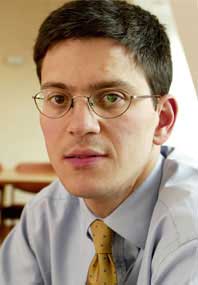
May 07: Why the boy Miliband should have challenged Gordon

This article was first published on 8th May 2007

It could go down in history as one of the worst political decisions ever made – if gay votes are anything to go by.

A poll of PinkNews.co.uk readers shows that if David Miliband had got up the courage to tackle Gordon Brown for the leadership, Labour might have had a stronger chance of winning an historic fourth term in office. 27% wanted Mr Miliband as next Prime Minister – only 13% wanted Gordon Brown.

Given that between 6% and 10% of the population are LGBT, depending on whom you believe, that is a lot of votes in every constituency in the country.

Alan Johnson’s profile gets a boost – the education secretary came second among LGBT voters with 21% picking him to become next Prime Minister. The smart talk is that Miliband knows Labour will lose the next election, and he is biding his time to lead the party in a (hopefully) short period of opposition against David Cameron.

And what of the Leader of the Opposition? The PinkNews.co.uk readers were asked – if Tony Blair, in a final act of spite, called a general election today, how they would vote if a general election were called?

It seems with gay voters, Mr Cameron has a way to go. It should come as no surprise that the two parties most associated with gay rights come out on top – 35% would vote Labour, 27% Liberal Democrats and 26% would vote Conservative. 10% said they would vote Green and 2% for the Scottish and Welsh nationalist parties.

In the local elections last week, 40% of the general populace voted Tory, 26% for Labour, Lib Dem 26% and others 7%.

A reluctance to vote Tory is more marked in older PinkNews.co.uk readers. The legacy of Section 28 and the Thatcher-years intolerance of gay people is not a factor for those too young to vote at the last election.

51% of them chose David Cameron, 32% Gordon Brown and 17% Sir Ming Campbell.

Overall 40% of the community selected Sir Menzies Campbell, 33% David Cameron just 27% Gordon Brown.

The sample was not asked if they would vote for Tony Blair again, but his legacy is certainly assured among gay people.

73% of LGBT voters consider that Britain's attitude to gay rights has changed for the better thanks to Tony Blair and his policies. More than half (51%) considered the introduction of Civil Partnerships as the Prime Minister’s strongest legacy. This was followed by the Equality Act (15 %), scrapping Section 28 (13%) and equalising the age of consent (13%).

Tony Blair is rightly praised for his record on gay rights, but it was not all good news. 48% of the gay community felt that the appointment of Ruth Kelly as minster for equality was the biggest LGBT-related mistake made by Blair since 1997.

22% criticised the Prime Minister for dithering over religious exemptions of the Equality Act, an equal number highlighted the decision not to introduce full marriage.

It seems that Ruth Kelly continues to be the main point of contention when it comes to recent Labour relations with gays. Not surprisingly, 89% of LGBT voters thought she would be the worst possible successor to Blair.

Labour’s outstanding record on gay rights does not seem safe in the hands of Gordon Brown seems to be the resounding message of the poll.

Gay voters see Alan Johnson, or even better David Miliband, as the sort of people who can keep that agenda moving forward. They would trust the other David, Cameron, with their votes more than they would Gordon Brown.

Whether this means that Labour are in danger of losing a core vote of gay people is unclear. Surveys are very different from general elections. Gay people, like everyone else, vote on a range of issues and none.

PinkNews.co.uk readers are likely to be more politically engaged than the general gay populace, so we should be wary of appearing to speak for the 3.5 million LGBT people in the UK. But the message seems clear. No breakthrough yet for the Tories, especially among older gay voters.

But Gordon Brown is failing to set pulses racing, and there seems as much suspicion about him as there is for the Conservatives.

The poll was open over Saturday and Sunday morning on the PinkNews.co.uk website. 534 geographically representative members of the LGBT community took part in the poll.

May 07: Power sharing government restored to Northern Ireland

This article was first published on 8th May 2007

The two parties sitting down to face each other as partners in government in Belfast today disagree about many things.

Gay rights proves no exception. Sinn Fein were the only party to mention LGB or T people at all until a few years ago. While middle-class Catholic opinion, in the form of the moderate SDLP, was cleaved tight to the pedestrian morality of the Roman Church, the doctrinaire Republicans were all for equality in its many forms.

Equality is not really a concept Unionist politics ascribed to.

For the men who were once masters of a "Protestant Parliament and a Protestant State" prejudice seemed to come naturally.

As Northern Ireland changed, the DUP sat sulking in the corner, clutching its Bible and lamenting that its leader Dr Paisley had lost his campaign to Save Ulster From Sodomy.

Now Sinn Fein and the DUP are the prime movers in the government of Northern Ireland.

The former main parties, the UUP and SDLP, have got one minister each but everyone knows that the engines driving devolution are two old enemies. The gay stories started last week.

The respected Belfast Telegraph could not resist having a bit of fun with the po-faced DUP.

New minister Edwin Poots, for example. The newspaper reported with mock horror and pantomine-style quotes that the department Mr Poots now heads, Culture, Arts and Leisure, give money to the Belfast Pride parade.

Or, as a reasonably typical preacher from Poot's religious sect called it, a "celebration of sodomy."

The founder of that sect, (the Free Presbyterian Church) is Ian Paisley. Another promoter of sodomy - his Office of the First Minister and Deputy First Minister is responsible for equality issues.

The Belfast Telegraph could not resist reporting that they will give £180,000 over a 12-month period to promote equality for the gay community, working with LGBT groups in the province. There is that word again. Equality. Of course the real triumph for the LGBT community in Northern Ireland is not a devolved government.

From the 14th October 2002 until 7th April 2007, the British government ruled directly from London. During that time a range of measures, from civil partnerships to protection from discrimination when accessing goods and services, were granted to the LGBT community.

Opposed at every turn by the new First Minister and his cohort.

Denounced from pulpits across the denominations in every city, town and village.

Money neither the DUP nor the former terrorists can touch has been ring-fenced for the purposes of making Northern Ireland a bit more like the rest of the UK.

Many in the province will see today as a great moment in their history. It certainly is.

But people concerned with the struggle for gay equality will take a moment to silently thank the British for imposing gay rights on a reluctant populace.

March 07: Ming Campbell on gays, religion and age discrimination


This interview was first published on 20th March 2007. Ming Campbell stood down as Liberal Democrat leader in October 2007 and was succeeded by Nick Clegg in January 2008.

It is just over a year since Sir Menzies Campbell won the leadership of the Liberal Democrats.
The vacancy arose when disgruntled MPs ousted the popular Charles Kennedy, an act of political regicide that led to a period of turbulence that continued throughout the election to find his successor.
The tabloid newspapers gorged themselves on a series of sexual revelations during the two-month campaign. Leadership hopeful Mark Oaten was revealed to be a serial hirer of rent boys.
Simon Hughes, the respected MP for Southwark & Bermondsey and a leading candidate, was forced into admitting he used gay chat lines.
The party, reeling from these lurid tabloid nightmares, turned to Ming Campbell.
He already had the backing of a third of the party's MPs and a string of Lib Dem grandees, among them former leaders Paddy Ashdown and David Steel.
As the Lib Dem Foreign Affairs spokesman, he had led his party’s principled opposition to the invasion of Iraq.
He was, in the words of another backer, Baroness Shirley Williams:
"Completely honest, completely devoted to his wife, most unlikely to be engaged in financial trickery. He is a good, upright Edinburgh man. Given that the media concentrates so much on personal weaknesses, you really needed someone who that could not be alleged against."
Since taking charge of the party, Ming has experienced some political turbulence himself. Not least from persistent, off-the-record voices within the parliamentary party who claim he is too old to take on David Cameron at the next election, which may not happen until 2010.
At that point Campbell will be 69.
Whether his maturity is an advantage or disadvantage is debatable, but it certainly allowed PinkNews.co.uk to explore with him the changing attitudes towards gay and lesbian people in Britain.
Campbell himself says he has always been supportive of the rights of gay and lesbian people to live their lives in freedom – a belief he ascribes to his liberal values. When the 18-year-old Campbell arrived at Glasgow University in 1959, he says he already had those values. Many of his university contemporaries would later become prominent in British politics.
Among them was the former leader of the Labour party, John Smith, and Donald Dewar, who helped found the Scottish Parliament. Both died young.
"It was not quite the Sixties, it was the eve of the Sixties, and we were beginning to cast off the shackles, as a group of people in society, to want to make more choices for ourselves," says Campbell.
"I went up to university in 1959, it’s no secret. By then things were beginning to change. I was developing, I was growing up, moving from being a schoolboy to being an adult, but I think at that particular time, there was a very 'small l' liberal sort of atmosphere and attitude.
"It was a perfectly natural thing for me to be associated with a party that believed in these things and to form views and opinions of my own which were consistent.
"There were all of the social consequences of rigidity. The unhappiness that people, homosexual people, lived through.
"The fact that in some cases they felt it necessary to take their lives, or they were repressed or deeply, profoundly unhappy.
"Not that I had any direct experience, but we knew, there was sufficient evidence of all of that, to tell you that this was something that was most certainly not in the interests of society. You are asking me to explain something that was a gut feeling."
The lack of personal experience of the lives of gay people at the time is easily explained."People did not come out. I mean they just didn’t come out.
"Although there was this liberal consensus among Glasgow university students, people just didn’t do it.
"They just did not reveal themselves because the attitudes were not always going to be as liberal as mine. There were derogatory words like poof and queer and bent and all the rest of it."
Campbell’s party has been consistent in their support for gay rights. In fact, the party’s constitution talks about no one being enslaved by conformity or discrimination.
He speaks warmly about the new Sexual Orientation Regulations, which are due to become law on 30th April, subject to a vote by both Houses of Parliament.
The regulations have raised serious objections from the Christian churches and most other denominations. They claim that services they provide, including adoption agencies and schools, will be forced by law to promote a gay lifestyle they regard as morally wrong. What is the correct balance between the secular and the religious?
"If they want to teach a particular view, then I do not stand in their way to do that, but I am not going to allow the fact that they have that particular moral view to stand in the way of people who are entitled to their own lifestyle," is Campbell’s response.
"Freedom is indivisible, and the freedom which I have to worship is the same freedom that others have to worship, to follow a particular lifestyle which their orientation makes them comfortable with.
"You can’t start dividing freedom up, you can’t start saying there are packages of it."
That being said, Campbell is not hostile to religious belief.
"I am an occasional Presbyterian. Let me put it this way, I think that everyone’s lives are in general made better by a set of ethical beliefs. And mine are I suppose the traditional ethical beliefs of someone brought up in particular way at a particular time, against the background of the Church of Scotland, whose radicalism and liberalism has long been well-known.
"I suppose I am a product of that. I do not believe in a man with a beard, of course I don't.
"But do I believe that there are ethical principles, which I find myself in sympathy with? Yes.
"But I do not think that my views are exclusive, and I certainly don’t think that any view I have would allow me to be intolerant of others."
Campbell took his time getting into Parliament. While his university friends John Smith and Donald Dewar were making names for themselves in the Labour party, he was losing election after election as a Liberal candidate.
His former university colleagues did try to convert him to Labour. "I joined the Liberals when I was 18. If I had wanted to be the Prime Minister of the country it was hardly a very constructive career move.
"At the time the Liberals had six MPs and were hanging on by their fingernails.
"I don’t determine my views by those around me, I determine them by what I think I believe and what I think to be right.
"I happen to think that liberalism is a fundamentally important philosophy. Every democracy is a better democracy the more that it espouses the principles of liberalism."
Campbell gained a repuation as a barrister, or advocate as they are called in Scotland. He was admitted to the Faculty of Advocates in 1968 and two years later he married Elspeth Suttie.
They have no children of their own, but his wife has one son from her first marriage. Her divorce lawyer, eccentric Tory Sir Nicholas Fairburn, is said to have introduced the couple.
Campbell finally won a parliamentary seat, North East Fife, in 1987. When he took his seat at Westminster, 34-year-old Tony Blair had been an MP since 1983.
Parliament was already eight years into the Thatcher revolution, and the Liberal party was eyeing up a merger with the SDP in an attempt to consolidate a third party voice to counter the binary division of Labour and Conservative.
That merger of the Liberals and the Social Democratic Party in 1988 resulted in the Liberal Democrats, and the party have increased the number of MPs since then, under popular leaders Paddy Ashdown and Charles Kennedy.
Ashdown led the party to great success in 1997, taking 46 seats, an increase of 28. Charles Kennedy consolidated the party's position in 2001 with a further eight seats overall.
By 2005, Kennedy's immense popularity with the public, coupled with a strong party and an unpopular government and opposition meant that at the last election the Liberal Democrats won a record 62 seats.
Campbell was a senior frontbench spokesman on defence and foreign affairs from 1992. He highlights his decision to support calls to allow gay people to serve in the military as an example of his liberal approach:
"One of my proudest possessions is a letter from Ian McKellen. He wrote to me after I took the view in relation to the Armed Forces that the situation was not sustainable.
"We associated ourselves with the Stonewall campaign. That is something of which I am rather proud.
"That is an illustration of where, if liberalism is sufficiently organised, you can change things."
He was appointed LibDem Shadow Foreign Affairs spokesman in 1997. He decided against standing for leader against Charles Kennedy when Paddy Ashdown stood down in 1999, and admitted he apparently regretted the decision "for about 10 minutes a day."
In 2000 he was an unsuccessful candidate to become Speaker of the House of Commons in a farcical election process in which 14 MPs put themselves forward. It could be argued that he was more high-profile earlier in his life than as a Lib Dem spokesman.
Campbell was a sprinter who represented the UK at the 1964 Tokyo Olympics, and captained the Great Britain athletics team from 1965 to 1966.
From 1967 to 1974, he was the fastest 100m sprinter in the country, while also practicing as a barrister. His thoughts on why there are so few out gay sportsmen seemed apposite.
"I have never really thought about any of this, so this opinion is rather ill-formed, but I think in hierarchies it may be more difficult, because people are so conscious of their place in the hierarchy that to admit to be different or to admit to a difference might lose you your place in that hierarchy.
"I played a bit of rugby, these are parts of society where, let’s put it this way, tolerance is taking a little bit longer to reach."
Despite his earlier assertion that he had no personal experience of the pressures on gay people in the 1960s and 1970s, Campbell revealed he may have known one person who suffered from the oppressive nature the hierarchical society of the time.
"I had one close friend at university, whom I think was gay. Clever, clever man, never got married, died early, because he drank too much, and when I look back now I realise.
"With the benefit of hindsight, I suspect he was, in fact I am pretty certain that he was gay. But these pressures I have been talking about really made it impossible.
"He was an exceptionally successful lawyer, a partner in a very successful firm, but I think the pressure of his sexuality certainly influenced his drinking, and the drinking ultimately caused him to lose his life."
The unhappy tale of Campbell's lawyer friend has some parallels with former Liberal leader Jeremy Thorpe's fall from grace in 1979. The scandal surrounding Thorpe's trail for conspiracy to murder in 1979 cast a long shadow over the party.
Campbell was Leader of the Scottish Liberal Party at the time. Thorpe was in many ways one of the most gifted politicians to lead the Liberals in the 20th century.
He inherited a party of twelve MPs in 1968 and became a media celebrity of sorts. His youthful, charismatic style and distinctive Edwardian suits made him a household name. In the February 1974 election the Liberals took 20% of the vote, and Thorpe was reportedly offered the Home Secretary role in a possible coalition with Ted Heath's Conservatives.
By 1976, though, Thorpe was engulfed in a serious sex scandal. A former male model called Norman Scott claimed to have been involved in sexual relationship with Thorpe between 1961 and 1963.
The Liberal party had investigated the claims in 1971 and found them to be baseless. In 1975 Scott was confronted on Exmoor in Devon by an armed man, and a dog accompanying him, Rinka, was shot.
At the gunman's trial, Scott once again claimed he had an affair with Thorpe and that the Liberal leader had threatened to kill him if he continued to talk about their relationship. He then released sentimental letters sent to him by the Liberal leader to the press. Thorpe had to resign.
To make matters worse, he stood trial in 1979 alongside David Holmes, then deputy Treasurer of the Liberal party and two others, charged with conspiracy to murder.
A week before the trial Thorpe lost his seat in the 1979 general election. All four were acquitted of the conspiracy charge, but Thorpe was a broken man. He retired from public life for good. Still alive today, he has never commented on his sexuality.
What sort of pressure would compel such an ambitious and talented politician into these almost unbelievable circumstances?
"I knew Thorpe reasonably well, not as well as most," says Campbell."I am back to my hierarchies. For Thorpe, if he were gay, and I don’t know whether he was or not, but put it this way, a lot of evidence points in that direction, I think for him to have admitted that would have damaged his place in the hierarchy.
"In the end it becomes "what is most important" and it's your place.
"Like my friend, the place as a partner in a successful law firm is more important to you than the freedom and the release which you would have from being open about your sexuality."
Simon Hughes knows something of that pressure. The veteran MP was forced to admit his bisexuality during last year’s leadership contest. The revelation was particularly ironic for those old enough to remember Hughes' first election to Parliament in 1983.
He was the SDP candidate who split the Labour vote in a by-election campaign notorious for the homophobia directed against Labour candidate Peter Tatchell.
"I think if Simon Hughes were here he would say, "the problem was what I said about it rather than the fact of it."
"Simon is a close friend and I would not want to hurt him," explains Campbell."But I think part of it too was the context of the by-election with Peter Tatchell."
Mr Tatchell himself spoke up for Mr Hughes in the aftermath of his admission of bisexuality.
For Campbell, his age is a constant theme in criticism of his leadership.
Although he has packed his frontbench with young talent, notably the 27-year-old Jo Swinson and rising star Nick Clegg, 40, he is most regulary portrayed as an out-of-touch pensioner.
His performances at Prime Ministers Questions have also been a focus for criticism from opponents within his own party. BBC TV satire Dead Ringers is fond of portraying Ming as an avuncular granddad.
Surely that must hurt? Campbell claims to not watch the show.
"If you put yourself into the public arena, then you have to accept that there are certain advantages that go with it, and certain disadvantages.
"So long as humour is not distasteful, so long as it doesn’t mock disability, then I think you have to be tolerant of that as well.
"I am not going to be deflected from my belief in that by the fact that there is a rather poor impression of me on television. Not actually that good. If it were better I might watch it more often."
In the modern political climate, there is something comforting about Campbell’s refusal to be made over into an appealing figure. When the workaholic Chancellor and PR savvy Leader of the Opposition's attempts to appear down with the kids is raised, Campbell seems to revel in being rooted to his generation and class.
Like he said, he is pre-Sixties and has none of that baby boomer desire to appear hip that so famously led to Tony Blair clinging to rock stars in an attempt to live up to the spin of Cool Britannia.
"There is no time for pop, in a way, in this life. I like classical music. I am not an expert in any sense whatsoever, but my wife and I have been going to the Edinburgh festival for 37 years."
Campbell reveals a musical pechant that could conceivably win him some votes in the gay community.
"I am very keen on musicals – I saw Porgy & Bess not all that long ago, and before that I saw Guys and Dolls.
"I have got Les Miserables in the car and I play that and play that and play that. Let me put it this way, I could live without music, but it is something from which I take great pleasure."
The Lib Dems are the most prominent supporters of the European project in British politics. But events in the new EU states, notably Poland and Latvia, have caused outrage among gay people in the UK.
The leaders of Poland freely state their disgust for gay people, while in Latvia, last year's Pride parade was attacked by gangs of protestors.
Given that the Lib Dems are the party who are most supportive of the European dream, what does Campbell think can be done to combat the naked homophobia on display?
"Poland is particularly offensive, isn’t it? We have what we call the Copenhagen criteria which as you know means (new EU member states) meeting these human rights standards.
"The trouble is when you let people in, the EU has no way of dealing with it.
"You remember we sort-of suspended Austria from some of the councils of Europe over right-wing fascism, but we have absolutely no mechanism for dealing with people who want to detract from human rights.
"I would say that we should seek out intolerance wherever we find it and expose it. In our words and our deeds we should.
"Both in what you do and what you say, you have to live up to these principles. If you really think they are important then you have to live by them."
Finally, we turn to the young David Cameron, the 40-year-old huskie-riding, hoodie-hugging, NHS-loving, Arctic Monkeys fan who currently leads the Conservative party. Cameron is often desribed as a liberal on social issues like civil partnerships – what is Campbell's take on the use of his favourite word to describe an opponent?
"If I told you I was a conservative Liberal, you would find that a pretty curious animal. So to be a liberal Conservative is to be equally curious.
"It is not the judgement of other political parties that counts about these things, it is what the public think and if I may say so it is about what gay people think
"What do gay people think of it?
"They are in an infinitely better position to make an assessment and reach a conclusion than someone who has never been adversely affected by the sort of prejudice that we are talking about."