Sunday, January 20, 2008

February 07: Gay history


LGBT History Month is an excellent opportunity for all of us to learn more about the histories of lesbian, gay, bisexual and transgender people in the UK.


A recent poll of more than 5,000 gay people found that Kylie Minogue is their goddess, and that the gay community seems to worship straight women who can hold a tune more than the real heroes that have made their lives better.


50 gay icons were chosen, and down the list after the pocket princess came David Beckham, (6) his delightfully common wife, (12) and a couple who make Posh and Becks look like the Greek royal family, Jordan and Peter Andre at 9.


Guess where the first homosexual on the list appeared? 19th place. And it was Will Young.


Dolly Parton is the number two gay icon. You know Dolly, out on the streets marching for gay rights. Oh no hold on. Sorry - Dolly sings songs. Sometimes she walks around while she sings. I do not recall her ever expressing public support for gay rights.


That nice young man Will Young is followed on this list of gay icons by Sir Elton John at number 20. They only narrowly beat a plastic doll. (Barbie at number 21). Overall there were only nine gay men on the list, either as individuals or as members of a band. (Young, John, Wham!, Rupert Everett, Westlife, Boy George, The Village People, Steps, Scissor Sisters).


There were no lesbians on the list. That means only 18% of "gay icons" are in fact gay. A depressing statistic. Had any of these people heard of Chris Smith, the first MP to ever publicly come out of the closet?


What about Sir Ian McKellen, who helped found Stonewall and went to 10 Downing St to talk to Prime Minister John Major about gay rights? Or Harvey Milk, the former San Francisco city supervisor who showed that the gay community could be galvanised into an effective political force?


What about Quentin Crisp, who by his tenacity and simple refusal to be anything except what he was, made middle England consider their prejudices as well as making them laugh?


A person ignorant of their own history cannot really know themselves. How can you be proud of how far we have come if you don't know how we got there?


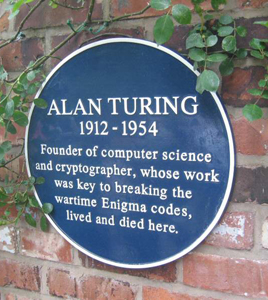
For those of you unaware of the lives of people like Alan Turing (without him you would not be reading this) LGBT History month is a useful opportunity for you to learn about your history.


You might even be proud of some of it, of the people who came out and stayed out when it was social suicide.The people who marched and publicly displayed their sexuality at great risk to themselves.


Until recently, most LGBT people preferred to avoid attention. Many still do. Even today, the penalties for those who refuse to conceal themselves, or fail to do so, can be severe.


They can range from ostracism and victimisation to assault and even murder. In the past, the silencing of LGBT people was often reinforced by legislation.


The most recent example was Section 28, passed in 1988 and repealed in 2003, which was intended to restrict debate on homosexuality, particularly in schools.


Whatever you do during History Month, try to learn something about the people who are responsible for the freedoms we enjoy today.


And for God's sake, stop holding aloft Katie Price and Victoria Beckham as icons of anything, except conspicuous consumption and the triumph of bad taste over talent.


Tuesday, January 01, 2008

Profile of Spencer Livermore

This profile was first published on PinkNews.co.uk on 27th December 2007.

Spencer Livermore is one of the least-recognised names on the PinkNews.co.uk Top 50, but he wields a level of influence most politicians could only dream of. As Director of Political Strategy at Number 10, he is planning the next election and the direction of the government and the Labour party next week, next month and next year. He speaks to Gordon Brown several times a day, and no-one is more trusted to give advice and analysis.
Only 32, Livermore lives the dream of many a West Wing addict. He contributes to speech writing for Mr Brown and he is one of his closest advisers, and with the departure of key personnel Ed Miliband and Ed Balls to greater things, he is one of the longest-standing. Let's put it this way - he attends Cabinet meetings, and unlike the rest of the people round the table, he has easy access to the Prime Minister.
His low profile is in keeping with his approach to political strategy, but lazy comparisons with that other ultra-powerful gay New Labour figure, Peter Mandelson, are wide of the mark.
The current EU Commissioner for Trade was closeted for most of his career, until outed on live television by Times columnist and former MP Matthew Parris.
Livermore, from a different generation of gay men, has been out and proud his whole professional career. On first meeting his demeanour and manner would never indicate his sexuality but his always-immaculate appearance might lead you to think otherwise.
A tall, besuited and perpetually discreet presence at the odd Stonewall event or gay networking evening, he has been heard to remark that he is not the gay representative in No 10.
However, he clearly has a hand when gay issues or requests from the gay community come to the attention of the Prime Minister - an 'area of special knowledge' rather than his own cause. Livermore has no desire to become an MP or a Cabinet minister.
This is partly because he is not at heart a politician, though he is tribally Labour, but mostly because he knows he has far more power where he is now – at the side of the Prime Minister.
Working with MPs on a daily basis also appears to have retarded his earlier consideration of a career in front line politics.
He is "licensed to speak" as they say, yet chooses not to - there could be two reasons for this - the first is the correct assumption that the less people say the more influence they actually have.
The other is that in contrast to many special advisers, or SpAds as they are called, who are keen to get their name in the paper, Livermore seems equally keen to keep his out.
He does not see it as his job to speak to the press - probably because he is too busy speaking to the PM. Livermore has worked for Gordon Brown for nearly ten years, and much of his attitude towards politics has been moulded by this close relationship.
Accusations that the Prime Minister is less than keen on gay rights do not seem to have much traction when this decade of close co-operation and mutual admiration is taken into account.
Livermore and his boyfriend were recent supper guests at the Prime Minister's country home, Chequers, along with the Chancellor and his wife. Whenever the issue of Brown's perceived coolness towards gay rights is raised with Livermore, he replies that he would never work for someone who has a problem with his sexuality, says one friend.
His boyfriend, Seb Dance, recently took up a post as a special adviser to Secretary of State for Northern Ireland Shaun Woodward and previously worked in public affairs for Digital UK. They met at Labour party conference, but those close to them both describe the relationship as a love match. They are eagerly buying furniture for a new flat they have bought in Canada Water.
The couple recently took a two-week holiday, so clearly Livermore is not a political obsessive of the type so often seen in the corridors of power that has to feed his addiction to information – in fact he does not even own a Blackberry.
All very different from that most heterosexual of Prime Ministerial advisers, Alistair Campbell, who seemed surgically attached to his pager and mobile. That being said, Livermore is rumoured to have something of Campbell's attack-dog sensibility at times.
The Mail on Sunday recently gave Livermore the dubious honour of publishing the first news story about him.
While it is clear he was closely involved with the election that never happened, friends describe the idea that he was "reduced to tears after the Prime Minister exploded in rage, blaming him for the on-off autumn Election fiasco" as fantasy.
Some Westminster watchers also detected a note of old-fashioned homophobia in the tone of the Mail on Sunday article. In any case, following a profile in gay magazine GT Livermore is more prominent than he was at the Treasury.
He is described by colleagues as a very private person who seems to have no ambitions to follow former Brown aides such as Ed Miliband, Ian Austin and Douglas Alexander into the House.
Livermore was born 12th June 1975 in Slough but later moved to Wickford in Essex. His sister is a nurse and he has recently become an uncle for the first time. His mother works in the NHS, and his father for a music publishing company. He was educated at a local comprehensive then took his A-levels at a sixth form college in Basildon. Livermore was the first person at his college to apply for Oxbridge and one of only a handful in his year to go to university at all. He fed his interest in economics and politics at the London School of Economics, while taking advantage of the opportunities the capital affords by working part time for the Institute for Public and Policy Research.
It was here that Livermore made connections with the actual movers and shakers in New Labour. During his years at LSE, which coincided with the slow, drawn-out death of the Major government, Livermore became interested in politics and put aside his ambition to become a civil servant.
"The future was there for the bright young things such as Spencer," one old New Labour hand commented. He became active in the party in 1994, and by the 1997 election, less than a year since graduating from LSE, he was working for the Labour Party's Economic Secretariat.
In 1998 he was a Special Adviser at the Treasury and his close relationship with the Prime Minister began. Brown, the arch-strategist, asked his young apprentice to take up the post of Head of Research for the 2001 election campaign, when Labour held on to all but a handful of seats. For Livermore's key role in this triumph, he was appointed Special Adviser to the Chancellor of the Exchequer.
By 2005, he was Gordon Brown's most senior adviser and in charge of strategy. There is no doubt that Livermore would have been in government whatever route he took.Like most of Brown's camp, he appears more relaxed now they are finally in No 10, and there no one banging on the walls.
Downing St insiders attribute Brown's strong showing early in his premiership to Livermore's 'strategic genius' but will he end up being blamed if it all goes wrong? He was deeply involved with the u-turn over a November election, though one of the advantages of relative anonymity is that, in public at least, rising Cabinet stars such as Ed Balls are taking much of the blame.
The end of a third term is when things normally start to get very rocky for a government – and it will be up to Livermore to provide the Prime Minister with the strategies needed to navigate the inevitable storms ahead.


http://www.pinknews.co.uk/news/articles/2005-6417.html

PinkNews.co.uk Top 50 LGBT people in politics


Here is the PinkNews.co.uk list of the 50 most powerful gay, lesbian, bisexual and trans people in British politics. It was first published on the website on 27th December 2007.


1. Spencer Livermore, 32, Director of Political Strategy, 10 Downing Street

Top of our list is a non-elected Labour adviser, but Spencer Livermore has power most MPs could only dream of. He has worked with Gordon Brown for nearly ten years, and after strategy roles in the 2001 election and at the Treasury, in June he became one of the most powerful people in Britain as Director of Political Strategy at 10 Downing St. He speaks to the PM several times a day and is one of the tiny inner circle that Gordon Brown turns to for strategic advice. Spencer Livermore profile: click here


2. Nick Brown, 57, Deputy Chief Whip, MP for Newcastle upon Tyne East and Wallsend

A friend and ally of Gordon Brown since the early 1980s, he was at first close to Tony Blair as well, but by 1996 he was Gordon's unofficial campaign manager for the leadership, and reportedly persuaded him to stand aside in favour of the telegenic Blair. Nick Brown was appointed Chief Whip by the new Prime Minister in 1997 and was moved to Agriculture, Fisheries and Food a year later. This effective demotion was followed by a News Of The World story that outed him, and he responded with good humour. "It's a lovely day. The sun is out - and so am I," he announced to a room full of baffled farmers. His department's poor handling of the foot and mouth outbreak led to his second demotion and he was eventually sacked in 2003. He is immensely close to the Prime Minister, and they talk often on the phone. While not in contact as regularly as Spencer Livermore, he is described by one Downing St insider as "the most trusted" of Gordon's confidantes. He continues to act as an organiser for the Brownites among the parliamentary party, was instrumental in organising Brown's "coronation" as leader earlier this year and most of all has a rapport and bond of trust with the Prime Minister that only a 24-year alliance could forge.


3. Peter Mandelson, 54, EU Trade Commissioner

The 'Prince of Darkness' is one of the great survivors of British politics. Hated by many in his own party, his closeness to Labour leaders from Neil Kinnock onwards meant he has retained power and privilege despite his reputation. Mandelson's survival skills are legendary – a man who has been sacked twice from the Cabinet now controls one of the most important jobs in world trade, bringing his notorious slippery spin tactics to the negotiating table, just as he did as Secretary of State for Northern Ireland. The Unionists certainly did not know what to make of this softly-spoken gay man, Brazilian boyfriend in tow, who entered the fray at a key moment in the peace process and contributed immensely to its successful conclusion. He was outed on Newsnight in September 1998, by journalist Matthew Parris (11), who, knowing he was unlikely to get sued for libel, baldly stated " Peter Mandelson is certainly gay."

The hate between Brown and Mandelson is the stuff of legend. Initially thick as thieves, Mandelson's affections gradually drifted towards the charismatic Blair, who he supported for leader in 1996. Brown never forgave his former ally for the betrayal, and Gordon never forgets. He has made it clear that he will not be reappointing Mandelson to the EU Commission. Few think that the man legendary for spin, the Dome, the dodgy home loan and the Hinduja brothers scandal will settle into anonymous retirement when his Brussels term ends in 2009.


4. Angela Eagle, 46, Exchequer Secretary to the Treasury, MP for Wallasey

Angela Eagle is a hero to many in the gay community as the only out lesbian in Parliament, and for her consistent hard work on gay issues, such as civil partnerships. Recognised with the Stonewall Politician of the Year award last month, in June she was appointed to the government by Gordon Brown, in the newly-revived position of Exchequer Secretary to the Treasury. She served in a series of junior posts under Tony Blair until he sacked her in 2002.Close to deputy leader Harriet Harman and well-regarded by Gordon Brown, she is also popular in the party, and is a member of Labour's governing body, the National Executive Committee. She came out a matter of weeks after Tony Blair was elected, and her frank interview in The Observer was a special moment in lesbian history in the UK. Angela Eagle was elected to Parliament in 1992. Five years later her twin sister Maria joined her, making them the first twins ever to be elected to the House of Commons.


5. Ben Bradshaw, 47, Minister of State for Health Services, MP for Exeter

In the 1997 general election Ben Bradshaw fought a notoriously homophobic opponent, and went on to win Exeter with with a majority of 11,705.A former BBC journalist, he was appointed to the government in 2001, and has held several junior positions. He is regarded as a safe pair of hands, an intelligent and successful minister, although his profile is somewhat low. In 2006 he became the first MP to have a civil partnership ceremony, but it was a relatively low-key affair in the wake of Sir Elton John and David Furnish's nuptials. He is currently Minister of State at the Department of Health.


6. Andrew Pierce, 46, Assistant Editor, Daily Telegraph

A ball of giggles, gossip, scandal and kinetic energy, Pierce is an interesting mix of rebel and establishment figure. He was an out and proud political correspondent when such things were regarded as scandalous (1988), yet these days he moves in Royal circles and seems to know every important person in London. His career has been spent at the right-wing end of the newspaper spectrum; he left The Times after nearly 20 years to take up the assistant editor role at the Daily Telegraph. Memorably dubbed a "gay gadfly from Swindon's best council estate" by The Independent, he usually has enough Westminster gossip to fill a diary section every day, and can't wait to tell you all the gory details.


7. Ben Summerskill, 46, Chief Executive, Stonewall

When he speaks, people listen. Since taking Stonewall by the scruff of the neck in 2003, Ben Summerskill has transformed the organisation into a solvent, highly effective campaigning machine, regarded with fear and admiration in equal measure. Whether giving evidence to MPs, lobbying peers, speaking out against homophobic bullying or marching in the pouring rain at Pride London, Summerskill is the face of Stonewall and its most effective asset. He is on first-name terms with most of the Cabinet and is ridiculously well-informed, with a dry, caustic sense of humour. While his reputation as a boss is fearsome, his charm has helped oil the wheels of government in favour of gay rights. A former assistant editor of The Observer, his mastery of the media has pushed Stonewall's visibility to an all-time high, and during his tenure landmark protections for gay people have become law. The appearance of Prime Minister Tony Blair at a Stonewall fund-raising event was a person highlight of 2007 for Summerskill, but 2008 will find him ensuring the Equality Act is effective and that gay children are protected at school.


8. Nick Herbert, 44, Shadow Secretary of State for Justice, MP for Arundel and South Downs

Herbert is one of those politicians that stands out. Smart, clubbable and hard to dislike, this fox-hunting enthusiast from Sussex is destined for high office in a future Tory administration. The first out gay man to be elected for the party, he and his boyfriend Jason seem anything but ground-breaking in their constituency, where the local Conservatives seem to have taken to the pair without dwelling on the fact of their sexuality. Herbert is currently making a name for himself shadowing Jack Straw at Justice, and has made some well-regarded, if under-reported, initiatives on prison reform. While light on experience, he is the subject of high hopes among political watchers as a future leading light of the progressive Tories. He could even lead the party one day, becoming their first, or possibly second, gay leader.


9. Michael Cashman, 56, Labour MEP for the West Midlands

The most vocal gay advocate in the European Parliament, Cashman is Chair of the Intergroup on LGBT Rights and has represented the West Midlands since 1999. A member of Labour's ruling NEC, he is an influential figure in the party and close enough to Tony Blair to have been invited to Chequers with his civil partner, Paul Cottingham, on several occasions. In the European Parliament he has been a tireless campaigner on a range of issues, yet seems to have reconciled himself to the fact that in the minds of most people, he will always be Colin, the gay one off EastEnders. His character was groundbreaking, the first to have a gay kiss on a UK soap. Around 17 million people saw it, The Sun was outraged, and another small victory for gay visibility had been won. Cashman has been fighting for more victories, big and small, ever since. In 1988 he was one of the founding members of Stonewall.


10. Stephen Williams, 41, Liberal Democrat spokesman for Innovation, Universities and Skills, MP for Bristol West

The first out gay Liberal Democrat MP, Stephen Williams is well-respected in the party for his sterling work on homophobic bullying. His support for Nick Clegg in the recent leadership election has seen him promoted into the Liberal Democrat "shadow Cabinet" with responsibility for Innovation, Universities and Skills. While keen not to be seen as "gay MP" he has been a steadfast supporter of gay rights measures, in particular combating bullying in schools. With a major boundary change to his constituency before the next election, Williams spends a considerable amount of time in his Bristol constituency. If he can retain the seat, there is the possibility he might find himself in government in the event of a hung parliament.


11. Matthew Parris, 58, journalist and broadcaster

Probably the UK's most influential gay commentator, Matthew Parris' regular columns in The Times and numerous TV appearances have made him a well-loved presence in British politics. A former correspondence secretary to Margaret Thatcher and later a Tory MP, he has carved a niche for himself as a national treasure, but his quiet insistence on gay equality has always set him apart from his Tory colleagues. In 1998 he outed Peter Mandelson (3) during an edition of Newsnight. Matthew Parris once jumped into the Thames to rescue a dog, and was awarded with an RSPCA medal. In 2006 he entered into a civil partnership with his boyfriend of many years, John Glover (19).


12. Paul Jenkins, Treasury Solicitor

Appointed in 2006 as Her Majesty's Procurator General, Treasury Solicitor and Head of the Government Legal Service, Paul Jenkins is probably the most influential civil servant on our list. He oversees legal services to other departments in England and Wales and runs one of the largest legal organisations in the UK. He joined the government legal service in 1979, has served as a litigator and adviser to half a dozen departments and was formerly Solicitor to both the Department for Work and Pensions and the Department of Health.


13. Gregory Barker, 43, Shadow Environment Secretary, MP for Battle and Bexhill

After a bruising experience being outed by the Daily Mirror, Greg Barker seems at ease in his new role at the latest gay Tory MP, attending a National AIDS Trust reception at a Soho bar earlier this month. He confirmed he is gay earlier this year, having amicably separated from his wife and become romantically involved with his decorator, William Banks-Blaney. His treatment at the hands of the tabloids gave David Cameron a good opportunity to show his gay-friendly credentials, and he backed his political ally and friend in public and in private. His closeness to the Tory leader – Barker, as the party's environment spokesman, accompanied Dave on his Arctic adventure – is the reason he is rated above other gay Shadow Cabinet members.


14. Howell James CBE, Permanent Secretary, Government Communications

A former head of publicity at TV-am, BBC director of corporate affairs and political secretary to John Major, Howell James moved between the government and private sector until his appointment as the first permanent secretary for the Government Information and Communications Service in 2003.A gregarious, lively figure, he is ridiculously well-connected, and whether dining with Princes William and Harry or recounting his days at Downing St at a gay networking event, he is always good value for money. His wide brief in managing all non-political communications came in the wake of the Alistair Campbell years and he reports directly to the Head of the Civil Service, Sir Gus O'Donnell.


15. Alan Duncan, 50, Shadow Secretary of State for Business, Enterprise and Regulatory Reform. MP for Rutland and Melton

Compact, suave and beautifully presented, Alan Duncan is the liberal, urbane face of the Conservative party. He became the first Tory MP to voluntarily come out, in 2002, has been a frontbench presence for nearly a decade and is a nimble Commons performer. Duncan has a devoted following among some gay Tories, and he has certainly spoken up in favour of gay rights, often disagreeing, politely, with many of his own colleagues. His style and politics sit well with Cameron, and he can expect to retain a high profile presence on the frontbench.


16. Adam Price, 39, Plaid Cymru MP for Carmarthen East and Dinefwr

One of two Welsh nationalist MPs, Adam Price has been fermenting revolt in the principality of late, threatening to go to jail rather than pay his TV licence in protest at the lack of Welsh news programming. The son of a coal miner, he was central to recent negotiations over Plaid Cymru's involvement in the new Welsh government, bringing the party into power for the first time. At Westminster he exposed the link between Tony Blair and the Indian steel magnet Lakshmi Mittal and tried to have the Prime Minister impeached for going to war in Iraq. Voted the Western Mail's Greatest Living Welsh Politician in 2006, he is tipped as a future leader of Plaid.


17. Margot James, Conservative prospective parliamentary candidate for Stourbridge

A Tory party vice chair and self-made millionaires, as she hates to be described, Margot James is openly gay, a confident and intelligent speaker and likely to be a Tory leading light if she gets to Westminster at the next election. A Kensington and Chelsea councillor, she lives with her partner, BBC TV presenter Jay Hunt. She is highly rated by David Cameron, and was an A-List candidate when selected for Stourbridge, in the West Midlands, exactly the sort of seat David Cameron's Conservatives must win back at the next election if they are to stand a chance of taking power.


18. Simon Hughes, 56, President of the Liberal Democrats. MP for North Southwark and Bermondsey

A veteran MP and another survivor of a tabloid outing, Simon Hughes is both powerful and popular among Liberal Democrats as their elected party president. His bid for Mayor of London failed in 2004 and his leadership prospects were sunk by revelations he had been calling a gay chatline. He first came out as bisexual in an interview with PinkNews.co.uk after the tabloids labelled him as gay.Hughes was first elected in the notoriously homophobic 1983 Bermondsey by-election, where he beat the Labour candidate, Peter Tatchell (22).


19. Waheed Alli, Baron Alli, 43, Labour Peer

Waheed Alli is a TV genius, a committed gay rights champion and successful businessman. He even finds time to speak in the Lords. He left school at 16, had a highly successful career in magazine publishing and then in investment banking, before joining forces with his partner Charlie Parsons to produce legendary TV shows such as The Word. Made a life peer at the age of 34, he was, preposterously, the only openly gay person in the House, as well as the youngest. His softly-spoken manner has endeared him to many peers, but his honest, effective, moving and forthright speeches on gay matters have earned him admirers in all political parties. Lord Alli is believed to have convinced Tony Blair not to grant an exemption of the Sexual Orientation regulations to Catholic adoption agencies that would have allowed them to ban gay couples from jointly adopting children.


20. Julian Glover, journalist and author

The chief leader writer on The Guardian, Julian Glover is one of the most influential voices on the paper. Despite his leftist credentials, he helped John Major write his memoirs and in 2006 he entered into a civil partnership with his boyfriend of many years, Matthew Parris (11).


21. Brian Paddick, 49, Liberal Democrat candidate for Mayor of London.

Until May he was the most senior gay police officer in the UK, but even if he wasn't it would be likely you would have heard of Brian Paddick. He has a knack for generating headlines, from his policy on cannabis while borough commander of Lambeth to his revelations about what London's senior police officers knew about the shooting of an innocent commuter Jean Charles de Menezes.A biography due next year, which will deal frankly with his gay experiences as a constable and his five year marriage, should coincide nicely with the campaign for Mayor of London. Of most concern is his tendency to say the wrong thing to the media, which has continued to land him in trouble.


22. Nick Boles, 42, Conservative prospective parliamentary candidate for Grantham and Stamford

The ultimate Cameroon, Nick Boles narrowly failed to take the decidedly gay seat of Hove in 2005. A former director of think tank Policy Exchange, he was the frontrunner to become the Tory candidate for Mayor of London until illness intervened, but bounced back when he was selected to fight the seat Margaret Thatcher grew up in. Close friends with David and Samantha Cameron, Michael Gove and George Osborne, he is at the centre of the Notting Hill cabal currently steering the Tory party in a new direction and is certain to form part of any future Cameron administration.


23. Peter Tatchell, 55, Green party parliamentary prospective candidate for Oxford East

Currently celebrating 40 years of campaigning, Peter Tatchell is probably the best-known gay rights activist in the UK. In recent years he has concentrated on broader human rights issues, becoming a hero to the Daily Mail for attempting to perform a citizen's arrest on the President of Zimbabwe and being beaten savagely for his trouble. He is a regular TV and radio commentator, and with his nomination as a Green party candidate at the next election, there is a slim hope he might become an MP more than 25 years after his defeat in Bermondsey, where he faced unmasked homophobia as the Labour candidate. Fearless in his opinions, he regards civil partnerships as a form of apartheid, compares the Pope to Hitler and makes most of us feel vaguely guilty we do not do enough to fight for gay rights.


24. Patrick Harvie, 34, Green MSP for Glasgow Region

Re-elected this year despite the best efforts of evangelical Christian groups, Patrick Harvie was nominated to convene the Transport, Infrastructure and Climate Change Committee in the Scottish parliament. The Greens lent support to the minority SNP government, and he has used his new prominence to promote homophobic hate crimes legislation and other gay rights issues.


25. Dan Ritterband, 32, director of Boris Johnson's campaign for Mayor of London

Tories, with the possible exception of Theresa May, are not known for their sartorial sophistication, but Dan Ritterband certainly stands out. He is currently the impeccably-dressed campaign director for Boris' bid, appointed by David Cameron. An ex-ad man, he worked in Michael Howard's private office and was a member of the Cameron leadership campaign team, but he will need all his charm and skill to keep Boris away from potential gaffes. Regardless of what happens in London next May, he will be working closely with communications chief Steve Hilton on the Conservative election strategy.


26. Chris Bryant, 45, Labour MP for Rhondda

Once tipped for high office, it seems the curse of Gaydar continues to hang over Chris Bryant. In 2003 The Sun brought to light pictures of the former Anglican priest posing in his underwear, which they procured from his Gaydar profile. Despite that setback, he has worked hard in Parliament and spoken in favour of gay rights at every opportunity. One of the MPs behind a plot to oust Tony Blair in 2006, he may have hoped for promotion under Gordon Brown but remains on the first rung of the ministerial ladder as parliamentary private secretary to Secretary of State for Equality Harriet Harman.


27. Ray Collins, assistant general secretary, Unite

With Labour looking for a new general secretary, many close to the Prime Minister are encouraging support for Ray Collins. As assistant general secretary of the TGWU, he has helped steer the union into a merger with Amicus, creating Unite, one of the largest trade unions in the country. Peter Watt, who resigned as Labour's general secretary in the wake of the Abrahams scandal after claiming he did not know that third-party donations are illegal, beat Collins, Tony Blair's choice, to the post in November 2005.


28. Iain Dale, 45, blogger

Loved and loathed by his own party in equal measure, Iain Dale has used the internet to its full potential and transformed himself from failed parliamentary candidate to one of the most listened-to Tory pundits in the UK. His blog Iain Dale's Diary is one of the most popular and influential around Westminster and among the party grassroots, and it has led to a regular column in the Daily Telegraph and numerous TV and radio appearances. He reportedly still harbours ambitions to become an MP.


29. Michael Portillo, 54, political commentator

He could have led his party, instead Michael Portillo no longer sits in Parliament and devotes his time to TV work and journalism. He is known to a whole new generation of political watchers as Diane Abbott's comedy partner, but to many he is the face of Tory defeat, when he lost his safe seat in 1997 to an out gay Labour candidate. Portillo did his own bit of coming out in 2001, when he admitted to " youthful homosexual dalliances." Whether this revelation harmed his chances of leading the Tories is debatable, but the right-wing press were in uproar.The revelation he had an eight-year affair with gay rights campaigner Nigel Hart gave the impression he was being less than truthful. Norman Tebbitt certainly thought so when he accused him of lying about the extent of his "sexual deviance." Michael Portillo has been married to Carolyn Eadie since 1982.


30. Lord Chris Smith, 56, Labour Peer

The MP for Finsbury South and Finsbury from 1983 to 2005, Chris Smith was the first MP to come out, the first out man to be appointed to the Cabinet and the first MP to reveal that he is HIV+. A hero to many in the gay community, he continues to argue for LGBT rights in the Lords, where he is a highly-respected figure. A former Secretary of State for Culture, Media and Sport, he retains strong links with the arts world. Convivial, agile and intelligent, he came out in 1984, blazing the trail for many others on this list.


31. Iain Smith, 47, Liberal Democrat MSP for North East Fife

Elected to the first Scottish parliament in 1999, Iain Smith was previously Sir Menzies Campbell's election agent and is tipped to inherit the North East Fife constituency when the former leader stands down. He is Convenor of the Education Committee and one of three LGB MSPs.


32. Margaret Smith, 46, Liberal Democrat MSP for Edinburgh West

Only the third lesbian politician on our list, Margaret Smith outed herself in 2003 ahead of a Sunday tabloid story. A mother of two children from a previous marriage, she entered into a civil partnership with her partner Suzanne Main in 2006.Just before the ceremony Rangers and Trinidad and Tobago player Marvin Andrews said his church could "cure" her of lesbianism.


33. Alan Wardle, public affairs director, Local Government Association

It will be hard for Alan Wardle to top his multiple achievements as Stonewall's chief lobbyist, but after four years in the job this effective and well-connected Scot left earlier this year for the LGA.


34. David Borrow, 55, Labour MP for South Ribble

One of the Labour multitude elected in the 1997 landslide, David Borrow came out in 1998 during the age of consent debate. A former valuations tribunal clerk, he entered into a civil partnership in 2006.


35. Clive Betts, 57, Labour MP for Sheffield Attercliffe

Elected in 1992, Clive Betts was outed by The Sun in 2003. As Chair of the Parliamentary Football Club has tabled motions about homophobia in the game and lent his support to the Gay and Lesbian Football Association World Championship 2008 in London.


36. Stephen Purcell, 34, Labour leader of Glasgow City Council

Elected unopposed as the leader of Scotland's largest city council two years ago, at the tender age of 32, Stephen Purcell was recently tipped as a future Scottish Labour leader. Described as charismatic and capable, he helped secure the Commonwealth Games for Glasgow in 2014. One to watch.


37. Steve Reed, Labour leader of Lambeth Council

When he gained control of the council last year in a surprise result, which bucked the national trend, Steve Reed was feted as a 'model' local government leader. Widely admired in Labour circles, he is the frontrunner to take Streatham when sitting MP Keith Hill retires at the next election.


38. Brian Coleman, 46, Conservative member of the London Assembly

In practical terms, Brian Coleman is probably more influential both in London government and across the party than any of his Tory Assembly colleagues. Known for his incendiary journalism, he recently accused the Metropolitan Police Commissioner of being drunk at public functions and claimed that former Prime Minister Edward Heath went cruising for gay sex.


39. Darren Johnson, 43, Green member of the London Assembly

Before Peter Tatchell joined the Greens, Darren Johnson was probably the most influential gay member of the party. He was the Green candidate for Mayor of London in 2000 and 2004. Lives in Brockley with his long-term partner and fellow Lewisham councillor Dean Walton.


40. Sir Simon Milton, 45, Conservative leader of Westminster City Council

As well as chairing the influential Local Government Association, Sir Simon Milton oversees one of the most important boroughs in the country. Knighted in the 2006 New Year's Honours List, he publicly declared his sexuality and married his long-term partner Councillor Robert Davis at The Ritz hotel earlier this year.


41. Richard Barnes, Conservative member of the London Assembly

A Hillingdon borough councillor since 1982 and former council leader, Richard Barnes has served on the London Assembly and takes a special interest in policing and security. A partner of Richard's died of AIDS several years ago and he has been active in HIV charities since then.


42. Rodney Berman, 38, Liberal Democrat Leader of Cardiff Council

Probably the most influential gay Liberal Democrat in local government, Rodney Berman runs Wales' biggest city. Born and educated in Glasgow, he unsuccessfully ran for Parliament in 1997 and 2001. Entered into a civil partnership at the city's Mansion House last year with ITV Wales political correspondent Nick Speed.


43. Jenny Bailey, 45, Liberal Democrat mayor of Cambridge

Although the role is largely ceremonial, Jenny Bailey's election as mayor of one of the country's best-known cities was a huge moment for trans visibility in the UK. Coverage of her transition was mostly sensitive, and her elevation was reported across the world.She has become an all-too-rare trans role model in British life. Ms Bailey chose her partner Jennifer Liddle, who also underwent gender reassignment surgery, to serve as Mayoress.


44. Philip Hensher, 42, journalist

The author, critic and journalist Philip Hensher worked as a House of Commons clerk for six years, and no doubt his observations there inform his often funny, sometimes surreal comment pieces in The Independent. Won the Stonewall award for Journalist of the Year 2007, a companion piece to the Somerset Maugham Award he won for his 1996 novel Kitchen Venom.


45. Angela Mason CBE, 63, adviser

As head of the government's Women & Equality Unit from 2003 until earlier this year Angela Mason was instrumental in pushing forward gay rights legislation. A lawyer, former radical and previous director of Stonewall, she has worked hard to change civil service attitudes. Currently works as an adviser to the Improvement and Development Agency.


46. Johann Hari, 28, journalist

He has fallen out with George Galloway, won armfuls of awards, beginning with Student Journalist of the Year in 2000, and remains one of the most original writers in British journalism. And he isn't even 30 yet. Nearly got beaten up at the BAFTA awards by James Bond, aka Daniel Craig, for commenting on his pecs and not his acting.


47. Seb Dance, 26, special adviser to the Secretary of State for Northern Ireland

A fun-loving exterior masks Seb Dance's quick mind, and his recent appointment by Shaun Woodward indicates his star is on the rise. He previously worked with Woodward as his parliamentary researcher, and also worked as a lobbyist for Digital UK. Lives in London with his boyfriend Spencer Livermore (1).


48. Mark Meredith, 42, Labour Mayor of Stoke-on-Trent

In an unusual and largely unreported election in 2005, Mark Meredith became the first gay man to oust another gay man as directly elected Mayor of Stoke-on-Trent. The election was his first – he had never stood as a candidate before. He now controls a city of 239,000 people.


49. Mike Wolfe, 56, former independent Mayor of Stoke-on-Trent

An honourable mention for the man defeated by number 48. In 2002 Mike Wolfe was the man who pushed the idea of a directly-elected mayor for the city, then resigned from the Labour party, ran for the job as an independent, and won.


50. Pav Akhtar, Labour party councillor, Lambeth

He came within 28 votes of becoming President of the National Union of Students, but Pav Akhtar claimed a potent mix of Islamophobia and homophobia denied him victory. The first non-white President of the Cambridge University Students Union, Pav worked as a journalist for the Daily Telegraph and is now employed by UNISON, the trade union.
http://www.pinknews.co.uk/news/articles/2005-6416.html

June 06 - Nick Clegg interview


At the time he was a new MP, destined for great things. Today he leads his party. First published on the new-mothballed politicsjunkie.co.uk website, this interview with Nick Clegg was first published in June 2006.

Charismatic. Articulate. Passionate. Crowd-pleasing. Funny. Not the usual qualities one expects in Liberal Democrats.

They are more usually thought of as nice, unconfrontational, consensus building dreamers.

The appeal of Nick Clegg, who burst onto the Westminster scene a mere 17 months ago, is that he appears to combine all these qualities and more.

Since winning Sheffield Hallam in the 2005 general election, the39-year-old has made a major impression on the Liberal Democrats in parliament and across the country.

He was initially appointed as a Foreign Affairs spokesman by Charles Kennedy, a sensible appointment for a former MEP who speaks five languages. He represented the East Midlands from 1999 to 2004.

He rejects the assertion that the Brussels parliament is boring: “I look back on my time in the European Parliament with enormous nostalgia and regard it as pleasurable and formative time.

“The thing that people in the Westminster village forget is that the European Parliament has become an extremely important legislative body.

“You could argue now that the average MEP has considerably more influence over the shape of laws in this land than the vast bulk of MPs.

“It’s very much a law making body which contrasts with the political pyrotechnics of Westminster which is more of a politically dramatic place.

“If you are interested in how law is made, scrutinised and improved, or at times rejected, there are few more interesting places than the European Parliament.”

Clegg was no stranger to Europe. He was educated at the highly regarded private Westminster School, and went on to Robinson College, Cambridge.

He took post-graduate degrees at the University of Minnesota and the College of Europe in Brussels. After training as a journalist in New York, he joined the European Commission in 1994.

The high-flyer then became senior adviser to Sir Leon Brittan, the Thatcher-appointed Vice President of the European Commission.

Despite this pedigree, Clegg was a latecomer to party politics. He says student politics left him cold: “I only developed, if you like, in a partisan fashion, a lot later than many of the colleagues I know in the LibDems.

“It was a switch I guess in my professional life, when I just felt that I had strong opinions on a number of things and that maybe it was time for me to put my money where my mouth is and not continually hurl abuse at the television set, but try to make my own views known in the public realm.

“I had always voted for the LibDems, I was a member as soon as I became interested in party politics, for a number of reasons. I am a passionate internationalist, extremely interested in civil liberties and human rights, in the way in which this country is governed.

“The LibDems are the only party of radical and far-reaching reform, I like the sincerity with which we talk about devolution and decentralisation, I like the fact that we are a party free of dominance from any particular interest group, whether it’s the unions or big business.”

It is a mark of his extraordinary talent that by January this year, when Charles Kennedy stood down, MPs and party activists were approaching Clegg to stand as leader. He cannily refused, just as he refuses to discuss whether or not he will succeed Ming Campbell, or when.

He was appointed to the high-profile Home Affairs brief by Ming, to replace the disgraced Mark Oaten, and has proved his mettle in the job.

In parliament, the LibDems can often be a marginal voice, barracked by Labour and the Tories alike.

Clegg has been an effective Commons performer, holding Charles Clarke and John Reid to account over the multiple failures of the Home Office on everything from asylum to terrorism legislation.

Surely even a seasoned MEP would find standing up in the House of Commons as a frontbench spokesman a little scary?

“I think the sheer intensity of the House in full flight is pretty difficult to prepare yourself for. It has its pros and its cons.

“It is not always the place that is most conducive to balanced considered argument, but it does

show up weak or strong arguments for what they are in a fairly brutal fashion.”

The material he had to work with certainly helped:

“It was pretty intimidating the first couple of occasions. The first few times I was against David Davis and Charles Clarke I was lucky in the sense that I was on very secure territory, as the spokesman of the only party to maintain our principled objection to ID cards.

“Remember the Conservatives inexplicably at the last minute supported the legislation. I was lucky that I was able to find my feet on an issue that I felt very strongly about, it was an issue I had been following for some time.”

Perhaps his finest hour in the last parliamentary session came with the debate he secured on the UK/US extradition treaty. MPs from all sides listened to his principled comments about the unfair nature of that treaty, and many praised his efforts to raise the issue in the House.

Let us be clear about just how charismatic Nick Clegg is. Not since the days of Paddy Ashdown has there been a Liberal Democrat with such an electrifying effect on his own party.

The start of our conversation was delayed by over ten minutes. Just trying to get through the café at Portcullis House and into a seat, it seemed everyone wanted a word with Nick, to introduce him to their visiting constituents or have a word about policy.

Just as we were about to start, LibDem party president and 23-year veteran of the House of Commons Simon Hughes interrupted to go over the wording of a press release on sentencing with him. The boy has star written all over him.

Clegg continues to be a loyal supporter of the party’s current leader, who has faced sustained press attention because of his age and slightly stiff manner.

Like many Liberal Democrats, he sees Campbell’s difference as an asset: “Ming’s appeal to the electorate at a time when everyone’s heads are being turned by the somewhat cosmetic charms of David Cameron will prove even more overwhelming by the time of the general election than it does now. He will be able to bring a degree of credibility and gravitas to his job that I think will escape Cameron.”

Clegg is the same age as Cameron, and in his keynote speech he took time to mock the new Tory leader as small-c Conservative.

Yet the Cameron message of ‘hug-a-hoodie’ could provide the third party with a rare opportunity to out-manoeuvre the Tories on one of their core strengths, law and order.

“Intellectually, I refute the idea that because we are the leading proponents of civil liberties and human rights in British politics that that somehow neuters us as a party speaking out about crime, anti-social behaviour, the rights of victims.

"Ming surprised many people in the party by saying very bluntly and very boldly that we will continue to champion human rights but we will also be champions of a criminal justice system that works, and that doesn’t let criminals off.”

Clegg is also talking tough on the Home Office, which he feels has become too big to be handled effectively by one cabinet minister: “I think the Home Office now needs to be broken up.

“There is an overwhelming case to look at the model used in other European countries, and in North America as well, where you have a justice ministry dealing with judicial issues, you have another ministry dealing with security issues.

“You make sure that quasi-judicial functions such as the processing of asylum applications are hived off altogether into a separate agency such as you have in Canada, in other words you de-politicise those areas.”

Clegg also thinks that the government’s proposals for ID cards will be an issue for voters once the cards start to be introduced. Many of the voters have failed to grasp what biometric identification actually means.

“The sheer scope and power of an ID database which will be capable of storing a level of information which no ID card I know of anywhere in the world has so far required.

“The government has grotesquely underestimated the cost of ID cards and the complexity of the IT systems.

“They are dangerously underestimating how much resistance there will be amongst the British people when they are asked to go down to some office somewhere and give their fingerprints, give their iris scans, give up a lot of information that is going to be held on a database.

“And then pay through the nose for the privilege of having that intrusion in their private lives. I think there is a long way to go before we can say that ID cards are here to stay.”
So there are some of the key battlegrounds that Nick Clegg will be fighting on up until the next election.

When teased about being exactly the same age as the still-wet behind the ears Tory leader, he responds: “I don’t get up every morning and compare myself to David Cameron, I promise you!”
Clegg recently conceded even he is bored of constantly being talked up as a successor to Ming Campbell.

After his outstanding speech to the Liberal Democrat conference this week, it is a question he will have reconcile himself to being asked in every interview.

When asked, he gave politicsjunkie the standard response:

“I have so much to get on with as a Home Affairs spokesman, I am forever being asked to speculate about our party and the future, for me it is just essential that we do what I think we do best, which is to provide a liberal alternative to the electorate.

“Come the next general election I think with Cameron peddling his slightly insincere wares and Brown not really resiling from the authoritarian instinct in the Labour party, the role for the Liberal Democrats will be even more pressing than it has been in the last few elections.”

Finally, politicsjunkie asked about which MPs have impressed Clegg since he came to the House in 2005:

“I am enormously impressed by Michael Gove’s presence in the chamber. I have to confess that at his best I am impressed by Tony Blair’s capacity to, in the teeth of terrible headlines and vicious opposition, even from his own benches, to speak with a self-confidence that probably comes with experience but is impressive to watch.”

May 06 - Shirley Williams


This interview was first published in May 2006 on my now-mothballed webiste politicsjunkie.co.uk


It was one of my first ever big gigs, and I am immensely grateful to Baroness Williams for taking the time to speak to me. I realised today that the interview is no longer available online, so I thought I would reproduce it here.


Shirley Williams has been in Parliament, on and off, for over 40 years, first as a Labour MP, then briefly for the SDP and finally as a leading LibDem peer.


She clearly still loves the job - her interview with politicsjunkie was delayed when she realised she wanted to make a point about Iraq in the Lords.


Despite not being in a visible role since she stood down as LibDem leader in the Lords, she is still a well known figure in Britain:


"Comprehensive education and the creation of the SDP - those are the two things people remember about me – oddly enough most people remember one or the other but not both."


When she returns from the chamber we settle down in her box-strewn office and politicsjunkie asks how a political animal like Williams adjusted to the pace of life in the Lords:


"I enjoy politics very much so I enjoyed the Commons – I found the House of Lords a bit quiet at first, but when we got to the situation where there was no overall majority, when the great bulk of the hereditary peers went in 1998, that changed the House of Lords into a much more interesting place than the Commons.


"I don’t miss the Commons. Most of the time I was there I was an opposition MP and the government of the day had huge majorities - that frankly makes the House of Commons a dull place.


"The outcome of almost every vote is known. It's only if you get a substantial rebellion on the part of the governing party that you actually have an interesting Commons where things are fluid. Basically it becomes a rubber stamp."


The recent history of the party she helped to found has not exactly been tranquil. As a senior party figure she was privy to the growing problem at the heart of the LibDems:


"I was aware that Charles had an alcohol problem. I spoke to him about it well before it became publicly known. What I am aware of is that if you have an alcohol problem then you have to give it up totally – its no use just having a few drinks on the side.


"I also know that the culture of politics is one that makes that extraordinarily difficult. I think he was in many ways a brilliant leader – the way he appealed to young people was very striking, the fact that he had no pomposity was remarkable.


"At the end of the day there were too many public occasions when Charles couldn’t handle it because he was under the influence of drink. It was becoming more and more evident to the media."


Williams rejects suggestions that the party had been ruthless and brutal in their removal of Kennedy:


"Actually the Liberal Democrat party behaved with extraordinary restraint. Charles had a problem for at least two years before anyone made it public and the party effectively covered up because they so appreciated the good things he had done.


"They really became quite worried and some of us who were, as it were, senior figures in the party became quite worried. In the end we came to the conclusion that Charles simply had to stand down."


Williams is no stranger to political turbulence. Born Shirley Catlin in 1930, she was the daughter of political scientist Sir George Catlin and the novelist Vera Brittain, best known for her World War 1 memoir 'Testament of Youth'.


Young Shirley was heavily influenced by both her parents, and was brought up as a Roman Catholic - her mother was a leading pacifist during the Second World War.


While studying at Columbia University in New York she met Bernard Williams, regarded as one of the greatest philosophers of the 20th century. Shirley returned with him to Oxford and they married in 1955, despite her brief affair with four-minute-miler Roger Bannister.


Williams worked for the Financial Times as a journalist, gave birth to a daughter and lived happily in Kensington with her husband.


She became a Labour MP at the age of 34, winning Hitchin in the 1964 Labour landslide, and was an immediate star, becoming a junior minister.


In 1974, her marriage was dissolved - the athiest Bernard had grown distant from the religious - and increasingly ambitious - Shirley. That year she was appointed to the Cabinet by Harold Wilson as Secretary of State for Prices and Consumer Protection.


When Wilson was succeeded in 1976 by James Callaghan, she became Secretary of State for Education.


Williams will always be identified with the creation of comprehensive education, though much of the groundwork had been laid by her predecessor, Tony Crosland.


She is not impressed with the bill that the current secretary of state now finds himself piloting:

"I find the education proposals appalling. They're an attempt to bring the market to bear on education – as they are trying to do in the health service. These are both areas where the customer is captive – you can't choose to have healthcare – ditto with education – it’s a compulsory process you can't not have it.


"It's absurd to think that the market would operate in the normal way it would operate for cosmetics or soups. That means that your customer is in an extremely weak position.
"It's much more effective in my view to deliver a public service where there is accountability to parliament and government, not to try to deliver a market service where the providers have got something close to monopoly power.


"Where the education white paper is terribly weak is that it rests the whole of the non-selective principle on an admissions code which is even now not statutory. It’s a terribly weak protection – it means if the Tories get back in they can sweep it away just overnight.


"They are building a hierarchy of secondary schools, protected by what I can only call the codpiece of an admissions code. But within the system the pressures are all the other way – the academies want the brightest kids, then the specialist schools want the next brightest kids, then after that the trust schools.


"In every case the pressure will be to satisfy the sponsor – these are private business interests and there is no guarantee that their first concern is education. There is no system of sifting or enquiring into, no system of interviewing these people.


"Some of them are very curious people."


Curious people is an apt description of the gaggle of mis-matched Labour MPs who rocked the party in 1981.


Williams had lost her seat in the 1979 election and was disgruntled with the extreme leftists who seemed to be taking over the party. Moderate Labour MPs were being deselected from their constituencies by Militant socialist activists.


Something had to change and in 1981 Williams resigned from the party, along with fellow moderates Roy Jenkins, David Owen and Bill Rodgers, to form the SDP.


Later that year, following the death of Tory Rodney Graham Page, Shirley Williams won a by-election in Crosby in Merseyside, becoming the first SDP MP to be elected.


The SDP rocked the political establishment, at times hitting 25% in the polls. The Labour party reacted by swinging even further to the Left under Michael Foot while Thatcher's right-wing market-led policies became more strident. The SDP seemed the sane alternative.


Williams was elected SDP president but lost her seat in the 1983 general election. The party had failed to make a breakthrough at the ballot box, despite the unpopularity of Labour, who lost 3 million votes, their worst result since 1918.


The Falklands War had buoyed up support for the incumbent and the SDP revolution was stalled by an unfair voting system. The SDP-Liberal Alliance was a mere 675,985 votes behind Labour, but won only 23 seats with 25% of the vote.


Williams supported the party's subsequent merger with the Liberal Party in 1988, to become the Liberal Democrats.


The SDP/Liberal Alliance may never have lived up to their early promise but they changed the Labour party. The Limehouse declaration reads like a new Labour manifesto - taking on union power, a healthy private sector, a constructive role in the EU, the elimination of poverty.


By 1997, new Labour were in tune with many of the LibDem values. Use of the market where appropriate, regional assemblies, independence for Scotland were all policies the Liberal Democrats supported.


If new Labour started out looking like the SDP, where did it all start to go wrong?


"Round about 2002 the whole thing started going pear-shaped. The unbelievable levels of intervention in the public services from this government.


"A new law virtually every few months in the Home Office, reorganising every bloody thing, reorganising the police forces, the schools, the hospitals. Not once but twice and in some cases three times, with the result that we have got a demoralised and totally confused public sector that doesn’t know if it is coming or going.


"There seems to have been a sort of control madness on the part of the government."


One area where the government has been uncharacteristically slow to legislate is reform of the house of Lords. Since the proposals brought forward by Robin Cook in 2002 found no consensus in the Commons, the second chamber has been in a sort of limbo.


The recent scandals over peerages-for-sale has prodded the government into action, with an assurance that MPs will be given a free vote and Tony Blair indicating he will concede to an elected second chamber.


Baroness Williams has a very clear idea of how she wants the Lords to be selected:

"What I would really like is an 80% elected house with a long term – probably not renewable, maybe 10 years, elected by PR from the regions. But with a system like a multi-member constituency system – which allows the public to make the choice but not the party, in other words not a party list system."

She thinks she will get half of what she wants:

"I think we may well get the 80%, I think the government is likely to give in to a democratic element to the Lords. I think we are unlikely to get PR as the government gets scared anytime it goes near PR because you might just get a just voting system. And that would never do."

Williams left front-line British politics in 1988 and moved back to academia. She married for a second time, to Harvard academic Richard Neustadt, and moved to the United States, as Public Service Professor of Elective Politics at the John F Kennedy School of Government at Harvard University from 1988 and also lecturing in Princeton, Berkley and Chicago.

When we talk about the current tide of anti-American sentiment in the UK, it is clear Williams relishes her time in the States. She is sanguine about the current British distaste for America:

"Anti-Americanism is made up of two things – a very unattractive aspect of some of the older and posher groups in society, resenting America just for being big and successful, lively and exciting.

"On top of that there is a different kind of resentment, much more justified in my view, largely directed at the present administration. The US is beginning to change quite fundamentally and will never be again the kind of beacon of liberty that we thought of it as being in the 1940s.

"Roosevelt, Eisenhower, that whole period when America was deeply internationalist, deeply involved in the outside world, dominated by the civilised east coast intellectuals or west coast professionals.

"You now have the middle asserting itself, most of whom haven’t travelled abroad or if they have it is only on the briefest of visits. Most of them aren’t interested in abroad, know very little about abroad and they are becoming the dominant political force.

"They tend to be conservative, fundamentalist Christian and they are a very different ball game. A lot of Brits who have never been to Des Moines or Kansas City just don’t know that America and don’t like what little they do know about it. Even a change of president will not change that."

Returning from American academic life to British politics as a life peer with the title Baroness Williams of Crosby in 1993, she was Leader of the Liberal Democrats in the House of Lords from 2001 to 2004.


It is a mark of the love which the party have for this icon of the centre-left that her last speech at the Liberal Democrat party conference in autumn 2004 received an emotional standing ovation. She backed another well-loved figure, Sir Menzies Campbell, after Charles Kennedy stood down.


Williams insists the LibDems are back on an even keel, despite the rising concerns about Ming Campbell's recent performances in the Commons, notably at prime minister's questions:


"PMQ are a media silliness, real clown stuff. People watch PMQ in the same way they watch Rory Bremner, because it is a fun entertainment. It has got very little to do with real politics."

The mention of Ming leads Williams to a comparison with the new Tory leader - and criticism of the the press for reducing the debate to image and soundbite:

"We needed someone who could bring to bear a real degree of wisdom and judgment to matters, as Ming did to his credit over Iraq.

"Because of that people like the government and the foreign office treat him seriously. As they do not treat David Cameron seriously despite him being a brilliant performer at PMQ.

"Forgive me for saying this to you so sternly, but that is exactly the mistake the media make over and over again and that is why they are ruining politics."

Chastened, politicsjunkie asked Williams what made Ming the right choice, given that image is more and more important than substance in modern politics, whether the fault of the media or of politicians:

"Ming was the right choice and I was actually a sponsor of him. I think we needed an absolutely steady and reliable leader for a while against whom the press could not dig up anything.

"Ming is completely honest, completely devoted to his wife, most unlikely to be engaged in financial trickery. He is a good, upright Edinburgh man."

Williams' reasons reveal the depth of her political instincts, when one considers what happened to two of Ming's opponents for the leadership:

"Given that the media concentrates so much on personal weaknesses you really needed someone who that could not be alleged against."

As a representative of the media, image is everything to politicsjunkie - so what did the baroness make of the young pretender?

"We have to see - he is very attractive and obviously in the initial phase you get a reaction to him, which you would expect. He is the first good, exciting leader for some while for the Conservatives."

It is the threat from the far-right, more than the rise of green Conservatism, which has been occupying the chattering classes since the local elections. Williams asserts that comparisons with the 1970s are wide of the mark:

"The BNP are hardly a huge threat with 40 councillors - we are looking at a much smaller threat than in the 1970’s – there is no comparison at all.

"The National Front were very consciously racist, more than now, and it was stopped in its tracks by the extraordinarily courageous action of Edward Heath in sacking Enoch Powell.

"Enoch as you know went off to the UUWC (Ulster Unionists) and became a dud volcano.

"This time it's not just to do with race, an awful lot of it is to do with a feeling in some London boroughs and in certain parts of the Pennines that the government is not listening to them. "

Of the two things Shirley Williams is known for, one, the SDP, has been folded into a new political entity.

She still stoutly defends the other claim to fame, the comprehensive principle so closely identified with her as education secretary:

"In Scotland where the comprehensive system has been almost untrammeled by interventions from the centre you have got better results, more children staying on and this is a system which has been true throughout to the comprehensive ideal.

"In England and Wales they have become a political football and not been given the time and the peace and the support to settle down.

"It makes me very angry."


Monday, October 22, 2007

Err ... Damehood for JK please?


The casual yet calculated announcement by Harry Potter author JK Rowling that the character of Albus Dumbledore was gay made headlines around the world.


Her books are, as she put it, "a prolonged argument for tolerance," a theme not lost on her millions of gay fans. The character that embodies that tolerance above all others is Dumbledore, the wise and caring headmaster.


The revelation that a character in a popular children's book is gay would be welcome enough if the novel's reach only extended to the UK.


But Potter is a worldwide phenomenon, and is wildly popular in the Western country arguably having the most trouble understanding that gay people deserve equal rights - America.


Ms Rowling chose to reveal her character's sexuality in front of a group of young American fans, and went on to tell them to "question authority." She chose to use her huge influence to directly challenge the establishment and speak up for gay people. She chose to do it, not for more publicity, hardly something she needs, but because she wanted to make a point.


I think it is to her credit that she never made Dumbledore a "gay" character in the Harry Potter series. Some have argued that she should have made a point of his sexuality. Clearly, they have not read the books. Sexuality hardly features. A few chaste kisses are about as racy as it gets. For a teenage boy, Harry Potter really does not get much action. Why would Dumbledore feel the need, in that environment, to whip out a rainbow flag?


Her books are not about sex or sexuality, but they are a clear representation of the values that many people in our country hold dear. Yes tolerance, but also respect, freedom, bravery and defiance in the face of bullies and tyrants.


To fight for things because they are right, to resist hatred and bigotry and to stand by your friends, be they Mudbloods such as Hermoine or weird like Luna Lovegood.


She has carried those lessons into the hearts of millions of children across the world. As well as made a ton of money for the Exchequer and encouraged a whole generation to read. Which leaves one question - where is her Damehood?


I have admired the amazing Ms Rowling for some time, but the events of this weekend have galvanised us into action. We are calling on the Prime Minister to advise the Queen to elevate Ms Rowling to Dame Commander of the British Empire.


Barbara Cartland got one for "literary, political and social contributions."


We think its time that JK Rowling was honoured for her amazing achievement, and for arguing for tolerance and love, while thrilling children, young and old, with the exploits of the boy wizard.


Saturday, January 06, 2007

Time to scrap "Don't Ask Don't Tell"

It seems America is finally coming to terms with the fact that there are gay people in their Armed Forces, whether they ask or not.


The much-maligned compromise policy of "Don’t Ask, Don’t Tell," whereby military authorities promise not to ask servicemen and women if they are gay, as long as those same soldiers, sailors, marines, air force and coast guard personnel promise not to tell if they are, is rightly judged a failure by all but the most pig-headed commentators.
In the 13 years since the policy was hatched, tens of thousands of committed members of America’s armed forces have been discharged for homosexuality.

DADT was born out of a compromise - newly elected President Bill Clinton had promised to allow gay men and lesbians to serve their country.Congress and the Pentagon were implacably opposed - it would ruin morale and lead to indiscipline in the ranks.

Gays would prissy up the whole place, and lesbians would mess up the cohesion of units. Ever since 1993, when the bastard compromise was conceived, the position of gay and lesbian service personnel has been precarious.

It only takes one spiteful enemy to report you for 'acting' or 'speaking' gay and your military career will end in recrimination and the shame of a dishonourable discharge. Currently around 25 servicemen and women every week are drummed out of the services in this way.
Many thousands more live their lives in fear, not of Iraqi or Afghanistani insurgents, but of their fellow soldiers. While the UK, Israel, France and even Russia have come to realise that a desire to serve one’s country can sometimes be stronger than a desire to sleep with every man or woman in sight, the US remains stuck in a rut, half in and half out, unwilling to admit that gays and lesbians exist in their military.

Consider our troops in the Gulf, in coherent and efficient units made all the more strong and cohesive because all our soldiers and sailors, nurses and doctors, support staff and commanders can be honest with themselves and with their colleagues about who they are.

Fighting beside them are soldiers and sailors just are brave, just as committed, yet forced to hide, to lie and to evade, just so they can hold on to their jobs. Things are changing though, and rapidly, not least opinion in the US military itself.
A poll published last month showed that 73% of people currently serving in the US Armed Forces are comfortable with lesbians and gays. Nearly one in four (23%) of service members reported knowing for sure that someone in their unit is lesbian or gay, including 21% of those in combat units.
The American public are coming round to the idea as well. Opinion polls in 2005 and 2006 found that a large majority of Americans (79% and 60% respectively) have no problem with openly gay people serving.

Then there is the former chairman of the Joint Chiefs of Staff who implemented DADT.

General John Shalikashvili, who retired in 1997, used to be of the opinion that openly gay and lesbian personnel would hurt troop morale and undermine the cohesion of combat units.

Now he has changed his mind. In an article for The New York Times earlier this week, Gen Shalikashvili said that conversations with gay service members, "showed me just how much the military has changed, and that gays and lesbians can be accepted by their peers."

Shalikashvili urged Congress to "welcome the service of any American who is willing and able to do the job."
Within 24 hours, a former US Defence Secretary publicly questioned the "Don’t Ask Don’t Tell" policy.William Cohen, a Republican who served from 1997 - 2001 under Bill Clinton, told CNN that the current policy is discriminatory and not reflective of current American public opinion.

"It's time to start thinking about it and starting to discuss it," he told presenter Wolf Blitzen."I think what we're hearing from within the military is what we're hearing from within society, that we're becoming a much more open, tolerant society for diverse opinions and orientation," he added.

For the resurgent Democratic Party, majorities in both branches of Congress means control of the legislative agenda and the all important committees of the House and Senate.
Later today the 110th Congress will be sworn in. For the first time since 1995, the Democratic Party will be in charge of the legislative branch of the government. Control of the House Armed Services Committee means control of the US policy towards military recruitment, and the Dems are already being urged to re-examine America’s ban on openly gay and lesbian personnel.
The new Speaker of the House of Representatives, Nancy Pelosi, represents California’s 8th District, which covers most of San Francisco.

She is, unsurprisingly, very supportive of gay rights. Today she will become the first woman ever to hold the Speakership, second in the line of succession to the Presidency, after Vice President Cheney, two heartbeats away from the Oval Office.
Attempts were made last year to bring forward legislation to repeal the "Don’t Ask Don’t Tell" policy, led by three Republican Representatives among them out gay man Jim Kolbe. 120 Representatives sponsored the bill.
Two newly-elected Democratic Congressmen from Pennsylvania, Patrick Murphy and Joe Sestak, are decorated Iraq War veterans who have spoken out again DADT.

The US military is in the middle of a recruitment crisis, with troops fighting two foreign wars and President Bush set to send yet more soldiers to Iraq.
C. Dixon Osburn, executive director of Servicemembers Legal Defence Network, said this week, "The dominos propping up 'Don't Ask, Don't Tell' are falling, and they are falling quickly."It is clear that prominent military leaders question the wisdom of maintaining the ban. "
As three service members continue to lose their jobs every day, our armed forces are experiencing a significant talent drain. Those who know our military best now realise that the ban is not only unjust, but also unproductive."

It may be too late for the tens of thousands of Americans who happened to be gay or lesbian but despite that had the impudence to think they could serve their country.
For those who remain in the front line, there is hope that one day they could have the respect and freedom given to their fellow soldiers in the British Army.
2007 could be the year that America finally grows up and realises that gay soldiers can fight and die just as well as their heterosexual counterparts.