Showing posts with label Tory. Show all posts

Sunday, February 03, 2008

Are the papers being homophobic?


Derek Conway certainly thinks so. The disgraced MP has hit out at press coverage of his son Henry, one of the family members Conway paid a generous salary to for doing what would appear to be no work.

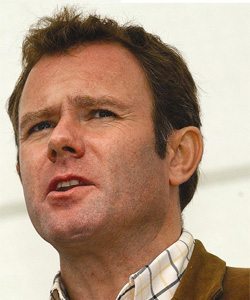
As soon as the story broke jounalists showed an unhealthy interest in Henry. He promotes a club night at a venue the Royal Princes like to go to. That's gold dust to the Daily Mail.

He is gay, out and by all accounts camp. The Sun loved that.

He has a Facebook profile - perfect "research" for the lazy journalists, who stole pictures and wrote shit 'profiles' of Henry with the crappy scraps of information they found online.

Even The Times and The Independent found time to comment on Henry's sexuality.

Is that homophobia? Well, it is hard to tell.
If the Conway child had been a female socialite, with a reputation as one of the best connected young people in London, who ran club nights in trendy venues, it is likely that would have got just as much coverage.

"MP pays socialite daughter" is perfectly plausible, especially if this fictitious creature was attractive.

However, there is something nasty about the newspapers' reporting on Henry. The smell of old -style homophobia that the British press used to be notorious for.

Even if Henry worked as a vicar in an inner London parish and gave all the money to the poor, the tabs and even the "respectable" papers would have mentioned his homosexuality.

Today his father hit out.
"One newspaper even tried to suggest that he'd had a sex-change on the NHS," he said.

"It is complete rubbish. These homophobic clowns think every gay wants to be a woman.
"Why should he be pilloried for being gay? He's my son."

Now while that is particularly low, and probably homophobic, it strikes me as no less serious than the shit everyone else unlucky enough to be ripped apart by the tabloids has to endure.
The way Henry has been treated is probably homophobic.
The way lots of other people are treated in ways that do not have a handy label, but are just as despicable. The conclusion we should draw is not that the British tabloids are homophobic.
They are complete bastards to everyone.

And as for Mr Conway, this quote caught my eye and stuck in my throat:

"He (Henry) goes out as normal people go to bed. It is portrayed as a gay lad bouncing round London; drink, drugs, whatever.

"It is hard to watch when you know he has committed no crime. "
No, you are the one who has committed the crime and caused your whole family to be thrust into the limelight.

The aspect of this whole sorry incident that most upsets me is the arrogance of Conway.
After more than 20 years in Parliament, he obviously has no respect for it or for his party or constituents.

He actually conceived this scheme and thought he would get away with it. No-one would know or care.

The other thing he may have done is stop MPs employing their wives - this is a grave mistake, as well as an insult to the many women who do an outstanding and dedicated job for not very much reward.

Will Conway have to resign before the next election?
My gut instinct is no - the worst of the storm is over, he has promised not to seek re-election and the last thing the Tories want now is a by-election just before the London Mayoral elections.


Wednesday, January 30, 2008

Things move fast as Conway (sort of) resigns


Well , it has been a turbulent few days for Tory MP Derek Conway.

There he are, revelling in his anonymity, a figure of intense apathy among his constituents, and then a scandal rolls into view.

First he was censured for paying his younger son tens of thousands of pounds in public money for "work" for which there is no evidence.

Then he had to make a grovelly speech in the Commons apologising for effectively defrauding the tax payer.

That should have put an end to it all, except revelations come to light that he may have also had a previous similar arrangement with your elder son. And his wife also works for him.

Suddenly Tory leader David Cameron is withdrawing the whip, while opponents talk of police investigations.

Today Derek Conway effectively ended his career, annoucing that he would be stepping down at the next election.

Dozens of MPs who employ family members are jittery. Most of the A List of Tory candidates will be descending upon Old Bexley and Sidcup looking to take over this plum safe seat.

Poor old Derek. Only a week ago he must have been pretty confident of his career. Now it's over

As one wit put it, perhaps he is leaving to spend more time with his staff.

Here is how he explained his decision:

I have had tremendous support from my local party, my family and friendsbut have concluded that it is time to step down.

I stand by what I havesaid in relation to the report by the Commissioner of Standards and do not wish to add to those comments at this time.

Since joining the Conservative Party nearly 40 years ago I have had the privilege of serving in public office since 1974 and have done so to the best of my ability.

I have advised the Chief Whip and the chairman of my local Conservative Association that I shall not seek to continue as the Conservative Party Candidate for Old Bexley and Sidcup at the next election.

Though not an original supporter of David Cameron for the leadership of my party, I believe that he has shown he has both the ability and the character to be Prime Ministerof our country and I do not wish my personal circumstances to be a distraction in any way from the real issues that have to be addressed.


Tuesday, January 29, 2008

Conway scandal delights Labour


Every Labour member I spoke today could barely contain their glee at revelations that Tory MP Derek Conway had paid his son close to £45,000 as a “researcher,” despite there being no evidence the boy had done any work.

Indeed, considering he was studying full time in Newcastle, some distance from both Parliament and his father’s outer London constituency, it is hard to imagine what substantive contribution he could have made.

To be sure, the scandal has taken the spotlight off Labour – in the last news cycle Gordon Brown was having to stand up for Alan Johnson in the face of another scandal about deputy leadership campaign donations.

The PM must have wished there had never been a deputy election.

The Conway scandal is much more serious than the Hain incident, and it is telling that it took David Cameron a day to decide to remove the whip from Conway.

A spokesman for the Tory leader was saying yesterday: "Derek Conway has apologised fully on the floor of the House.

"The whip will not be withdrawn. The proper punishment has been administered."

Today, the Leader of the Opposition said that he has reconsidered and apparently realised that the offence was so great (the offence being moving the spotlight away from Labour sleaze) that Conway would receive the ultimate punishment.

Wasn’t it David Cameron who solemnly declared just the other day that the PM had dithered in not removing Hain from office before the Electoral Commission referred his campaign donations to the police?

Now it appears poor Conway also had a similar arrangement with his elder son, Henry.

I am sure you have seen a picture of Henry. A very flamboyant-looking young man in my view.


Look, there he is with former Eastenders starlet and Cockney sparrow Martine McCutcheon.

He has variously been described as a fashion writer, a club promoter, a “socialite” and, in the inimitable words of the Daily Mail, “he is a regular at gay clubs frequented by Elton John and David Furnish, and once described himself as "blond, bouncy and one for the boys."”


Fabulous!

In any case, it appears that Mr Conway’s generosity will spell the end of a Parliamentary career that began in 1983.

We will have to wait and see if Peter Hain can clear his name – it is unlikely he will be asked to rejoin the Cabinet.

So far Harriet Harman, Peter Hain and Alan Johnson have been accused of improperly declaring donations to their campaigns for deputy leader.

Labour MPs must be hoping that Hilary Benn, Hazel Blears and Jon Cruddas were more diligent.

Friday, January 25, 2008

The cabal around Ken


Although I think he has done his fair share of bad things, I am a bit of a fan of Ken Livingstone.
Why?
Because he is a proper Londoner. He likes a drink of whisky when he is answering Assembly questions? Good lad.
He accurately reflects the cheeky, lairy and cocky instincts of many of us in this city.
Channel 4 did their best with their expose documentary about Ken to dig some serious dirt, but I have to say that if all they could find after eight years in office was a bit of boozing, a streak of arrogance and some dodgy loans to dodgy community projects, then Ken must be cleaner than I thought.
The most hilarious part of the "expose" however, was the revelation that Ken had surrounded himself with a cabal of former Socialist Alliance comrades and - get this - employed them AND paid them salaries.
As I lay in bed this morning listening to Ken on the Today programme, I was amused by the thought that, in adopting the same alarmist tone that Martin Bright did in his Channel 4 hack job, you could make anyone sound sinister.
"A member of a tiny elite who think they are born to rule, he siezed control of the Conservatives when they were at their lowest ebb.
"Vandalising this once-great party, he moved quickly to surround himself with like-minded cronies.
"Committed to fanatical market solutions, he has learned, at least in public, to temper his hard Thatcherite views.
"However, with his gang, their committment to capitalism and the overthrow of the Blair/Brown consensus remains undimmed.
"There is Boris, a fellow member of the secretive Bullingdon Club, on over 60k a year in a sinecure job for life as MP for Henley.
"Two-brains Gove, feared for his ability to rip opponents apart.
"The intimdating figure of Nick Boles, a man who manipulates policy to suit the new, rightwing agenda.
"All of these men were close to Cameron as he plotted his rise to power, most of them given highly-paid jobs at Westminster, the better to advance their leader's cynical agenda."
Easy.

Tuesday, January 22, 2008

Thatcher wheeled out to vote against gays


You can always tell that the forces of conservatism are on full tilt then they wheel out their beloved icon and former Prime Minister to vote in the Lords.

Yesterday, in a doomed attempt to block perfectly sensible proposals to allow same-sex couples to be recognised as the legal parents of children conceived through the use of donated sperm, eggs or embryos, Baroness Thatcher was seen wandering through the lobbies accompained by arch-acolytes such as Lord St John of Fawning and the skinhead Tebbit.

The proposal means that a lesbian lady who gives birth and her civil partner will both be recognised as the parents of a child conceived through assisted reproduction.


Two men will also be able to apply for a parental order to become parents of a child conceived through a surrogacy arrangement.

This modest change in the law is like a red rag to the homophobic bulls of our public life.

I suspect the hand of shady organisation the Christian Institute in the mobilisation of La Thatcher (she’s 82 and by all accounts her once powerful intellect is tragically denuded.)

What was heartening about last night’s Lords vote on the Embryology Bill was the kicking the "need for a father" brigade got – their amendment was defeated by 60-odd votes, which in Lords terms is a disaster.

The family values campaigners, who of course are attempting to weaken the tens of thousands of non-Waltons families that already exist in our country, pulled out all the stops and fell flat on their face.

It certainly seems to have put their nose out of joint – only a few hours ago, in a debate on the proposed new offence of incitement to hatred on the grounds of sexual orientation, one of the more … errr … colourful members of the House had a big rant about gays having too much influence on the government. Read all about it here.

It must be a dark time to be a member of a sect such as Christian Institute – like a sort of a reverse Midas touch. Everything they touch turns to turd.

Still, at least Jeebus is on their side. Or something.

Sunday, January 20, 2008

politicsjunkie returns!

After a year away from blogging, I have decided I can’t live without it.

While editing PinkNews.co.uk, Europe’s largest gay news service, continues to be an exciting way to pass the working day, I find I do not get enough time to comment – and as you know I do love to comment.

In honour of the re-commencement of my blog, I have reproduced some of the best of the interviews and comment pieces I have written for PinkNews.co.uk in the past twelve months.


2007 was a great year for me – the first time I got to interview Cabinet ministers, my first visit to 10 Downing St, my first (and so far only) experience of seeing Tony Blair speak in the flesh.


I was particularly lucky to be able to interview both candidates for Lib Dem leader, all six of the contenders for Deputy Leader of the Labour party and receive a nomination for the Stonewall Journalist of the Year award.


Some person from The Independent won it.


A personal highlight was the party conference season – my first as a political journalist.


I guess I was not prepared for how much fun they are, and how much alcohol is consumed.


I can’t wait for 2008.


Yet there is so much to think about before then.


A London mayoral election that is already too close to call.


A Presidential election in America that could bring real change or more of the same.


A critical year for the Prime Minister.


Can he turn around his image and his party, pick up some council seats in the May elections and push forward into 2009 ready to win an historic fourth Labour term?


And what of Nick Clegg? Always a favourite of mine from the day he gave me one of my first high-profile interviews, he is yet to make a significant dent in the public consciousness.


Will the new confident Tory party squeeze the Lib Dems firmly onto the sidelines? Or will Cameron also falter, his new sheen dulled by the daily rough and tumble of Parliamentary politics?


And when IS Michael Martin going to stand down as Speaker?


Who knows – one thing is for certain though – with a new occupant of the White House to be chosen, and in the most wide-open race in decades, 2008 is going to be a political year to remember.

December 07 - Interview with Nick Herbert, Shadow Justice Secretary


The 2005 intake of MPs contained the usual mix of the good, the bad and the barmy. There were dozens of new Conservative MPs, a brace of freshman Lib Dems and hardly any new Labour faces at all.

The new Tory boys and girls were instrumental in propelling David Cameron into power, and he has rewarded the best and the brightest with seats in his Shadow Cabinet.

Nicholas Le Quesne Herbert is one of two Nicks who first sat on the green benches two years ago to keep an eye on in the years ahead.

Great expectations follow them around the corridors of Westminster.

While Nick Clegg is the clear favourite to become leader of the Liberal Democrat party later this month, Nick Herbert is making a name for himself as one of the new stars of the Conservative frontbench.

As Shadow Justice Secretary, he speaks for his party on diverse topics such homophobic incitement, prisons, constitutional reform and the funding of political parties.

The first openly gay man to be elected as a Conservative MP, he is destined for a frontline role in any future Cameron administration.

When we met in his Commons office the government was under siege over dodgy donations, and the new Tories were getting their first taste of just how badly the next few years could go for Prime Minister Gordon Brown.

Nick was, unsurprisingly, in a good mood as we talked gay rights, the future for party funding and how it feels to be a minority MP.

Let's start with the government's woes. What is your take on the donations scandal?
It appears that Labour has systematically attempted to undo or evade its own party funding laws. This will dismay the public.
What is doubly serious is not only that the law has been broken, as the Prime Minister said, but there has been a systematic attempt to evade the law by the party that was parading its high moral credentials in introducing this legislation, beating up all the other parties at the time for their approach to this matter, and yet has sought to evade its own legislation not once but twice.
Labour's chief fundraiser, Jon Mendelsohn, who was appointed by the Prime Minister in June, learned about Mr Abrahams' proxy donations last month, but was unaware that they were illegal. Is that credible?
It is completely incredible that those people who are officials involved in this fundraising effort do not understand the law.These are now matters for criminal investigation but in my view these are very serious indeed.
What do the Tories propose by way of reforming party funding?
We have called for a cap on all donations from whatever source, of £50,000, and unfortunately that is not possible. Labour is refusing to agree to that because they will not cap union donations.They should rethink that policy urgently.
It is clear that we need to build public confidence in the way in which parties are funded.The union bosses have control over these funds and we just think there should be one rule that applies to everyone.
But what about your own party. Are you entirely confident your own house is in order?
We are absolutely sure our own house is in order, that has been made clear. We know who all our major donors are.
We go through all the proper compliance procedures, but we have said let's have a cap on donations so that no party has to be reliant on major donations.
And what about public funding for political parties?
We are much more interested in reducing the cost of politics and that is what David Cameron has made clear.
Speaking of David Cameron, you must be very upset that his trip to Washington DC was overshadowed by this awful government scandal?
Well, all Shadow spokesmen over the last two or three weeks been making major speeches, I made a major speech on prisons, which are all receiving far less attention than they might otherwise have done.
I proposed to sell off our Victorian prisons. That was a fairly radical thing to suggest, but the government has found itself in such difficulties. That's politics.
Let's turn to incitement to homophobic hatred. At party conference in October you said that you'd wait to decide on whether to support it until you saw the amendment.
The government's now brought the amendment forward. Tell us what you feel about the government's proposals needs finessing or changing?
Well firstly just to make it clear, in committee the government's amendment went through without a vote, and the official opposition broadly supported the approach.
We think that hate crime has no place in a civilised society and inciting violent hatred against gay people plainly is totally unacceptable. The question is where criminal law should be drawn.
You and I would agree that when people say things which are abusive or insulting about gay people that that can be hurtful and wrong and in our eyes unacceptable but that's not to say that it should always be a matter for the criminal law.
I think that where there seems to be a consensus is that we must just make sure the law is drawn in the right place so that it's outlawing those acts which incite violence but is allowing free speech.
It's what Stonewall describes as "temperate comments" and that's what I think we are all trying to achieve, I don't think there's any disagreement about that between the major parties. We tabled our own amendment which had a very similar effect to the government and the minister said that she welcomed much of the amendment.
This matter will come back to the floor of the Commons I suspect, and I think that there will be Members of Parliament who are simply seeking reassurance that free speech is not going to be outlawed.
That people who have very strong religious conviction are going to be able to express disapproval of gay people. You know, I wish they wouldn't, of course. I think they're wrong but I think they must be allowed to hold those views and express them in a temperate way, provided, that is totally different, to someone seeking to incite hatred that is going to lead to violence against a community by spreading really vile literature and so on.
You seem to be saying that the lessons from the Race and Religious Hatred Bill have been learned.
I think the government has learned them and that's why they've modelled the provision more on the religious hatred side but we will just need to make clear, now it could be through guidance. It may be that the government's amendments doesn't require any further amendment.
We don't want to see the protection that the government is offering significantly weakened.
What we want to see, ensure is that free speech can be protected. It may be that that can be done in the form of guidance and so on. So I think it will need further debate, but I think also there is good will on all sides to try and get this measure onto the statute book.
Those two groups normally referred to as Christians and comedians will still be able to express their views, mock, insult or abuse?
Yes, as you know insulting or abusive words are out of the protection and that I think is a major difference between the racial and religious hatred legislation.
It should give the protection which the church seeks and comedians and so on seek. Now that means that they are going to be able to say things that makes us very uncomfortable, but we must engage with them and recognise that actually what we are trying to protect here is a decent civilised society and one of the qualities of a decent civilised society is that it protects free speech, except where that free speech really has to be criminalised.
It seems to me there has been an almost a wilful misunderstanding of legislation as it affects gay people. There seems to be a similar kind of misunderstanding of IVF provisions. Where do you think that misunderstanding about 'gay' legislation comes from and does it amuse or frustrate you when you read reports that are so wildly inaccurate?
It doesn't often amuse me. Sometimes its because proposals are made without the detail yet being available and I think that was the case in relation to the government's proposal on incitement to homophobic hatred.
I think people thought that it was going to be a wide-ranging offence that would prevent them from saying things that were perhaps comment on the basis of their Christian belief or some kind of joke.
As people see how the legislation is drafted they will become rather more reassured.
How do you feel about being a minority MP?
Am I a minority MP?
Well you are, aren't you? You're a gay MP and that makes you a minority MP in the same way that if you were black you would be a minority MP, or a Muslim, you'd be a minority MP. So clearly you don't think of yourself as a minority MP?
No I don't. I think of myself as an MP as a constituency Member of Parliament doing my best to represent my constituents in West Sussex.
I don't like labels that put people into a box and I think I've always taken the view that I wanted to be selected on my merits. I wanted to be elected on my merits and I think I was.
I want to be able to say things without people putting a label on and I think that's what a lot of gay people want. They just want to be treated as equal people in a society in which we live. They don't necessarily want to say, I'm different. Please treat me as different.
Rather the reverse, they want to say, I'm the same. Please treat me as the same. But having said that, the one thing that I have come to realise since I was elected as an out gay MP is that it's very important to other gay people.
Much more important than I realised. And I've come to realise that through the emails and letters that I get from individuals, including young people, including people going through school, including people who are actually trying coming to terms with coming out at a much older age.
Not just people who are Conservatives but often people who are, not surprisingly, in my own political party, they write and they say thank you for being out and open, because you've given me great hope that I might one day be able to be a Conservative councillor or a Conservative MP, or just be whatever I want to be in my community, without people thinking that there's anything wrong with that.
I've really come to understand that.I think initially I was trying to say, "yea look right I'm gay, next question," but actually it does matter, it matters to other people because we still live in a society where people feel inhibited about being open about their sexuality.
I've realised Alan Duncan (the other out gay Shadow Cabinet member) and I do have an important role in the Conservative party in making people say "look the Conservative party has changed, it doesn't matter if you're gay or straight, what matters is that you're Conservative."
You've had a pretty rapid rise to power.
Well I haven't got power yet.
Well, you know, influence. You're in the Shadow Cabinet and you've only been in Parliament for two years and a couple of months. What do you ascribe that to?
(Laughs) You'll have to ask others. I think I've been incredibly fortunate, you know I was selected at the last moment for a constituency in a fantastic part of the world.
I live in Arundel which is just a great town for anyone who's visited it. I feel incredibly privileged to be an MP, but I feel really privileged to be representing Arundel and the South Downs, it's a great part of the world and I'm very lucky and I also feel lucky because I've kind of come in to this just at the time when the political sands are shifting.
We have a new leader who has transformed the position of the Conservative party.
You mentioned your constituency, I was having a look at your schedule which you've very kindly put on your website. It seems that you're going to two Christmas parties in the next few days. How many Christmas parties does a conscientious constituency MP have to go to?
I don't know. But I think I'm doing about 20. By the time I get to Christmas, I'm never going to want to look roast turkey in the face again that happened last year.
The truth is if you're like me and really enjoy Christmas, I actually think that it's good fun, I have the opportunity to do it 20 times over.
They've started already, they started in November. I have a very busy life in the constituency, going to community events, going to my local party events.
There's a very strong sense of community in the villages I represent and it's a very big constituency so there are lots of villages in it so there are always things going on.
Apart from the great, huge enjoyment of being an MP is that you do four days a week up in Westminster, that's kind of intense and everything, but then you are down in the constituency doing the community work and it's actually that side of things that I really look forward to.
Talking of the constituency, well I get asked a lot if you've got a boyfriend, but I understand you do have a partner called Jason?
Yeah.
You've broken a lot of hearts there Nick.
That's very kind of you!
Does he have to do the role of the constituency wife?
Well I think a lot of the younger MPs of whichever party, whether they're gay or straight, it's very likely that their partners will be working, will have their own careers.Jason certainly is, he's a solicitor so he has his own career.
He often jokes about making vol-au-vents and so on, but the truth is since he can't cook to save his life, so it's plainly not true.
Jason was welcomed by the local party from the minute that I was selected and he supports an enormous number of the local activities, comes along to them and he's just treated as anybody else is treated.I think it's one of the marks actually of the way in which the Conservative party really has changed.
We haven't had an iota of criticism or rejection, rather than the reverse. He'll be coming along to one of the lunches that I'm going to tomorrow and they've specifically asked him to.
Do you think that model of the constituency wife is a little bit outdated?
What I think is outdated is the idea that you might have a partner and you are the principal person and your partner is the secondary person.
That's completely an outdated model. I think that being an MP is a job where I would find it very difficult to do without the kind of support that I get from him and I think a lot of MPs would say that about their wives, their husbands and their partners.
How long have you two been together?
Eight years.
Were you out at university, after university?
No, not at all. I mean I think that like a lot of people I was kind of crap about this, you know, really, really crap about this. And the thing is of course, once you're out, it's so easy to forget just what a huge deal this is. And at whatever age you are.
When I got around very late in the day to telling my friends, family and so on, and the funny thing was that a lot of my friends just said "Yes, right, well we kind of guessed that, you know, it's taken you a very long time to come right to telling us."
For a lot of young people and for old people it is still the most difficult thing to do and people need a lot of support and so on. Be reassured that it may seem the most difficult thing, but coming out will make you feel honest, powerful and liberated.
Do you feel now that the Tory party is there in terms of being fully accepting of gay, lesbian, bisexual and transgender people?
I think the party, I think we really are getting there.
We hear different things from the Tories in the House of Lords every time they talk about gay rights.
I think it is self-evidently that the party has moved. You have two out gay MPs both of whom happen to be in the Shadow Cabinet. You got the stances that, the frontbench led by David Cameron. we took on the sexual orientation regulations, the stance that we have taken in relation to this incitement to gay hatred provisions.
Still the bulk of the party, the majority of the party it would appear, voted against.
Actually most people didn't vote that day, because the vote was not expected and people weren't there, as I explained at the time.
Surely, the important thing is the signal that the frontbench was sending. I see among my own intake, which is about 50 conservative MPs who were elected last time, a change of attitude.
And I think it's fair to say that some of the recent legislation has raised very important issues about freedom of religious conscience. Both the Sexual Orientation Regulations in respect of gay adoption and the current regulations in relation to current bill, incitement in relation to free speech, and you shouldn't dismiss that.
And there are plenty of people, including gay people, including people who are otherwise very sympathetic to the gay rights agenda, who have concerns about this legislation, that it should not go too far, that it should be balanced, should protect free speech, should protect freedom of religious expression.
I didn't think myself that the sexual orientation regulations as it applied to gay adoptions was an easy issue to decide, because it appeared to involve competing rights.
I think that it's quite clear that we are a party that is changing its attitudes towards gay people and I am very proud of the fact that we are doing so and have a leader who is determined that is one of the things we should do.

Read an interview with Lib Dem Justice spokesman David Heath here.


http://www.pinknews.co.uk/news/articles/2005-6306.html

October 07: Michael Gove on homophobic bullying


While many in David Cameron's Conservatives are recent converts to gay equality, including Cameron himself, there are a few who spoke out long before it was fashionable.

The Shadow Secretary of State for Children, Schools and Families, Michael Gove, was urging the party to break with the past long before he took his place in the House of Commons.

Elected in 2005 to represent the true-blue constituency of Surrey Heath, Gove is a clever, articulate Scot, a former Times journalist and new Tory through and through. He used to share a flat with prominent gays Ivan Massow and Nick Boles, and during his time as a columnist he spoke out in favour of gay equality and even praised Will & Grace.

"Sexuality is incapable of being swayed by "promotion" in schools," was his common sense take on the hated Section 28 in 2003, when the Tories were still supporting it.

"You can no more "promote" the idea of becoming gay to a testosterone-fuelled, Key Stage 4-taking, FHM-reading, Jordan-ogling male teenager than you could have persuaded the young Graham Norton to make an honest woman of Ann Widdecombe," he continued.

"The intractability of your sexual orientation, and the folly of trying to change it to fit in with social pressure, forms one of the running gags in Channel Four's marvellous comedy Will and Grace.

"As the title itself prompts us to realise, your sexuality is not a simple matter of free will. It is something beyond your power to effect. Like the operation of divine grace."

The party, under the quietly suicidal leadership of Iain Duncan Smith and later the spine-chilling Michael Howard, continued to wear prejudice against gay people almost as a badge of honour until the arrival of David Cameron.

Gove, who is married with two small children, has risen quickly through the ranks since becoming an MP, making a name for himself as a quick-minded debater and as someone skilled at making simple statements about complex ideas.

Just before the summer, the first major ideological crisis for the "new" Tories was over grammar schools. The party's then-Education spokesman David "two brains" Willetts made a complete hash of explaining policy, seemingly announcing that the Tories no longer supported them, angering many.

Willetts was moved sideways at the first opportunity and replaced by Gove. At 40, he is a central figure in the Notting Hill set that surrounds Cameron.

He was promoted to the frontbench as soon as Cameron became leader, and in July was promoted to the Shadow Cabinet, one of a handful from the new intake at the top table.

He shadows Ed Balls, the Secretary of State for Children, Schools and Families, and has been a vocal supporter of new guidelines aimed at tackling homophobic bullying in schools.

I spoke to him about faith schools, the importance of sex education, double standards at the BBC and what age to start teaching kids about gay relationships.

What was it that spurred you to give the new guidance on homophobic bullying such a strong endorsement?

Michael Gove: The first thing is that bullying for all is a significant problem, a growing challenge, and it reflects some of the weaknesses, the broader weaknesses and challenges that society faces overall.

Two things I think reflect the way society has changed, and has shown up in the way bullying manifests itself, and that is as Britain has become more multi-ethnic and more multi-cultural, there is a real danger that there is a racially prejudiced tinge or a culturally prejudiced tinge to bullying.

I think that people are rightly aware of that, though as ever the government has a role to play in disseminating guidance, which helps people deal with some of the cultural challenges.

The other thing that's a related challenge is that as society has grown up and become better able to deal with sexual diversity, there are still taboos to be tackled and difficulties that need to be dealt with when it comes to adolescent sexuality.

In particular I think it's the case that society is still finding it difficult to work out how to deal with young people below the age of consent who are attempting to deal with a sexual orientation that is not the majority orientation.

That requires some sensitive handling.

You can't pay attention to popular culture and what's happened in the last ten years without being aware of a nasty edge to bullying and intimidation and sometimes it can have a homophobic element to it.

Many of us will remember the controversy around Chris Moyles, the Radio 1 DJ.

I myself do not believe that Moyles meant to be malicious. I'm sure that he regards himself as an equal opportunities tease, as it were, but what he's doing is picking up on the fact that 'gay' as a word has been used to intimidate in a pejorative sense, and without having to go into details about language, there are other examples of that. It's a complicated area.

I wanted to pick up on racial bullying. There are actually legal requirements surrounding racial bullying - schools are legally required to record it and the authorities are required to deal with it.

Homophobic bulling just gets 'guidance,' which is voluntary. One of the concerns about guidance is that at present 75% of gay and lesbian pupils at faith schools are bullied.

A much higher figure than in other schools. I want to know how you feel it is going to be possible to present guidelines to a Roman Catholic school or a Muslim school, when clearly they have views that are going to clash with that.

Well it is going to be tough, it is going to be a challenge because I support faith schools. I also support the right of individuals to believe, if they wish to, that homosexual behaviour is a sin.

The basic nature, the basic compact of British society is that you can believe what you like. But schools, if they are funded by the state, have to be a prejudice-free zone, they have to be zones where you respect the moral and ethical codes of the great religions, but it's also the case that there are basic minimum standards that have to be upheld.

That means when it comes to the treatment of women or to the treatment of anyone who might have a different sexual orientation from the majority, or from that prescribed as "optimal" by the faith, they have to show they are sensitive to those needs and respectful of them.

Now, I am not in a position to speak definitively about how you can negotiate those boundaries, but the one thing that I'm clear about is that there's a compact.

Faith schools have an ethos that's influenced by their faith and they have the right to insist that when it comes to appointments, people subscribe not just to the ethos but also to the religion.

They can be clear about what they consider to be the highest ethical standards, but at the same time they have to also be clear that if there are examples of behaviour which are prejudiced or intimidatory, based on someone's sexual orientation or their gender or their cultural background, then that's unacceptable.

The contract that comes if you're state-funded.

Exactly, and as I say these are uniquely sensitive areas because the contract at the heart of British society preserves the right equally of a fundamentalist Muslim preacher to hold certain views and of a militant atheist to hold his views and we have to hold the line between them but with institutions like schools have that challenge to respect both.

What the faith expects and also what society expects.

What part does sex education play here? Surely it is a mechanism by which ignorance can be defeated?

Yes, I think that one of the things I am cautious about is prescribing in detail every aspect of the curriculum. I think that teachers find that a great deal of prescription, often very well meaning, constricts their freedom to teach in the appropriate way.

I think that what you need is a light-touch curriculum, clear boundaries, proper inspection from Ofsted, and that can provide the groundwork.

Of course sex education and the other things that the curriculum has, such as PSHE, which is this broader menu of teaching, which covers personal and sexual developmental and health issues - there are things which can be taught there.

There are also things that can be taught in citizenship, so that people can understand the diverse nature of Britain, why we are where we are, and the respect that we have towards people from different backgrounds and who follow different lifestyles.

So you think they should be teaching civil partnerships in citizenship classes?

Well the key thing is that I wouldn't prescribe a particular model of teaching these things.

But I do think that one of the things is that sex education is there first to provide young people with an understanding of human biology and also to provide them with the tools and the knowledge to be more aware of their own bodies and the risks they can run.

A good school will teach children to respect themselves and their own bodies. Not just through sex education but generally through the way in which discipline is enforced, the way in which boundaries are set.

Doesn't that mean that faith schools can just not teach civil partnerships and not teach homosexuality as an acceptable thing or even mention it, a Roman Catholic school doesn't have to teach that...

You are quite understandably trying to draw me in to prescribing the curriculum. There are certain minimum standards that one should have ....

Isn't why civil partnerships exist a key part of citizenship?

I think that there are a variety of issues here. I believe that Britain is a better, healthier and a more advanced society because we deal with discrimination on the basis of gender and sexual orientation, and civil partnerships are part of that.

But I also recognise that British society is a delicate contract. I recognise that in order for diversity to work you've got to be firm and clear about what is acceptable.

You've also got to be open to negotiation with minority groups about their beliefs. More broadly, with the curriculum, it is also clear in my mind that there should certain things that we expect, but how schools achieve them should be up to them. Because to specify that a Roman Catholic school should teach precisely this set of ethics in this way in order to ....

This is not an ethics issue, this is a citizenship issue.

We have two forms of commitment in this country, marriage and civil partnerships, this is not a moral issue.

It is one of the basic things - if you are going to teach them about how to be good citizens, how to vote, what voting is about, but you are not going to mention that we should be proud of the fact that we have created civil partnerships, the most important legal contract that two people can have ....

You are inviting me to re-write the curriculum ...

I'm asking you whether it's something that you think should be taught in every school.

You're inviting me to step into an issue which I don't want to step into in the way in which you're inviting me.

Would you hope that it's something that every school would teach?

Again you're inviting me to .... look - the key thing is, I respect the autonomy. I'm a believer in both choice and autonomy.

I have clear views, but I do not believe that it is right for me to use the education system to impose my views in every area. Both as an individual and as a politician I think that civil partnerships are a good thing.

But it is important that I do not use the curriculum as a way of advancing these things. People should develop in education a practical tool to be able to engage with these issues so that they can then challenge prejudices and ethical positions.

I know you have only been in parliament since 2005, but that's a massive change from your party's position in 1988, when you were stomping round telling local authorities what books they could and could not take into their schools, and telling them that homosexuality under no circumstances was to be "promoted."

I personally am on the record saying that I thought that Section 28 was a foolish piece of legislation.

Do you understand the point about the chilling effect across the education system, to the extent that teachers would not know how to react to gay pupils and did not know how to help them?

I completely understand the effect that it had. One of the reasons why there is the religious hatred legislation in the form which it was brought before us is precisely because they believed that it would have that chilling effect.

That even though Salman Rushdie might not have been prosecuted under that legislation, the publishers might have felt that it was inappropriate. And so I entirely understand that.

I also think that as well the chilling effect there's a direct link between an environment in which Section 28 was part of legislation and the fear that adolescents and children may have had in discussing questions of their sexuality, their lack of confidence, their concern, their worry, with an appropriate authority figure, so yes I do.

I also understand why people with traditional ethical and religious views wanted to ensure that they were able to choose schools which reflected their value system and I think that it's important that we respect that right.

I'm one of those people who takes a view of sexual diversity which is different from traditional religious teachings, but I respect what those traditional religious teachings bring to the country.

What age do you think it's appropriate to learn about same-sex couples? Is it appropriate at primary school age?

Because the sexual development of young people has become a heavily fought-over area, the one thing I'm anxious to do is strike an appropriate balance between ensuring that children who either come from non-typical backgrounds or are developing in a particular way are given support and protection.

But I also think it's appropriate to recognise that there are many parents who are worried about the premature introduction of sexualisation, not just into the classroom but into their children's lives.

I think that there is an issue, everything from the way in which children's fashion is marketed, the way in which make-up is marketed to girls, to the way in which even for young boys, children's fashion and certain roles are assigned, which are encouraging children to grow up more quickly.

I absolutely share the concern that parents have and I think that while it is important that we counter prejudice, it's also important that we recognise that it is quite right for parents to say, "I want my children to be protected from some of the inevitable complexities of adolescent life for as long as possible, I want them to enjoy and cherish their innocence away from the premature drive towards introducing that sexual element into their lives."

As a social element rather than a sexual element, there is what is called the BBC test. When a footballer gets married, (Children's BBC news programme) Newsround can't shut up about it.

When Elton John or John Barrowman from Torchwood gets 'married,' they couldn't possibly mention it because it has moved away from being a social thing to a sexual thing.

I appreciate that and I think one of the things is that society is moving and has moved in a way which is much more understanding of sexual diversity.

The fact is that over time we are becoming more and more relaxed about these situations, but it's also important that in human relations there's always a desire to lay down hard and fast rules.

Sensitivity is required. There are people, to move it into a different area, there are people, particularly older people, who are not racist, but whose discourse and conversation wouldn't pass muster as being as respectful of difference as they should be.

If people can be offended, in particular, as I say, by older people who use a form of language which is inappropriate, I would say that rather than getting on your high horse about it, one should just recognise that there is a difference between the use of inappropriate and insensitive language and active prejudice.

And most of us know when we see it. In the same way I think that it's appropriate to recognise that when institutions are being well meaning and respectful, or when there's an extra edge to it, it's incumbent on all of us to use our judgement.

I am in the fortunate position of not having been a victim of prejudice, and not having had to go through the travails that people whose sexuality has been a source of prejudice have had to.

So it's relatively easy for me to say you should be a bit more relaxed about it, because I haven't been in the firing line, but the one thing that I would say is that it's important that we as a society develop that sense of being prepared to acknowledge that if things are broadly moving in the right direction, that's a good thing and patience can be a virtue as well.

Has having gay friends helped with you with that process of understanding?

Yes absolutely. I wouldn't say that I was anything other than broadly typical of my generation. I was part of a generation that at university it was natural and normal to have gay friends and I had friends, both gay men and lesbians, coming out at the time.

Therefore I'm part of a generation that finds it difficult to understand many of the arguments that were being made by people older than us against equality.

But at the same time one of the things that I've always tried to do, it doesn't apply in every area, but one of the things that I've always tried to do is understand if people are generally well meaning but they appear to have a prejudice or a block in one particular area it is sometimes appropriate to give them the benefit of the doubt.

I think that would mark me out from some others.


September 07 - Boris Johnson interview


At this time of this interview Boris was one of the four Tories vying to become the party candidate for Mayor of London. He won the selection on 27th September 2007. The election for Mayor of London will be held on May 1st 2008.


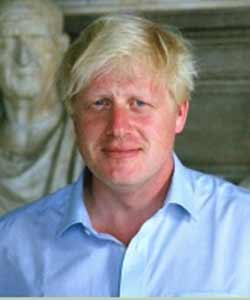
When I meet Boris Johnson in a Westminster cafe it becomes apparent, immediately after he shambles in and launches himself into a chair, that 10am is not optimum Boris time.

As he puts it in his diary of the 2001 election campaign, Friends, Voters, Countrymen, it is "a pretty ungodly hour for someone accustomed to journalism."

The interview had been in the pipeline well before Labour activists started taking swipes at him over his views on everything from civil partnerships to climate change.

In fact, the day after Boris announced his candidacy amid chaotic scenes outside City Hall several weeks ago, his press officer enthusiastically agreed to an interview with PinkNews.co.uk

The month of August intervened, and when we finally sit down to talk about his views on gays and gay issues, he has been roundly condemned as hostile to the LGBT community by left-wing groups nervous about his bid for the Conservative party nomination for Mayor of London.

In many ways he is reminiscent of Michael Foot - sartorially shambolic, though the suits have got better - and the general impression of not really caring about bourgeois concerns like neatness.

In the words of one critic, he looks like he has to keep a pitchfork in his back pocket to deal with his straw-coloured mess of hair.

He also has that vagueness that Foot possessed.

Many of Boris' stream of consciousness responses trail off or come to a sudden stop, but there is an impressive intelligence to his answers. One thing is for certain - he is not afraid to question measures that some gay people take as an article of faith - a new law of incitement to homophobic hatred among them.

43-year-old Boris - the 'Johnson' seems somehow redundant - is one of four candidates for the Conservative party nomination for Mayor of London. Andrew Boff, an IT consultant and publisher, joins Kensington & Chelsea councillors Warwick Lightfoot and Victoria Borwick in the contest, which has been opened up to the public for the first time.

All Londoners on the electoral register are eligible to vote by phone or postal ballot.

This "open primary" of voters closes on 26th September and the Tory candidate will be announced soon after. Boris, the clear front-runner, stakes out his message to London's gay community pretty clearly - he is a libertarian.

He thinks Section 28 was a bad idea, he voted in favour of civil partnerships and he will "fight against" homophobic attacks. That probably means he will attempt to use his powers to combat them, but could just as easily mean he will pile in, head first, to bash the homophobes himself.

That's the thing about Boris. He claims he is always being misinterpreted.

The many hundreds of articles he wrote in his years as a rightwing journalist and columnist do give his opponents easy pickings, he admits.

"I am on record with loads of provocative articles about loads of things, but if you take the article as a whole, they always amount to robust common sense," he claims.

He laments the tactics of Labour activists, who have pre-empted even his selection as Tory candidate by producing a 17-page document highlighting a range of those provocative statements from his pre-2001 journalism.

One quote in particular, taken from his 2001 book Friends, Voters, Countrymen, has angered and upset many gay people:

"If gay marriage was OK - and I was uncertain on the issue - then I saw no reason in principle why a union should not be consecrated between three men, as well as two men; or indeed three men and a dog."

This infamous passage actually refers to an incident where Boris was jogging and was verbally assaulted by "three youths."

He challenges them, they respond that they had formed a bad impression of him from a TV appearance, and he wonders if comments he once made on BBC current affairs programme Question Time (see above) were the reason they disliked him.

"What I was saying was that I am generally a libertarian," is Boris' response.

"What they are trying to do is they are trying to invent a character or create a turnip ghost, a kind of scarecrow figure they can attack because its much more convenient to have some sort of crypto-fascist, foam-flecked, Norman Tebbit-type Tory instead of me.

"They have gone back through thousands of articles, millions of words, to try to find a few phrases that they can take out of context to demonstrate I am something that I am not."

But clearly comparing a loving gay relationship with "three men and a dog" is in any context insulting.

He disagrees, and denies that such comments imply that civil partnerships are not equal to marriage and are instead are just a sort of contract.

"No, no, no, no, no," insists Boris. "I am genuine - I come from a family, I have Muslim ancestors, my ancestors believed in polygamy and I believe in loving relationships between all sorts of people to be valid, I really do."

He pauses for a moment, suddenly aware that he might have caused even more outrage. "I don't want to get myself into more trouble than I need to be," he adds.

"I am in favour of civil partnerships and I voted in favour of them.

"I was cycling up Shaftesbury Avenue the other day and there were two guys in a rickshaw who had just got married and they said, "Hey Boris we just got married" and it was wonderful."

On Section 28, which in fairness he did vote to repeal on one occasion, the incumbent Mayor of London, Ken Livingstone, has directly attacked his record.

"He struck a stance in support of the anti-lesbian and gay Section 28 and now wishes to be seen as supporting London's diversity," Ken said.

Again, in this race, the 'Livingstone' also feels slightly redundant.

The aforementioned 17-page report from left-leaning think tank Compass also highlighted some comments from Boris, written before he became MP for Henley in 2001 that appear to support the aims of Section 28.

"Slowly Labour is winning the battle it really cares about, the Kulturkampf, adjusting what can be said, and what cannot be said... Homosexuality is to be taught in schools." The Spectator 29 April 2000.

"I am not sure how widespread this new right-on mood really is. Metropolitan opinion was wrong-footed over Section 28." The Spectator 29 April 2000

Boris accepts the historic anger of gay people over towards the Tories over Section 28.

"I disliked all that (the way the Tories acted in the 1980s) and what I disliked about it was the way they were trying to whip up people's feeling of identification with the Tories by trying to make them hostile to another group.

"I hate all that stuff. In a way this is also my objection to the way the current incumbent is running London. It's all about trying to build up loyalty by trying to bash other groups."

I suggest that this would be a perfect opportunity to apologise to the gay community for Section 28.

Surprisingly, given that he has probably apologised more times than any other mainstream politician, he rejects this relatively easy option.

"I hate all this gesture politics. I am not convinced of the political value of endlessly apologising to absolutely everyone.

"On Section 28, what it was trying to do, what the whole argument was really about was about homophobia and tolerance.

"It wasn't really about the practicalities - it was about what you thought about it. It wasn't ideological - it was personal and I dislike it because I think all human hatreds are, when you dissect them, all irrational human hatreds are always really about your own feelings about yourself in some way.

"Anyway I think it's all bollocks and the sooner we get over it the better."

The existence of LGBT liaison officers within the police seemed to be news to Boris, but he is keen to praise the Met generally.

"I didn't know about those community support officers working specifically with the gay community but I'm in favour of safe neighbourhood teams and teams of community support officers that work with communities of all kinds.

"I think it's a fantastic way of improving everybody's sense of security on the streets of London."

Many groups, among them Stonewall, argue that attacks motivated by hatred of gay people should be covered by a new homophobic hate crime law. Boris takes a different view on the likely effects of such a law, especially on people's right to criticise homosexuality.

"Of course I want everybody to feel safe, and I deplore homophobic attacks, I think they're outrageous and disgusting and I will fight against them if I'm lucky enough to be Mayor.

"The point I'm trying to make to you is I loathe acts that encourage hatred of groups. But sometimes the very measures we take can kind of stir things up rather than produce harmony.

"What I worry about is that you have erosions in free speech that I don't think anyone in the gay community would ultimately support. We are all basically, what we want is for people to debate freely and rationally and not to succumb to bigotry."

Ken has, of course, been very vocal in his support for the gay community. Boris says that funding for Pride London will continue if he becomes Mayor ("The idea of gay Pride seems very good. Right on!") and the community generally is one he stresses his support for.

"London has a fantastic record of being attractive to gays around the world and being a place gays feel they can come and be safe and where they will have a tolerant society. That's what I want."

He even tacitly agrees that the office can be used to encourage other cities to become involved with the global struggle for gay equality, while making clear he will not have a "foreign policy" like Ken Livingstone.

"I'm not in favour of the Mayor intervening on every matter of global controversy but yeah I think there are things he can do to improve people's lives elsewhere."

A lot has been written about Alexander Boris de Pfeffel Johnson's background.

Eton and Oxford-educated, he has been close to party leader David Cameron since university.

The seemingly bumbling Boris has been editor of The Spectator, Brussels correspondent and later a columnist for the Daily Telegraph, and MP for Henley since 2001.

Michael Howard fired him from the frontbench in 2004 amid accusations he lied about his extra-marital affair with journalist Petronella Wyatt. Brought back to frontline politics by Cameron, he has proved popular as shadow higher education minister.

His many TV appearances have added to the public perception of Boris as a sort of Bertie Wooster-ish genial buffoon, but that convenient caricature conceals an ambitious political animal.

He did not bumble into a high-profile political career – indeed in his 2001 diary of his campaign for Parliament, he says he "always knew" he would become an MP.

Despite his early ambition, he smoked cannabis in his youth. Today he takes a traditional Tory line on London's established drug culture.

"I'm deeply against drugs. I loathe them. I think they destroy lives and they've changed since my last experiences of cannabis, which were a long time ago.

"I don't want the police to concentrate on rifling through the sock drawer of every student in the hope of finding a rabbit dropping of cannabis resin.

"I think if they do find it they should take action and I don't think they should be tolerant but what we want are serious crimes to be dealt with as well, and that was the point I was trying to make about cannabis.

"I have to accept as someone who took it years ago is that the drug has changed and it's far more potent and everything I read now tells me it has much more damaging psychotropic effects and it's a much more effective gateway drug than it used to be.

"I think most people strongly disapprove of drug culture. I don't think anybody really wants to see London turning into anything like Amsterdam was a few years ago, last time I was there, with a really sleazy atmosphere and lots of places really suffering from the tolerance of drugs."

A few months ago, the smart money was on another Cameron ally, Nick Boles, winning the Tory nomination for Mayor of London. Unfortunately, Boles dropped out unexpectedly when he was diagnosed with cancer, from which he is expected to make a full recovery.

Boris denies his very late entry into the race was David Cameron's idea, and claims he had thought of running for Mayor before Nick Boles withdrew from contention.

"I wont deny it had crossed my mind but I am a friend of Nick and a supporter of Nick and I was very, very sad when he had to pull out - and he encouraged me to do it."

As for his own credentials, as the only candidate for the Tory nomination never to serve in local government in the capital, he has come under fire as a carpetbagger.

"Well I've always loved London. I've always thought London was a fantastic place. I lived in London on and off most of my life.

"And I remember when the idea (of an elected London Mayor) was mooted years ago by my predecessor, actually, Michael Heseltine, thinking my God that's a good idea - we do need a spokesman, the place does need a voice."

A voice silenced by Margaret Thatcher when she abolished the Greater London Council.

"I think it is a bit unfair to blame me. I was at school."

It's a fair point. Boris is well known for his devotion to cycling around London, but of late he has been more concerned with buses.

"I do take the bus when my bike is stolen, as I take the tube. I normally, every day I ride a bike. I've taken all sorts of buses across London recently.

"I used to take the 277 every day. I used to get off at Canary Wharf, with my friend Yvette Cooper (now the housing minister).

"She used to sit next to me on the top deck. Me and Yvette Cooper – God, we used to slug each other, we'd have these ferocious arguments."

Boris has made some strong statements about safety on buses, a big issue for many Londoners instinctively scared of gangs of teenagers who get free travel. His law and order stance is designed to appeal both to natural Tories and older voters.

"Most under sixteens are great kids, but there is a problem," says Boris, warming to his theme.

Weeks of meeting disgruntled bus passengers has galvanised his view that this issue is a vote-winner.

"Travelling around London quite a lot on the buses, talking to loads of, particularly elderly people, it's the biggest issue that's being raised with me at the moment.

"And this is something that's directly in the power of the Mayor to sort out.

"I don't understand why people say the office of Mayor holds no power - he has huge direct power over things like that and there are things I could do immediately if I was lucky enough to get the job on day one I think to elevate the problem of kids abusing their privileges.

"We should take away their right to free travel if they are abusing it and we should take it away for a good long time and that would be a good deterrent."

Of course a policy towards youth crime and unemployment needs to be as much stick as carrot.

Boris is on-message with his proposed solutions for London's disenfranchised teenagers, echoing the sentiments of new Tories such as Shaun Bailey, the party's candidate in the Hammersmith parliamentary seat.

His suggestions range from male role models to old-fashioned respect for authority. "When I was a child there was a real difference between children and adults from the one that there is now.

"I mean there was no question. When I was a child all adults were given automatic respect, I don't mean to exaggerate but you know what I'm driving at, it was a different thing.

"There was more nervousness of adults, people were reluctant to shout at adults to insult them, children are much more confident about things today, which in some ways is a good thing - I'm not saying all the change has been completely bad.

"Because in many ways it's been a liberation, but the trouble is that there are too many kids that simply don't have any understanding of what the boundaries are in their lives.

"They don't have any rules, they don't have any figures of respect, they don't have any role models that they can identify with, they don't have any idea of what it might be to be a grown up human being with a productive interest in the rest of his or her society."

Boris has been heavily criticised for his comments on race.

References to "smiling piccaninnies" in some of his journalism have been used as evidence of his unfitness to lead multicultural London.

Doreen Lawrence, mother of murdered teenager Stephen, has condemned his candidacy.

None of this stops Boris from offering advice to the city's ethnic communities suffering from gang violence.

"There are considerable funds available to the Mayor, to support wonderful organisations like Kids Company, which is run by Camilla Batmanghelidjh, which has 11,000 children on its books and they are working with children who could so easily turn to crime and they're giving them an alternative vision of their futures.

"And they are saying 'you don't have to be like your older brothers, you don't have to be like your uncles, you don't have to feel so frightened about the world that you have to be in gang, there are other ways of being successful than just having this or that tracksuit of pair of trainers' and that's the way forward.

"I think you've got to work with the kids when they're a very young age, you've got to work with the parents and I think that there is great scope for expanding the whole safer neighbourhoods idea and using the networks that are being built up to reach out into every part of the community.

"Also I think the Mayor has a big job, and a potentially wonderful change we could have, is to get more males, black, white, don't care, teaching in primary schools, in London. And the ratio now is really dismal.

"It would make a huge difference I think to young males positive self-identification, if they saw someone teaching them who they could identify with.

"I think that young males learn in a different way from young girls - young males learn in a quite competitive way sometimes and they want to pit their wits against the teacher and if they see a male teacher that they can identify with and they think that's a figure of respect and he knows things and I want to be like that, then that's a fantastic thing.

"I would love to see far more black male graduates particularly."

Boris' comments about Papua New Guinea being over-run with cannibals caused anger, while an article he published while editor of The Spectator accusing Liverpool of wallowing in "vicarious victimhood" forced him to make a personal visit to the city to apologise.

Londoners seem split between those who think Boris' gaffes would make the city a more interesting place and others who cringe at the thought of the havoc his well-established ability to say the wrong thing might unleash.

"I don't like the term gaffes anyway but I reserve the right to keep a sense of humour," he says.

"I think it would be a good thing for a lot of us if we keep a sense of humour about some things.

"But please don't be in any doubt about the seriousness with which I'm approaching this. I'm fighting extremely hard. I'm trying very hard to get the Conservative nomination now and I hope I can win next year."

One of Boris' opponents for that nomination, Andrew Boff, expressed the Tory party's antagonism to the Mayoral organisation that Ken Livingstone has built around himself as London's figurehead by suggesting that City Hall be turned into a gay club.

Boris does not make quite such a generous offer, but still has a message for the gay community.

"I certainly think that are substantial savings that can be made in City Hall and I'm going to make them, I hope, if I get elected, and I look forward to using the proceeds for all sorts of wonderful things for Londoners

"But I think primarily what most people in the gay community would want is a greater sense of security on the streets, better transport and they'd want people to have better access to housing.

"I think the gay community has got enough energy and enterprise to build its own club, another big club, without some subsidy from me."

We asked Boris quick-fire questions about his London. Here are his not very quick responses.

Let's talk about your favourite places in London.

Oh man, then I'm just going to cheese off everybody else, that's the trouble. Everything I say causes immediate anger.

Neighbourhood: Greenwich.

Shop: There are a couple of cheese shops that I'm not going to name for fear of causing a riot. I mean London is incredible, one of the reasons doing this would be so exciting if you think how much better it is from the city I grew up in.

We never had shops selling cheese like this from all over the world. The quality of the food is so much better, the quality of the restaurants is so much better.

Everything is wonderful, well not everything is wonderful - that's what I hope to improve - but it is a joyous place now.

Street: My favourite street is Shaftesbury Avenue, without the traffic. It's beautiful sometimes.

So many people are frightened of it (cycling) but I think roads in London are safer than roads in the countryside. You'd be mad to cycle in the countryside.

The other thing is that people get their bikes stolen and that is something that I can crack down on and I will crack down on.

People snigger about them (decoy bikes) but it will make a huge difference.

Bridge: My favourite bridge is Hammersmith bridge.

Building: The British Museum.