The DUP are the undertakers of governments, as Shirley Williams said on Question Time. Very true, a typical blast of common sense from the tenacious peer.
However, yesterday's vote on 42 and the shenanigans around how Gordon won the vote seems like months ago after today's bombshell.
David Davis insists he is resigning from the Shadow Cabinet on a matter of principle. I don't buy it.
Why resign and fight a lone battle against a piece of legislation? Why piss off the leader and abandon the party, steal headlines from them and make the fight against 42 when the Lords are more than likely to kick it out, plus the government bill is unworkable?
And why now? I think this has got a lot more to do with the leadership of the party and not any issues of liberty.
Fighting his case in his own constituency - it is barmy.
And where will the Tories come into all this? Is he official candidate?
Cameron said he was going to campaign for Davis? How will that work?
Its all very confusing, but I think at the end of the day the loser will be Davis. He is out of the Shadow Cabinet - will he ever get back in?
Showing posts with label Commons. Show all posts
Showing posts with label Commons. Show all posts
Thursday, June 12, 2008
Friday, June 06, 2008
Since you've been gone
SO here it is my first blog entry since 19th April.
In that time I have been to Miami, spent the day with schoolkids at Auschwitz, been on BBC Radio Ulster (personal goal ticked off the list - shame my mum wasn't listening!) reported on the election of Boris Johnson as Mayor of London, been to my first PMQ and got to sit in the Press Gallery which was just SO cool (thanks Kevin), talked St Paul's epistles with the only gay bishop in the Anglican communion (only out one obviously. Its faggot central as everyone knows) discussed the psychology of Ann Widdecombe with drunken Labour researchers, listened to London's first gay deputy Mayor relive the experience of his partner dying in his arms, and then be told he was not a 'fit person' to register his death - he went all the way to the Registrar General to have that obscene insult abolished.
I have brooded over getting an interview with David Cameron, then brooded over getting one with Gordon Brown, planned by birthday picnic on Primrose Hill, thought about growing my hair long, had a beautiful dinner with my friend Michael in his new flat, received news that my brother Dominic is a father for a third time, a girl called Megan, found myself agreeing with everything my mother was saying about Tibet, fought a losing battle with Snickers addiction, argued about the ban on gay blood donations with two people who knew a lot more about it than me, had dinner with someone I fully expect to be in the Cabinet in ten years, realised what an brilliant film Minority Report is, interviewed about a million interns and not slept enough.
Clearly no time for blogging - its SO 2007. But we shall keep at it when we find a moment.
In that time I have been to Miami, spent the day with schoolkids at Auschwitz, been on BBC Radio Ulster (personal goal ticked off the list - shame my mum wasn't listening!) reported on the election of Boris Johnson as Mayor of London, been to my first PMQ and got to sit in the Press Gallery which was just SO cool (thanks Kevin), talked St Paul's epistles with the only gay bishop in the Anglican communion (only out one obviously. Its faggot central as everyone knows) discussed the psychology of Ann Widdecombe with drunken Labour researchers, listened to London's first gay deputy Mayor relive the experience of his partner dying in his arms, and then be told he was not a 'fit person' to register his death - he went all the way to the Registrar General to have that obscene insult abolished.
I have brooded over getting an interview with David Cameron, then brooded over getting one with Gordon Brown, planned by birthday picnic on Primrose Hill, thought about growing my hair long, had a beautiful dinner with my friend Michael in his new flat, received news that my brother Dominic is a father for a third time, a girl called Megan, found myself agreeing with everything my mother was saying about Tibet, fought a losing battle with Snickers addiction, argued about the ban on gay blood donations with two people who knew a lot more about it than me, had dinner with someone I fully expect to be in the Cabinet in ten years, realised what an brilliant film Minority Report is, interviewed about a million interns and not slept enough.
Clearly no time for blogging - its SO 2007. But we shall keep at it when we find a moment.


Saturday, April 19, 2008
Dunwoody's death is a blow for the Commons

I was genuinely upset to hear of the death of Labour MP Gywneth Dunwoody.
Ms Dunwoody, who had been the MP for Crewe and Nantwich since 1974, was chair of the transport select committee and a highly-respected parliamentarian.
She was 77.
The longest serving female MP ever, she first entered Parliament in 1966, representing Exeter. From 1966 to 1970 she sat alongside her then-husband, John Dunwoody, MP for Falmouth. In 1983 she ran for Labour deputy leader on a Euro-sceptic platform, but only attracted 1.3% support.
Ms Dunwoody was one of life's awkward squad, speaking out when she thought her own party was wrong, and her fellow MPs clearly had a lot of time for her.
An attempt in 2001 to remove her from the chair of the transport committee led to an effective rebellion by her colleagues, and the government had to let her take her rightful place.
In committee she was a wonder to behold, making ministers, civil servants and senior transport executives look like ill-prepared chancers.
In the chamber she was an exceptionally effective speaker, but more than that she carried before her respect, from MPs on all sides of the House. They listened to her. They liked her, and she was always good value for money.
The Times summed it up best: "a battleaxe in the best tradition."
I saw her in Parliament just a few weeks ago. She was examining trinkets for sale just outside Central Lobby, and I wanted to go over and speak to her, to say hello, so I could say that I had met her, someone I admire so much.
But I was late for my appointment, and I figured I would get many more chances to meet this formidable woman.
She was one of the only MPs I ever saw who managed to pin down the elusive Tony Blair, forcing him to admit that he had, in effect, no policy on immigration.
While some may breathe a sigh of relief that they will never be on the receiving end of her fearsome questioning, most people who knew her will say that the Commons lost one of its most important MPs this week.
Among the tributes from party leaders and political grandees, the words of her son David were the most touching:
"She was a woman who stood up and said what she believed was true and defended those who did not have many people to defend them. And she stood up for her principles, she was a wonderful woman."
Andrew Pierce's piece about her is outstanding - read it here.
Monday, April 14, 2008
MP calls for Speaker to go

It wasn't a vicious attack by any means. Rogue Tory Douglas Carswell has said what many of his colleagues think: the House of Commons needs serious reform and that cannot begin until the Speaker stands down.
He has broken a strong convention of the House, namely that the Speaker is above both party politics and public reproach, and by attacking him Carswell is attacking the Commons itselt.
Not quite. While he can expect a chat with the Whips, it would be stupid and petty of the Speaker not to call him in debates.
And his point is valid, and it could be argued he is acting in defence of the best traditions of the House.
The Speaker's own expenses are the subject of investigation and tabloid fodder adding to the gaiety of the nation on a weekly basis. Perhaps it is he who should consider if that damages the Speakership?
Carswell, the MP for Harwich, is an ardent campaigner for a range of parliamentary reforms.
"We need to clean up Westminster politics and take action to restore faith in our political system," he told the Mail on Sunday.
"Speaker Martin must step down. Perhaps not immediately, but he needs to set a date for his departure now.
"Until Speaker Martin goes, we will make little progress with anything else."
The photo is from Douglas Carswell's website.
Bad press day for the Prime Minister

Bad news for Gordon Brown - the papers today are a chorus of disapproval - Matthew Parris in The Times complaining that he is a naked, clueless vacuum.
Crikey. The Sun reports that he could face a challenge to his leadership if Labour do badly in the local elections next month, and The Guardian has published a series of comments from un-named government MPs bemoaning his election unopposed as leader last year.
All are agreed that the boy Miliband will not be challenging, and that the most likely contenders are Blairites Alan Milburn or Charles Clarke.
This talk of a leadership challenge is bollocks, though the underlying message that support for the government has all but evaporated is true.
The collapse in Gordon Brown's poll numbers is stunning, and it looks unlikely he will substantially raise it in the coming months.
Tessa Jowell, that harbinger of doom, has been raising hackles about the abolition of the 10p tax.
It looks likely that the PM is entering his John Major phase much earlier than predicted; we will see him defeated by his own party on key legislation, his younger Cabinet colleagues jockeying for position, safe in the knowledge they can hold their fire until after he loses the next election.
It is fast becoming a cliche, but it is all so terribly Shakespearean. It is as if he is under a curse, to always half-succeed but always look as if he failed completely.
Everything from the signing of the Lisbon treaty to getting lost in Windsor Castle, to not going to the opening of the Olympics, but happy to be there for the closing, he and his team seem unable to get anything right.
Kebab-eating Home Secretaries, the one-woman wrecking machine that is Harriet Harman and the sight of Tessa Jowell and the Olympics budget roadshow, all adds to the tragedy.
The idea that Brown promised only to serve one term, in favour of Ed Balls, is pure fantasy. There are few Cabinet ministers with as little support on the backbenches as Balls. He is entirely a creation of the Prime Minister, not the party.
And while the Tories may be jubilant at their poll lead, they are still only getting 40% of the vote - hardly enough to propel them into government.
They have yet to make a serious impact in cities like London, Manchester and Sheffield. The local elections on May 1st is their best chance to achieve those symbolic gains.
Even if they do, David Cameron has yet to convince voters that he is the man to lead Britain in a new direction.
Monday, March 31, 2008
Is someone out to get the Speaker?

Revelations over the weekend that the Speaker has spent £148,900 on furniture, £191,000 on an air conditioning system and £13,000 on art for his official apartment in the Palace of Westminster make for grim reading.
Particularly for Labour MPs who have been defending Michael Martin as a working-class hero and the victim of a Daily Mail-led campaign of snobbery against the former sheet metal worker.
OK so I get that the Speaker's apartment is used for official business and you can't really pop down to IKEA when you live in a Grade I listed property.
But the sums involved here do seem profligate. However, these stories are not about art or air-conditioning. Like the furore surrounding Lord Irvine's wallpaper, these attacks are about the man.
I think the Speaker is below-average and I sympathise with the many MPs on all sides who want him to retire.
The Tories are right not only to still be sore that Labour broke the convention of alternating Speakers from the main parties in 2000, when Martin succeeded Betty Boothroyd.
He has appeared at turns nakedly partisan and close to incompetence. But the point about the Speaker is that no MP can speak out against him. It has been left to former independent MP Martin Bell to say what needs to be said: it is time he stood down.
Because the Speaker in many ways IS the House of Commons, MPs are in a difficult position. They cannot openly express their displeasure at his performance and the ida of removing him is unthinkable.
There have been problematic Speakers before, many of them Labour. George Thomas was a drinker, for example, but the "usual channels" prevailed on him to stand aside for the legendary Bernard Weatherill.
The problem with Michael Martin is that, because the attacks on him appear class-based, they raise the hackles of many of his former Labour colleagues.
But the bottom line is that a Speaker on the front pages of the papers cannot, by defenition, continue in his job as an impartial chairman and figure of respect in the House.
We can expect Michael Martin to stand down at the next election. My money is on Ming Campbell to succeed him, and if he does not want it, there is talk of John Bercow.
After the shambles of the 2000 election, we can also expect his successor to have been decided behind the scenes.
From Wikipedia!
Betty Boothroyd announced her retirement shortly before the summer recess in 2000, which left a long time for would-be Speakers to declare their candidature but little opportunity for Members of Parliament to negotiate and decide on who should be chosen. Many backbench Labour MPs, especially from Scotland, advanced the claims of Michael Martin as a long-serving Deputy Speaker. Most Conservatives felt strongly that the recent alternation between the main parties ought to be maintained and a Conservative Speaker chosen. The most prominent Conservative choices were Sir George Young and Deputy Speaker Sir Alan Haselhurst. With several maverick candidates announcing themselves, the total number of Members seeking the Speakership was 14, none of whom would withdraw. A lengthy sitting of the House saw Michael Martin first proposed, then each of the candidates proposed as an amendment which was voted down. In points of order before the debate, many members demanded a secret ballot.
Tuesday, March 25, 2008
Catholics victorious over embryology bill

It may have saved Gordon Brown the crisis of three members of the Cabinet resigning over a point of religious principle, but I for one would question whether people who cannot reconcile party and government policy with their faith should be in the Cabinet at all.
After days of hysterical and mostly totally inaccurate attacks from leading Roman Catholic church leaders, the PM has caved and announced that three parts of the Human Fertilisation and Embryology Bill currently before Parliament will be a free vote for Labour MPs.
While this may spare Ruth Kelly, Des Browne and Paul Murphy from resigning from the government, it raises the role of the Roman Catholic church in British society.
If, like me, you grew up in Ireland in the 1980s and 90s, the sight of the government caving into the brute force of the Roman church demanding that MPs put faith above their role as elected representatives is worrying.
Ireland did not have divorce or abortion because priests stood up in their pulpits and instructed their parishoners how to vote in referendums. The church effectively decided social policy.
Now they have won a significant victory in the UK, and they are unlikely to rest there.
The PM should have stood firm, as Tony Blair did over gay adoption. The church on that occasion threatened to close its adoption agencies rather than consider gay couples. After much internal wrangling Blair, ironically a convert to Catholicism, called their bluff.
What is most troubling about this recent church spat is that they have told blatant lies about the scope and the impact of the bill. There will be no Frankenstein monsters, half-human half-beast creations.
More than 200 charities have spoken up for research. Yet the PM, somehow fearful of the small minority of his own MPs and Cabinet colleagues who feel they must side with their church, has allowed the bill to be challenged by Catholic politicians.
The Roman church has been trying this tactic in every country where they have influence. Gay rights in Italy are frustrated by their malign influence. They blatantly tried to stop the re-election of the Spanish government earlier this month, preaching that people who had allowed gay marriage were "anti-family."
Now they have managed to get their way in the UK. Fortunately, the bill will still pass and those Catholic MPs will have to explain to their constituents why they did not keep their best interests at heart over this matter.
Oh, and yes David Cameron and Nick Clegg have given their MPs a free vote, but then this is not their bill is it!
Read this excellent article on the topic of church vs constituents!
Friday, March 21, 2008
Mirror skewers bicycling Dave

You have to smile at the good old-fashioned journalism on show in today's Daily Mirror.
Journalists, determined to find something about David Cameron's cycling to the Commons stunt to take the sheen off it.
They followed him on three Wednesday's as he cycled from his Notting Hill home to Parliament.
The Tory boss was spotted flouting the law by cycling the wrong way in a one-way street, through red lights and the wrong side of a bollard on his 30-minute trip to work.
Hapless Cameron was breaking the rules within minutes of leaving his Notting Hill home in West London for Westminster.
He sailed past a large red no entry sign even Mr Magoo would have noticed. Another clue was the huge arrows on the road pointing which way traffic should go.
Next to be ignored was a keep left beacon in the Mall. He veered off to the right...no change there then. Cam also hurtled over a toucan crossing, for cyclists and pedestrians, while the signal was red.
Hapless Cameron was breaking the rules within minutes of leaving his Notting Hill home in West London for Westminster.
He sailed past a large red no entry sign even Mr Magoo would have noticed. Another clue was the huge arrows on the road pointing which way traffic should go.
Next to be ignored was a keep left beacon in the Mall. He veered off to the right...no change there then. Cam also hurtled over a toucan crossing, for cyclists and pedestrians, while the signal was red.
Dave, to his credit, immediately apologised and said he would not do it again. But still, its made it onto the One O'Clock News, which is not good at all.
Saturday, February 23, 2008
Resignation of Speaker's aide spells more trouble for Martin

A spokesman for the Speaker of the House of Commons resigned today after misleading a journalist.
Mike Granatt has done the honourable thing, but the circumstances of his departure raise more questions about Michael Martin.
It is an open secret that many MPs are very unhappy with his performance as Speaker, and they have good reason to be.
Granatt resigned after denying that the Speaker's wife had run up a £4,000 taxi bill on shopping trips. He had claimed she was accompanied by an official at all times and was buying food for official occasions.
It has now emerged Mrs Martin was in fact with her housekeeper and was off buying herself new hats and the like.
This latest example of improper use of funds comes hot on the heels of a complaint that the Speaker flew his family down from Glasgow using air miles that had been accumulated on official business.
There have been persistent rumblings about his high-handed attitude to many of the servants of the House, and ugly stories about his wife complaining about having to go through the same security procedures as everyone else.
All of this makes his position untenable. The office of Speaker is one of the few in politics that is by and large untainted by any sleaze or partisanship, or was before Gorbals Mick took the chair.
For a start, his election broke the convention that the Speakership should rotate between Labour and Tory MPs. He succeeded Betty Boothroyd, a former Labour MP, over the heads of much better qualified candidates from the Conservative benches.
Ming Campbell would have been a much better choice back in 2000.
But the present Speaker has been contentious from day one, with many MPs privately questioning many of his rulings from the chair.
At Prime Minister's Questions last year he caused outrage by trying to block David Cameron from asking about the Labour leadership.
Many of his judgements appear partisan, he seems to have little understanding of the House.
That he is overseeing a parliamentary inquiry into MPs' expenses seems laughable. When compared to his two immediate predecessors, he is an embarassment to the House.
Can anyone seriously imagine the late, much missed Bernard Wetherall or the great Betty allowing themselves to be exposed as misusing public funds?
The Speaker should be above all of that.
It is time for him to retire. The question is, who will replace him? It seems certain that the next Speaker will be chosen from the opposition benches.
Ming is certainly a candidate that would be popular with MPs on all sides, and the small but perfectly-formed Tory John Bercow is known to want the job.
However, they will need to get rid of Mr Martin first.
Tuesday, February 12, 2008
Where them MPs?

How come politicsjunkie aint been chatting about fascinating things going on in Westminster.
Well the reason for that is because they are all away on a well-deserved week's holiday.
Normal service should resume until next week!
Sunday, February 03, 2008
Are the papers being homophobic?

Derek Conway certainly thinks so. The disgraced MP has hit out at press coverage of his son Henry, one of the family members Conway paid a generous salary to for doing what would appear to be no work.
As soon as the story broke jounalists showed an unhealthy interest in Henry. He promotes a club night at a venue the Royal Princes like to go to. That's gold dust to the Daily Mail.
He is gay, out and by all accounts camp. The Sun loved that.
He has a Facebook profile - perfect "research" for the lazy journalists, who stole pictures and wrote shit 'profiles' of Henry with the crappy scraps of information they found online.
Even The Times and The Independent found time to comment on Henry's sexuality.
Is that homophobia? Well, it is hard to tell.
If the Conway child had been a female socialite, with a reputation as one of the best connected young people in London, who ran club nights in trendy venues, it is likely that would have got just as much coverage.
"MP pays socialite daughter" is perfectly plausible, especially if this fictitious creature was attractive.
However, there is something nasty about the newspapers' reporting on Henry. The smell of old -style homophobia that the British press used to be notorious for.
Even if Henry worked as a vicar in an inner London parish and gave all the money to the poor, the tabs and even the "respectable" papers would have mentioned his homosexuality.
Today his father hit out.
"One newspaper even tried to suggest that he'd had a sex-change on the NHS," he said.
"It is complete rubbish. These homophobic clowns think every gay wants to be a woman.
"Why should he be pilloried for being gay? He's my son."
Now while that is particularly low, and probably homophobic, it strikes me as no less serious than the shit everyone else unlucky enough to be ripped apart by the tabloids has to endure.
The way Henry has been treated is probably homophobic.
The way lots of other people are treated in ways that do not have a handy label, but are just as despicable. The conclusion we should draw is not that the British tabloids are homophobic.
They are complete bastards to everyone.
And as for Mr Conway, this quote caught my eye and stuck in my throat:
"He (Henry) goes out as normal people go to bed. It is portrayed as a gay lad bouncing round London; drink, drugs, whatever.
"It is hard to watch when you know he has committed no crime. "
No, you are the one who has committed the crime and caused your whole family to be thrust into the limelight.
The aspect of this whole sorry incident that most upsets me is the arrogance of Conway.
After more than 20 years in Parliament, he obviously has no respect for it or for his party or constituents.
He actually conceived this scheme and thought he would get away with it. No-one would know or care.
The other thing he may have done is stop MPs employing their wives - this is a grave mistake, as well as an insult to the many women who do an outstanding and dedicated job for not very much reward.
Will Conway have to resign before the next election?
My gut instinct is no - the worst of the storm is over, he has promised not to seek re-election and the last thing the Tories want now is a by-election just before the London Mayoral elections.
Wednesday, January 30, 2008
Things move fast as Conway (sort of) resigns

Well , it has been a turbulent few days for Tory MP Derek Conway.
There he are, revelling in his anonymity, a figure of intense apathy among his constituents, and then a scandal rolls into view.
First he was censured for paying his younger son tens of thousands of pounds in public money for "work" for which there is no evidence.
Then he had to make a grovelly speech in the Commons apologising for effectively defrauding the tax payer.
That should have put an end to it all, except revelations come to light that he may have also had a previous similar arrangement with your elder son. And his wife also works for him.
Suddenly Tory leader David Cameron is withdrawing the whip, while opponents talk of police investigations.
Today Derek Conway effectively ended his career, annoucing that he would be stepping down at the next election.
Dozens of MPs who employ family members are jittery. Most of the A List of Tory candidates will be descending upon Old Bexley and Sidcup looking to take over this plum safe seat.
Poor old Derek. Only a week ago he must have been pretty confident of his career. Now it's over
As one wit put it, perhaps he is leaving to spend more time with his staff.
Here is how he explained his decision:
I have had tremendous support from my local party, my family and friendsbut have concluded that it is time to step down.
I stand by what I havesaid in relation to the report by the Commissioner of Standards and do not wish to add to those comments at this time.
Since joining the Conservative Party nearly 40 years ago I have had the privilege of serving in public office since 1974 and have done so to the best of my ability.
I have advised the Chief Whip and the chairman of my local Conservative Association that I shall not seek to continue as the Conservative Party Candidate for Old Bexley and Sidcup at the next election.
Though not an original supporter of David Cameron for the leadership of my party, I believe that he has shown he has both the ability and the character to be Prime Ministerof our country and I do not wish my personal circumstances to be a distraction in any way from the real issues that have to be addressed.
Tuesday, January 29, 2008
Conway scandal delights Labour

Every Labour member I spoke today could barely contain their glee at revelations that Tory MP Derek Conway had paid his son close to £45,000 as a “researcher,” despite there being no evidence the boy had done any work.
Indeed, considering he was studying full time in Newcastle, some distance from both Parliament and his father’s outer London constituency, it is hard to imagine what substantive contribution he could have made.
To be sure, the scandal has taken the spotlight off Labour – in the last news cycle Gordon Brown was having to stand up for Alan Johnson in the face of another scandal about deputy leadership campaign donations.
The PM must have wished there had never been a deputy election.
The Conway scandal is much more serious than the Hain incident, and it is telling that it took David Cameron a day to decide to remove the whip from Conway.
A spokesman for the Tory leader was saying yesterday: "Derek Conway has apologised fully on the floor of the House.
"The whip will not be withdrawn. The proper punishment has been administered."
Today, the Leader of the Opposition said that he has reconsidered and apparently realised that the offence was so great (the offence being moving the spotlight away from Labour sleaze) that Conway would receive the ultimate punishment.
Wasn’t it David Cameron who solemnly declared just the other day that the PM had dithered in not removing Hain from office before the Electoral Commission referred his campaign donations to the police?
Now it appears poor Conway also had a similar arrangement with his elder son, Henry.
I am sure you have seen a picture of Henry. A very flamboyant-looking young man in my view.

Look, there he is with former Eastenders starlet and Cockney sparrow Martine McCutcheon.
He has variously been described as a fashion writer, a club promoter, a “socialite” and, in the inimitable words of the Daily Mail, “he is a regular at gay clubs frequented by Elton John and David Furnish, and once described himself as "blond, bouncy and one for the boys."”
Fabulous!
In any case, it appears that Mr Conway’s generosity will spell the end of a Parliamentary career that began in 1983.
We will have to wait and see if Peter Hain can clear his name – it is unlikely he will be asked to rejoin the Cabinet.
So far Harriet Harman, Peter Hain and Alan Johnson have been accused of improperly declaring donations to their campaigns for deputy leader.
Labour MPs must be hoping that Hilary Benn, Hazel Blears and Jon Cruddas were more diligent.
Wednesday, January 23, 2008
Why we should pay MPs £100,000 a year

Tomorrow MPs will get to vote on their own pay rise. Nice work if you can get it.
They are likely to ignore the advice of Downing St for prudence and a 1.9% rise and vote themselves the 2.8% recommended by the Senior Salaries Review Body.
At present MPs get paid £60,675.
I think they deserve more. In fact, I would suggest that they get a much bigger rise than that – perhaps bringing them into line with GPs, who are routinely earning £100,000.
However, there are two caveats attached to this pay rise. For a start, at least half of them need to go.
There are an astonishing 646 MPs at the moment.
All political parties are full of useless, faceless nobodies cluttering up the benches. We need bigger constituencies and less MPs.
By all means increase their office expenses, as long as they prove they are employing researchers for their researching skills.
You do see a lot of suspiciously hot young boys and girls floating around the corridors, in addition to which the vast bulk of researchers have solid party connections, as opposed to solid casework skills. Let’s not even begin to discuss the levels of nepotism attached to many jobs in Parliament.
The second caveat is that no MP should be allowed to accept money from any outside institution. Back in the day being an MP was kind of like voluntary work.
Gentlemen would attend to their profession (if they had something as common as a profession) in the mornings and then spend their afternoons and evenings at the House ruling over the British Empire.
In fact, the very first regular salary for MPs was instituted in 1911 to benefit the newly-elected Labour members who were in actual need of an income – until then all members had to be financially secure enough not to require payment.
The situation these days has completely changed – why on earth is it deemed acceptable that MPs can have paid interests outside Parliament and those of the people who elect them?
Why should former Health Secretary Patricia Hewitt, while still the sitting MP for Leicester West, be taking money from Boots and private equity company Cinven to “advise” them?
Why should Tim Yeo be a paid director of Univent plc, ITI Energy, Eco City Vehicles plc, AFC Energy and Groupe Eurotunnel SA, as well as MP for South Suffolk?
Why should it be OK for Doug Henderson to be on the board of McDonalds as well as claiming to represent the best interests of his constituents?
The Register of Members’ Interests is one of the most depressing documents anyone with any belief in real democracy can read.
MPs should have one job – representing their constituents. If an increased salary and increased expenses are not enough for them, then they should leave politics and find something more lucrative to do.
Even those who are very politically aware would struggle to name more than 100 MPs. In other words less than one sixth of them are making any sort of impact.
For every John Bercow or Gywneth Dunwoody there are a dozen non-entities, lobby fodder for their parties who have contributed nothing to our political process.
People who have trouble getting recognised in their own front room. I think we deserve a leaner, more efficient House of Commons with better pay and conditions for the 50% of MPs who would remain under my excellent plan.
Monday, January 21, 2008
It's a shambles, Darling

Time was that economic competence was the mark of this Labour government.
But today, with shares hitting lows not seen since 9/11, record defecits in December and most of all the continuing balls-up that is Northern Rock, it seems that Brown is no longer the master he once was.
The shameful spectacle of 25 billion pounds being pumped into a dodgy bank has not been helped by the Chancellor and Treasury's seeming lack of an exit strategy.
His latest suggestion is to convert the money into bonds and sell them to investors.
It is pretty clear that they should have let the bank die, and tough on those who had left their savings with the bank, or nationalised the thing in the first place.
While it would have been hard on those people who had deposited money with Northern Rock, the fact is that putting your money in the bank is not 100% guaranteed.
Similarly, pumping tens of billions of pounds into the coffers of a private financial institution was madness and there is no clear route out for the government.
It seems that Alastair Darling's promotion to Chancellor was a poisoned chalice. Meanwhile the Tories and Lib Dems are crowing from the sidelines.
The increasinlgy impressive George Osborne pointed out in the Commons today that not since the nightmares of the 1970s has so much public money been funnelled into a British company, and never on this scale.
Even in the best-case scenario in which Northern Rock's debt is all paid back, albeit over at least five years, the Labour government's reputation for economic competence is ruined forever.
Sunday, January 20, 2008
politicsjunkie returns!
 After a year away from blogging, I have decided I can’t live without it.
While editing PinkNews.co.uk, Europe’s largest gay news service, continues to be an exciting way to pass the working day, I find I do not get enough time to comment – and as you know I do love to comment.
In honour of the re-commencement of my blog, I have reproduced some of the best of the interviews and comment pieces I have written for PinkNews.co.uk in the past twelve months.
2007 was a great year for me – the first time I got to interview Cabinet ministers, my first visit to 10 Downing St, my first (and so far only) experience of seeing Tony Blair speak in the flesh.
I was particularly lucky to be able to interview both candidates for Lib Dem leader, all six of the contenders for Deputy Leader of the Labour party and receive a nomination for the Stonewall Journalist of the Year award.
Some person from The Independent won it.
A personal highlight was the party conference season – my first as a political journalist.
I guess I was not prepared for how much fun they are, and how much alcohol is consumed.
I can’t wait for 2008.
Yet there is so much to think about before then.
A London mayoral election that is already too close to call.
A Presidential election in America that could bring real change or more of the same.
A critical year for the Prime Minister.
Can he turn around his image and his party, pick up some council seats in the May elections and push forward into 2009 ready to win an historic fourth Labour term?
And what of Nick Clegg? Always a favourite of mine from the day he gave me one of my first high-profile interviews, he is yet to make a significant dent in the public consciousness.
Will the new confident Tory party squeeze the Lib Dems firmly onto the sidelines? Or will Cameron also falter, his new sheen dulled by the daily rough and tumble of Parliamentary politics?
And when IS Michael Martin going to stand down as Speaker?
Who knows – one thing is for certain though – with a new occupant of the White House to be chosen, and in the most wide-open race in decades, 2008 is going to be a political year to remember.
December 07 - Interview with Nick Herbert, Shadow Justice Secretary
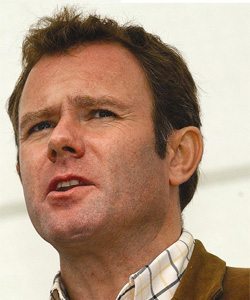
The 2005 intake of MPs contained the usual mix of the good, the bad and the barmy. There were dozens of new Conservative MPs, a brace of freshman Lib Dems and hardly any new Labour faces at all.
The new Tory boys and girls were instrumental in propelling David Cameron into power, and he has rewarded the best and the brightest with seats in his Shadow Cabinet.
Nicholas Le Quesne Herbert is one of two Nicks who first sat on the green benches two years ago to keep an eye on in the years ahead.
Great expectations follow them around the corridors of Westminster.
While Nick Clegg is the clear favourite to become leader of the Liberal Democrat party later this month, Nick Herbert is making a name for himself as one of the new stars of the Conservative frontbench.
As Shadow Justice Secretary, he speaks for his party on diverse topics such homophobic incitement, prisons, constitutional reform and the funding of political parties.
The first openly gay man to be elected as a Conservative MP, he is destined for a frontline role in any future Cameron administration.
When we met in his Commons office the government was under siege over dodgy donations, and the new Tories were getting their first taste of just how badly the next few years could go for Prime Minister Gordon Brown.
Nick was, unsurprisingly, in a good mood as we talked gay rights, the future for party funding and how it feels to be a minority MP.
Let's start with the government's woes. What is your take on the donations scandal?
It appears that Labour has systematically attempted to undo or evade its own party funding laws. This will dismay the public.
What is doubly serious is not only that the law has been broken, as the Prime Minister said, but there has been a systematic attempt to evade the law by the party that was parading its high moral credentials in introducing this legislation, beating up all the other parties at the time for their approach to this matter, and yet has sought to evade its own legislation not once but twice.
Labour's chief fundraiser, Jon Mendelsohn, who was appointed by the Prime Minister in June, learned about Mr Abrahams' proxy donations last month, but was unaware that they were illegal. Is that credible?
It is completely incredible that those people who are officials involved in this fundraising effort do not understand the law.These are now matters for criminal investigation but in my view these are very serious indeed.
What do the Tories propose by way of reforming party funding?
We have called for a cap on all donations from whatever source, of £50,000, and unfortunately that is not possible. Labour is refusing to agree to that because they will not cap union donations.They should rethink that policy urgently.
It is clear that we need to build public confidence in the way in which parties are funded.The union bosses have control over these funds and we just think there should be one rule that applies to everyone.
But what about your own party. Are you entirely confident your own house is in order?
We are absolutely sure our own house is in order, that has been made clear. We know who all our major donors are.
We go through all the proper compliance procedures, but we have said let's have a cap on donations so that no party has to be reliant on major donations.
And what about public funding for political parties?
We are much more interested in reducing the cost of politics and that is what David Cameron has made clear.
Speaking of David Cameron, you must be very upset that his trip to Washington DC was overshadowed by this awful government scandal?
Well, all Shadow spokesmen over the last two or three weeks been making major speeches, I made a major speech on prisons, which are all receiving far less attention than they might otherwise have done.
I proposed to sell off our Victorian prisons. That was a fairly radical thing to suggest, but the government has found itself in such difficulties. That's politics.
Let's turn to incitement to homophobic hatred. At party conference in October you said that you'd wait to decide on whether to support it until you saw the amendment.
The government's now brought the amendment forward. Tell us what you feel about the government's proposals needs finessing or changing?
Well firstly just to make it clear, in committee the government's amendment went through without a vote, and the official opposition broadly supported the approach.
We think that hate crime has no place in a civilised society and inciting violent hatred against gay people plainly is totally unacceptable. The question is where criminal law should be drawn.
You and I would agree that when people say things which are abusive or insulting about gay people that that can be hurtful and wrong and in our eyes unacceptable but that's not to say that it should always be a matter for the criminal law.
I think that where there seems to be a consensus is that we must just make sure the law is drawn in the right place so that it's outlawing those acts which incite violence but is allowing free speech.
It's what Stonewall describes as "temperate comments" and that's what I think we are all trying to achieve, I don't think there's any disagreement about that between the major parties. We tabled our own amendment which had a very similar effect to the government and the minister said that she welcomed much of the amendment.
This matter will come back to the floor of the Commons I suspect, and I think that there will be Members of Parliament who are simply seeking reassurance that free speech is not going to be outlawed.
That people who have very strong religious conviction are going to be able to express disapproval of gay people. You know, I wish they wouldn't, of course. I think they're wrong but I think they must be allowed to hold those views and express them in a temperate way, provided, that is totally different, to someone seeking to incite hatred that is going to lead to violence against a community by spreading really vile literature and so on.
You seem to be saying that the lessons from the Race and Religious Hatred Bill have been learned.
I think the government has learned them and that's why they've modelled the provision more on the religious hatred side but we will just need to make clear, now it could be through guidance. It may be that the government's amendments doesn't require any further amendment.
We don't want to see the protection that the government is offering significantly weakened.
What we want to see, ensure is that free speech can be protected. It may be that that can be done in the form of guidance and so on. So I think it will need further debate, but I think also there is good will on all sides to try and get this measure onto the statute book.
Those two groups normally referred to as Christians and comedians will still be able to express their views, mock, insult or abuse?
Yes, as you know insulting or abusive words are out of the protection and that I think is a major difference between the racial and religious hatred legislation.
It should give the protection which the church seeks and comedians and so on seek. Now that means that they are going to be able to say things that makes us very uncomfortable, but we must engage with them and recognise that actually what we are trying to protect here is a decent civilised society and one of the qualities of a decent civilised society is that it protects free speech, except where that free speech really has to be criminalised.
It seems to me there has been an almost a wilful misunderstanding of legislation as it affects gay people. There seems to be a similar kind of misunderstanding of IVF provisions. Where do you think that misunderstanding about 'gay' legislation comes from and does it amuse or frustrate you when you read reports that are so wildly inaccurate?
It doesn't often amuse me. Sometimes its because proposals are made without the detail yet being available and I think that was the case in relation to the government's proposal on incitement to homophobic hatred.
I think people thought that it was going to be a wide-ranging offence that would prevent them from saying things that were perhaps comment on the basis of their Christian belief or some kind of joke.
As people see how the legislation is drafted they will become rather more reassured.
How do you feel about being a minority MP?
Am I a minority MP?
Well you are, aren't you? You're a gay MP and that makes you a minority MP in the same way that if you were black you would be a minority MP, or a Muslim, you'd be a minority MP. So clearly you don't think of yourself as a minority MP?
No I don't. I think of myself as an MP as a constituency Member of Parliament doing my best to represent my constituents in West Sussex.
I don't like labels that put people into a box and I think I've always taken the view that I wanted to be selected on my merits. I wanted to be elected on my merits and I think I was.
I want to be able to say things without people putting a label on and I think that's what a lot of gay people want. They just want to be treated as equal people in a society in which we live. They don't necessarily want to say, I'm different. Please treat me as different.
Rather the reverse, they want to say, I'm the same. Please treat me as the same. But having said that, the one thing that I have come to realise since I was elected as an out gay MP is that it's very important to other gay people.
Much more important than I realised. And I've come to realise that through the emails and letters that I get from individuals, including young people, including people going through school, including people who are actually trying coming to terms with coming out at a much older age.
Not just people who are Conservatives but often people who are, not surprisingly, in my own political party, they write and they say thank you for being out and open, because you've given me great hope that I might one day be able to be a Conservative councillor or a Conservative MP, or just be whatever I want to be in my community, without people thinking that there's anything wrong with that.
I've really come to understand that.I think initially I was trying to say, "yea look right I'm gay, next question," but actually it does matter, it matters to other people because we still live in a society where people feel inhibited about being open about their sexuality.
I've realised Alan Duncan (the other out gay Shadow Cabinet member) and I do have an important role in the Conservative party in making people say "look the Conservative party has changed, it doesn't matter if you're gay or straight, what matters is that you're Conservative."
You've had a pretty rapid rise to power.
Well I haven't got power yet.
Well, you know, influence. You're in the Shadow Cabinet and you've only been in Parliament for two years and a couple of months. What do you ascribe that to?
(Laughs) You'll have to ask others. I think I've been incredibly fortunate, you know I was selected at the last moment for a constituency in a fantastic part of the world.
I live in Arundel which is just a great town for anyone who's visited it. I feel incredibly privileged to be an MP, but I feel really privileged to be representing Arundel and the South Downs, it's a great part of the world and I'm very lucky and I also feel lucky because I've kind of come in to this just at the time when the political sands are shifting.
We have a new leader who has transformed the position of the Conservative party.
You mentioned your constituency, I was having a look at your schedule which you've very kindly put on your website. It seems that you're going to two Christmas parties in the next few days. How many Christmas parties does a conscientious constituency MP have to go to?
I don't know. But I think I'm doing about 20. By the time I get to Christmas, I'm never going to want to look roast turkey in the face again that happened last year.
The truth is if you're like me and really enjoy Christmas, I actually think that it's good fun, I have the opportunity to do it 20 times over.
They've started already, they started in November. I have a very busy life in the constituency, going to community events, going to my local party events.
There's a very strong sense of community in the villages I represent and it's a very big constituency so there are lots of villages in it so there are always things going on.
Apart from the great, huge enjoyment of being an MP is that you do four days a week up in Westminster, that's kind of intense and everything, but then you are down in the constituency doing the community work and it's actually that side of things that I really look forward to.
Talking of the constituency, well I get asked a lot if you've got a boyfriend, but I understand you do have a partner called Jason?
Yeah.
You've broken a lot of hearts there Nick.
That's very kind of you!
Does he have to do the role of the constituency wife?
Well I think a lot of the younger MPs of whichever party, whether they're gay or straight, it's very likely that their partners will be working, will have their own careers.Jason certainly is, he's a solicitor so he has his own career.
He often jokes about making vol-au-vents and so on, but the truth is since he can't cook to save his life, so it's plainly not true.
Jason was welcomed by the local party from the minute that I was selected and he supports an enormous number of the local activities, comes along to them and he's just treated as anybody else is treated.I think it's one of the marks actually of the way in which the Conservative party really has changed.
We haven't had an iota of criticism or rejection, rather than the reverse. He'll be coming along to one of the lunches that I'm going to tomorrow and they've specifically asked him to.
Do you think that model of the constituency wife is a little bit outdated?
What I think is outdated is the idea that you might have a partner and you are the principal person and your partner is the secondary person.
That's completely an outdated model. I think that being an MP is a job where I would find it very difficult to do without the kind of support that I get from him and I think a lot of MPs would say that about their wives, their husbands and their partners.
How long have you two been together?
Eight years.
Were you out at university, after university?
No, not at all. I mean I think that like a lot of people I was kind of crap about this, you know, really, really crap about this. And the thing is of course, once you're out, it's so easy to forget just what a huge deal this is. And at whatever age you are.
When I got around very late in the day to telling my friends, family and so on, and the funny thing was that a lot of my friends just said "Yes, right, well we kind of guessed that, you know, it's taken you a very long time to come right to telling us."
For a lot of young people and for old people it is still the most difficult thing to do and people need a lot of support and so on. Be reassured that it may seem the most difficult thing, but coming out will make you feel honest, powerful and liberated.
Do you feel now that the Tory party is there in terms of being fully accepting of gay, lesbian, bisexual and transgender people?
I think the party, I think we really are getting there.
We hear different things from the Tories in the House of Lords every time they talk about gay rights.
I think it is self-evidently that the party has moved. You have two out gay MPs both of whom happen to be in the Shadow Cabinet. You got the stances that, the frontbench led by David Cameron. we took on the sexual orientation regulations, the stance that we have taken in relation to this incitement to gay hatred provisions.
Still the bulk of the party, the majority of the party it would appear, voted against.
Actually most people didn't vote that day, because the vote was not expected and people weren't there, as I explained at the time.
Surely, the important thing is the signal that the frontbench was sending. I see among my own intake, which is about 50 conservative MPs who were elected last time, a change of attitude.
And I think it's fair to say that some of the recent legislation has raised very important issues about freedom of religious conscience. Both the Sexual Orientation Regulations in respect of gay adoption and the current regulations in relation to current bill, incitement in relation to free speech, and you shouldn't dismiss that.
And there are plenty of people, including gay people, including people who are otherwise very sympathetic to the gay rights agenda, who have concerns about this legislation, that it should not go too far, that it should be balanced, should protect free speech, should protect freedom of religious expression.
I didn't think myself that the sexual orientation regulations as it applied to gay adoptions was an easy issue to decide, because it appeared to involve competing rights.
I think that it's quite clear that we are a party that is changing its attitudes towards gay people and I am very proud of the fact that we are doing so and have a leader who is determined that is one of the things we should do.

http://www.pinknews.co.uk/news/articles/2005-6306.html
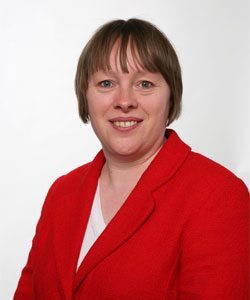
November 07 - Interview with Justice minister Maria Eagle
The government's proposal to create a new offence of incitement to hatred on the grounds of sexual orientation has not been met with approval by some leading gay commentators.
Well-respected opinion-formers such as Times columnist Matthew Parris and Independent journalist Johann Hari have questioned the need for new laws. Parris said that the gay community does not need protection from ridicule.
Rowan Atkinson, the star of the inexplicably popular Mr Bean films, has publicly fretted about the implications of such a law on the freedom of comedians to mock gay, lesbian and bisexual people.
The minister piloting the relevant amendments to the Criminal Justice and Immigration Bill is the Parliamentary Under Secretary of State at the Ministry of Justice, Maria Eagle.
The 46-year-old MP for Liverpool Garston has held various junior ministerial posts since 1998, and when we met in her spacious Whitehall office last week she was keen to highlight the work done on gay equality in the past ten years.
As the sister of the only out lesbian MP, Maria Eagle has a particular understanding of the experience of the gay community. The proposed incitement to homophobic hatred law has been discussed for some time.
The Liberal Democrats made its introduction a manifesto commitment in the 2005 elections.
The passage of the controversial Racial and Religious Hatred Act in 2005 and 2006 led gay rights campaigners to increase their campaign to have their community granted an equal level of protection.
I put the three main arguments put forward in opposition to the government's homophobic hatred provisions to the minister.
The first is that as incitement is already an offence, the new law is unnecessary.
"There is existing legislation about violence against individuals, provisions within the current law that will enable the Criminal Justice System to take a dimmer view of those who get engaged in violence against an individual because of their sexuality," she replies.
"If you go and attack someone because they are gay then that is an aggravating feature of the violence offence. That's true.
"But I think that the evidence that Stonewall gave to the public bill committee got to the point on this.
"Because there is no incitement provision at the minute, there is a gap.
"If you go around inciting hatred against a group of people or an undefined group of people on the grounds of their sexuality, that isn't against the law. We think it should be."
Christian activist groups such as the Evangelical Alliance claim the new law will leave them "living in fear of prosecution" for expressing their Bible-inspired beliefs about homosexuality.
Muslim groups have also criticised the law for the same reason. Ms Eagle confirms that groups have made representations to her on the issue. She insists that the new law will not have any such effect.
"It has not been our intention to outlaw people expressing their views, whether they be Christians or comedians, about the way other people live their lives.
"You can have protection against incitement to hatred and at the same time protect people's right to express their free views. It's a very important factor of our history and heritage, freedom of speech, and I hope we can do it right."
Concerns about freedom of speech led to a rare Commons defeat for the government in January 2006 over the Racial and Religious Hatred legislation.
Lib Dem peer Lord Lester introduced a clause in the House of Lords which had the effect of seriously restricting the way in which the incitement law could be used.
The Blair government lost a vote on that amendment in the Commons.
Provisions referring to "abusive and insulting" language and behaviour were removed from the law, and prosecutors now have to prove intent to stir up religious hatred, rather than just the possibility of doing so.
Ms Eagle says the homophobic incitement proposal differs from both the race protections in the Public Order Act and the recent religious protections.
The homophobic amendments target threatening behaviour or words that are intended to stir up or incite hatred but not those that are judged as "likely to."
"We are aiming at threatening words and behaviour that are intended to incite. It is very clear from that what we do not want.
"We are taking out abusive and insulting, but we are applying the offences to threatening words or behaviour.
"Partly because that way of expressing ourselves in (the Racial and Religious) legislation was never what we wanted as a government. We did not support it. It only ended up in there because we got defeated.
"I think that in respect of sexuality in particular it would be most inappropriate to have a caveat saying you are allowed to go and abuse and insult gay people."
To bring some clarity to all of this, I presented two high-profile examples to the minister.Stephen Green, the Christian activist, likes to hand out leaflets at Pride events carrying quotations from the Bible stating that homosexuality is wrong.
He's been arrested under public order offences before. The BNP has in the past handed out leaflets in a council estate saying "All gay people are paedophiles."
Would both or either of those be covered by the proposed incitement law?
"I think it depends not only on the intention, which is a key part of the offence, and that will be a matter for the judgment of the individual investigating officer," Ms Eagle explains.
"Police officers make those judgments all the time and CPS make those judgments.
"Obviously the context is going to be important. If you are a preacher and on Sunday morning you tell your sermon of your beliefs and the beliefs of your denomination about gay people then that's different to going and standing outside a gay club and using threatening words and behaviour.
"The intent is the key. That is very clearly unacceptable and that's where we are pitching the offence."
The third objection to the law focuses on its practical purpose. When he announced the proposed amendments, Justice Secretary Jack Straw said of the proposed incitement legislation:
"It is a measure of how far we have come as a society in the last 10 years that we are all now appalled by hatred and invective directed against gay people, and it is now time for the law to recognise the feeling of the public. "
In other words, it is symbolic, a sign to the gay community that their concerns are listened to by the government, but just another new offence to add to the thousands already created by this Labour administration.
"The law lays down a line beyond which it's not possible to go without being on the wrong side of the law and you are subject to being prosecuted," the minister asserts.
"The law as a side effect can send signals, yes, and I think that can be important in areas like this about equality.
"But I am trained as a lawyer and I am not myself inclined to see the law as something that is just sending signals.
"It's putting down a line in the sand, on this side of the line what you do is lawful; on the other side it's unlawful. That's what the law does.
"If it sends signals as a result then that's also important. It's not a cosmetic exercise. I don't think it's right to change the law as a cosmetic exercise."
The leading contender for the Lib Dem leadership supports the proposed new law, while the Tory Shadow Justice Secretary Nick Herbert has stressed "the right balance between freedom of speech, ensuring that the offence must be intentional, and covering threatening language only."
The minister says she expects amendments to be brought forward, and concedes that the Lords are unpredictable, but expects "widespread support" from MPs for the incitement law.
There are proposals to include trans people and the disabled in the proposal, but the government requires an evidence base to make the case for their inclusion.
"One of the things you need to do if you are impinging upon free speech is be able to show for human rights reasons that there is a good reason for that to balance against the free speech rights," Ms Eagle explains.
"I've had some representations as you might imagine as a result of this. Anyone who wants to talk to us about this please do. We do, in order to impinge on free speech in this way, need to show that there is a reason."
The new Justice department, of which Ms Eagle is one of six ministers, takes responsibility for the criminal justice system in England and Wales.
She concedes that parts of the system have been slower than others to tackle homophobia and homophobic attacks, but claims that the specific needs of gay, lesbian and bisexual people are being taken seriously.
"Since the 2003 legislation that made an aggravating factor of homophobic motivation in attacks, the criminal justice agencies, be they police, the judges or the CPS have to take that on board.
"It's partly training, partly cultural change in society. I think we have seen a lot of that, but which is the chicken and which is the egg I'm not quite sure.
"One of the reasons why we have seen such cultural change is a general increased level from younger age groups of tolerance, but in order to promote that you have to have a way of tackling intolerance, and this is part of that."
Ms Eagle knows more than most about intolerance.
She has been a Labour member since her teenage years, and her sister Angela made the headlines and gained the respect of many by coming out as the only gay woman in Parliament soon after the 1997 election.
The sisters first attended party conference in 1980 – "you never had to queue in the ladies, put it that way, as there weren't very many women there," she recalls with a smile - and they are the only pair of female twins ever to be elected to the Commons.
The minister embraces the change in British attitudes since the days of Old Labour, not least the fact that the Tories are now keen to stress their gay-friendly credentials.
"You wouldn't have thought that ten years ago, or five years ago, and I think that's good. Tolerance, diversity and equality have always been at the heart of the Labour party and its politics.
"Far more gay and lesbian people are happy to come out now, they are able to do it without having to live their lives hiding away, and that's got to be good for the health of individuals and society generally."
Many MPs and others in politics are yet to step out of the closet.
When I mention that her sister is the only lesbian MP the minister corrects me by saying she is the only one "out," indicating there are others who have thus far not been so brave.
Given the attention Angela Eagle's announcement received, it is understandable why other women have not followed.
"It was a tough thing for her to do," recalls Maria.
"I supported her very much. The previous female MP who had done that, or rather had that done to her, was Maureen Colquhoun, who had a terrible time.
"She was deselected by her own party, the national party had to say hang on, you can't do that to her, reinstated her, and she lost.
"So obviously we were worried about it, but to be honest she prepared it so very, very well, she picked the time perfectly and it came off as well as you could have expected.
"That isn't to say that my father wasn't door stepped, that I wasn't door stepped, our neighbours weren't door stepped, our old head teacher from when we were five wasn't door stepped because, they all were.
"I saw it from being a supportive sister with Angela, how much guts and preparation and everything it takes. It's the same for everybody who decides to come out in their lives. Alright it's not always going to be on the front of all the newspapers but for every person who does that it feels like to them.
"There are gay and lesbian people at every level of every organisation, and I think whether or not they are out is a very personal choice.
"Some people do and do so at an early stage, but I have never talked to a gay or lesbian friend who has not found it to be one of the hardest things they have ever done, and I don't think its right to force people to declare themselves. It's the same with disability.
"When I was a minister for disabled people we had all these arguments and discussions. I just don't think that when you have discrimination, which we still do, that it's right to force people to declare a disability, or their sexuality.
"I am the only person who got forced to declare my sexuality that I know of because of course when Angela came out everybody had to report that I was heterosexual.
"It's quite amusing , when you look at a lot of the information sheets you get about MPs, you get a lot of "Maria Eagle, the heterosexual member for Liverpool Garston."
"Why don't you say everyone else is heterosexual as well, but its just one of the consequences of being a twin."
Despite all that information identifying Maria Eagle as the straight one, she reveals that even the Speaker has mixed them up.
"People just think of us as "the Eagles." Sometimes I wish I had a pound for every time I get mixed up with my sister, because I'd be very rich."

http://www.pinknews.co.uk/news/opinion/2005-6149.html
November 07: Nick Clegg interview

This article was first published on 15th November 2007. Nick Clegg beat Chris Huhne to become the Lib Dem leader on 18th December 2007 by just 511 votes.
Since winning Sheffield Hallam in the 2005 general election, Nick Clegg has made a major impression on Liberal Democrats in Parliament and across the country.
Tipped as a future leader before he even entered Westminster, in the wake of Sir Menzies Campbell's resignation he finds himself standing sooner than was imagined.
Age did it for Ming, and 40-year-old Clegg is the frontrunner in the contest to replace him. Like his opponent in the leadership race, Chris Huhne, he attended the private Westminster School.
After Cambridge, and post-graduate degrees at the University of Minnesota and the College of Europe in Brussels, he joined the European Commission in 1994.
A high-flyer, he became a senior adviser to Sir Leon Brittan, the Thatcher-appointed Vice President of the Commission, and then MEP for the East Midlands from 1999 to 2004.
As his party's home affairs spokesman he has become a prominent critic of the government on civil liberties and a vocal opponent of ID cards and increased pre-charge detention of terror suspects.
In an exclusive interview Nick Clegg explains why he is the heir to Ming, how to tackle homophobia in eastern Europe, and where the Lib Dems could take seats from Labour at the next election.
How is the campaign going?
Good. The whole contest gives us a really good opportunity to do what, frankly, we haven't been doing enough of over the last couple of years, which is speaking to people beyond politics and starting to really showcase what the Lib Dems are about. I am all about expanding the appeal of the party.
Why are there so few out gay MPs?
There are too few women, too few gay men and women, too few black and minority ethnic MPs, all roughly for the same reason. This whole place, Westminster, looks like a 19 th century boarding school, acts like a 19th century boarding school, so frankly it speaks a language utterly alien to anybody who does not fit that conventional mould.
In 2005 the Lib Dems had a manifesto commitment to make incitement to homophobic hatred a crime on a par with religious hatred. What is your view?
I am absolutely in favour of that. I pushed it very strongly has home affairs spokesperson; I passionately believe that there is a real problem. I have heard some people claim that it is not an issue – it is.
There is a real problem with homophobic violence. That is unacceptable and what we did with religious hatred bill shows that we can strike the right balance between making sure that hateful crime does not take place but at the same time protect people's right to free speech.
Several gay commentators, such as Times columnist Matthew Parris, object to the law.
I have become persuaded by the evidence put forward by Stonewall that this is a real issue. I accept there is a much more theoretical argument about where the law affords protection to particular groups.
I still think the evidence from Stonewall is compelling. Matthew is an old friend. I understand where he is coming from, I just disagree with him on this particular issue and under my leadership I will make absolutely sure that we are at the forefront of getting the balance right with this legislation.
Homophobia in some of the new EU states is a huge problem. Gay rights marches are being banned in Poland and in Lithuania. As a former MEP, what do you think we should do about it?
Bluntly, I do not think we were tough enough on the Copenhagen criteria in letting them in without challenging this. And it is not just homophobia.
If you look at the persecution of the Roma in parts of central and eastern Europe, it is grotesque.
We need to use every single avenue possible – political, in press terms as well to throw a spotlight onto behaviour that is simply incompatible with the criteria these countries signed up to when they joined the European Union. The EU is not an economic club, it is a club of values, and I passionately believe that, of liberal values.
Are you confident they will come round to our way of thinking?
If you look at the grand scheme of things, there is progress. Sometimes it goes backwards, but on the whole, judicial independence and a spreading of liberal values is going in the right direction, but is not moving as fast as I would like.
If you become leader will you increase online campaigning?
Oh yes, hugely. For the obvious reasons. I am part of that generation that increasingly does not rely on ink and paper for my information. I take a train in every morning into Westminster, when I am London during the week, and I get my news from a little hand-held PDA. That is now the way people increasing get their information.
What is it you can bring to the party as leader?
It is a number of things. If you look at the work I have done in the home affairs capacity for the party, I think most people recognise that I am one of the leading campaigners in this country on some very important issues: prison reform, talking in a smart but compassionate way about immigration, being a progressive voice on civil liberties.
I have always tried to do it in a way that is straight, plain speaking and has real substance to it.
But you do not have the gravitas that Ming was praised for.
I am someone who has taught at university on policy, I used to work as an international trade negotiator, I used to manage major aid projects in some of the poorest countries in Asia. I think I have got the experience and the background …
The perception of some people is: he has only been in Parliament for two years, he is the new boy, young, charismatic, good looking, but we do not know what he stands for ...
I will tell you a story to illustrate it. About seven years ago when I first thought that I might want to make the transition from the European Parliament to Westminster, I came to this building to meet some senior Lib Dem MPs.
I said that no one had made the leap from the European Parliament to Westminster before, do you think I can do it.
And all of them said to me that your problem is that you are too interested in policy substance, you keep producing all these books, I have written books on world trade, education police, reform of the EU.
They said, you are just a bit too interested in substance and not interested enough in the presentational side of politics.
So to be told a few months later that maybe the reverse is the case shows how fickle, frankly, people's judgements are. I am totally self-confident that I marry an ability to be able to speak to people like a human being and crucially communicate with people beyond the Westminster bubble, but do so with a real sense of credibility and substance.
It is one of the most dangerous jobs in British politics, being leader of the Lib Dems. You are confident that there are not any skeletons in the Clegg closet that are going to jump out.
I doubt my teenage years merit a great deal of scrutiny by those who are easily shocked! I am not for one moment pretending I am an unblemished human being but I wouldn't be stupid enough – not for my own sake, by the way, but for the sake of the party – to put myself forward if I did not feel that I can do so with a clear conscience.
Being leader does put a big strain on your family – is that something you have discussed with your wife?
Oh yeah. I would say this, wouldn't I, but Miriam is an extraordinary woman. She has her own full time career. We have two small children; we both work more than full time and we share childcare very easily. I am as much a primary parent to my children as she is.
The way you do that is being very organised and sheltering the kids from politics. I do not think you will ever see me use my kids for political advantage and above all saying no sometimes.
It is not their fault their dad has gone into politics.
Are you the nasty party now?
No, I don't think we are. We have had a really rocky time of it obviously and there have been some ructions, some self-inflicted, some not.
Frankly my only concern now is to draw a line under what has been a slightly introverted time in the parliamentary party and start talking outwards again.
That is why I am so pleased that the vast majority of the colleagues in the parliamentary party, who know Chris and myself the best, have declared in favour of me.
Not for some fatuous tally or head count, but because I think any leader of this party is going to have to be able to unite people very rapidly in order to make sure that there is no internal tensions so we can reach out to new voters.
It is going to have to be very rapid because of what is known as the Tory squeeze, that a third party with a resurgent Conservative party …
Can I just qualify that? Cameron's appeal is much more regionally constrained than large parts of the London-based media appreciate.
In the same way that you are a middle-class party with middle-class concerns?
Well you say that, but you watch. We are now a party which is representing north and south, urban and rural. The Conservatives have been beaten back to their English rural heartlands.
One of the reasons I am keen to lead the party is because I am an MP from the North, I cut my teeth in cities like Derby, Leicester, and Nottingham. I am the only non-Labour MP in Sheffield and south Yorkshire.
You represent one of the richest seats in the UK outside of the south east.
Well come and visit it. If you think Sheffield Hallam is paved in gold you have another thing coming. There are some real pockets of deprivation.
I am a very active MP for the whole of Sheffield. I campaign with Lib Dems across the city. You cannot but be shocked by the social divisions where in the poorest ward in Sheffield you will die, on average, 14 years earlier than someone in the wealthy wards just a few miles down the road.
The Conservatives are nowhere there. They are a meaningless political force in any urban area north of Watford. That gives us an enormous bridgehead.
I think the big gains that we will make against either party in the coming years will be in large measure against Labour in their urban heartlands. Look at our advances in Leeds, Newcastle and Liverpool.
And you don't think the Tory emphasis on social justice under former leader Iain Duncan Smith will work in those areas?
I think most people are pretty smart, and are not just going to be bought off with some new rhetoric and photographic blandishments from Cameron. They want to see where the beef is.
I still don't know where the substance is on his environmentalism, his social compassion.
How can you believe the Conservatives on social justice, when they want to distort the tax system in favour of marriage? Where is the progressive nature of a party that somehow thinks you can bribe people through the tax system to walk up the aisle?
Where is the progressive nature of a party that thinks you can turn immigration on and off like a tap? In a party that is extraordinarily introverted and inward looking when it comes to international relations?
And what about the charge that you are a middle-class party?
It needs to change. Which is why Simon Hughes has declared himself in favour of my candidacy and why I was with him in London South Bank University last week meeting a number of students from black and minority ethnic backgrounds.
The Liberal Democrats cannot pretend to represent contemporary Britain until contemporary Britain is represented in us.
Subscribe to:
Posts (Atom)