Thursday, November 23, 2006

PMQ - Where was the va va voom?

The first PMQ of Tony Blair's last session was a stilted affair. David Cameron used all of his supplementaries on the growing crisis in Sudan, perhaps determined to appear statesmanlike after the prime minister's effective attacks on his gravitas during the Queens Speech debate earlier in the week.

The result was a distinct lack of Punch and Judy. In fact it was more like Richard and Judy - lots of meaningless exchanges which brought about no real enlightenment. The atmosphere was lethargic, as MPs listened silently as the party leaders dumped platitude on top of cliche.

Cameron's line of questioning had some potential at the start. After praising the bravery of our boys in Afghanistan, he wanted to know why there were not more NATO troops there from other countries, and asked if British troops needed more helicopters.

Mr Blair replied in a liminal fashion. Our troops are in good heart. Reconstruction and development. The US and Canada have also lost troops. Working together. Credibility of NATO. Doing everythin we can.

Instead of attacking, Cameron switched to Darfur. There were a series of exchanges, the conclusion of which was that the crisis had to be solved by the Sudanese, with help from the African Union. Cameron asked the PM to ensure the Sudanese govenement would stick to t agreement, as if it was in his power.

Mr Blair responded he would do everything he can. He also heaped praise on international development secretary and Blairite deputy leadership contender Hilary Benn.

Cameron failed to make any impact by asking about a subject that Mr Blair has no direct control or influence over. It may have been statesmanlike, but it was dull and a waste of time.

Thank God for Ming. In what is becoming his trademark, the LibDem leader picked up on a small but significant news story, and successfully got stonewalled by the PM.

Will legislation concerning the renewal of Trident is to be published before the end of the year, Ming asked. Yes, was the response.

Seems innocuous enough. But wait - will the House of Commons (by which he actually means left=leaning Labour MPs) get to vote on a series of options and not just the principle of renewing the nuclear capability?

Ming was rewarded with a non-denial denial. The House would certainly get a vote, the PM said. He also reiterated his support for renewal.

Ming used his two questions to maximum effect, exposing a rift in the Labour party potentially as divisive as 90 day detention was at the start of the last session.

There were few moments of levity during the PMs appearance at the dispatch box.

London Tory MP Derek Conway, a rotund ball of moral outrage, caused a few titters by raising the soaring costs of the 2012 Olympics, and what he termed the "drunken sailor spending attitude of Ken Livingstone."

There were the usual Tory questions about the NHS (consultants are being sacked in my constituency - oh no they are not - oh yes they are - record investment in the NHS - police are being sacked in Wales - on no they are not - record investment in police - repeat ad nauseam)

Finally, the veteran of PMQ and two-time leader of the SNP, Alex Salmond, managed to get under the PMs thick skin. His verbal hand grenade of a question was a masterful example to Cameron and others in how to insult, insinuate and belittle, while all the time appearing to have a query:

"Will the Prime Minister undertake to stay out of the clutches of the Metropolitan police until the end of the week, because we are looking forward enormously to his visit to the Scottish Labour conference on Friday? Is he aware that every time he attacks the SNP, support for Scottish independence soars to new, unprecedented levels? Will he promise to launch another furious assault on us this coming Friday?"

Blair got angry for the second time this week, and his own MPs loved it:

"Yes, I will and I shall tell the hon. Gentleman why. It is because by ripping Scotland out of the UK we would damage the economy, living standards, health service and education in Scotland. He has no positive proposals for Scotland because the only policy that he has has been rejected twice before and will be rejected a third time."

And a piece of trivia to take home with you. Although premanently associated with Islington, in an answer to Labour MP Meg Hillier the Prime Minister revealed he used to live in crime-ridden next-door London Borough Hackney - opposite the Holly Street housing estate, to be exact.

Tuesday, November 21, 2006

Olympic Shambles

I was pleased that London won the right to host the 2012 Olympics last year. Not because I thought it would have a transformative effect on the city - London is too big for any one event to hold the attention of the entire metropolis.

Not was I particularly impressed with the regeneration of Stratford. That would probably have happened anyway. As for the 'encouragement' the Olympics will give to the millions of fat children in the UK, well i doubt the Games will have that effect.

No, I love a good fight, a nice long-running bitching session, and the seven year build up to the Games looks set to be the biggest bitch fight in modern times.

Today, Tessa Jowell was hauled before the DCMS Select Committee to explain to MPs just how much these Olympics are going to cost. The summary of her answers was that she has absolutely no idea.

The first estimate was 2.4bn - at this stage the Olympic bid had cross-party support. Last week it was revealed that the initial calculations had not factored in VAT or increased security costs. It was estimated that the Games might cost 5bn.

In front of the Select Committee, Tessa joked that some estimates put the cost at 18bn. Funny. But not when we consider the shambles that was the Millennium Dome. Or the Scottish Parliament building.

A report to the London Assembly tomorrow will put the total cost of the Games at 8bn. London Mayor Ken Livingstone has already promised that London council tax payers will not be asked to contribute more than the 38p-per-week extra charge they are currently paying for the 30th Olympiad.

The good news for Tessa Jowell and London Mayor Ken Livingstone is that neither of them will be in office by the time the true cost of the Games are known. They will both be former politicians, no doubt with front row seats at the opening ceremony, but they will both point the finger at everyone else for the inevitable over spend.

The Tories, likely to be in power in 2012, have few options. They cannot cancel the Games. They cannot raise more money from Londoners. It seems that all UK taxpayers will end up footing the bill. It is also clear that the Lottery money currently spent on other new causes will be diverted to keep the Olympic show on the road.

The reason I was pleased that London won is that it provides journalists with great stories for the next six years and beyond.

The British press love nothing more than a good shambles, and judging by the past year of Olympics planning, they do not get more shambolic than this.

Saturday, November 18, 2006

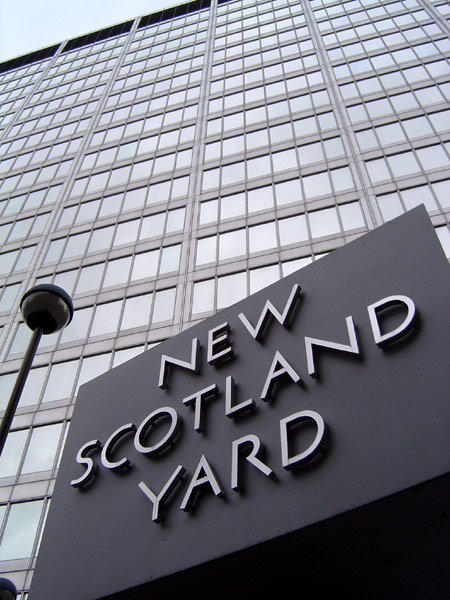
Scotland Yard Divas

When will the Met be talking to Tony Blair?
I dont know - I just thought I would ask in case any of you do!

The whole investigation has raised serious questions about the leadership of the Met. At the top there is Ian Blair, a man who seems more interested in his press image than his job. He thinks his role as commissioner is to be some sort of "voice" for the police - which it isn't. There are various bodies that represent police of all ranks.

Yet Blair thinks it is ok for him to phone MPs and try to influence how they vote. His egotism seems to be catching on among other senior staff at New Scotland Yard.

Take Dep Asst Commissioner Brian Paddick. The highest ranking gay police officer in the UK today talks to the press regularly.

Speaking at an employment advice day for gay teenagers, Mr Paddick expressed his dismay at being sidelined by the current Commissioner Sir Ian Blair, “because I spoke the truth."

"I have the opportunity to retire this year because I've served thirty years in the force, but I don't want to just grab the money and run. “I'm looking at what may happen when the current Commissioner retires."Mr Paddick made it clear that he thinks he is qualified for the top job.

Traditionally only officers who had served as Chief Constable of a smaller force would be considered for the Commissioner role.


"I may or may not have been asked by the Liberal Democrats to be their candidate for Mayor."Mr Paddick has previously addressed the Lib Dem Party conference.He added: "I wouldn't be comfortable as a Member of Parliament because I would be expected to attend divisions on the party line.

“But in general, the Mayoral candidates have been given greater leeway to be independent by their parties."

"Remember Ken Livingstone was first elected as an Independent before Labour begged him to rejoin the party."

HEY! I got an idea for you Brian? Why not try acting like a fucking civil servant? Why not keep out of the press? Keep your mouth shut and get on with your job. Maybe I am old fashioned but frankly the public should not have a clue who the Assistant Commissioners are.

He is not the only attention seeker. The recent loans for peerages investigation has revealed yet another top cop who seems in love with the media.

Dep Comm. Andy Yates has been dubbed Yates of the Yard by the more hysterical of our newspapers. No doubt he relishes the title and looks forward to stepping into the top job one day. His inquiry has been leaking like a sieve from day one. Why hasn't he put a stop to it?

Yet another rampant ego at the top of the Met. It is a sad day when a punter on the street like me knows who Cressida Dick is.

Friday, November 17, 2006

What the Queen said


The last Queen’s Speech of Tony Blair’s premiership has been dominated by security measures aimed at cutting crime, curbing anti-social behaviour and combating terrorism. The Queen, sitting on the throne in the House of Lords, told peers and MPs summoned from the House of Commons that the government intended to take “further action to provide strong, secure and stable communities and address the threat of terrorism.”The Speech lists government legislation for the coming parliamentary session. It is written by the government and formally read out to parliament by the Queen. Among the 29 new bills unveiled this morning, Her Majesty announced a climate change bill, which aims to reduce carbon emissions by 60% by 2050, and will establish a new, independent Carbon Committee to work with the government on reducing carbon use.


The Tories and Liberal Democrats have been calling for yearly carbon reduction targets.The government intends to merge all terror legislation into one coherent bill, and will ask once again for 90-day detention without charge for terrorism suspects. The controversial three-month detention was rejected by MPs in the last session. Evidence obtained by wiretap will be admissible in court. ID cards will proceed. There have been six terrorism bills since 2001, and a new ‘super bill’ might not be debated until next year. The police are getting new powers to deal with serious and organised crime. It will become easier to deport immigrants who break the law or commit immigration crimes. There will also be new regulations for UK estate agents, who will be compelled to join a redress scheme.


Energywatch, Postwatch and the National Consumer Council (NCC) are to be merged into a super-consumer watchdog. In what will be a busy session for Home Office ministers, the Queen also announced tougher sentences for violent offenders and new powers to remove people who commit anti-social behaviour from their properties. Pensioners and disabled people will receive free off-peak bus travel across England for the first time. From April 2008, concessionary passes issued by local authorities will be recognised in all parts of the country.


The controversial Child Support Agency is to be abolished and replaced with a smaller enforcement agency. Single parents will no longer be forced to apply for maintenance if they apply for benefits. People who repeatedly fail to pay maintenance could have their passport seized or be placed under curfew. A new mental health bill will be introduced which will ensure that people with mental health problems receive treatment in the community. There will be a new, simpler definition of mental illness and an overhaul of the treatment regime.


The Queen also announced extended powers for the London Mayor and Assembly and a new independent board to enhance public confidence in government statistics. The Turner report proposals on pensions will be implemented, including restoring the link with earnings and the introduction of compulsory contribution schemes. Millions of women who have been deprived the state pension will now be covered.This year’s State Opening of Parliament was the 55th attended by the Queen.


There had been some concern that a back injury might lead her to miss the ceremony, but in the event the Queen was strong enough to attend. She has missed the State Opening on only two occasions, 1959 and 1963, when she was pregnant with Princes Andrew and Edward respectively.

Tuesday, November 14, 2006

Im A Celebrity! Are you????

My fashion sources tell me that Scott Henshall, the nobody designer currently squatting in the Australian jungle as a contestant on crappy reality show "I'm A Celebrity Get Me Out Of Here" has more in common with Mark Oaten than just a receeding hairline.
That must be why his nickname is Scat Henshall .....

Queen to open Parliament

HM The Queen will be well enough to perform the State Opening of Parliament tomorrow.
The arcane ceremony takes hours, so I hope Her Maj rests her back.

The exciting contents of her speech should include yet more Home Office legislation as well as another Education Bill - probably - I haven't checked - but as this government has passed a new Education Bill every year since 1997 it is worth a punt.

LibDem research reveals that this government have created over 3000 new offences since they came to office!

Monday, November 13, 2006

Interview with David Starkey


Despite his reputation as the rudest man in Britain, Dr David Starkey is on good form when I speak to him. I approach the interview cautiously, aware that a badly phrased question might bring a volley of his trade- mark abuse down upon me.
In the event, the 61-year-old former Cambridge don and gay rights advocate is a pussycat, laughing, joking and even indulging my schoolboy questions about English history.I even interrupt him a few times and escaped unscathed.
Starkey is much more than the television controversialist the public know and love. His approach to history, during a career spanning four decades, directly challenged the accepted idea that big changes come from big causes.
His area of expertise is the Tudor period, and his focus on the domestic intrigue at the court of Henry VIII cemented his reputation. The way many of us learn history is as a series of big events. Starkey thinks that approach is outdated. "That is the kind of heresy that I was taught when I was both a grammar school boy and also at Cambridge.
"It is perfectly clear that very big events can have small causes. Henry VIII's passion for Anne Boleyn really is the only reason why we had the Reformation. Catholicism was doing well in England, Henry had been the most passionate supporter of it, and the only thing that changes all of that was Anne.
"It's like that wonderful quote from 'The History Boys' from that Northern lad who com- plains that history is, "just one fucking thing after another." I don't actually believe that is what it is solely, but there is an element of it that is like that."
Starkey's atheism has actually led him to take religion more seriously than many historians of the generation before him did. "I always say there are only two types of atheist – Catholic atheists and Protestant atheists!
"I admit freely I am a Protestant atheist but it means I do have an emotional understanding of what I am writing about, and that is vital as a biographer.
"One of the things I have tried to do as an historian is show that you must take the values of the people that you study really seriously.
"The absurdity is to think that the past must be like the present. It is absolute disaster for an historian to impose his own values on the past."
Starkey's spiky persona is part of his media image and one he readily plays up to. His behaviour on Radio 4's 'The Moral Maze' led The Daily Mail to dub him 'the rudest man in Britain'. He says that epithet has subsequently earned him an extra £100,000 a year.
"Your reputation, be it sweet or sour, grows with each programme. There are obviously different David Starkeys knocking around in the media universe, which of course is a great advantage.
"The reputation for being tough means that when people first meet you, a new TV director or whatever, they are usually pretty much on their Ps and Qs. Then of course they discover that I am really quite human.
"All you have to do is behave with average politeness and people think you are the nicest thing since sliced bread. You very rarely actually have to be demanding or difficult. I think I have several reputations and we won't go into some of them – not even for The Pink News."
His recent TV success means he no longer lectures, as he had done for nearly 40 years, first at Cambridge and then at LSE. He thinks that academia is more bitchy than the media could ever be.
"I still sort of teach. Last night I was up in Kendal where I am the president of the local history society. I regret in some ways that I no longer have time to do the real thing but equally I don't regret marking essays, having to deliver the same lectures year after year and I certainly don't regret having to sit on committees."
Starkey was born in Kendal in 1945,the only child of a Quaker family. The poverty of his early life might well explain his delight at accumulating cash from his years of hard study - he was paid £2m for the ongoing three-part Monarchy series for Channel 4.
His early childhood was tough and his overprotective mother was a strong influence on his outlook and attitudes. Born with two club feet, he felt an outsider, but overcame his disability as well as a breakdown at 13, to shine at grammar school. He left Kendal and his mother behind, enjoying a glittering academic career as an under-graduate and then a fellow of Fitzwilliam College, Cambridge.
London, with its social opportunities for gay men, led him to the London School of Economics, where he taught history from 1972 to 1998.
In 1993 he met his partner, book publisher James Brown. Starkey describes his TV work as teaching, but to a much larger audience, the same lectures but this time with millions of students.
Part 2 of the Monarchy series, which covers the Wars of the Roses to the Restoration, is released on DVD on 20th November.
The series is an outstanding academic and televisual achievement, a radical reassessment of the development of English identity, culture and politics, using the monarch, the central institution of national life, as the focus of how the country was formed.
Starkey's trademark blunt delivery and mastery of his subject makes it a fascinating watch, as he stitches the story of the monarchy from Alfred the Great to Elizabeth II into one coherent narrative
"If you are dealing with monarchical regimes, the personal is the political, as indeed it is within quasi-monarchical regimes like New Labour or Bush's White House. They are not dead, I only wish court studies were dead, but they are alive and horribly well."
The third and final series, from James II to the present Queen, will start on Channel 4 this month.Will historians in the 22nd Century be talking about monarchy as a historical relic?
"I am not a betting man myself, but I wouldn't put a lot of money on it either way. My instinct is that monarchy is looking surprisingly durable. If you look at the European model in Sweden, Denmark, the Netherlands or Spain monarchy is absolutely central.
"Another outcome is that we drop the whole show and decide we are just a big state called London."
The third series tells the story of the monarchy in recent times. He identifies the Queen's Silver Jubilee in 1977 as the turning point for the institution
"Up until then the Queen had kept the show on the road in exactly the same way as her father and grandfather, keeping it as it was in 1917.
"Darling, you can't do that! In fact she had a very good try up until the Silver Jubilee, with the whole notion of the family monarchy as the great representative British family.
"Since then it has fallen to bits and Diana was the final coup de grace. The monarchy itself looks in surprisingly good health, but it is so simply by accident.
"Back in 1997 when Tony Blair was still fresh and washed behind the ears, it looked to be really quite at risk. Once that insidious sense of betrayal and dishonesty and warmongering became attached to Labour politicians then republicanism, which has never really been a significant movement in Britain, fades away again."
The tension between Western and Muslim values has become a major issue in recent years, and Starkey surprises me by being broadly supportive of the controversial comments made by Pope Benedict about the nature of Islam.
While pointing out that the Catholic Church has a lot of apologising to do before it starts to point the finger at Islam, citing the Crusades and the Spanish conquest of Latin America among the many sins of the Roman Church, Dr Starkey thinks that Benedict's point about the nature of Islam is correct.
"There is nothing in Islam that corresponds to "turn the other cheek", to the pacifism that I think is the authentic tradition of the New Testament.
"Islam spreads in a completely different way from Christianity, which spread through the Roman Empire by conversion and an almost willing acceptance of persecution.
"Islam spreads by conquest. Mohammed even conquers Mecca. Also it has a very clear doctrine of holy war, and it does not make a distinction between church and state.
"Jesus, living under the Roman occupation, gave us the famous phrase: 'render unto Caesar the things that are Caesar's, and unto God the things that are God's'. That does not exist in Islam and I would argue that that distinction is the key to why Christianity and progress are so closely related.
"The separation of church and state is the spirit of freedom. It is somewhere that we can escape from the crushing weight of authority. This is why I think the history of Western Europe is a history of progress and the history of Islam is not."
That separation between politics and religion may also be the reason why gay and lesbian people have gained their rights in Western societies, and Starkey has been a leading advocate of those newly acquired liberties.
He was a vocal advocate for gay rights throughout his career on radio, and has been patron of the Tory Campaign for Homosexual Equality (TORCHE) since 1994.
If history shows us that big changes can have small causes, how small a cause would it take for gay rights to be swept away? Starkey is optimistic that there is not too much to worry about. "It would take a revolution of consciousness for that to happen. There is some sort of religious revival in England going on, but it is so inchoate and disparate and takes place against a background which is so overwhelmingly secular, materialist and consumerist.
"It would need some huge slump or political, military or economic crisis. On the other hand, I do believe passionately that freedoms always have to be defended, that we always have to be aware of the threat to them.
"The threats are much more likely to come from politicians than the Church. The whole security-driven response of New Labour and the Republicans in the States, that is where the danger is."
The nature of British society is where he derives that optimism that gay rights will not be swept away with a sudden change of government. The place of the monarchy within British life is also likely to remain for the same reason.
"The great thing that drives British politics for most of the time is inertia, and the monarchy is the great beneficiary from that.
"Because most of us have decided that politicians of what- ever stripe are such absolute awful shits, the monarchy looks to be quite safe just by way of a reaction against that."
Monarchy: The Complete Second Series will be released on a two disc DVD set on 20th November, priced £19.99. Starkey's Last Word is currently on More4 on weekday nights. The third series of Monarchy will be broadcast on Channel 4 throughout November.
This interview first appeared in the November issue of The Pink News - www.pinknews.co.uk